Zware Winstdam Trading Platform Alternatives 2026
Compare Zware Winstdam alternatives for 2026: regulated brokers, fees, platforms (MT4/MT5/cTrader), safety checks, and migration steps for US/EU traders.

Compare Zware Winstdam alternatives for 2026: regulated brokers, fees, platforms (MT4/MT5/cTrader), safety checks, and migration steps for US/EU traders.
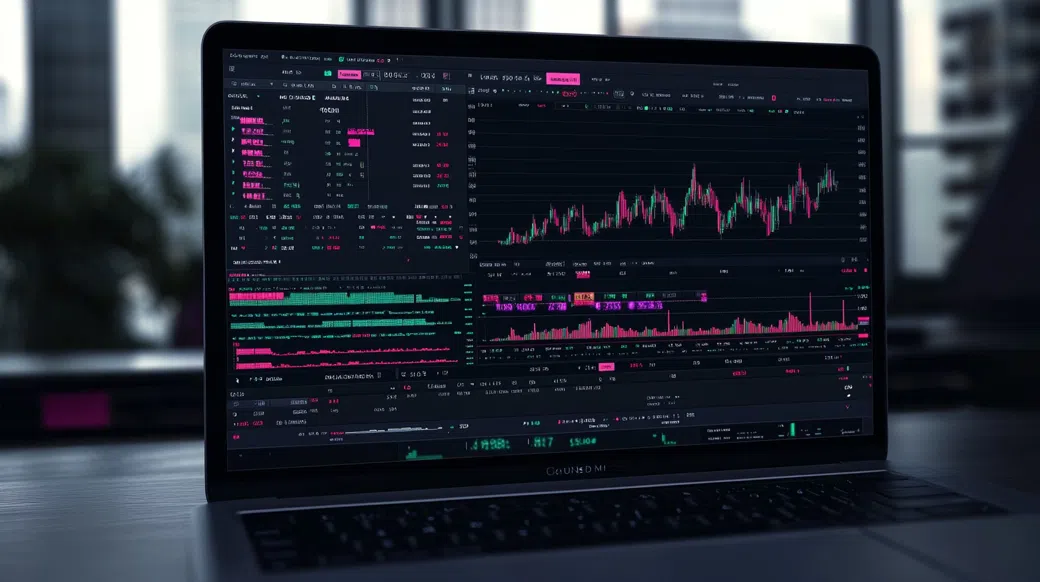
Price action doesn’t care about branding, but your broker’s rulebook absolutely does. From what’s publicly observable for offshore CFD venues, Zware Winstdam sits in that familiar bracket: a CFD-first offering with a proprietary WebTrader, a mobile app, and headline leverage that looks generous on paper. For active traders, that mix can work for basic directional FX and index CFD positioning—until you start pushing size, trading news, or running a systematic playbook that needs tighter execution controls.
That’s where Zware Winstdam alternatives enter the conversation. The decision is rarely about “more instruments” in the abstract; it’s about measurable friction: spreads that don’t fit your strategy, slippage around macro releases, limited order types, and the practicalities of funding/withdrawals and dispute resolution. In US/EU contexts, the regulatory perimeter matters even more because it shapes client money protections, product access, and what recourse exists if something goes wrong.
In this guide I map out the most credible alternatives to the Zware Winstdam trading platform for 2026, with a bias toward verifiable guardrails: Tier-1 regulation (FCA/ASIC/CySEC/NFA), clearer execution disclosures, and platform stacks that can support both discretionary chart work and more structured risk processes. Expect comparisons that emphasize cost-of-trade (spread + commission + swap), not just marketing leverage, because that’s what shows up in your P&L over a month.
Disclaimer: This article is for informational purposes only and does not constitute investment advice. CFDs and other leveraged products can move against you quickly and may result in losses exceeding your deposit.
For a global retail audience, Zware Winstdam presents as an offshore-style CFD broker, commonly associated with a Seychelles FSA framework rather than a major onshore regulator. The product focus typically centers on forex pairs and CFDs on indices, commodities, and crypto, with account terms that appeal to traders chasing leverage (often advertised up to around 1:500). That positioning tends to target newer CFD traders and short-term speculators who want quick onboarding and simple access via web and mobile, rather than portfolio-style investors who need cash equities, futures, or exchange-traded options.
The proprietary WebTrader is built for speed of access: log in, pull up a chart, place a market or pending order, and manage margin from a single dashboard. Charting usually lands in the “basic-to-mid” zone—enough indicators and drawing tools for structure, trendlines, and simple momentum checks, but not the deep customization power users expect from MT4/MT5 or cTrader. Mobile parity is typically decent for monitoring and risk controls (stop-loss/take-profit edits, watchlists), though the workflow can feel cramped when you’re managing multiple correlated positions across FX and index CFDs. This is the lane you’ll see in many platforms like Zware Winstdam: functional, but not built for complex tooling.
Cost-wise, offshore CFD venues often lean on spread-first pricing. A realistic working assumption for EUR/USD on a standard-style account is “from ~2.0 pips,” with financing (swap/overnight fees) applying on held positions and widening spreads during illiquid windows. Some brokers in this segment advertise a “raw” tier—think ~0.0–0.4 pips plus a commission in the neighborhood of $6–$8 round-turn—but the real test is whether execution quality and slippage remain stable when volatility spikes. Minimum deposits in this category are commonly around $250, and you may also see non-trading fees such as withdrawal charges or inactivity rules depending on the payment method and account status.
Switching rarely begins with a single bad trade; it starts when the brokerage plumbing becomes the constraint. Traders comparing Zware Winstdam alternatives are usually reacting to a mismatch between their strategy and the broker’s environment—execution model, funding reliability, product access, or the level of regulatory oversight. If you’re sizing up from “learning mode” to a repeatable process, details like negative balance protection, how margin calls are handled, and whether order fills deteriorate during data releases become non-negotiable.
Think of broker selection as fitting infrastructure to a strategy, not choosing a logo. Your “right” substitute depends on what you trade, how you execute, and what risks you refuse to warehouse (custody, leverage, operational delays). For regulated options vs Zware Winstdam, I focus on the pieces that survive a bad week: money protection, execution transparency, and a platform stack that doesn’t force workarounds.
Start with the regulator’s public register: FCA, ASIC, CySEC, or NFA (for US FX) provide a materially different oversight level than offshore-only setups. Under the FCA, eligible clients may fall under FSCS coverage up to £85,000; under CySEC, the ICF can cover up to €20,000 (eligibility rules apply). Look for segregated client funds language, negative balance protection where mandated, and clear legal entity naming—small details that determine what happens if the broker fails.
Most competitors to Zware Winstdam will cover FX and CFDs, but “multi-asset” isn’t a throwaway term. If you want real stocks/ETFs (not just stock CFDs), exchange-traded futures, or listed options, you’ll typically need a broker built for DMA and exchange connectivity. Map your needs: macro traders often want indices/rates proxies; equity investors need real share ownership; hedgers may require futures or options rather than perpetual CFDs.
Compare round-turn costs, not marketing numbers. A raw account might show a near-zero spread but charge commission; a standard account might bundle everything into a wider spread. Add the quiet leaks: swap/overnight financing, inactivity fees, and currency conversion. If you trade 50 standard lots a month, a 1.0 pip difference on EUR/USD is roughly $500 of friction before slippage—enough to flip a marginal strategy negative.
Platform choice is workflow choice. MT4/MT5 and cTrader support automation, deeper analytics, and broader third-party tooling; proprietary terminals can be clean but limiting. Execution model matters: market maker pricing can be fine for many retail flows, while STP/ECN/DMA setups are often preferred for scalpers sensitive to slippage and latency. If you’re coming from Zware Winstdam, test for fill quality around liquidity events (session opens, CPI/NFP) using small size first.
When something breaks, response time is a trading variable. Check support hours against your active sessions (London/NY overlap is a common stress test), plus language coverage if you’re in the EU. Strong education isn’t “videos”; it’s clear margin policy, transparent fee schedules, and platform documentation. Finally, confirm mobile parity—risk management shouldn’t require a laptop in 2026.
On FX and index CFDs, Zware Winstdam likely provides the core menu: roughly a few dozen FX pairs, a standard spread around ~2.0 pips on EUR/USD, and leverage up to about 1:500. That suits small accounts looking for directional exposure, but it’s not optimized for cost-sensitive strategies where a pip is the difference between “edge” and “noise.” Pepperstone and IC Markets are the kind of top substitutes for Zware Winstdam that active FX traders gravitate toward because they offer MT4/MT5/cTrader, publish clearer pricing structures, and typically provide raw-style accounts where spreads can compress materially (with commission). If your trading involves frequent entries, the consistency of execution and the ability to manage orders with more nuance (partial closes, advanced pending orders, stable VPS/EA workflows) becomes more valuable than simply having higher leverage available.
This is where many platforms like Zware Winstdam hit a ceiling: stock exposure is often delivered as CFDs rather than real share ownership, which means no shareholder rights and costs that can include financing. US/EU traders who actually want to build a portfolio—cash equities, ETFs, bonds, even options—usually step up to multi-asset brokers designed for exchange access. Interactive Brokers (IBKR) is the obvious heavyweight for global stocks/ETFs plus listed options and futures, with a toolset that suits serious risk control and multi-currency accounts. Saxo Bank is another strong alternative to the Zware Winstdam trading platform for investors who want curated multi-asset access with robust reporting and portfolio tools. If your goal is to hedge macro exposure with equity index options or manage a long-only book alongside tactical FX, these brokers cover ground that CFD-first venues rarely match.
Crypto at offshore CFD brokers is typically “price exposure,” not on-chain ownership—meaning you’re trading a derivative whose risks include funding costs, weekend liquidity gaps, and platform-specific pricing. Zware Winstdam likely offers a limited set of crypto CFDs (think major coins rather than the long tail), which can be adequate for short-term tactical views but less compelling for investors who want custody choices or spot-market transparency. For regulated options vs Zware Winstdam, IG and Plus500 are commonly used in regions where crypto CFDs are permitted because they wrap that exposure inside established compliance frameworks and familiar risk controls. The practical advice is simple: treat crypto CFDs as high-volatility leveraged instruments, size down, and monitor margin closely—liquidations happen faster than most traders expect when volatility regimes shift.
Regulation: SEC/FINRA (US), FCA (UK), IIROC (Canada)
Markets: Stocks, ETFs, options, futures, FX, bonds, funds
Fees: Varies by product and venue; FX pricing is typically commission-based with tight spreads; market data and exchange fees may apply
Platform: Trader Workstation (TWS), IBKR Desktop/Mobile, Client Portal APIs
Best For: Multi-asset traders who want exchange access and pro-grade risk controls
Regulation: FCA (UK), ASIC (Australia), CySEC (EU), DFSA (UAE)
Markets: FX and CFDs (indices, commodities, some crypto CFDs where permitted)
Fees: EUR/USD often ~0.0–0.3 pips plus commission on Razor/Raw-style pricing; wider all-in spreads on Standard-style pricing
Platform: MT4, MT5, cTrader
Best For: Cost-aware FX traders running systematic or high-frequency-style workflows
Regulation: FCA (UK), MAS (Singapore), DFSA (UAE)
Markets: Stocks, ETFs, options, futures, FX, bonds, CFDs
Fees: Pricing varies by tier and product; FX spreads are typically competitive on major pairs; commissions apply on exchange-traded products
Platform: SaxoTraderGO, SaxoTraderPRO
Best For: Portfolio-style traders who want strong reporting plus broad global market coverage
Regulation: ASIC (Australia), CySEC (EU), FSA Seychelles (group-level)
Markets: FX and CFDs (indices, commodities, some crypto CFDs where permitted)
Fees: EUR/USD commonly ~0.0–0.2 pips plus commission on Raw pricing; Standard accounts typically higher all-in spread
Platform: MT4, MT5, cTrader
Best For: Scalpers who prioritize tight pricing and fast execution on majors
Regulation: FCA (UK), ASIC (Australia), MAS (Singapore)
Markets: CFDs (FX, indices, commodities, shares), spread betting (UK), some crypto CFDs where permitted
Fees: Costs typically embedded in spread for many CFD markets; overnight financing applies on held positions
Platform: IG web platform, mobile app (MT4 available in many regions)
Best For: Macro traders who want broad CFD coverage and robust risk tools
Regulation: FCA (UK), CySEC (EU), ASIC (Australia), MAS (Singapore)
Markets: CFDs (FX, indices, commodities, shares), some crypto CFDs where permitted
Fees: Spread-based pricing; financing charges (swap/overnight) apply; additional fees can apply depending on funding/activity rules
Platform: Plus500 proprietary WebTrader and mobile app
Best For: Newer CFD traders who want a simple interface over complex tooling
| Platform | Regulation | Main Markets | Typical Costs | Best For |
|---|---|---|---|---|
| Interactive Brokers (IBKR) | SEC/FINRA, FCA, IIROC | Stocks/ETFs, options, futures, FX, bonds | Product-based pricing; FX usually commission + tight spread; exchange/data fees may apply | Multi-asset traders who want exchange access and pro-grade risk controls |
| Pepperstone | FCA, ASIC, CySEC, DFSA | FX + CFDs (indices/commodities; crypto CFDs where allowed) | Raw: ~0.0–0.3 pips + commission; Standard: wider all-in spreads | Cost-aware FX traders running systematic or high-frequency-style workflows |
| Saxo Bank | FCA, MAS, DFSA | Stocks/ETFs, options, futures, FX, bonds, CFDs | Tiered pricing; commissions on exchanges; competitive FX on majors | Portfolio-style traders who want strong reporting plus broad global market coverage |
| IC Markets | ASIC, CySEC (plus FSA Seychelles group-level) | FX + CFDs (indices/commodities; crypto CFDs where allowed) | Raw: ~0.0–0.2 pips + commission; Standard: higher spread | Scalpers who prioritize tight pricing and fast execution on majors |
| IG | FCA, ASIC, MAS | CFDs across FX/indices/commodities/shares; spread betting (UK) | Mostly spread-based; financing on held CFD positions | Macro traders who want broad CFD coverage and robust risk tools |
| Plus500 | FCA, CySEC, ASIC, MAS | CFDs across FX/indices/commodities/shares; crypto CFDs where allowed | Spread-based; overnight fees apply; other charges depend on account activity/funding method | Newer CFD traders who want a simple interface over complex tooling |
A broker change is a process trade: reduce operational risk first, then worry about features. The clean sequence is to validate the new venue’s legal entity, get KYC done, and only then unwind exposure and cash management from the old account. Don’t rush this—leverage amplifies not just market risk, but also the damage from mistakes in withdrawals, margin settings, or platform configuration. If you’re migrating from Zware Winstdam, plan for a few business days of overlap.
If you’re still evaluating your options, review current onboarding steps, funding methods, and regional eligibility before committing capital. Compare the platform stack (WebTrader vs MT4/MT5/cTrader) and the real all-in costs on your most traded markets, then decide where the execution and protections fit your risk budget.
Visit Zware WinstdamThe best option depends on whether you’re optimizing for multi-asset access or FX/CFD execution. For global stocks/ETFs plus options and futures, Interactive Brokers (IBKR) is hard to beat; for FX traders focused on tight pricing and MT4/MT5/cTrader workflows, Pepperstone and IC Markets are frequently stronger fits. If your priority is broad CFD coverage with robust risk tooling, IG is a common pick among the best Zware Winstdam alternatives 2026.
Zware Winstdam appears to operate under an offshore regulatory framework (commonly associated with Seychelles FSA-style oversight) rather than Tier-1 regulators like the FCA, ASIC, CySEC, or NFA. That doesn’t automatically mean it’s unusable, but the investor-protection toolkit is usually thinner than onshore regimes (for example, compensation schemes like FSCS/ICF are tied to specific regulators and eligibility rules). For many traders, that’s the core reason regulated options vs Zware Winstdam become attractive when account size and trade frequency increase.
Zware Winstdam is typically positioned around forex and CFDs, with crypto often offered as crypto CFDs rather than on-chain ownership. Stock/ETF access, when present, is commonly CFD-based; listed futures are more often found at multi-asset brokers than at offshore CFD-first venues. Traders who need real stocks/ETFs or exchange-traded futures generally look at brokers similar to Zware Winstdam only for CFDs, and use IBKR or Saxo Bank for the broader book.
Before switching, verify the new broker’s legal entity on the regulator’s register, then complete KYC so you’re not stuck mid-withdrawal. Next, compare all-in costs on your key markets (spread + commission + swap) and test execution with small size to see how slippage behaves around volatile sessions. Finally, confirm funding/withdrawal rails and margin policies so your move from Zware Winstdam alternatives is operationally smooth.
About the Author: Daniel Okafor is a derivatives trader turned market analyst based in Singapore, focused on APAC brokerages and global macro linkages. He evaluates platforms the way traders actually experience them—through execution, cost-of-trade, and risk controls—then lets the charts do the talking.