Zlaturna Aktivník Alternatives 2026: Best Trading Platforms
Compare Zlaturna Aktivník alternatives for 2026—regulated brokers, fees, platforms, and safety checks—so you can switch to a more reliable trading setup.

Compare Zlaturna Aktivník alternatives for 2026—regulated brokers, fees, platforms, and safety checks—so you can switch to a more reliable trading setup.
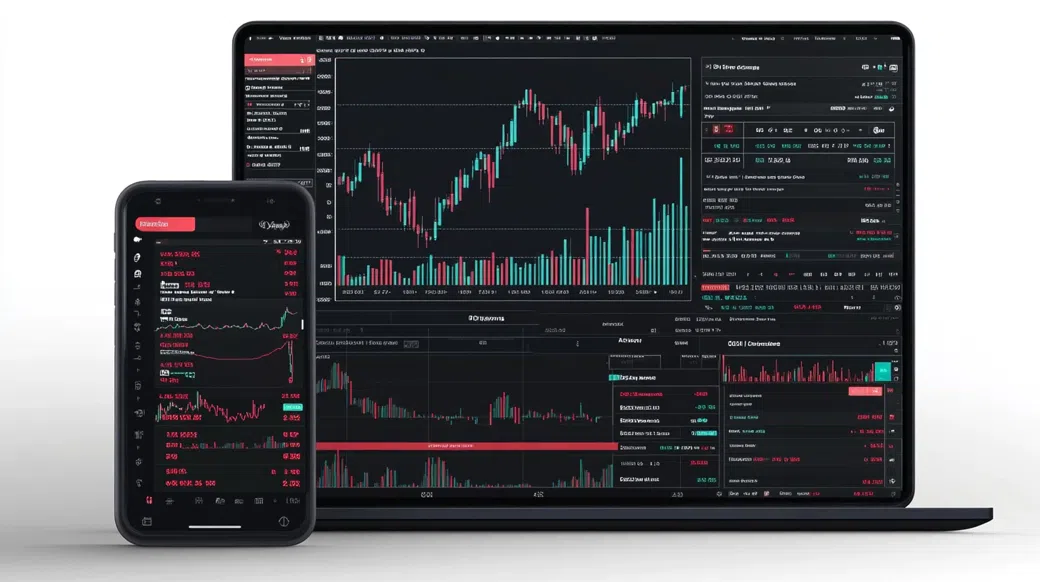
From a Singapore desk, I look at brokers the way I used to look at options chains: structure first, stories second. In that spirit, Zlaturna Aktivník reads like a lightweight, broker-led web platform typically associated with retail Forex/CFD flows rather than a full multi-asset stack. Traders usually start searching for Zlaturna Aktivník alternatives when they hit the practical friction points—thin tooling, unclear protections, and execution that’s hard to verify. This guide is built for a global audience with a US/EU lens: it focuses on regulated venues, transparent pricing, and platforms with institutional-grade charting and order controls. If you’re evaluating the Zlaturna Aktivník trading platform alternatives 2026 list, treat this as a due-diligence map: what to compare, what to avoid, and where the real, regulated options tend to sit.
Disclaimer: This article is for informational purposes only and does not constitute investment advice. Trading leveraged products carries a high level of risk.
Zlaturna Aktivník appears to be positioned as a retail trading venue centered on Forex and CFDs. Where hard, verifiable broker data isn’t publicly available, I apply baseline assumptions commonly seen in the market: Unregulated or Offshore (High Risk) operating model, a Proprietary Web Trader (Basic) platform layer, and pricing that tends to be floating from ~2.0 pips on major FX pairs (before considering any financing or non-trading fees). Those assumptions don’t automatically mean a platform is illegitimate—but they do raise the bar for your verification work, especially if you’re comparing competitors to Zlaturna Aktivník that sit under top-tier supervision in the US/EU.
Functionally, a basic proprietary web trader usually covers the essentials: market/limit orders, simple watchlists, and a chart package that’s adequate for discretionary setups but light on depth. Expect standard indicators, basic drawing tools, and a clean interface designed for quick onboarding rather than advanced workflow. The typical gap—why traders look at top substitutes for Zlaturna Aktivník—is the absence of an ecosystem: limited third-party tooling, fewer automation options (EAs/algos), and less granular execution control (partial fills, advanced order types, or transparent slippage reporting). For chart-first traders, this matters: your edge often lives in repeatable process, and repeatability improves when the platform supports templates, robust alerts, and exportable history.
Using industry-standard baselines when specifics are not confirmed, costs typically show up as: floating spreads from ~2.0 pips on FX, overnight financing/rollover on leveraged CFDs, and potential admin fees (inactivity, withdrawals, or conversion). Account tiers—if offered—often bundle “better spreads” with higher deposit requirements, but the true all-in cost depends on execution quality and financing rates, not marketing labels. This is a core driver behind Zlaturna Aktivník alternatives: traders want transparent fee schedules, audited best-execution style reporting (where applicable), and clear product documents that explain how CFDs are priced and hedged.
Most switching decisions are less about “liking a platform” and more about risk control and operational certainty. If you’re weighing brokers similar to Zlaturna Aktivník, the question is: does the setup support your strategy and protect you when markets gap, volatility spikes, or you need your capital back on schedule? In my experience, the reasons cluster into a few repeat offenders.
Choosing among Zlaturna Aktivník alternatives is not about finding the “tightest spread” on a landing page. It’s a multi-factor decision: entity-level regulation, product structure (CFD vs underlying), cost transparency, and the trading stack you’ll actually use day-to-day. Here’s the framework I use when screening platforms like Zlaturna Aktivník for US/EU-oriented readers.
Start with the legal entity that will hold your account and your exact jurisdiction. Look for top-tier regulators (for example, the UK’s FCA, Germany’s BaFin, Cyprus’ CySEC under MiFID rules, Australia’s ASIC, Singapore’s MAS, or the US CFTC/NFA for derivatives). Confirm the license number on the regulator’s register, then match it to the broker’s entity name—don’t rely on logos. Stronger setups typically include client money segregation rules, negative balance protection (jurisdiction-dependent), and clear complaints escalation paths. If your baseline assumption for Zlaturna Aktivník is “unregulated or offshore,” that alone can justify moving to regulated options vs Zlaturna Aktivník.
Map instruments to your strategy: FX majors/minors, equity indices, commodities, rates, single-stock CFDs, or real shares/ETFs. If you need portfolio building, prioritize brokers that offer cash equities and ETFs (not only CFDs). If you need active macro expression, make sure the index/commodity suite is liquid and the trading hours align with your session. US clients face tighter rules on CFDs (often not permitted), so “broker availability” is a hard constraint—not a preference.
Compare all-in costs: typical spreads during liquid hours, commission (if any), and overnight financing. For CFDs, financing is often the silent P&L leak. Also check non-trading fees: withdrawals, inactivity, FX conversion, and guaranteed stop premiums (if offered). If you can’t verify Zlaturna Aktivník’s schedule line-by-line, treat any comparison as a baseline assumption and give more weight to brokers with published, jurisdiction-specific cost disclosures.
If your process is chart-led, platform matters: MT4/MT5 and cTrader support, depth-of-market (where relevant), advanced order types, stable mobile apps, and dependable alerts. Execution quality is harder: look for clear execution policies, slippage disclosures, and whether the broker offers STP/ECN-style accounts (not as a guarantee of “better,” but as a transparency signal). Many alternatives to the Zlaturna Aktivník trading platform are compelling primarily because they offer mature platforms and better workflow.
Test support like you’d test latency: ask a specific question about fees, entity regulation, or product specs and see if the answer is precise. For beginners, structured education helps—but for active traders, what matters is operational competence: funding methods, withdrawal timelines, platform stability, and clear incident communication during volatility events.
Based on baseline assumptions, Zlaturna Aktivník is mainly a Forex/CFD venue. That can work if your goal is tactical exposure to majors (EUR/USD, USD/JPY), indices (S&P 500, DAX), or commodities (gold, oil) with leverage. The trade-off is that CFD trading concentrates risk in three places: (1) execution and slippage during fast markets, (2) financing costs for holds beyond intraday, and (3) counterparty and jurisdiction risk if the broker is unregulated/offshore. This is where Zlaturna Aktivník alternatives under stronger oversight tend to win: tighter disclosure standards, more predictable operational processes, and usually better platform choice (MT5/cTrader). If you’re seeing spreads that behave like “floating from ~2.0 pips” even in liquid sessions, or you can’t reconcile fills with market conditions, that’s a strong signal to compare competitors to Zlaturna Aktivník more aggressively.
For stocks and ETFs, the key question is whether you’re getting real ownership (cash equities/ETFs) or a derivative wrapper (stock/ETF CFDs). Under the baseline profile (Forex/CFD-centric), access to real shares/ETFs may be limited or unavailable, and any equity exposure may come via CFDs. That matters for US/EU investors who want transparent custody, corporate actions handling, and long-term portfolio construction. Many platforms like Zlaturna Aktivník are optimized for short-horizon speculation; the best Zlaturna Aktivník alternatives 2026 list often includes brokers that offer both: real shares/ETFs for investing and CFDs for hedging/tactical trades (where permitted).
Crypto access is highly jurisdiction-dependent. If offered by a CFD-style venue, it may be crypto CFDs rather than spot coins—meaning you’re trading price exposure, not holding assets on-chain. That can be appropriate for short-term trading but adds financing costs and counterparty exposure. In the US, access is typically via regulated exchanges or futures venues rather than retail crypto CFDs. For EU/UK users, the safer route is to use well-regulated brokers/exchanges with clear custody and risk disclosures. If your motivation for switching is crypto access, treat “brokers similar to Zlaturna Aktivník” with caution and prioritize regulated options vs Zlaturna Aktivník that publish clear product documentation and jurisdictional restrictions.
Regulation: IG operates through regulated entities in multiple jurisdictions (commonly including FCA in the UK and other top-tier regulators depending on your region). Always verify the specific entity you onboard with.
Markets: Broad multi-asset offering typically spanning FX, indices, commodities, shares (often via CFDs and/or dealing), and rates products (availability varies by jurisdiction).
Fees: Transparent schedules; costs generally include spreads (and commissions on some products), plus financing on leveraged positions.
Platform: Robust proprietary web/mobile tools; often supports MT4 in many regions.
Best For: Traders who want a mature, regulated setup and a wide product shelf—one of the more credible Zlaturna Aktivník alternatives for active macro trading.
Regulation: Saxo operates under recognized regulators (commonly in the EU/UK/Asia depending on entity). Confirm your local entity and protections.
Markets: Strong multi-asset access—often including FX, CFDs, stocks, ETFs, bonds, and listed derivatives in many regions (product access depends on jurisdiction and account type).
Fees: Tiered pricing typical; commissions apply on cash equities/ETFs; spreads/financing apply on leveraged products.
Platform: SaxoTraderGO/PRO with deep charting and portfolio tools.
Best For: Multi-asset traders who want an “invest + trade” stack rather than a basic CFD-only experience—an excellent alternative to the Zlaturna Aktivník trading platform for serious allocation.
Regulation: Interactive Brokers operates via regulated entities (including US oversight for relevant products; EU/UK entities for European clients). Protections vary by entity and product.
Markets: Very broad access to global stocks, ETFs, options, futures, FX, and more (subject to permissions and jurisdiction).
Fees: Typically commission-based for many instruments; competitive for active traders; market data fees may apply depending on subscriptions.
Platform: Trader Workstation (TWS), web/mobile; strong APIs for systematic workflows.
Best For: Active and professional-style traders who need global market access and advanced tooling—often the “upgrade path” when comparing competitors to Zlaturna Aktivník.
Regulation: Commonly regulated in major jurisdictions (for example, FCA in the UK; other entities region-dependent). Verify your onboarding entity.
Markets: Strong CFD lineup typically across FX, indices, commodities, treasuries/rates, and shares (availability varies).
Fees: Spreads on many CFD products; some accounts may offer commission + lower spreads. Financing applies to holds.
Platform: Next Generation platform with strong charting and pattern tools; MT4 often available in many regions.
Best For: Chart-driven CFD traders who want a more feature-rich platform—one of the best Zlaturna Aktivník alternatives 2026 for technical execution.
Regulation: Operates through regulated entities in several jurisdictions (including US for FX brokerage; other regions via local regulators). Confirm product availability by location.
Markets: Primarily FX, with CFDs in certain jurisdictions; product range depends on region.
Fees: Typically spread-based pricing with potential commission options in some regions/account types; financing on leveraged positions.
Platform: OANDA web/mobile plus MT4 integration in many regions; strong data and API reputation.
Best For: FX-focused traders who value regulatory clarity and dependable infrastructure—solid among Zlaturna Aktivník alternatives for currency execution.
Regulation: Operates via regulated entities (commonly ASIC in Australia, FCA in the UK, and other regulators depending on region). Always verify the entity and client protections.
Markets: FX and CFDs across indices/commodities/crypto CFDs in some jurisdictions (product availability varies).
Fees: Often offers two pricing styles: spread-only or commission + lower spreads (typical industry approach). Financing applies.
Platform: MT4/MT5 and cTrader in many regions; suitable for algos and scalping-style workflows (subject to terms).
Best For: Traders prioritizing third-party platforms and execution tooling—one of the top substitutes for Zlaturna Aktivník if you want MT5/cTrader.
| Platform | Regulation | Main Markets | Typical Costs | Best For |
|---|---|---|---|---|
| IG | Multi-jurisdiction (e.g., FCA and others by entity) | FX, indices, commodities, shares (CFDs/other, region-dependent) | Spreads; commissions on some products; financing on leverage | All-round regulated trading with broad market access |
| Saxo | Multi-jurisdiction regulated (entity-dependent) | Multi-asset (often stocks/ETFs + FX/CFDs; region-dependent) | Commissions on cash equities/ETFs; spreads/financing on leverage | Investing + active trading in one platform |
| Interactive Brokers | US/EU/UK regulated entities (entity-dependent) | Global stocks/ETFs, options, futures, FX, more | Commissions; possible market data fees; financing on margin | Advanced traders needing global access and powerful tools |
| CMC Markets | Multi-jurisdiction (e.g., FCA and others by entity) | CFDs: FX, indices, commodities, shares (region-dependent) | Spreads; some accounts commission-based; financing on holds | Technical CFD traders who want rich charting |
| OANDA | Regulated entities (including US for FX; region-dependent) | FX (core), CFDs in some jurisdictions | Spread-based (and possible commission options); financing on leverage | FX-first traders who value infrastructure and oversight |
| pepperstone | Regulated entities (e.g., ASIC/FCA; region-dependent) | FX and CFDs (indices/commodities/crypto CFDs in some regions) | Spread-only or commission + lower spreads; financing on holds | MT4/MT5/cTrader users and systematic traders |
Operational risk is real: the biggest losses I’ve seen outside the charts come from sloppy transitions—poor record-keeping, unmanaged exposure, or rushed funding decisions. If you’re moving to Zlaturna Aktivník alternatives, treat the switch like a controlled migration, not an emotional exit.
The “best” choice depends on what you trade and your jurisdiction, but for many EU/UK-focused traders, IG, CMC Markets, and Saxo stand out among Zlaturna Aktivník alternatives due to stronger regulation, clearer disclosures, and more capable platforms. For US/global multi-asset access (stocks, options, futures), Interactive Brokers is often the benchmark—especially if you’ve outgrown a basic web trader workflow.
Safety is primarily about verifiable regulation, entity transparency, and investor protection mechanisms. If you cannot independently confirm licensing and jurisdictional protections for Zlaturna Aktivník, it’s prudent to treat it as higher risk (often consistent with an unregulated/offshore baseline) and compare regulated options vs Zlaturna Aktivník where client money rules and dispute processes are clearer.
Using baseline assumptions (typical of smaller retail CFD venues), Zlaturna Aktivník is primarily focused on Forex and CFDs. Stock/ETF exposure—if offered—may be via CFDs rather than real shares, and futures access is often limited or unavailable on basic proprietary platforms. Crypto access, if present, is commonly via crypto CFDs and is heavily jurisdiction-dependent. If you need real stocks/ETFs or listed futures/options, you’ll generally find better fit with competitors to Zlaturna Aktivník such as Interactive Brokers or Saxo (subject to eligibility and region).
Check (1) the new broker’s exact regulated entity and your protections, (2) product structure (CFDs vs underlying assets), (3) all-in costs including financing and non-trading fees, (4) platform fit (MT5/cTrader/API, order types, stability), and (5) operational reliability via a small deposit-and-withdrawal test. Doing this systematically is the difference between “switching brokers” and actually upgrading your trading process—especially when evaluating Zlaturna Aktivník alternatives.