Wolf Vermohof Trading Platform Alternatives 2026
Compare Wolf Vermohof alternatives for 2026—regulated brokers, platforms, fees, and safety checks. Find reliable options for FX, CFDs, and more.

Compare Wolf Vermohof alternatives for 2026—regulated brokers, platforms, fees, and safety checks. Find reliable options for FX, CFDs, and more.
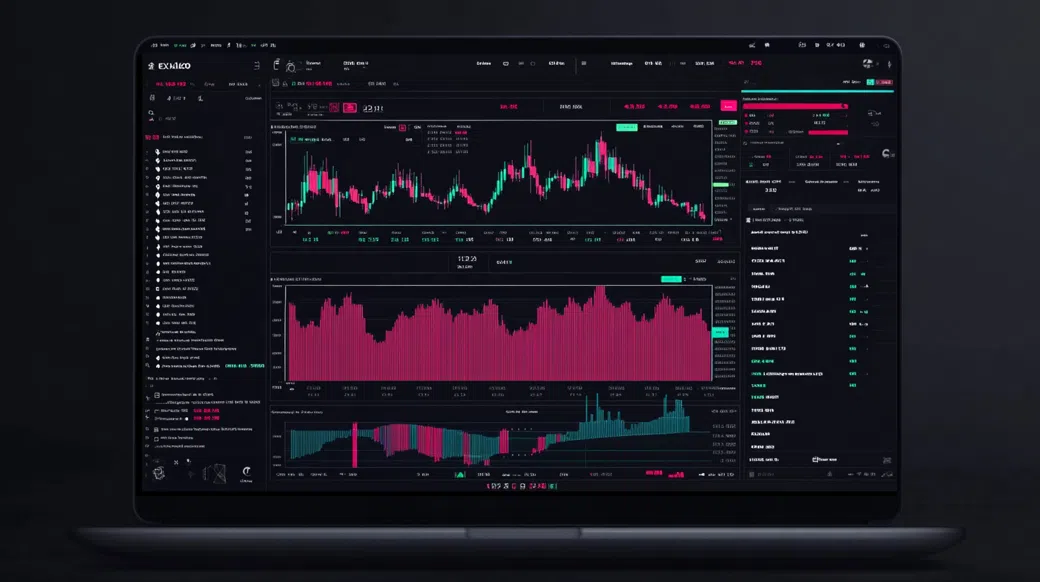
Spreads and execution decide more P&L than most people admit. That’s why the conversation around Wolf Vermohof isn’t really about branding—it’s about what sits behind the ticket: regulation, order handling, and whether you can run your process without friction. From what’s publicly observable for offshore CFD-first providers, Wolf Vermohof appears positioned as a forex/CFD venue with a proprietary WebTrader plus mobile apps, headline leverage that can run as high as 1:500, and a retail-friendly entry point (often around a $250 minimum deposit). Typical EUR/USD pricing in this bracket tends to land near ~2.0 pips on a standard-style account, with “raw” style pricing sometimes offered via commissions.
For some traders, that setup is adequate for small-size discretionary trading. For others—especially anyone who cares about audited oversight, predictable withdrawals, or platform depth—it’s a reason to keep a shortlist of Wolf Vermohof alternatives. 2026 is also shaping up to be a year where macro volatility (rates, geopolitics, commodity shocks) punishes weak execution: slippage grows, margin calls come faster, and broker reliability stops being an academic concern.
Disclaimer: This article is for informational purposes only and does not constitute investment advice. CFDs and other leveraged products carry a high risk of loss, and you can lose more quickly than expected if leverage is misused.
Across brokers similar to Wolf Vermohof, the operating blueprint is usually CFD-centric: forex pairs, major indices, a handful of commodities, and crypto CFDs, delivered via a proprietary front end. Wolf Vermohof appears to fit that mold, with an offshore regulatory posture commonly associated with the Seychelles FSA, and a product set aimed at retail traders who prioritise access and leverage over deep market structure. The U.S. is typically off-limits for this category, and other restricted or sanctioned jurisdictions are often excluded as well. That context matters, because your legal protections, dispute pathways, and even how client funds are handled can differ sharply from FCA/ASIC/CySEC-supervised firms.
The WebTrader experience in this segment tends to be functional rather than institutional: enough charting to place trades and track risk, but not always enough to run a research-heavy workflow. Expect the basics—multiple timeframes, a modest indicator library, standard drawing tools, and one-click trading—plus a mobile app that mirrors the core ticket and watchlist. Where advanced traders feel the ceiling is in order control and analytics: fewer conditional order types, limited depth-of-market cues, and less transparency around execution quality in volatile bursts. The account dashboard is usually straightforward (deposits, withdrawals, open positions), but the real test is how stable the platform feels when spreads widen and the tape accelerates.
Cost is typically packaged in tiers. A standard-style account often shows EUR/USD “from” pricing that, in practice, sits around ~2.0 pips in normal liquidity. Some brokers in this bracket also advertise a raw/ECN-style option, where spreads can compress toward 0.0–0.4 pips but a round-turn commission (often in the $5–$8 range per lot) does the real charging. Swing traders should pay attention to swap/overnight financing—those fees can eclipse spreads over time—while inactive accounts sometimes attract administrative charges. Withdrawal costs and processing speed vary widely among competitors to Wolf Vermohof, and those are rarely obvious until you test a small cash-out.
Leverage is the headline; trust is the deciding variable. In my experience, people begin hunting for Wolf Vermohof alternatives when the platform stops matching the strategy—either because execution quality is inconsistent during news-driven volatility, or because the account setup doesn’t provide the protections you’d expect from top-tier oversight. Another common catalyst is cost discovery: a trader runs the math on round-turn spreads/commissions and realises the “cheap” account isn’t cheap at their monthly volume. And then there’s the practical stuff—withdrawals, KYC friction, regional restrictions—that turns a trading plan into an operational headache.
Pick the broker the way you’d size a trade: define risk first, then optimise for cost and tooling. For alternatives to the Wolf Vermohof trading platform, I start with “What happens in a bad week?”—a gap open, a platform outage, a margin call cascade. From there, regulation, money handling, and execution model matter more than marketing. Only after that do I care about spreads, platforms, and extras.
FCA, ASIC, CySEC, and NFA/CFTC supervision changes the whole contract between client and broker: capital requirements, conduct rules, and enforcement power. In the UK, eligible clients may fall under FSCS protection up to £85,000; in Cyprus, the ICF framework can cover up to €20,000 for eligible retail clients. Look for segregated client funds as a baseline expectation, then confirm the broker’s legal entity on the regulator’s public register. “Regulated options vs Wolf Vermohof” isn’t a slogan—it’s about which rulebook governs your account when something goes wrong.
Match the venue to the instrument, not the other way around. If you only trade major FX and index CFDs, a specialist with tight pricing can be enough. If your playbook includes macro hedges—Treasury futures, equity options, or multi-currency cash management—you’ll want a true multi-asset broker with exchange access. Be precise about the difference between owning stocks/ETFs (with shareholder rights) versus trading CFDs on them (no ownership, different fees, different risk). That distinction alone separates many platforms like Wolf Vermohof from institutional-grade alternatives.
Spreads are only the first line item. The clean comparison is round-turn cost: spread plus commission for your typical trade size, plus the average slippage you observe in fast markets. Add swap/overnight fees if you hold for days, and check non-trading charges such as inactivity or withdrawal fees. A scalper doing 200 round turns a month will feel a 0.5 pip difference immediately; a swing trader might care more about financing rates and execution at the stop-out point.
Platform choice is a strategy choice. MT4/MT5 remain common for EAs and indicator ecosystems; cTrader is popular with traders who care about depth-of-market and modern order tickets; proprietary platforms vary from excellent to barebones. Execution model matters: market maker setups can be fine for small tickets, while STP/ECN/DMA-style routing is often preferred when you’re sensitive to requotes and want clearer execution logic. If you’re coming from Wolf Vermohof, run a small live test and measure fill quality around liquid sessions (London/NY overlap) before scaling.
Operational reliability is underrated until it’s not. Check support hours against your trading window, whether tickets are handled in your language, and how fast you get a human during a margin event. Education only counts if it’s specific—platform walkthroughs, risk modules, market research that goes beyond headlines. Finally, mobile parity matters more than most admit: if the app can’t manage stops and alerts cleanly, you’re flying half-blind when volatility hits outside your desk hours.
On paper, the Wolf Vermohof-style offering is familiar: roughly a few dozen FX pairs, a shortlist of indices, and a small commodities menu—enough to trade majors and the headline macro instruments. The pressure point is usually cost and execution consistency. A typical ~2.0 pip EUR/USD spread is workable for low frequency, but it becomes a tax on any high-turnover approach. Regulated FX/CFD specialists like Pepperstone and IC Markets are often built for tighter pricing via Raw-style accounts (spread + commission), and they tend to provide MT4/MT5/cTrader stacks that suit systematic workflows. The second difference is risk controls: negative balance protection and clearer margin policies are more standard under FCA/CySEC-style regimes than in offshore setups. If your strategy lives or dies by stops, treat execution quality as a first-class requirement, not a “nice to have.”
This is where many traders feel the gap fastest. Brokers in the offshore CFD bracket often present “stocks” as CFDs rather than real share dealing, which means no shareholder rights, different financing costs, and sometimes thinner liquidity on the broker’s internal pricing. If your goal is portfolio exposure—owning US/EU equities, buying ETFs, or running factor tilts—Interactive Brokers and Saxo Bank are closer to what you want: broad exchange access, proper stock/ETF custody (where available), and a deeper product shelf that can include options and futures. Even for active traders, DMA-style access and better corporate action handling can be worth more than a few headline pips. For investors comparing top substitutes for Wolf Vermohof, the question is simple: do you want a contract (CFD) or the underlying asset?
Crypto exposure on CFD-first platforms is typically delivered as crypto CFDs—price speculation rather than on-chain ownership. That can be fine if you’re trading momentum with tight risk, but it won’t let you withdraw coins to a wallet, and financing/spread costs can be meaningful during weekend volatility. For traders who want regulated derivatives-style exposure, IG and Plus500 offer crypto CFDs in jurisdictions where permitted, inside a more established compliance framework. The practical benefit isn’t just “safety” in the abstract; it’s clearer KYC/AML processes, more predictable platform governance, and fewer surprises around trade restrictions during stress. If crypto is a side pocket within a broader macro book, pairing it with a regulated CFD venue also keeps your reporting and risk controls cleaner.
Regulation: SEC/FINRA (US), FCA (UK), IIROC (Canada) via relevant entities
Markets: Stocks, ETFs, options, futures, FX, bonds, funds (product access varies by region)
Fees: FX spreads often competitive with commission-based pricing; equities typically low per-share/per-order commissions depending on venue
Platform: Trader Workstation (TWS), IBKR Mobile, Client Portal, API access
Best For: Macro multi-asset traders who want exchange access
Regulation: FCA (UK), ASIC (Australia), CySEC (Cyprus), DFSA (Dubai)
Markets: FX and CFDs (indices, commodities, some shares as CFDs depending on entity)
Fees: Standard spreads commonly around ~1.0+ pip on EUR/USD; Raw-style pricing often ~0.0–0.3 pips + commission (varies by platform/entity)
Platform: MT4, MT5, cTrader, TradingView integration (where offered)
Best For: Systematic FX traders using MT4/MT5 or cTrader
Regulation: FCA (UK), MAS (Singapore), DFSA (Dubai) via relevant entities
Markets: Stocks, ETFs, options, futures, FX, bonds, CFDs (availability depends on jurisdiction)
Fees: FX spreads typically tiered by account level; broader investing fees depend on exchange and product
Platform: SaxoTraderGO, SaxoTraderPRO
Best For: Investors who want curated research and multi-asset depth
Regulation: FCA (UK), ASIC (Australia), MAS (Singapore)
Markets: CFDs (FX, indices, commodities, shares), spread betting (UK/IE), limited crypto CFDs where permitted
Fees: Costs are usually spread-led on CFDs; typical EUR/USD spreads often around ~0.6–1.0+ pips depending on conditions
Platform: IG proprietary platform, MT4 (in supported regions)
Best For: Active CFD traders who value a long operating track record
Regulation: ASIC (Australia), CySEC (Cyprus), FSA Seychelles (group-level)
Markets: FX and CFDs (indices, commodities, crypto CFDs where permitted)
Fees: Raw-style accounts often near ~0.0–0.3 pips on EUR/USD + commission; Standard accounts commonly ~0.8–1.2+ pips (varies by entity)
Platform: MT4, MT5, cTrader
Best For: Scalpers prioritising low spreads and fast execution
Regulation: FCA (UK), CySEC (Cyprus), ASIC (Australia), MAS (Singapore)
Markets: CFDs (FX, indices, commodities, shares), crypto CFDs where permitted
Fees: Primarily spread-based; EUR/USD spreads often around ~0.6–1.2+ pips depending on market conditions
Platform: Plus500 proprietary WebTrader and mobile app
Best For: Beginners who want a simple, app-first CFD interface
| Platform | Regulation | Main Markets | Typical Costs | Best For |
|---|---|---|---|---|
| Interactive Brokers (IBKR) | SEC/FINRA, FCA, IIROC (entity-dependent) | Real stocks/ETFs, options, futures, FX, bonds | Commission-based; FX generally tight vs retail CFD venues | Macro multi-asset traders who want exchange access |
| Pepperstone | FCA, ASIC, CySEC, DFSA | FX + CFDs | Raw ~0.0–0.3 pips + commission; Standard ~1.0+ pip | Systematic FX traders using MT4/MT5 or cTrader |
| Saxo Bank | FCA, MAS, DFSA (entity-dependent) | Multi-asset: stocks/ETFs, options, futures, FX, CFDs | Tiered FX pricing; investing fees vary by exchange/product | Investors who want curated research and multi-asset depth |
| IG | FCA, ASIC, MAS | CFDs + (UK) spread betting; crypto CFDs where allowed | Mostly spread-led; EUR/USD often ~0.6–1.0+ pips | Active CFD traders who value a long operating track record |
| IC Markets | ASIC, CySEC, FSA Seychelles (group-level) | FX + CFDs (incl. crypto CFDs where permitted) | Raw ~0.0–0.3 pips + commission; Standard ~0.8–1.2+ pips | Scalpers prioritising low spreads and fast execution |
| Plus500 | FCA, CySEC, ASIC, MAS | CFDs (multi-asset list; no exchange ownership) | Spread-based; EUR/USD often ~0.6–1.2+ pips | Beginners who want a simple, app-first CFD interface |
Switching brokers is less about “opening a new account” and more about controlling operational risk while your capital is in transit. Treat the move like a planned rollover: reduce exposure, secure records, and test the new venue under real conditions before you size up. If you’re migrating away from Wolf Vermohof, remember that leverage can magnify small execution differences into large equity swings—keep risk small until the new setup proves itself.
If you’re still evaluating whether the current setup fits your trading plan, review the latest onboarding flow, product list, and trading conditions for your region. Then compare those details against the regulated brokers above—especially platform stack, costs, and withdrawal handling—before committing meaningful capital.
Visit Wolf VermohofThe best alternative depends on whether you need exchange-traded markets or mainly FX/CFDs. For broad US/EU access to stocks, ETFs, options, and futures, Interactive Brokers is hard to ignore; for FX/CFD execution with MT4/MT5/cTrader, Pepperstone and IC Markets are common picks. If you want a simpler CFD-only experience under top-tier regulation, IG or Plus500 can be a cleaner fit than many offshore venues. Those are, in my view, the best Wolf Vermohof alternatives 2026 for most retail traders.
Wolf Vermohof appears to operate under an offshore framework commonly associated with the Seychelles FSA category of providers, which generally offers fewer investor-protection mechanisms than FCA/ASIC/CySEC regimes. That doesn’t automatically mean “unsafe,” but it does mean you should be more demanding on withdrawals, client-money handling, and dispute pathways. If safety is your priority, regulated options vs Wolf Vermohof—backed by segregated client funds expectations and stronger enforcement—tend to be the more conservative route.
With platforms like Wolf Vermohof, “stocks” are often offered as CFDs rather than real share ownership, and exchange-traded futures are frequently not part of the core offering. Crypto exposure is typically via crypto CFDs (price exposure without on-chain ownership or wallet withdrawals). If you need real stocks/ETFs or listed futures/options, multi-asset brokers such as Interactive Brokers or Saxo are usually better aligned to that requirement.
Before switching, verify the exact legal entity on the regulator register and confirm which protections apply (segregated funds policies, negative balance protection, and any compensation scheme like FSCS or ICF where relevant). Next, compare round-turn costs (spread + commission) and test execution quality with small trades to observe slippage. Finally, confirm deposit/withdrawal rails and expected processing times so your migration doesn’t get stuck in an AML loop. This is the practical checklist I use when screening Wolf Vermohof alternatives.
About the Author: Daniel Okafor is a derivatives trader turned market analyst based in Singapore, focused on APAC brokerages and global macro cross-currents. He prioritises execution, cost-of-trade, and platform mechanics—because charts are honest even when marketing isn’t.