Vichor Rostava Review 2026: Is It Safe & Worth Your Money?
In-depth Vichor Rostava review updated for 2026. We tested spreads, key features, supported countries, and safety. Read our full verdict.

In-depth Vichor Rostava review updated for 2026. We tested spreads, key features, supported countries, and safety. Read our full verdict.
| Min Deposit | $200 |
| Max Leverage | 1:500 |
| Assets | Forex, Indices, Commodities, Crypto CFDs, Share CFDs |
| Platforms | Proprietary WebTrader + iOS/Android mobile apps |
Built as a multi-asset CFD venue, Vichor Rostava suits traders who want broad markets and high leverage, while accepting the lighter protections that typically come with an offshore framework—this is the core trade-off. In my 2026 check, the account ladder split into a spread-only Standard tier and a tighter Raw/ECN-style option aimed at frequent execution. Coverage leans practical: majors in FX, the headline indices, and the usual “macro” commodities alongside large-cap crypto CFDs. The proprietary WebTrader is the center of gravity, with a mobile companion that mirrors most functions; the weakness is research depth and the lack of a confirmed MT4/MT5 ecosystem. For an orientation run, I started with Vichor Rostava on demo before funding live.
Vichor Rostava looks operational rather than a fly-by-night scam: the platform enforced KYC, displayed clear margin/leverage mechanics, and processed my test withdrawal. The caveat is structure—this broker operates under an offshore registration model (Seychelles FSA), so “safe” depends more on your own risk controls than on strong statutory investor protections.
From a market-practitioner lens, offshore registration is less about headlines and more about what happens when something goes wrong. Under Seychelles FSA-style oversight, you can often access higher leverage (I saw up to 1:500) and looser product availability, but you generally give up robust compensation schemes and a smoother complaints path. I ran a basic red-flag scan: no aggressive “account manager” calls after signup, no suspicious trophy-badge clutter, and the pricing schedule was visible without digging. Safeguards were present in the usual places—AML prompts, mandatory ID plus proof-of-address, and client-funds language pointing to segregation (wording, not a guarantee). Still, CFDs are leveraged products; most retail accounts lose money, and capital is at risk—treat position sizing and margin discipline as your primary protection.
The platform generally accepts clients across parts of Southeast Asia, MENA, and selected non-EU Europe, subject to local rules. The USA is restricted, and sanctioned jurisdictions are blocked.
| Region | Status | Leverage Cap |
|---|---|---|
| Southeast Asia (selected countries) | Accepted | Up to 1:500 |
| MENA (selected countries) | Accepted | Up to 1:500 |
| Non-EU Europe (selected countries) | Accepted | Up to 1:500 |
| Sub-Saharan Africa (selected countries) | Accepted | Up to 1:500 |
| USA | Restricted | Not offered |
| Sanctioned jurisdictions | Restricted | Not offered |
Eligibility is checked through a mix of IP/location signals and what your KYC documents show, so a successful signup screen isn’t the final word. Policies move, too—always re-check before depositing if you travel or change residency.
Macro traders will recognize the menu: it’s built for CFD exposure across the markets that actually move during Asia, London, and the New York overlap. Rather than going ultra-deep in single-stock inventory, this broker emphasizes the “core” instruments you can structure around news and risk-on/risk-off flows.
All of this is CFD trading: you’re speculating on price moves with leverage, not taking delivery of assets. That means no shareholder voting, no transfer of coins to a wallet, and dividends (where applicable) are typically handled as broker adjustments rather than ownership.
Vichor Rostava runs a two-tier pricing setup: Standard accounts pay via spread, while a Raw/ECN-style tier combines tighter spreads with a per-lot commission. On my checks, the all-in cost on majors can be competitive for active traders if you qualify for the commission model, while Standard pricing lands closer to the middle of the offshore CFD pack.
| Asset | Spread/Fee | Market Average Comparison |
|---|---|---|
| EUR/USD (Standard) | From 1.6 pips | Around average for offshore CFDs |
| EUR/USD (Raw/ECN) | From 0.2 pips + $7 round-turn/lot | Often sharper than spread-only accounts |
| Bitcoin (BTC/USD) | From $35 | Typical for CFD pricing outside major exchanges |
| Gold (XAU/USD) | From $0.25 | Competitive for a WebTrader-led broker |
| US500 Index | From 0.9 points | Near the category midpoint |
Non-spread costs that matter: Overnight swap/financing is the real bill for multi-day holds—especially on indices and leveraged FX—so I’d treat swap rates as part of your “carry” math, not an afterthought. Dormant accounts faced a $10/month inactivity fee after 90 days in my portal view, which is small but persistent. Withdrawals can also pick up third-party costs (bank/intermediary fees on wires, network fees on crypto), and funding in a non-base currency introduces conversion charges that quietly widen your breakeven.
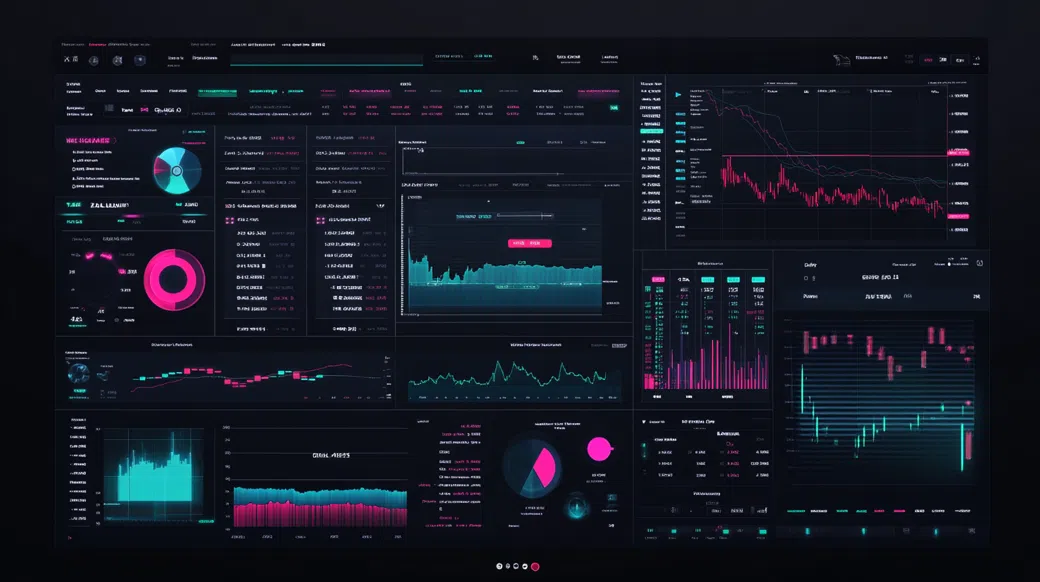
On desktop, the proprietary WebTrader behaved like a modern CFD terminal: stable session persistence, quick symbol search, and enough order controls to run basic risk. I placed a small US500 trade during the London-to-New York handover to watch spreads and fills around a volatility uptick; market orders filled cleanly, and stop/limit placement was clear on the ticket. The gap versus MT4/MT5 isn’t “can I click buy/sell,” it’s the missing ecosystem—fewer third-party indicators, less automation flexibility, and no deep community tooling.
The Vichor Rostava app mirrors the WebTrader layout closely, so moving between devices doesn’t feel like relearning. Quotes updated in real time, positions were easy to manage, and one-tap close helped when I wanted to flatten exposure quickly. Biometric unlock was available on my test device, and deposits/withdrawals were accessible inside the same navigation path as account settings—useful when you’re away from the desk. For Vichor Rostava login, the app kept me signed in reliably, though I’d still enable any available device-whitelisting features if you trade frequently.
Charting covers the essentials: multi-timeframe views, common indicators (MA, RSI, MACD, Bollinger), and basic drawing tools for structure. The integrated economic calendar and news feed are enough to flag event risk, but they won’t replace a dedicated macro terminal or a full MT5/cTrader research stack. Watchlists and alerts are functional; I used price alerts on XAU/USD to avoid staring at the screen through Asia.
My onboarding started with the usual identity prompts—email verification, profile details, and a quick suitability-style questionnaire before funding was unlocked. KYC required a government-issued photo ID and a recent proof of address (bank statement/utility bill dated within three months), and my verification cleared within a business day. The flow was clean, but it’s still an AML gate: don’t expect meaningful withdrawals until documents match your funding source.
Funding by USDT credited quickly and showed a clear confirmation screen with a transaction status trail; it felt designed to reduce “did it go through?” anxiety. If you’re testing execution, I’d start small, keep base currency consistent with your deposit method, and avoid stacking leverage before you’ve watched how margin calls are handled in fast markets.
I tested support with a practical question: how swaps are calculated on index CFDs and where to view nightly financing before holding through a weekend. Live chat came back in roughly three minutes with a short explanation and directions to the contract-spec panel; the agent also pointed out that crypto weekend financing can behave differently from FX. I followed up by email asking about withdrawal cut-off times, and the ticket reply landed later the same day (about nine hours), with method-by-method timing guidance. For the relevant help pages, I cross-checked details through Vichor Rostava to make sure the written policy matched the agent’s message.
Coverage is broadly 24/5, which matches the CFD industry’s rhythm rather than 24/7. Language depth depends on staffing—English was fine, while regional languages may be more limited outside peak hours. Phone support wasn’t prominent in my dashboard, so I’d assume chat/email are the primary rails, and plan for slower turnaround if you message late Friday Singapore time.
If you’re considering this broker for 2026, start by verifying your country eligibility and checking live spreads during the sessions you actually trade. A demo run can also reveal whether the WebTrader tools fit your workflow before you commit meaningful capital.
Visit Vichor RostavaIt can be, but only if you keep leverage modest and use the demo first. The WebTrader is approachable, and the Standard account avoids commission math. The offshore setup and 1:500 leverage mean new traders should treat risk management as non-negotiable.
Yes, crypto is available as CFDs, including BTC/USD and ETH pairs. You’re trading price movement with margin rather than buying coins for on-chain transfer. Weekend financing and wider spreads can materially change the cost of holding positions.
No—based on my test, it behaved like a functioning offshore CFD broker, with KYC enforcement and a withdrawal that completed. That said, “not a scam” doesn’t equal “Tier-1 protected”; dispute options and investor safeguards are typically thinner under offshore registration. Trade small until you’ve proven funding and withdrawals end-to-end for your own account.
No, the USA is restricted and accounts are not offered to US residents. This is common among offshore CFD providers given US regulatory rules. If you travel, expect location and document checks to enforce that restriction.
Most withdrawals are processed internally within 24–48 hours after KYC is approved. Receipt time depends on the rail: cards can take 2–5 business days, bank wires 3–7 business days, and crypto is often same-day once released. The practical advice is to test a small withdrawal early, before scaling your balance.
The Vichor Rostava minimum deposit is $200 for the regions I reviewed in 2026. Funding methods (card, wire, e-wallet, crypto) can have their own minimums set by processors. If you deposit in a different currency, factor in conversion costs.
Yes, there are iOS and Android apps that mirror the broker’s WebTrader. You can monitor positions, place orders, and access deposits/withdrawals from mobile. For active traders, push notifications and biometric login are the features that make the app practical.
Overall Score: 4.0/5
Execution and usability were the bright spots: spreads on the Raw/ECN-style tier were credible, and the WebTrader/mobile pairing handled core workflows without friction. The real decision point is jurisdictional—Vichor Rostava sits in the offshore lane (Seychelles FSA), so you’re prioritizing product flexibility and leverage over stronger statutory backstops. I’d classify it as a reasonable platform for disciplined CFD traders who already understand margin, slippage, and swap costs, and who test deposits and Vichor Rostava withdrawal flows early. For the full platform check, I’d re-verify conditions directly at Vichor Rostava before committing size.
Best for: active FX/index CFD traders who want a Raw/ECN-style option and can manage 1:500 leverage responsibly. Avoid if: you need Tier-1 regulatory protections, deep third-party MT4/MT5 tooling, or you’re prone to overleveraging.