Trustenix AI Review 2026: Is It Safe & Worth Your Money?
In-depth Trustenix AI review updated for 2026. We tested spreads, key features, supported countries, and safety. Read our full verdict.

In-depth Trustenix AI review updated for 2026. We tested spreads, key features, supported countries, and safety. Read our full verdict.
| Min Deposit | $200 |
| Max Leverage | 1:500 |
| Assets | Forex, Indices, Commodities, Crypto CFDs, Share CFDs |
| Platforms | Proprietary WebTrader, iOS/Android mobile apps |
Built as a multi-asset CFD venue with an “AI” wrapper, Trustenix AI suits traders who want fast access to FX and indices from a single WebTrader—while accepting the key compromise of an offshore framework and higher leverage. In my test account, the broker steered me toward two tiers (spread-only Standard and a tighter Raw-style option) and kept the product list focused on liquid benchmarks rather than thousands of micro-tickers. The platform stack is proprietary on web and mobile, with charting that’s serviceable for macro-driven setups. The main upside is flexibility (leverage, markets, funding rails); the main downside is that investor protections don’t match top-tier jurisdictions. I ran a small deposit, traded the US500, and later processed a withdrawal through Trustenix AI.
Trustenix AI appears operational and legitimate in the narrow sense that it provides trading access, enforces KYC, and processes withdrawals, but it’s not “safe” in the same way a Tier-1 regulated broker is. I did not see scam-style blocking behavior in my cashflow test, yet the offshore structure raises the bar for your own risk controls.
My account documentation pointed to a Mauritius FSC registration model, which typically comes with lighter investor-protection plumbing than UK/EU/AU regimes. Practically, that trade-off shows up as higher available leverage (useful for hedging or short-term trading, dangerous for under-sized accounts), fewer formal compensation backstops, and a more limited path for complaints if something goes wrong. On the red-flag checklist, I looked for heavy “account manager” pressure, fake-looking awards, and withdrawal friction; none of those surfaced during my test, and the portal did push ID verification before permitting certain account actions. The provider also references segregated client funds language, though—offshore being offshore—you’re still relying more on internal controls than hard regulation. Remember: CFDs are leveraged products; most retail traders lose money, and you can burn capital quickly if margin and stops aren’t respected.
The broker targets international clients across parts of Asia, MENA, Africa, and some non-EU European markets, while keeping high-regulation jurisdictions tighter. The USA is not supported, and sanctioned countries are blocked.
| Region | Status | Leverage Cap |
|---|---|---|
| Southeast Asia (selected countries) | Accepted | Up to 1:500 |
| MENA (selected countries) | Accepted | Up to 1:500 |
| Sub-Saharan Africa (selected countries) | Accepted | Up to 1:500 |
| Non-EU Europe (selected countries) | Accepted | Up to 1:500 |
| USA | Restricted | Not offered |
| Sanctioned jurisdictions | Restricted | Not offered |
Eligibility is enforced through a mix of sign-up declarations, KYC checks (proof of address matters), and routine IP/location screening. Policies can shift with compliance updates, so it’s worth re-checking accepted countries before funding.
Product depth here is built for traders who think in macro blocks: currencies, indices, metals, and a slice of crypto, rather than niche single-stocks. I treated the lineup as a “liquid beta” toolbox for hedges and directional swings.
All of the above are CFDs, so you’re trading price exposure with leverage—not taking delivery, not receiving shareholder voting rights, and not holding “real” crypto in a wallet. Any dividends (on share CFDs) are typically reflected via adjustments rather than ownership.
Trustenix AI fees follow the familiar two-lane model: a Standard account where costs are baked into the spread, and a Raw/ECN-style tier that compresses spreads and adds commission. On EUR/USD, my pricing snapshots sat in the expected band for offshore CFD brokers—not bargain-basement, not punitive—especially if you size up and benefit from the Raw tier.
| Asset | Spread/Fee | Market Average Comparison |
|---|---|---|
| EUR/USD (Standard) | From 1.5 pips | In line with typical offshore CFD spreads |
| EUR/USD (Raw/ECN) | From 0.2 pips + $7/round-turn per lot | Competitive if you trade frequently |
| Bitcoin (BTC/USD) | From $30 | About average; can widen on weekends |
| Gold (XAU/USD) | From $0.35 | Slightly better than average in calm tape |
| US500 Index | From 0.8 points | Typical for a proprietary CFD platform |
Non-spread costs that matter over time: Overnight swap/financing is the real P&L tax if you hold CFDs for days, and it’s particularly noticeable on indices and crypto when weekend financing kicks in. I also noted a $10/month inactivity charge after 90 days without trading, which can quietly erode small balances. Withdrawals can carry method-side fees (card networks or crypto miners), and if you fund in one currency and trade in another, conversion costs can sneak in—so keep an eye on your base currency selection.
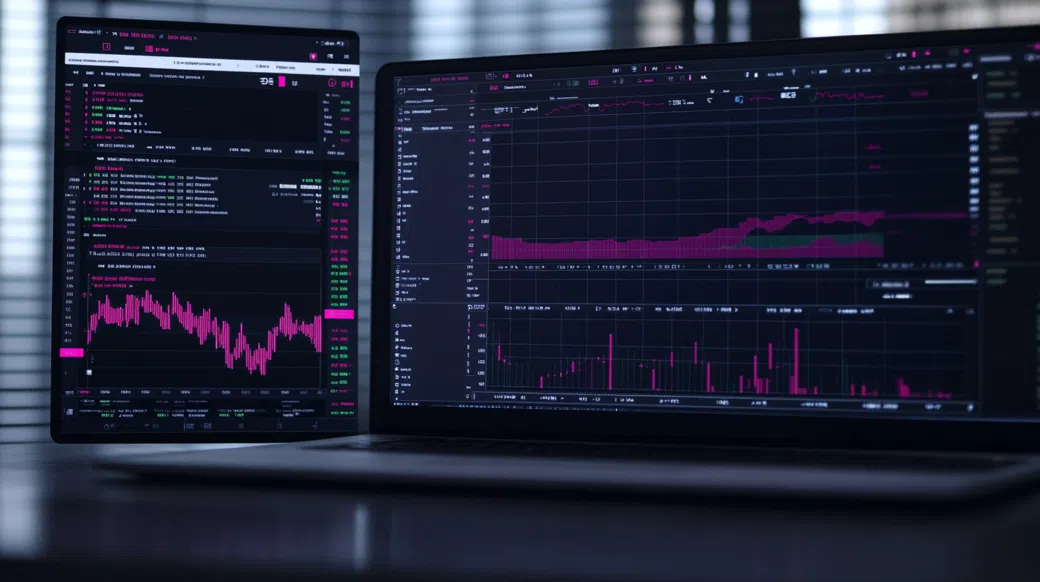
From a Singapore desk, I care less about glossy UI and more about whether a platform behaves under session transitions. The WebTrader held steady through Asia into early Europe, and the order ticket covered the essentials: market/limit, stop loss, take profit, and position modification without digging through menus. Charting won’t replace an MT4/MT5 plugin ecosystem for automation, but for discretionary CFD execution it did the job, and I didn’t run into repeated disconnect loops.
The Trustenix AI app mirrors the web layout closely, so context-switching is painless; biometric unlock worked on my device, and push notifications for price alerts landed reliably. During a quick “Trustenix AI login” check on mobile data, quotes refreshed without the lag spikes you sometimes see on thin apps. I could also add funds and initiate withdrawals directly from the app, plus there’s a one-tap close function that’s handy when volatility hits and you want out without re-opening the ticket.
Tools are practical rather than academic: a built-in economic calendar, a news feed, watchlists, and the standard indicator shelf (MA, RSI, MACD, Bollinger) with basic drawing. Alerts are good enough for “levels trading” on indices and gold. Still, if you’re building rule-based systems or need depth-of-market analytics, dedicated MT5/cTrader-style environments generally offer a higher ceiling.
After hitting the sign-up page, the flow asked for the usual identity and contact details, then routed me into KYC before I could unlock full account functions. Verification required a government-issued photo ID and a proof of address dated within three months; my documents cleared the same day, and the AML prompts were consistent with what you’d expect from an offshore CFD provider. If you’re searching specifically for the Trustenix AI minimum deposit, the entry point on my account was set at $200.
Funding via USDT posted quickly to the balance and generated a clear on-screen receipt and transaction ID; that’s the sort of small UX detail I like because it reduces “where did my money go?” anxiety. For the platform itself, Trustenix AI kept the account dashboard uncluttered—useful when you’re managing margin and monitoring open risk.
I tested support with a specific question: how swap/overnight financing is calculated on US500 and whether triple-swap applies midweek. Live chat connected in roughly three minutes, and the agent pointed me to the contract specs page and clarified the rollover timing in platform time. I then emailed a follow-up about withdrawal cut-offs; a ticket reply landed later the same business day (around nine hours) with method-by-method timing guidance.
Coverage is positioned as 24/5, which matches how most CFD brokers staff their desks—busy during the trading week, lighter on weekends. Language availability looked region-dependent, and I didn’t see a universally advertised phone line on my portal, so expect chat/email to be the primary route. Relative to peers in this segment, the support was competent on mechanics and policy, less so on “strategy talk” (which is fine; I don’t want brokers coaching trades).
If you’re considering this broker, start by checking current spreads during your usual session and confirming your country’s eligibility before you fund. A demo pass is worthwhile to map margin behavior and order handling, especially if you plan to trade indices around data releases.
Visit Trustenix AIIt can be, provided you treat it as a CFD platform and keep leverage modest. The interface is not overly technical and the demo helps, but the offshore setup means you should be extra disciplined with risk, position sizing, and withdrawals planning.
Yes, crypto is available as CFDs, including BTC/USD and ETH/USD on my instrument list. You’re trading price exposure with financing considerations, not transferring coins on-chain or holding them in a wallet.
No, it didn’t present as a scam in my testing: KYC was enforced and a withdrawal request was processed. The bigger issue is jurisdictional—offshore registration can mean fewer formal protections than Tier‑1 regulators, so your risk management matters.
No, the USA is restricted and accounts are not offered to US residents. If you attempt to register from a blocked jurisdiction, you’ll typically be stopped through compliance screening and verification checks.
Most withdrawals are queued within 24–48 hours after KYC approval, then timing depends on the rail. Cards commonly take 2–5 business days, bank wires 3–7 business days, and crypto often arrives the same day once released.
The Trustenix AI minimum deposit on my test account was $200. That’s enough to get the account live, but it’s not necessarily enough to trade 1:500 leverage responsibly—size positions for volatility and margin.
Yes, there are iOS and Android apps that mirror the WebTrader layout. You can monitor positions, place market/limit orders, set SL/TP, and manage deposits and withdrawals from the handset.
Overall Score: 3.9/5
Execution and usability are the reasons this platform stays on the radar: I was able to trade liquid CFDs (notably US500 and XAU/USD), manage risk cleanly, and move funds out without theatre. That said, the offshore Mauritius FSC framework is the line you shouldn’t hand-wave—if you need Tier‑1 dispute channels or strict conduct rules, look elsewhere. For experienced traders who understand margin, swaps, and slippage, Trustenix AI is a capable toolkit. CFDs are high-risk instruments; leverage amplifies both wins and losses, so treat position sizing as your first line of defense.
Best for: macro-focused CFD traders who want a proprietary WebTrader and flexible leverage. Avoid if: you require Tier‑1 regulation, extensive research/education, or you’re prone to over-leveraging small accounts.