Timber Rendholt Review 2026: Is It Safe & Worth Your Money?
In-depth Timber Rendholt review updated for 2026. We tested spreads, key features, supported countries, and safety. Read our full verdict.

In-depth Timber Rendholt review updated for 2026. We tested spreads, key features, supported countries, and safety. Read our full verdict.
| Min Deposit | $200 |
| Max Leverage | 1:500 |
| Assets | Forex, Indices, Commodities, Crypto CFDs, Share CFDs |
| Platforms | WebTrader, iOS app, Android app |
Built as a multi-asset CFD venue for leveraged traders, Timber Rendholt suits active speculators who value flexible margin more than top-tier regulatory cover. In my Timber Rendholt walkthrough, the account tiers split cleanly between a spread-only Standard and a tighter Raw/ECN-style option that’s clearly aimed at frequent ticketing. Markets are broad enough for macro-themed rotations—G10 FX, index CFDs, metals, and the usual headline crypto pairs—without pretending to be an equities terminal. The proprietary WebTrader is chart-forward and fast to navigate; the main compromise is the offshore framework, which can limit recourse if a dispute turns ugly.
Timber Rendholt looked operational in my tests, not like a “disappear-with-your-deposit” setup, but it sits under an offshore registration model where protections are thinner. That makes it “legit” in the sense of providing tradable markets and processing withdrawals, yet not equivalent to a heavily supervised Tier-1 broker.
The provider presents itself as registered with the Mauritius FSC, which typically enables higher leverage and broader onboarding than tightly capped jurisdictions. The practical implication: you may get more margin (and more rope), but you usually give up robust compensation schemes and a clear escalation ladder for complaints. I ran a basic red-flag sweep while testing—no fake “trophy cabinet” pop-ups, no aggressive account manager pressure after funding, and the back office consistently pushed KYC/AML steps before payout. The wording around segregated client funds is present, though as a trader I still treat that as a policy claim rather than a guarantee absent Tier-1 enforcement. Remember the product risk: CFDs are leveraged instruments, margin calls happen fast, and most retail accounts lose money when risk controls slip.
This broker primarily targets international clients across parts of Asia, Africa, and LATAM, while blocking the USA and sanctioned locations. Eligibility is ultimately checked at verification, not just at signup.
| Region | Status | Leverage Cap |
|---|---|---|
| Southeast Asia (selected countries) | Accepted | Up to 1:500 |
| Middle East & North Africa (selected countries) | Accepted | Up to 1:500 |
| Sub-Saharan Africa (selected countries) | Accepted | Up to 1:500 |
| Latin America (selected countries) | Accepted | Up to 1:500 |
| USA | Restricted | Not offered |
| Sanctioned jurisdictions | Restricted | Not offered |
Access controls weren’t cosmetic: IP checks triggered extra prompts, and the KYC step (ID plus address proof) is where approvals or rejections become final. Policies can shift quickly when compliance teams tighten a region, so it’s worth validating your country during onboarding.
The lineup is built for cross-asset macro trading—enough instruments to express a rates-and-risk theme without drowning you in micro-cap noise. I found it strongest for FX and index positioning, with crypto and shares as satellite exposure.
Everything here is CFD exposure: you’re trading price movements with leverage, not taking delivery of assets. That means no shareholder voting rights on share CFDs and no on-chain withdrawals for crypto positions.
Costs are structured in two lanes: Standard is spread-only, while the Raw/ECN-style account compresses spreads and adds a per-lot commission. On my pricing checks, the Raw lane is where the broker becomes competitive for frequent FX traders, while the Standard lane is more “pay-for-convenience.” Overall, it sits in the middle of the offshore CFD pack rather than at the ultra-low end.
| Asset | Spread/Fee | Market Average Comparison |
|---|---|---|
| EUR/USD (Standard) | From 1.6 pips | Slightly wider than low-cost leaders |
| EUR/USD (Raw/ECN) | From 0.2 pips + $7 round-turn/lot | Competitive for active trading |
| Bitcoin (BTC/USD) | From $35 | In line with typical CFD crypto pricing |
| Gold (XAU/USD) | From $0.35 | Close to market norms |
| US500 Index | From 0.7 points | Near average for offshore CFD venues |
Non-spread costs matter more than most traders admit: overnight swap/financing can turn a “nice entry” into an expensive hold, and crypto often carries weekend financing that compounds quickly. The platform also applies a $10 monthly inactivity fee after 90 days without trading activity, which hits small accounts hardest. On withdrawals, I didn’t see a platform-side “commission” line item, but your bank/card provider and any FX conversion between account currency and funding rail can add frictional costs that don’t show up in the spread.
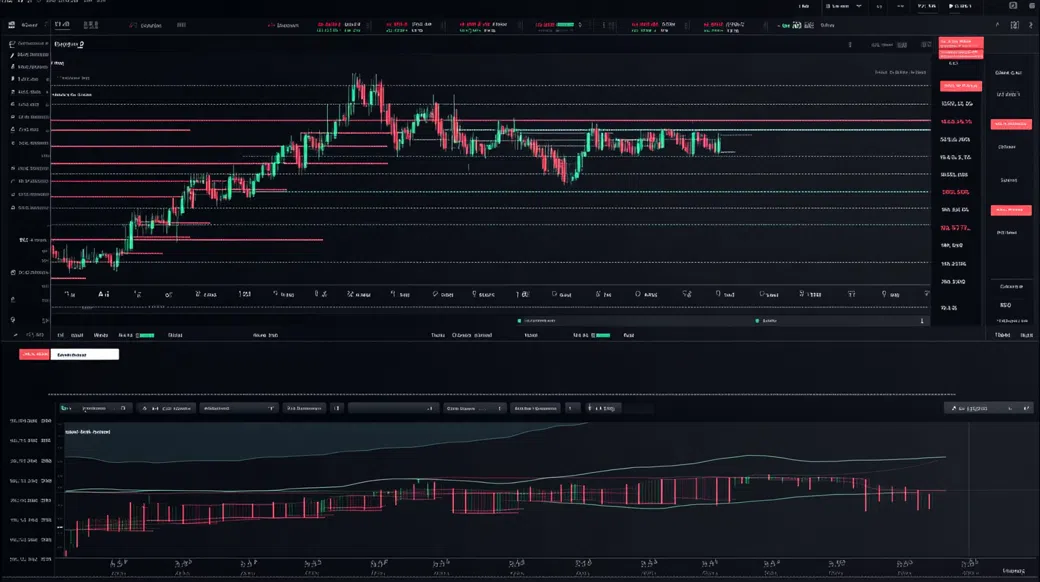
WebTrader is the main workhorse, and from a trader’s seat that’s not a bad thing: I had stable sessions during the Asia morning and into the London handover, with no random logouts while charts were loaded. Order tickets support market and pending orders, with stop-loss and take-profit placement baked into the flow; execution felt consistent on liquid FX, though spreads naturally breathed wider around data releases. MT4/MT5 aren’t something I could confirm inside the client area—so if you rely on a deep EA ecosystem, treat that as a potential gap.
The Timber Rendholt app is tuned for monitoring and quick risk actions rather than heavy analysis, which fits how I use mobile during commutes in Singapore. Timber Rendholt login on my phone supported biometric unlock, and quotes updated cleanly across watchlists. I could place and modify orders, toggle SL/TP, and check margin level at a glance; deposits and withdrawals are accessible from the same menu stack. One quirk: chart indicators are present, but the screen gets crowded fast when you layer more than two studies.
Tools lean practical: multi-timeframe charts, common indicators (MA, RSI, MACD, Bollinger), and drawing utilities for structure and levels. There’s an economic calendar and a compact news feed that’s good for “what just happened” context, not for deep strategy work. Alerts and watchlists do the job, but the ceiling is below a dedicated MT5/cTrader workstation setup. For most discretionary CFD traders, it’s sufficient; for quant-style workflows, you’ll likely want external tooling.
Starting the account felt like a compliance-first funnel: email/phone verification, basic suitability prompts, then identity checks before full features unlocked. For KYC, the broker requested a government-issued photo ID and a proof of address dated within three months (I used a bank statement). My verification cleared within a business day, and the dashboard then exposed funding rails and account-type selection without additional hoops. If you’re searching for the Timber Rendholt minimum deposit, the live cashier set it at $200 in my test.
Funding with USDT posted after network confirmation, and the ledger updated with a clear transaction reference—useful if you ever need to reconcile. Denomination choices were serviceable, but if you deposit in a different currency than your base, expect conversion costs to be external rather than advertised. Before scaling size, I’d still recommend running a demo and then a small live account to map real fills under your typical session.
I tested support with a practical trader question: “Where do I see the swap/overnight rate before holding XAU/USD?” Live chat came back in roughly three minutes with the navigation path and a short explanation of how triple-swap days are applied. I also sent an email asking about withdrawal processing once KYC is complete; the reply landed later the same day (just under nine hours) and matched what I saw in the back office when initiating a payout.
Coverage is broadly 24/5, which aligns with the CFD week, and English support was consistent in tone and clarity. Phone help appears to vary by region, so don’t assume you’ll have a direct dealing-desk line. Over weekends, you can still submit tickets, but meaningful account actions tend to queue until markets reopen.
If you want to sanity-check pricing and platform flow, start with the demo, then compare Standard vs Raw costs on the instruments you actually trade. Confirm your country eligibility and leverage cap during onboarding before you fund a larger balance.
Visit Timber RendholtIt can be, but only if you treat leverage with respect and use the demo first. The WebTrader layout is readable and the order ticket is not overly technical. Beginners should start small at the $200 minimum deposit and focus on risk limits, because CFDs can liquidate accounts quickly when position sizing is loose.
Yes, crypto is available via CFDs, with BTC/USD and ETH/USD as core listings. You’re trading price exposure with margin rather than owning coins on-chain. Keep an eye on financing, especially over weekends, because carry can dominate P&L on longer holds.
No, my test account behaved like a functioning brokerage service—orders executed, KYC was enforced, and withdrawals followed the stated workflow. The bigger nuance is regulation: it operates under an offshore model (Mauritius FSC), so protections and dispute escalation are not the same as with FCA/ASIC-style oversight. Always assume CFD trading can result in losses and size positions accordingly.
No, the USA is restricted and accounts are not offered to US residents. If you attempt signup from a blocked region, eligibility checks typically surface during verification. Traders in accepted countries should still confirm status at KYC, since policies can change.
Most withdrawals are released by the broker within 24–48 hours after KYC is complete. Arrival time depends on the rail: cards typically take 2–5 business days, bank wires around 3–7 business days, while crypto transfers can land the same day. In my case, the status updated in the portal before the funds hit the destination.
The Timber Rendholt minimum deposit is $200 for a live account. That’s enough to test execution and fees, but it’s not a cushion against volatility at 1:500 leverage. If you’re new, consider using the demo first and then funding the smallest amount you can trade responsibly.
Yes, there are iOS and Android apps alongside the WebTrader. You can manage positions, place orders, and handle deposits/withdrawals from the phone interface. For heavy chart work, the desktop experience remains cleaner, but mobile is solid for monitoring and quick risk actions.
Overall Score: 4.0/5
For traders who think in charts and manage risk tightly, Timber Rendholt gets the basics right: usable WebTrader tools, a sensible Standard vs Raw split, and a market list that lets you express macro views across FX, indices, and metals. I also valued that the back office pushed KYC before withdrawals rather than playing games later. The trade-off remains jurisdictional—offshore registration can mean fewer formal protections if things go wrong—so keep size conservative and respect the fact that CFDs are leveraged and losses can exceed expectations. More details in my Timber Rendholt notes above.
Best for: active CFD traders who want 1:500 leverage and can quantify costs (spread + commission) per strategy. Avoid if: you require Tier-1 regulation, guaranteed protections, or an MT4/MT5 ecosystem for automated trading.