Summit Wertgrove Review 2026: Is It Safe & Worth Your Money?
In-depth Summit Wertgrove review updated for 2026. We tested spreads, key features, supported countries, and safety. Read our full verdict.

In-depth Summit Wertgrove review updated for 2026. We tested spreads, key features, supported countries, and safety. Read our full verdict.
| Min Deposit | $200 |
| Max Leverage | 1:500 |
| Assets | Forex, Indices, Commodities, Crypto CFDs, Share CFDs |
| Platforms | Proprietary WebTrader + iOS/Android mobile apps |
Built for traders who want multi-asset CFDs with punchy leverage, Summit Wertgrove targets active speculators more than long-horizon investors—and the headline trade-off is an offshore setup in exchange for flexibility. In my Summit Wertgrove review, I tested both the spread-only Standard tier and the tighter Raw/ECN-style pricing to see where costs actually land once commission is included. Coverage is broad enough for a macro playbook (FX, indices, gold, and crypto CFDs) without feeling like a “thousand markets” marketing gimmick. The proprietary WebTrader is the centre of gravity, with mobile apps doing most of the day-to-day heavy lifting. Biggest drawback: protections and dispute escalation typically aren’t as strong as at top-tier regulated venues.
Summit Wertgrove looks operational rather than a “vanish-with-your-deposit” scam, based on account controls, KYC gating, and a withdrawal that completed in my test. The caveat is structural: it sits in an offshore regulatory framework, so the safety net is thinner than what you’d expect under FCA/ASIC-style regimes.
What stood out first was the compliance friction in the right place: identity checks were enforced before withdrawals, and the platform pushed AML-style prompts when I changed funding rails. The broker presents itself under a Mauritius FSC registration model, which is common for international CFD providers offering higher leverage and broader onboarding than strict jurisdictions allow. Practically, that can mean fewer investor-compensation mechanisms and a steeper climb if you need to escalate a dispute beyond support. I also ran a quick red-flag scan: no “guaranteed profit” language, no fake leaderboard pressure, and no suspicious “award badge” pop-ups during the account dashboard flow. On the safeguards side, client-money segregation is referenced in the legal docs, though enforcement standards vary offshore. Keep the product risk in view: CFDs are leveraged instruments, margin calls happen fast, and most retail accounts lose money when volatility spikes.
This broker is primarily geared toward clients across parts of Southeast Asia, MENA, Africa, and selected non-EU European markets, with eligibility confirmed during signup and KYC. The USA is not supported, and sanctioned jurisdictions are blocked.
| Region | Status | Leverage Cap |
|---|---|---|
| Southeast Asia (selected) | Accepted | Up to 1:500 |
| MENA (selected) | Accepted | Up to 1:500 |
| Africa (selected) | Accepted | Up to 1:500 |
| Europe (non-EU, selected) | Accepted | Up to 1:200 |
| USA | Restricted | Not offered |
| Sanctioned jurisdictions | Restricted | Not offered |
Access is enforced through a mix of IP/location checks and document verification—your passport and proof-of-address ultimately decide the outcome. Policies shift, so treat eligibility as a live variable, not a permanent entitlement.
Rather than chasing novelty tickers, the lineup leans toward the “liquid core” that most CFD traders actually rotate through—rates-sensitive FX, index beta, and a handful of commodities and crypto pairs.
Everything here is CFD-based: you’re trading price movement with leverage, not taking delivery of assets. That means no shareholder voting, and no on-chain crypto withdrawal—profits and losses are settled in account currency.
Summit Wertgrove fees follow a two-lane model: Standard is spread-only, while the Raw/ECN-style tier tightens the spread and adds a per-lot commission. On my screens, the all-in cost on majors was broadly in the expected range for offshore CFD venues, with the Raw account favouring frequent traders who care about entry precision.
| Asset | Spread/Fee | Market Average Comparison |
|---|---|---|
| EUR/USD (Standard) | From 1.4 pips | In line with typical offshore CFD pricing |
| EUR/USD (Raw/ECN) | From 0.2 pips + $7 round-turn/lot | Competitive for active trading, commission-heavy if you scalp small size |
| Bitcoin (BTC/USD) | From $28 | Middle of the pack; can widen on weekend flow |
| Gold (XAU/USD) | From $0.35 | Reasonable versus retail CFD averages |
| US500 Index | From 0.8 points | Comparable to similar multi-asset CFD platforms |
Non-spread costs matter more than most new traders realise on leveraged books: overnight swap (and triple-swap days) can turn a “cheap” trade expensive if you hold for weeks. I also noted a dormancy charge of $10 per month after 90 days without activity, which quietly punishes set-and-forget accounts. Depending on your funding currency, conversion mark-ups can show up as a hidden drag, and crypto CFDs often carry heavier weekend financing. For a clean read on these line items, I pulled the contract specs directly inside Summit Wertgrove before sizing any positions.
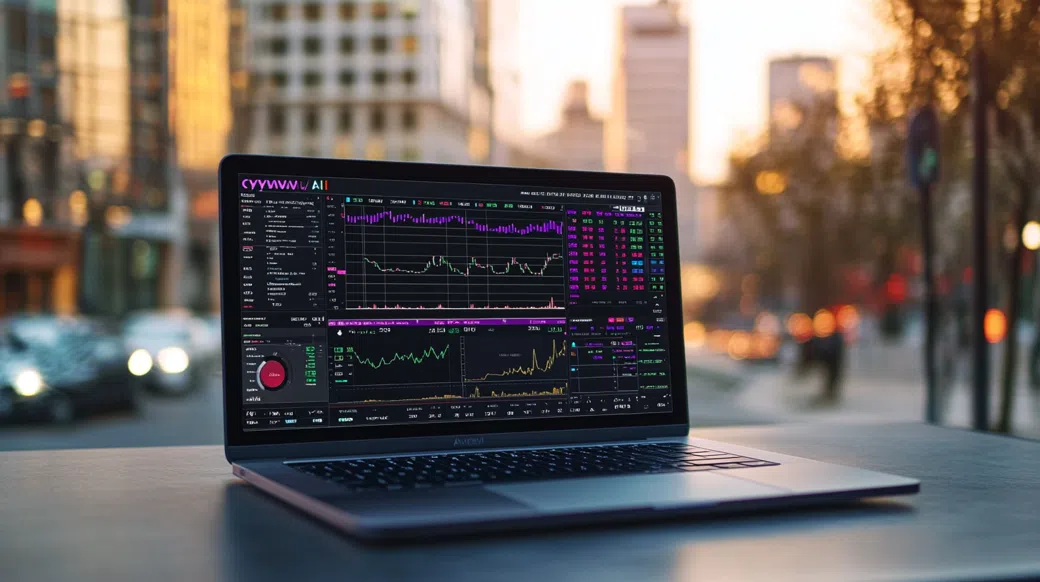
On desktop, the proprietary WebTrader kept things lean: watchlist on the left, chart in the centre, ticket on the right—no unnecessary pop-ups once you’re past onboarding. I stress-tested order placement during the London open with a small EUR/USD market order and a bracketed stop/limit; execution came back without a requote, though spreads did breathe wider for a few seconds around the initial liquidity rush. If you’re coming from MT4/MT5, the biggest gap is ecosystem depth—fewer third-party add-ons and less automation flexibility—but the core workflow is intact (market/limit/stop, partial close, and position-level risk controls).
The Summit Wertgrove app is clearly designed as more than a companion: quotes refresh fast, you can manage stops, and one-tap close is available when volatility flips the tape. Summit Wertgrove login on my Android device supported biometric unlock, which made it practical to check margin and exposure between meetings. Deposits and withdrawals are accessible from the same navigation layer as trading, and push notifications can be toggled for price alerts and order updates. The trade ticket is compact; the only quirk I hit was occasional chart redraw lag when switching timeframes on weaker Wi‑Fi.
Charting covers the essentials—multi-timeframe views, the usual indicators (MA, RSI, MACD, Bollinger), and basic drawing tools for levels and trendlines. There’s an economic calendar and a news feed that’s good enough to flag scheduled risk (CPI, central bank decisions), but it won’t replace a dedicated macro terminal. Alerts and watchlists help, yet power users will still miss the deeper strategy tooling found in MT5 or cTrader-style environments.
My onboarding started with a short form (email, phone, base currency), then a compliance step that asked the right questions for suitability and AML. KYC required a government-issued photo ID plus a proof of address dated within three months; I used a bank statement, uploaded from mobile, and verification cleared the same business day. The flow felt built for international clients—clean screens, clear prompts, and no confusing detours before reaching the trading dashboard.
Account currency selection matters: if you fund in SGD but trade products quoted in USD, conversion costs can stack up over time. I also found that withdrawal options only fully unlocked after KYC was approved, which is sensible from a compliance standpoint but worth planning for if you like to “fund first, verify later.”
Support was responsive when I pushed a practical question: I asked live chat to clarify where the swap/overnight fee is displayed for gold and whether it changes on triple-swap day. The agent came back in roughly three minutes with the exact navigation path (contract specs → financing) and a short explanation of how day-counting works. I followed up via email to confirm Summit Wertgrove withdrawal processing time after KYC; the ticket reply landed about eight hours later with method-by-method timing and a reminder to match withdrawal rails to the original funding source.
Coverage is the usual 24/5 cadence, which suits FX and index traders but won’t feel “always on” for weekend crypto volatility. Language support is region-dependent, and while phone assistance may exist in some locales, chat and email are the dependable channels. Relative to peers in this segment, the key win is clarity: fewer canned scripts, more actionable pointers.
If you’re considering this broker, start by checking spreads on your preferred instruments during your usual session and confirming your country’s eligibility before funding. A demo pass can also tell you quickly whether the WebTrader layout fits your workflow and risk controls.
Visit Summit WertgroveIt can be, provided you keep position sizing small and respect leverage. The platform is not overloaded with tools, so the learning curve is manageable, and the demo account helps. That said, offshore CFD trading moves quickly—beginners should expect volatility, swaps, and margin rules to bite if ignored.
Yes, crypto is available as CFDs, typically including BTC/USD and ETH/USD plus a few large-cap alternatives. You’re trading price exposure with leverage, not buying coins to transfer on-chain. Weekend financing and spread widening are the two costs to watch most closely.
No, it didn’t present as a scam in my 2026 test: KYC was enforced, the platform functioned normally, and a withdrawal request was processed. The more relevant question is protections—because it’s offshore, you generally have less formal recourse than with Tier‑1 regulators. Treat it as a higher-risk venue and use conservative leverage.
No, the USA is restricted. US residents typically can’t open accounts due to local regulatory constraints around retail CFD and leveraged products. If you travel, eligibility still comes down to residency and KYC documents.
Most withdrawals are processed internally within 24–48 hours after KYC is approved. After that, the delivery speed depends on the rail: cards are commonly 2–5 business days, wires 3–7 business days, while crypto payouts can arrive the same day. Timing can stretch during compliance checks or bank cut-offs.
The minimum deposit is $200. That’s enough to open a live account, but it doesn’t mean you should run high leverage—margin requirements and drawdowns can overwhelm small balances. If you’re testing, consider starting with the minimum and scaling only after you’ve measured spreads and swaps.
Yes, there are iOS and Android apps alongside the WebTrader. The app supports order placement, basic charting, and account actions like deposits and withdrawals. Biometric login is available on supported devices, which makes frequent risk checks less of a hassle.
Overall Score: 4.1/5
For traders who think in spreads, session liquidity, and risk limits, Summit Wertgrove does the fundamentals well: workable pricing tiers, a clean WebTrader, and a mobile stack that’s genuinely trade-capable. My biggest positive was operational follow-through—funding, trading, and cash-out all behaved as expected—while the biggest negative is the offshore framework, which usually means fewer guardrails when something goes wrong. Keep leverage realistic and treat CFDs like the sharp instrument they are: losses can exceed expectations fast. If you want to sanity-check terms before committing, start at Summit Wertgrove with a demo and a small live deposit.
Best for: active CFD traders who want flexible leverage and a straightforward proprietary platform. Avoid if: you require Tier‑1 regulation, deep institutional research, or US access.