SQM Financerra Review 2026: Is It Safe & Worth Your Money?
In-depth SQM Financerra review updated for 2026. We tested spreads, key features, supported countries, and safety. Read our full verdict.

In-depth SQM Financerra review updated for 2026. We tested spreads, key features, supported countries, and safety. Read our full verdict.
| Min Deposit | $200 |
| Max Leverage | 1:500 |
| Assets | Forex, Indices, Commodities, Crypto CFDs, Share CFDs |
| Platforms | Proprietary WebTrader, iOS app, Android app |
Built as a multi-asset CFD venue, SQM Financerra suits traders who want higher leverage and a clean WebTrader stack, but who can live with an offshore framework and the extra self-discipline that comes with it. In my test, the broker pushed a two-tier setup—Standard for simplicity and a tighter-spread Raw/ECN-style option aimed at frequent execution. The menu leans macro-friendly (FX, gold, US indices) with crypto CFDs for out-of-hours volatility, all accessible via SQM Financerra on web and mobile. The best part is the “get in, get out” trading flow; the main drawback is that dispute escalation and investor protections aren’t on the same level as top-tier regulated houses.
SQM Financerra looks operational rather than a “disappear-with-your-money” setup, but it sits in the offshore CFD bracket where protections are thinner. I didn’t see the classic scam tells (blocked withdrawals, fake “regulator” seals, or endless upsell calls) during the test window. The trade-off is simple: you’re relying more on platform controls and your own risk management than on a heavyweight regulator.
The provider presents itself under a Mauritius FSC-style offshore registration, which typically allows flexible leverage and broader product packaging, but also means weaker compensation schemes and fewer levers for formal dispute escalation if something goes wrong. On my side, identity checks weren’t optional: the portal requested a government photo ID plus a proof of address dated within three months, and trading limits tightened until documents were approved. The client-area language referenced segregated client funds, and the withdrawal module required KYC completion before processing—a decent sign for AML discipline. I also scanned for marketing red flags (manufactured awards, pressure to “upgrade,” or unusually aggressive account managers) and didn’t run into any. Still, CFDs are leveraged products; most retail accounts lose money, and a margin call can arrive fast when volatility spikes.
The platform generally accepts clients across parts of Southeast Asia, MENA, LATAM, and selected non-EU Europe, while the USA and sanctioned jurisdictions are blocked.
| Region | Status | Leverage Cap |
|---|---|---|
| Southeast Asia (selected) | Accepted | Up to 1:500 |
| MENA (selected) | Accepted | Up to 1:500 |
| Latin America (selected) | Accepted | Up to 1:500 |
| Non-EU Europe (selected) | Accepted | Up to 1:200 |
| USA | Restricted | Not offered |
| Sanctioned jurisdictions | Restricted | Not offered |
Eligibility is enforced through onboarding declarations plus KYC checks; in my run, the country field and document review acted as the real gatekeepers. Policies can shift with compliance and banking partners, so check access again before funding.
From a trader’s lens, this is a macro-first CFD lineup: FX and indices feel like the core rails, with commodities and crypto there for volatility and diversification when the calendar gets busy.
Everything here is CFD exposure: you’re trading price movements, not taking delivery, not getting shareholder voting rights, and not holding on-chain crypto. Dividends (where applicable) are typically handled as cash adjustments rather than ownership.
Pricing is split by account tier: Standard runs spread-only, while the Raw/ECN-style account compresses spreads and adds a per-lot commission. On EUR/USD, I saw Standard start around 1.6 pips, with Raw/ECN nearer 0.2 pips plus a $7 round-turn—broadly in line with offshore CFD peers. Your real cost depends on frequency, holding time, and whether you’re trading during calm Asia hours or the London/NY overlap.
| Asset | Spread/Fee | Market Average Comparison |
|---|---|---|
| EUR/USD (Standard) | From 1.6 pips | Slightly wider than the best ECN-first brokers |
| EUR/USD (Raw/ECN) | From 0.2 pips + $7 round-turn/lot | Competitive for active traders in the offshore segment |
| Bitcoin (BTC/USD) | From $35 | Middle-of-the-pack; can widen on weekend volatility |
| Gold (XAU/USD) | From $0.35 | Reasonable versus typical CFD gold spreads |
| US500 Index | From 0.8 points | Comparable to many international CFD platforms |
Non-spread costs matter more than most new traders think: overnight swap/financing accrues when you hold beyond the session, and weekend financing can be noticeable on crypto CFDs. I also noted an inactivity charge of $10 per month after 90 days without trading, which turns “parked” accounts into a slow leak. Withdrawals can include third-party processing or banking fees depending on rail, and FX conversion costs apply if you fund in one currency and trade in another.
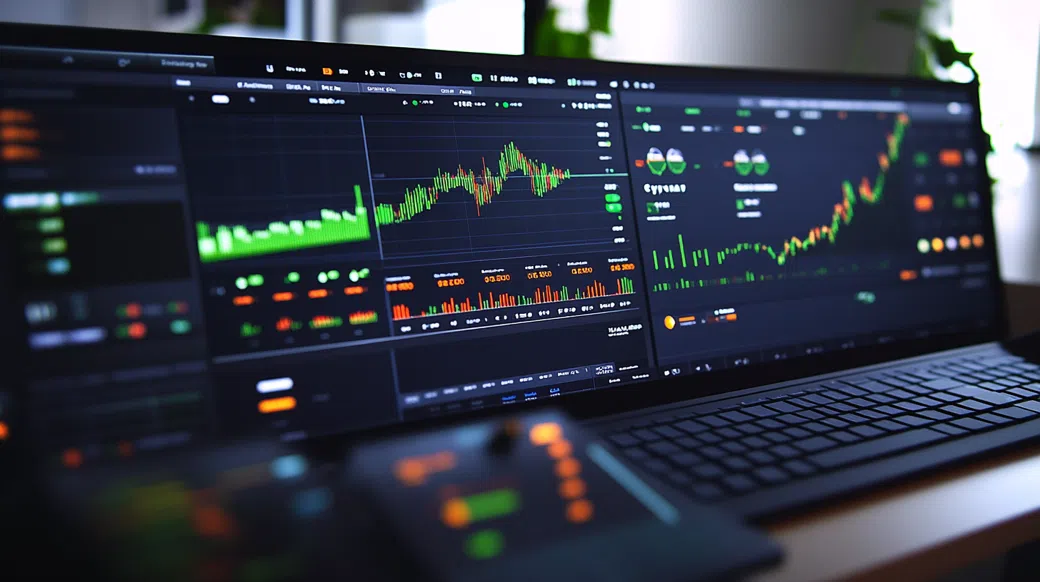
On desktop, the proprietary WebTrader held up well during my Singapore evening session: charts loaded without stutter, watchlists synced, and order tickets offered market, limit, stop, plus take-profit/stop-loss attachments. Execution on a small EUR/USD test clip around the London open was clean enough for discretionary trading, though I’d still avoid over-leveraging into high-impact releases where slippage is part of the game. If you live inside MT4/MT5 plugins and third-party algo ecosystems, note that this stack feels more self-contained.
The SQM Financerra app is built for monitoring and fast decision-making: real-time quotes, one-tap close, and push notifications for price moves were all in place on my Android device. SQM Financerra login supported biometric unlock after initial setup, which is the right balance between speed and security when markets gap. Deposits and withdrawals are accessible from the same navigation layer as trading, although smaller screens make multi-chart work more cramped than on web.
Charting covers the core indicator toolkit—moving averages, RSI, MACD, Bollinger Bands—with basic drawing tools and multi-timeframe switching. There’s an economic calendar and a light news feed, enough to time around CPI/FOMC but not a substitute for a full research desk. Alerts and watchlists did the job; power users chasing advanced strategy testing will still prefer MT5/cTrader-style environments.
Before I could place meaningful size, the portal walked me through a short profile (contact details, country, trading experience) and then pushed straight into KYC. The upload prompts were clear: a government-issued photo ID plus a recent utility bill/bank statement as proof of address. My verification cleared within one business day, and the dashboard flipped from “pending” to “verified” without me chasing support.
Funding by USDT credited quickly and the transaction record was easy to reconcile in the client area at SQM Financerra. One practical note: keep your base currency choices consistent to limit conversion drag, especially if you’re running frequent index trades where small costs compound.
I tested support with two specific asks: first, a live chat query on how swap rates are displayed for gold and indices; second, an email ticket about withdrawal sequencing after KYC. Chat connected in roughly three minutes and the agent pointed me to the instrument-spec panel where overnight financing is listed per symbol. The email reply landed later the same day (about nine hours), confirming internal withdrawal handling runs 24–48 hours once documents are approved.
Coverage is geared to the weekday trading week—24/5 live chat plus email and a contact form, which matches what you see across many offshore CFD shops. Language support is serviceable but not “global bank” level, and phone support looked region-dependent rather than universal. Over weekends, you can still submit tickets, but resolution tends to wait for Monday liquidity and operations.
If you’re considering this broker, start by checking the live spreads during your usual session and confirm your country eligibility before depositing. I’d also recommend running the demo first to see whether the WebTrader workflow fits your execution style and risk controls.
Visit SQM FinancerraIt can be, as long as the beginner treats leverage with respect and starts small. The WebTrader is not cluttered, and the demo account helps you learn order placement without cash risk. Still, offshore CFD trading isn’t a training-wheels environment, so position sizing matters more than platform features.
Yes, crypto CFDs like BTC/USD and ETH are available on the platform. You’re speculating on price rather than moving coins on-chain, so there’s no wallet transfer or blockchain settlement. Expect wider spreads and financing effects around weekends.
No, I didn’t encounter scam-pattern behavior in testing—deposits posted correctly, KYC was enforced, and the withdrawal workflow was functional. That said, it operates under an offshore registration model, which means fewer formal protections than FCA/ASIC-style regimes. Evaluate it like any leveraged CFD venue: manage risk, keep records, and don’t overfund on day one.
No, the USA is restricted and accounts aren’t offered to US residents. This is consistent with many offshore CFD brokers that don’t operate under US regulatory rules. If you’re traveling, eligibility is still tied to residency and KYC documents.
A SQM Financerra withdrawal typically clears internal processing in 24–48 hours after KYC approval. Receipt time depends on the method: cards commonly take 2–5 business days, bank wires 3–7 business days, and crypto can arrive the same day. Plan around weekends and banking cutoffs.
The SQM Financerra minimum deposit is $200 based on the cashier requirements I saw for card funding. Bank wire or crypto rails may have practical minimums depending on network fees and your provider. If you’re testing execution, funding just above the minimum keeps the learning cost contained.
Yes, it offers mobile apps for iOS and Android. The app supports trading, alerts, and account management, including deposits and withdrawals. For serious chart work, the web platform still feels roomier, but mobile is strong for monitoring and fast exits.
Overall Score: 4.0/5
From an execution-and-coverage standpoint, this broker does what a macro trader needs: majors, indices, gold, and crypto CFDs in a platform that doesn’t fight you when markets move. My funding and withdrawal loop was uneventful, and the tiered pricing makes sense if you can actually use tighter spreads with discipline. The catch is structural: offshore oversight means fewer formal backstops, so treat risk controls as non-negotiable. If you’re comfortable with that trade-off, SQM Financerra is a credible option to shortlist for 2026—just remember CFDs are leveraged and capital is at risk.
Best for: active CFD traders who want 1:500 leverage and a clean WebTrader for FX/indices. Avoid if: you require Tier-1 regulation, deep research, or you tend to overtrade with leverage.