Sprong Winstent Review 2026: Is It Safe & Worth Your Money?
In-depth Sprong Winstent review updated for 2026. We tested spreads, key features, supported countries, and safety. Read our full verdict.

In-depth Sprong Winstent review updated for 2026. We tested spreads, key features, supported countries, and safety. Read our full verdict.
| Min Deposit | $200 |
| Max Leverage | 1:500 |
| Assets | Forex, Indices, Commodities, Crypto CFDs, Share CFDs |
| Platforms | Proprietary WebTrader + iOS/Android apps |
Built as an offshore-style CFD venue, Sprong Winstent suits traders who want multi-asset leverage and a lightweight platform, with the headline trade-off being weaker investor protections than a top-tier regulated broker. In my test account, the two-tier pricing (spread-only vs. Raw/ECN-style) was the main decision point, not the instrument list. Forex and index CFDs felt like the core product; crypto is available, but it’s clearly positioned as a side shelf. The WebTrader is chart-forward and quick to navigate, while mobile mirrors most workflow steps. If you’re considering Sprong Winstent, go in expecting decent mechanics—and an offshore framework that puts more responsibility on your own risk controls.
Sprong Winstent operated normally in my checks and trade/withdrawal tests, so it reads as a functioning broker rather than an outright scam. The caution is structural: it’s set up under an offshore regime, which changes what “safety” means versus FCA/ASIC-style oversight.
Seychelles FSA registration was the key jurisdictional detail surfaced in the legal/AML flow, and that’s a meaningful distinction for traders who assume regulator-backed recourse is universal. Offshore status often comes with higher leverage availability (here up to 1:500), but also fewer formal protections like statutory compensation funds and a more limited complaints runway if something goes wrong. I scanned for the classic red flags—hard-sell account managers, too-good-to-be-true awards, and frictiony withdrawals—and didn’t see aggressive pressure tactics during onboarding. KYC was enforced (photo ID plus proof of address), and the client-area language referenced segregated client funds, though you should treat that as policy rather than a guarantee. Finally, remember the product: CFDs are leveraged instruments; margin calls happen fast, and most retail accounts lose money trading CFDs.
This broker mainly targets international clients across parts of Asia, Africa, and non-EU Europe, while turning away the USA and sanctioned jurisdictions. Eligibility is confirmed through KYC rather than marketing claims.
| Region | Status | Leverage Cap |
|---|---|---|
| Southeast Asia (selected countries) | Accepted | Up to 1:500 |
| Sub-Saharan Africa (selected countries) | Accepted | Up to 1:500 |
| MENA (non-sanctioned) | Accepted | Up to 1:500 |
| Non-EU Europe (selected countries) | Accepted | Up to 1:500 |
| USA | Restricted | Not offered |
| Sanctioned jurisdictions | Restricted | Not offered |
In practice, access is enforced through address checks and document verification—IP signals help, but KYC is the real gate. Country coverage can shift quickly if the provider updates risk policy or payment rails, so confirm eligibility before funding.
The lineup leans “macro-first”: FX and index CFDs sit at the center, with commodities and crypto used as tactical add-ons. For an APAC trader, it’s a familiar menu geared toward liquid instruments and event-driven sessions.
All instruments here are CFDs, so you’re trading price exposure, not ownership. That means no shareholder voting rights for share CFDs and no on-chain withdrawals for crypto—your P&L is cash-settled through the broker.
Costs are split by account type: Standard pricing is spread-only, while the Raw/ECN-style option compresses spreads and adds a per-lot commission. On my screens, the all-in picture looked broadly in line with offshore CFD peers—competitive on the raw tier, merely average on Standard.
| Asset | Spread/Fee | Market Average Comparison |
|---|---|---|
| EUR/USD (Standard) | From 1.6 pips | Around average |
| EUR/USD (Raw/ECN) | From 0.2 pips + $7 round-turn/lot | Competitive |
| Bitcoin (BTC/USD) | From $28 | Average |
| Gold (XAU/USD) | From $0.22 | Slightly better than average |
| US500 Index | From 0.8 points | Average |
Non-spread costs to watch: Overnight swap/financing is the quiet drag for multi-day positions, and it matters more here because leverage magnifies financing sensitivity. I also noted an inactivity fee of $10 per month after 90 days without trading, which can nibble at small balances. Withdrawal rails can add their own friction—conversion charges show up if you fund in one currency and withdraw in another, and weekend financing can widen the holding cost on crypto CFDs. For the cleanest read on your own trading costs, I’d check the live contract specs inside Sprong Winstent before scaling position size.
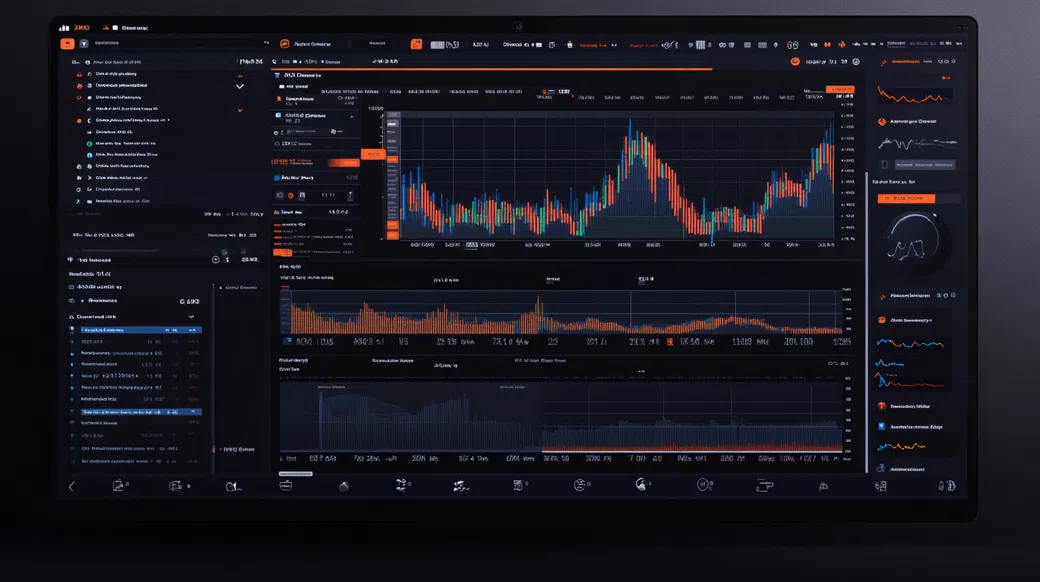
From a trader’s seat, the WebTrader is built for speed rather than ecosystem depth: watchlists, chart panels, and ticket controls are front and center. My Sprong Winstent login held stable across multiple sessions, and order placement supported market and pending orders with visible margin impact before submission. Execution felt consistent on liquid FX during the London open; I saw modest slippage when I deliberately sent a market order into a fast tick on NAS100, which is normal behavior for CFD dealing in volatility. If you rely on MT4/MT5 plug-ins, EAs, or a deep indicator marketplace, note that this stack is proprietary—functionally fine, but not an MT5/cTrader replacement.
The Sprong Winstent app keeps the core workflow intact: real-time quotes, one-tap trade tickets, and position management are all there, and deposits/withdrawals can be initiated from the same menu. Biometric unlock worked cleanly on my device, and push notifications for price alerts were reliable once enabled. Where it feels “mobile-native” is quick position actions (close/partial close), though heavy chart annotation is still easier on desktop. If you’re the type who checks risk during commutes, the app is adequate—just don’t expect the same analytics you’d run on a full workstation.
Charting covers the essentials: multiple timeframes, the usual indicator pack (MA, RSI, MACD, Bollinger), and basic drawing tools for levels and trend structure. An economic calendar and integrated news feed help with macro timing, but research depth is a step below what you get from premium brokers with in-house analysts. Alerts and watchlists do the job for price-driven strategies; for systematic traders, the ceiling will show up quickly without MT5-grade tooling.
My onboarding started with a simple profile form (email, phone, residence selection) followed by an AML prompt that funneled me straight into verification. KYC required a government-issued photo ID and a proof of address dated within three months; submission was done via the client portal with clear upload slots. Verification cleared the same day for my test account, and the portal then unlocked funding and full trading permissions.
One practical note: base-currency choices are limited, so expect FX conversion if you deposit from a mismatched bank/card currency. I also prefer brokers that force KYC before first deposit; here it’s integrated early, which reduces the chance of “surprise verification” at the Sprong Winstent withdrawal stage.
To test support, I asked live chat a specific question: how swap rates are displayed for metals and whether weekend financing is applied on crypto CFDs. The agent came back in roughly three minutes with a menu path to the contract specs and a short explanation of triple-swap timing, then offered to email the instrument list. I followed up via ticket to confirm card withdrawal timelines after KYC, and the email reply landed in about nine hours with a rail-by-rail breakdown and a reminder that internal processing precedes bank/card settlement.
Coverage is what you’d expect from an offshore CFD shop: 24/5 live chat and email support, with service quality varying by time zone. Language support is region-dependent, and phone lines aren’t consistently promoted, so I treat chat/email as the primary channels. On weekends, you can still trade crypto CFDs, but assistance may be thinner—plan accordingly if you hold positions through Saturday/Sunday volatility.
If you’re curious, start by stress-testing the platform on demo, then compare Standard vs. Raw/ECN pricing on the exact instruments you trade. Also confirm your country eligibility and funding rail before sending real capital, especially if you plan frequent withdrawals.
Visit Sprong WinstentYes, it can work for beginners who keep position sizes small and stick to liquid markets like majors and US indices. The interface is not cluttered, and the $10,000 demo helps you learn order tickets and margin behavior. The bigger issue is risk: 1:500 leverage plus CFDs can punish mistakes quickly.
Yes, the platform offers crypto CFDs such as BTC/USD and ETH pairs. You’re trading price exposure via CFD, not buying coins for on-chain transfer or custody. Expect wider spreads and higher weekend financing sensitivity versus major FX.
No—based on my 2026 test workflow (KYC, trading, and a completed withdrawal), it behaved like an operating broker. That said, the “Sprong Winstent scam” question usually comes down to expectations: offshore registration means fewer formal protections than tier-1 regulated firms. Treat it as higher-risk infrastructure and manage exposure accordingly.
No, it’s restricted for USA residents. US clients typically need a broker authorized under US rules, and this provider’s offshore model doesn’t fit that framework. If you try to register, the eligibility checks usually fail at the residence/KYC stage.
A Sprong Winstent withdrawal typically clears internal processing within 24–48 hours once KYC is in good order. After that, cards commonly take 2–5 business days, bank wires 3–7 business days, and crypto can land the same day (often within a few hours). Timing still depends on your bank, chain congestion, and any compliance reviews.
The Sprong Winstent minimum deposit is $200 on the Standard entry setup in my test. Funding options include cards, bank transfer, e-wallets, and crypto rails like BTC/USDT. If you’re testing strategy viability, consider using the demo first and then depositing only what your risk plan supports.
Yes, the broker provides a Sprong Winstent app for iOS and Android alongside its WebTrader. You can monitor quotes, place market/pending orders, and manage deposits and withdrawals from mobile. For detailed chart work and journaling, desktop still feels more efficient.
Overall Score: 4.0/5
What stood out wasn’t flashy research or exotic products—it was the practical trading loop: reasonable raw pricing, stable proprietary tooling, and a withdrawal that arrived without drama. Sprong Winstent fits traders who already understand margin mechanics and simply want access to liquid CFDs with up to 1:500 leverage under an offshore umbrella. Keep expectations calibrated: protections are not the same as tier-1 regulated venues, and financing costs can quietly shape returns for swing trades. If you do proceed, use Sprong Winstent with strict position sizing, hard stops, and a clear plan for funding/withdrawal rails.
Best for: active CFD traders focused on FX/indices who prefer raw spreads and can manage leverage risk. Avoid if: you need tier-1 regulation, deep research, or plug-and-play MT4/MT5 automation.