Sereno Crescália Trading Platform Alternatives 2026
Compare Sereno Crescália alternatives for 2026: regulated brokers, spreads, platforms (MT4/MT5/cTrader), markets, and a safer migration checklist for traders.

Compare Sereno Crescália alternatives for 2026: regulated brokers, spreads, platforms (MT4/MT5/cTrader), markets, and a safer migration checklist for traders.
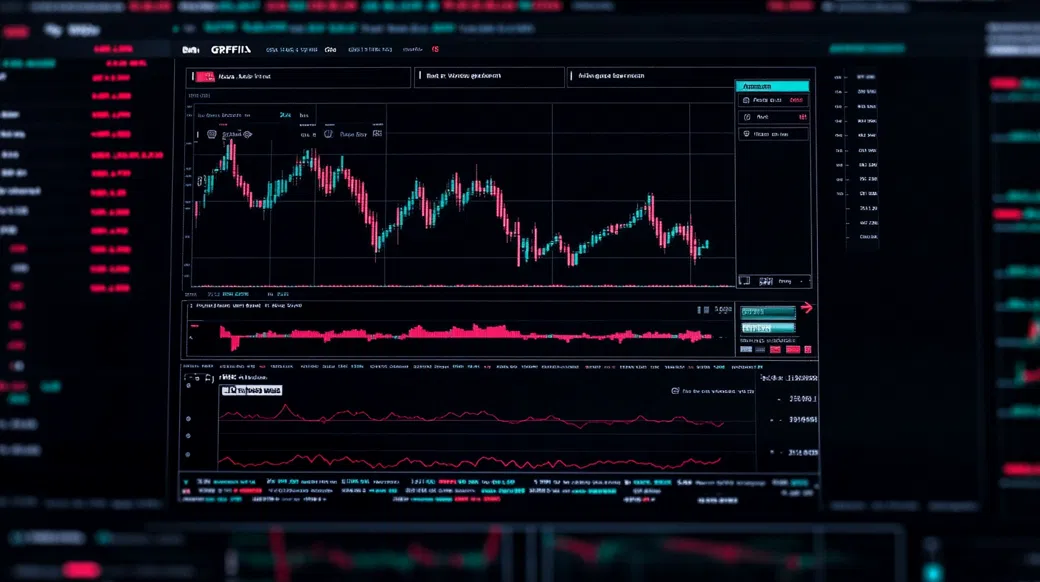
Charts don’t care about brand names; they care about fills, costs, and whether the counterparty behaves when volatility hits. That’s the lens I use when readers ask about offshore CFD venues and the realistic next step for their workflow. From what’s publicly observable about Sereno Crescália, it sits in the familiar offshore CFD bucket: a proprietary WebTrader plus mobile apps, a product mix centered on forex and index/commodity CFDs, and the kind of headline leverage (often up to 1:500) that looks exciting until a margin call turns it into a forced lesson in position sizing.
In this segment, traders usually run into the same pressure points: execution quality that’s hard to audit, fewer platform integrations than MT4/MT5/cTrader stacks, and terms that can change faster than your risk model. That’s why this guide focuses on Sereno Crescália alternatives with tighter governance, clearer investor protections, and more transparent pricing. The goal isn’t to “bash” any one provider; it’s to map your strategy (scalping, swing, macro hedging, options overlay) to a venue that matches your risk budget and regional rules (US/EU readers: those rules are non-negotiable).
Disclaimer: This article is for informational purposes only and does not constitute investment advice. CFDs and other leveraged products carry a high risk of loss, and you can lose more than your initial deposit in some structures.
For traders scanning platforms like Sereno Crescália, the setup usually reads the same: an offshore framework (commonly aligned with Seychelles FSA-style structures in this category), CFDs as the main wrapper, and a retail-first interface built to get you from signup to first trade quickly. The product shelf typically prioritizes FX (roughly 30–50 pairs), major indices, a handful of commodities, and a smaller crypto CFD list. US residents are generally not onboarded, and other restricted or sanctioned jurisdictions are frequently excluded as well.
Functionally, Sereno Crescália tends to sit in the “basic-to-mid” WebTrader tier: clean charts, straightforward watchlists, and enough indicators and drawing tools for directional setups. Order entry is usually optimized for market/limit/stop workflows, with a position panel that makes margin and P&L easy to monitor on mobile. Where these proprietary stacks often fall short is depth: fewer advanced order types, limited automation hooks, and less transparency around execution reporting—things that matter once you start measuring slippage during event risk rather than admiring the UI.
Cost-wise, offshore CFD venues commonly run a tiered model. A “Standard” style account often prints EUR/USD around ~2.0 pips in typical conditions, while a “Raw/ECN-like” tier (where offered) may show 0.0–0.4 pips plus a $6–$8 round-turn commission. Add swaps/overnight financing for held positions, and keep an eye on non-trading fees such as inactivity or withdrawal charges, which can dominate your net results if you trade infrequently. This is the practical reason competitors to Sereno Crescália get evaluated on full lifecycle costs, not just the quote on the ticket.
A trader’s “switch” decision rarely comes from one bad trade; it comes from repeated friction that shows up in the blotter and the withdrawal ledger. For many readers, the catalyst is risk governance: high leverage combined with an offshore rulebook can widen the gap between what you expect and what you can enforce when disputes arise. That’s why Sereno Crescália alternatives get shortlisted based on verifiable regulation, platform fit, and whether execution holds up when spreads blow out around CPI, FOMC, or a surprise risk-off open.
Think of the selection process as a strategy audit: your time horizon, product needs, and risk limits decide the broker—not the other way around. Regulated options vs Sereno Crescália typically give you clearer rules on client money handling and complaints escalation, but you still need to match platform and pricing to your method. I also treat “operational risk” (funding, reporting, platform stability) as a real line item alongside market risk.
Start with what you can verify: FCA, ASIC, CySEC, and for US FX brokers, NFA/CFTC. These frameworks usually require segregated client funds and defined conduct standards. In the UK, the FSCS can cover eligible claims up to £85,000; in Cyprus, the ICF can cover eligible claims up to €20,000. Offshore entities may still operate legally, but the protection envelope is typically thinner, and dispute resolution can be less straightforward.
Match instruments to intent. Macro hedgers and portfolio builders often need real stocks/ETFs, bonds, or futures—not just CFDs. Active FX traders may be fine with spot FX/CFDs, but the moment you want listed options for convexity or exchange-traded futures for cleaner pricing, you’ll outgrow CFD-only shelves. Brokers similar to Sereno Crescália can cover the basics; multi-asset venues usually broaden the toolkit.
Spreads are only one part of the invoice. Compare round-turn transaction costs (spread + commission) and then stress-test the “hidden” lines: swap/overnight fee for holds, inactivity fees for low-frequency accounts, and funding/withdrawal charges. A 0.6 pip difference in EUR/USD can matter more than leverage if you trade size repeatedly—especially when your edge is small and your holding period is short.
Platform choice is really a choice about tooling and execution transparency. MT4/MT5 and cTrader ecosystems support automation, custom indicators, and third-party analytics; proprietary platforms can be stable but may limit integrations. Ask how orders are routed (market maker vs STP/ECN/DMA), and consider how the broker reports slippage. If you’re still using Sereno Crescália, replicate the same trade in a demo/live micro account elsewhere during a data release and compare fills—your journal will tell you more than a marketing page.
Operational support matters most when something breaks. Check support hours against your trading session (US/EU open, Asia close), test response times with a pre-sales query, and review how the broker handles KYC/AML document updates. Education is optional if you’re experienced, but a clean platform, consistent mobile parity, and transparent reporting are not. If your tax reporting is messy, you’re adding avoidable risk.
On FX/CFDs, Sereno Crescália typically competes with leverage and simplicity rather than institutional-style execution. With max leverage often marketed around 1:500 and a Standard-tier EUR/USD near ~2.0 pips, the economic question becomes: what’s your all-in cost once slippage and swaps are included? For tighter pricing and platform depth, FX/CFD specialists like Pepperstone and OANDA tend to be the benchmark set: multiple platform options, clearer execution disclosures, and regulatory oversight (FCA/ASIC/CFTC-NFA depending on entity) that forces better operational hygiene. If you scalp, pay special attention to stop execution in fast markets; that’s where “cheap” spreads can get offset by adverse fills.
Equities are where the difference between “trading exposure” and “owning an asset” becomes obvious. Many offshore CFD venues primarily offer stock and ETF exposure as CFDs (if at all), meaning no shareholder rights and an ongoing financing line item for overnight holds. For US/EU investors who want real shares, Interactive Brokers (IBKR) is hard to ignore because it’s built around listed markets—stocks, ETFs, options, and futures—rather than a CFD wrapper. Saxo Bank is another strong candidate for multi-asset access and a more portfolio-oriented workflow. If your strategy includes dividend capture, long-term ETF allocation, or options hedges, the “real market access” route is usually a cleaner fit than rolling CFD financing.
Crypto is often offered on offshore platforms as CFDs: you get price exposure, not on-chain coins, and you’re taking counterparty risk alongside market risk. Sereno Crescália-style shelves typically include a limited list (often around 10–30 coins), which may be enough for BTC/ETH directional trades but not for nuanced allocation. In regulated environments, availability varies by jurisdiction; some brokers focus on crypto CFDs rather than spot ownership. IG (where permitted) can suit traders who want crypto price exposure inside a regulated CFD framework, while Saxo Bank may fit investors who want crypto-related products integrated into a broader portfolio view. Either way, treat crypto leverage as a volatility multiplier—size down, and assume gaps can happen.
Regulation: SEC/FINRA (US), FCA (UK), IIROC (Canada) (entity depends on region)
Markets: stocks, ETFs, options, futures, FX, bonds, funds
Fees: FX spreads typically tight on major pairs; commissions vary by product/venue (tiered/fixed schedules)
Platform: Trader Workstation (TWS), IBKR Desktop, Web, Mobile; APIs for automation
Best For: Multi-asset traders who need listed options/futures and real-share access
Regulation: FCA, ASIC, CySEC, DFSA
Markets: FX, CFDs (indices, commodities, some shares depending on entity)
Fees: Standard spreads often ~1.0–1.3 pips on EUR/USD; Razor/Raw-style pricing can be ~0.0–0.3 pips + commission (varies by platform/entity)
Platform: MT4, MT5, cTrader, TradingView integration (availability by region)
Best For: Systematic FX traders running EAs and needing cTrader/MT execution
Regulation: FCA, MAS, DFSA
Markets: stocks, ETFs, options, futures, FX, bonds; CFDs in some regions
Fees: FX spreads and commissions depend on tier; typically tighter for higher activity, with transparent pricing schedules
Platform: SaxoTraderGO, SaxoTraderPRO
Best For: Portfolio-led investors who want strong risk tools and cross-asset analytics
Regulation: CFTC/NFA (US), FCA, ASIC, IIROC
Markets: FX; CFDs in certain jurisdictions (indices/commodities depending on entity)
Fees: Spread-based pricing on core accounts (often around ~0.8–1.5 pips EUR/USD depending on conditions); commissions may apply on certain account structures/regions
Platform: OANDA web/mobile, MT4 (availability varies), APIs
Best For: US-eligible FX traders prioritizing regulation and straightforward pricing
Regulation: FCA, ASIC, BaFin
Markets: CFDs (FX, indices, commodities, shares)
Fees: Competitive spread-led pricing; EUR/USD often around ~0.7–1.2 pips depending on account and market conditions
Platform: Next Generation platform, Mobile apps; MT4 available in some regions
Best For: Active CFD traders who want rich charting and strong market scanners
Regulation: FCA, CySEC, ASIC, MAS
Markets: CFDs (FX, indices, commodities, shares, crypto CFDs where permitted)
Fees: Mainly spread-based pricing; costs vary by instrument with overnight financing for held CFD positions
Platform: Plus500 proprietary WebTrader and mobile apps
Best For: Simplicity-first traders who prefer a clean CFD-only interface
| Platform | Regulation | Main Markets | Typical Costs | Best For |
|---|---|---|---|---|
| Interactive Brokers (IBKR) | SEC/FINRA, FCA, IIROC | Real stocks/ETFs, options, futures, FX, bonds | Product-based commissions; FX typically tight on majors | Multi-asset traders who need listed options/futures and real-share access |
| Pepperstone | FCA, ASIC, CySEC, DFSA | FX + CFDs (indices/commodities; some shares CFDs) | Std ~1.0–1.3 pips EUR/USD; Raw ~0.0–0.3 + commission | Systematic FX traders running EAs and needing cTrader/MT execution |
| Saxo Bank | FCA, MAS, DFSA | Stocks/ETFs, options, futures, FX, bonds | Tiered spreads/commissions; clearer schedules for active clients | Portfolio-led investors who want strong risk tools and cross-asset analytics |
| OANDA | CFTC/NFA, FCA, ASIC, IIROC | FX (plus CFDs in some regions) | Often ~0.8–1.5 pips EUR/USD on spread-based accounts (conditions vary) | US-eligible FX traders prioritizing regulation and straightforward pricing |
| CMC Markets | FCA, ASIC, BaFin | CFDs across FX/indices/commodities/shares | Spread-led; EUR/USD often ~0.7–1.2 pips (varies) | Active CFD traders who want rich charting and strong market scanners |
| Plus500 | FCA, CySEC, ASIC, MAS | CFDs (FX, indices, commodities, shares; crypto CFDs where allowed) | Spread-based + overnight financing on CFDs | Simplicity-first traders who prefer a clean CFD-only interface |
Migration is best treated like reducing counterparty exposure: control sequence, document everything, and keep optionality until the new venue is live. The operational mistake I see most is withdrawing first and then discovering the new account is stuck in KYC, leaving you unable to trade or hedge. If you’re moving away from Sereno Crescália, keep leverage modest during the transition—thin liquidity plus new-platform unfamiliarity is a bad combo.
If you’re still evaluating fit, check the current onboarding flow, supported regions, and the platform stack side-by-side with the substitutes covered above. A quick test—demo plus a small live order—often reveals more about execution and fees than a week of reading specs.
Visit Sereno CrescáliaThe best option depends on whether you need listed markets or mainly FX/CFDs. For real stocks/ETFs plus options and futures, Interactive Brokers (IBKR) is often the cleanest jump; for FX execution and MT4/MT5/cTrader tooling, Pepperstone is a frequent fit. This guide’s “best Sereno Crescália alternatives 2026” list is designed to match broker choice to strategy rather than chase maximum leverage.
Sereno Crescália appears consistent with an offshore/unregulated-or-lightly-regulated CFD model (commonly seen under Seychelles-style frameworks in this segment), which generally offers fewer investor protections than FCA/ASIC/CySEC/NFA regimes. Safety is not only about platform uptime; it’s also about enforceable rules on segregated client funds, complaint handling, and disclosure standards. If your priority is a stronger protection envelope, focus on regulated alternatives to the Sereno Crescália trading platform and verify the license on the regulator’s public register.
Sereno Crescália typically aligns with forex and CFD offerings, where stocks (if available) are more likely offered as CFDs rather than real shares, and futures access is usually not the core proposition. Crypto exposure in this segment is commonly via crypto CFDs (price exposure, not on-chain ownership), often with a limited coin list. If you need listed futures or real-share investing, platforms like Sereno Crescália are usually a poor match compared with IBKR or Saxo.
Before moving, verify the new broker’s regulator listing (FCA/ASIC/CySEC/NFA) and confirm your country eligibility and product permissions. Next, compare all-in trading costs (spread + commission + swap) and validate platform fit—MT4/MT5/cTrader vs proprietary—against your execution needs. Finally, complete KYC first and plan the cashflow sequence so withdrawals and AML checks don’t leave you unhedged mid-transition from Sereno Crescália alternatives research into action.
About the Author: Daniel Okafor is a derivatives trader turned market analyst based in Singapore, covering APAC brokerages and global macro through a trader’s lens. He focuses on execution, risk controls, and cost-of-trade—because your P&L rarely cares about marketing, but always cares about fills.