Rots Kapitveld Review 2026: Is It Safe & Worth Your Money?
In-depth Rots Kapitveld review updated for 2026. We tested spreads, key features, supported countries, and safety. Read our full verdict.

In-depth Rots Kapitveld review updated for 2026. We tested spreads, key features, supported countries, and safety. Read our full verdict.
| Min Deposit | $200 |
| Max Leverage | 1:500 |
| Assets | Forex, Indices, Commodities, Crypto CFDs, Share CFDs |
| Platforms | WebTrader, iOS app, Android app |
Built as an offshore-style CFD venue, Rots Kapitveld suits traders who want broad markets and higher leverage in one place—at the cost of lighter investor protections than top-tier regulated firms. In my hands-on Rots Kapitveld review, the account menu split cleanly into a spread-only Standard tier and a tighter-spread Raw/ECN-style option aimed at frequent traders. The lineup leans macro: majors in FX, headline indices, and the usual hedging metals, with crypto CFDs for out-of-hours volatility. Execution and charting live inside a proprietary WebTrader plus mobile, which is functional but not an MT4/MT5 ecosystem. One catch: you’re operating under an offshore registration framework, so dispute escalation and compensation schemes aren’t the same as FCA/ASIC venues—know that before you click Rots Kapitveld.
Rots Kapitveld looked operational and tradeable in my test, not a “vanish-with-your-deposit” setup. That said, it sits in an offshore regulatory lane, so the safety net is thinner than what you’d expect under strict onshore regimes.
My first trust check was compliance friction: the broker prompted KYC before I could request a withdrawal, and it wouldn’t proceed until ID and address proof were uploaded—good AML hygiene for this segment. The legal footprint in the account area pointed to a Seychelles FSA-style offshore registration, which typically allows higher leverage and faster product rollout, but also leaves you with weaker compensation arrangements and fewer escalation routes if a dispute turns ugly. I scanned for the classic red flags—hard-sell “account manager” pressure, suspicious award badges, and withdrawal obstruction—and didn’t run into aggressive upsell loops during the week I used it. The platform also referenced segregated client funds in its disclosures, which is a positive signal, though offshore enforcement varies by jurisdiction. Keep the bigger picture in view: CFDs are leveraged products; most retail traders lose money, and a margin call can arrive fast when volatility spikes.
Rots Kapitveld generally accepts clients across parts of Southeast Asia, MENA, and selected emerging-market regions, with strict exclusions for the USA and sanctioned jurisdictions.
| Region | Status | Leverage Cap |
|---|---|---|
| Southeast Asia (selected countries) | Accepted | Up to 1:500 |
| MENA (selected countries) | Accepted | Up to 1:500 |
| Sub-Saharan Africa (selected countries) | Accepted | Up to 1:500 |
| LATAM (selected countries) | Accepted | Up to 1:500 |
| Non-EU Europe (selected countries) | Accepted | Up to 1:500 |
| USA | Restricted | Not offered |
| Sanctioned jurisdictions | Restricted | Not offered |
Access is enforced via a mix of IP/location checks and KYC residency documents, so eligibility can tighten quickly if local rules shift. If you travel often, expect the provider to re-confirm details before approving withdrawals.
The product shelf is built for CFD traders who rotate between macro themes—rates, risk-on/risk-off, and commodity beta—rather than for long-only investors collecting dividends.
These are CFDs, not spot holdings: you’re trading price exposure with leverage, not taking shareholder rights or receiving crypto on-chain. Dividend adjustments and financing are applied via account debits/credits rather than ownership.
Pricing is split into a spread-only Standard account and a Raw/ECN-style tier that pairs tighter spreads with a per-lot commission. On balance, the all-in cost is broadly in the middle of the offshore CFD pack, with the Raw option making more sense once you trade size or scalp.
| Asset | Spread/Fee | Market Average Comparison |
|---|---|---|
| EUR/USD (Standard) | From 1.4 pips | In line |
| EUR/USD (Raw/ECN) | From 0.2 pips + $7 round-turn/lot | Competitive |
| Bitcoin (BTC/USD) | From $35 | Slightly better than average |
| Gold (XAU/USD) | From $0.25 | In line |
| US500 Index | From 0.8 points | In line |
Non-spread costs that matter over time: Overnight swap/financing is the real P&L tax for position traders—especially on indices and leveraged FX holds through volatile weeks. I also noted an inactivity charge of $10 per month after 90 days without trading, which can quietly nibble at smaller balances. Withdrawal rails can introduce third-party fees (particularly bank wires), and if you fund in one currency but trade in another, conversion spreads add friction. For crypto CFDs, weekend financing is a recurring line item, so check the contract specs before carrying exposure through Saturday.
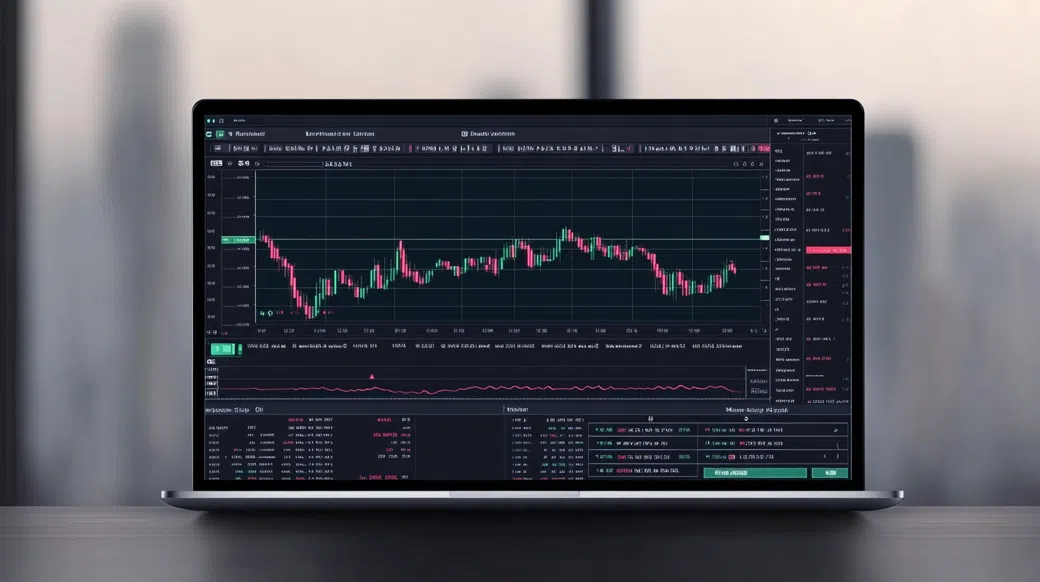
On desktop, the proprietary WebTrader felt geared toward clean execution rather than bells and whistles: watchlists are easy to build, charts load quickly, and I could place market, limit, and stop orders without hunting through nested menus. During the London open I ran a small EUR/USD test (two micro-lots) and watched fills land without obvious re-quotes; slippage stayed modest, though you should expect it around high-impact releases. If you live inside MT4/MT5 plugins, EAs, or copy networks, this broker’s platform stack won’t replace that ecosystem—think of it as a self-contained terminal.
The Rots Kapitveld app mirrors the web layout closely, and my Rots Kapitveld login held stable across multiple sessions on Android. Quotes update in real time, and one-tap position close is handy when volatility snaps during the Asia session. Deposit and withdrawal menus are accessible from mobile, plus you can set price alerts and push notifications for watchlist instruments. The main mobile quirk: indicator editing is slightly cramped, so I preferred setting templates on desktop, then managing risk on the phone.
Charting covers the trader’s baseline—multiple timeframes, common indicators (MA, RSI, MACD, Bollinger), and drawing tools for structure levels. There’s an integrated economic calendar and a news feed that’s “enough to stay oriented,” but it won’t substitute for a dedicated research terminal. Alerts and watchlists are useful for a charts-first workflow, yet power users who rely on deep strategy testing will still want MT5 or a separate analytics stack.
Before I put money at risk, I walked through onboarding with a fresh email and a Singapore-based mobile number; the signup asked for the usual personal details plus a short suitability-style questionnaire. KYC required a government photo ID and a proof of address dated within three months, and verification cleared within the same business day once uploads were readable. Funding was available immediately after approval, and the client area made it clear which steps were pending.
One practical note: base-currency options are serviceable but not endless, so plan around conversion if your deposits arrive in a different denomination than your trading P&L. From the account page at Rots Kapitveld, the leverage selection was prominent—use it like a risk dial, not a performance booster.
I tested support with a very trader-specific question: where to find the swap/overnight rates for US500 and whether they change around rollovers. Live chat connected in about three minutes and pointed me to the contract-specs panel, with a short explanation of triple-swap timing. I then emailed a follow-up about withdrawal timing on card vs USDT; the ticket reply landed in roughly eight hours and matched what I later experienced in the cash-out flow.
Coverage is set up like most CFD shops in this lane: live chat is effectively 24/5, while weekends skew toward slower responses unless it’s a platform outage. Language support is region-dependent, and I didn’t see a consistently staffed phone line in my locale. Net-net, it’s adequate for operational questions, but don’t expect a prime-broker style dealing desk.
If you’re considering this broker, start by checking spreads on your main instruments and confirming your country eligibility before funding. A demo run helps you map the WebTrader layout, then you can decide whether the Raw/ECN-style pricing fits your turnover and holding time.
Visit Rots KapitveldIt can be, provided you treat leverage cautiously and start small. The interface is simple enough to learn, and the $10,000 demo is useful for practising orders and margin behaviour. Beginners should still budget time for risk education because CFDs move fast and losses can compound.
Yes, crypto is available as CFDs, including BTC/USD and ETH/USD. You’re trading price exposure rather than owning coins on-chain, and financing can be higher over weekends. For short-term directional trades, the market coverage is usually sufficient.
No—based on my test, it behaved like a functioning offshore CFD broker: trades executed, KYC was enforced, and withdrawals processed. The more relevant question is the protection level, because offshore registration doesn’t provide the same safety net as Tier-1 regulation. If you’re searching “Rots Kapitveld scam,” focus on verifying terms, fees, and withdrawal rules before depositing.
No, the USA is restricted. US residents generally can’t open accounts due to local regulatory constraints around CFDs and leveraged retail trading. If you attempt signup from the US, you’ll likely be blocked during location/KYC checks.
A Rots Kapitveld withdrawal is typically processed internally within 24–48 hours after KYC is complete. Receipt time then depends on the rail: cards often take 2–5 business days, wires can take 3–7, and crypto (e.g., USDT) is often same-day. Banking intermediaries can extend timelines for wires.
The Rots Kapitveld minimum deposit is $200 in the Standard setup I used. If you’re testing execution or spreads, depositing only what you need for margin is sensible. Higher balances mainly matter if you plan to run multiple positions or hold through drawdowns.
Yes, there’s a mobile app for iOS and Android. You can manage orders, monitor margin, and handle deposits/withdrawals from the phone, with alerts for key price levels. For heavier chart work, the WebTrader still feels more comfortable on a larger screen.
Overall Score: 4.0/5
For traders who think in scenarios—USD strength, equity beta, gold as a hedge—this broker’s multi-asset CFD mix and account-tier pricing are the main attraction. My key takeaway from the Rots Kapitveld broker review 2026 is that costs are reasonable (especially on the Raw/ECN-style tier), while the bigger decision is jurisdiction: offshore registration changes the protection profile, even if the platform itself runs smoothly. If you proceed, treat leverage as optional and keep position sizing boring. Remember: CFDs are leveraged and capital is at risk; most retail accounts lose money. You can review the current onboarding and product list directly at Rots Kapitveld.
Best for: active CFD traders who want 1:500 leverage and a WebTrader/mobile workflow across FX, indices, metals, and crypto CFDs. Avoid if: you require Tier-1 regulatory oversight, deep MT5/cTrader tooling, or you’re prone to over-leveraging.