Rendaluce Review 2026: Is It Safe & Worth Your Money?
In-depth Rendaluce review updated for 2026. We tested spreads, key features, supported countries, and safety. Read our full verdict.

In-depth Rendaluce review updated for 2026. We tested spreads, key features, supported countries, and safety. Read our full verdict.
| Min Deposit | $200 |
| Max Leverage | 1:500 |
| Assets | Forex, Indices, Commodities, Crypto CFDs, Share CFDs |
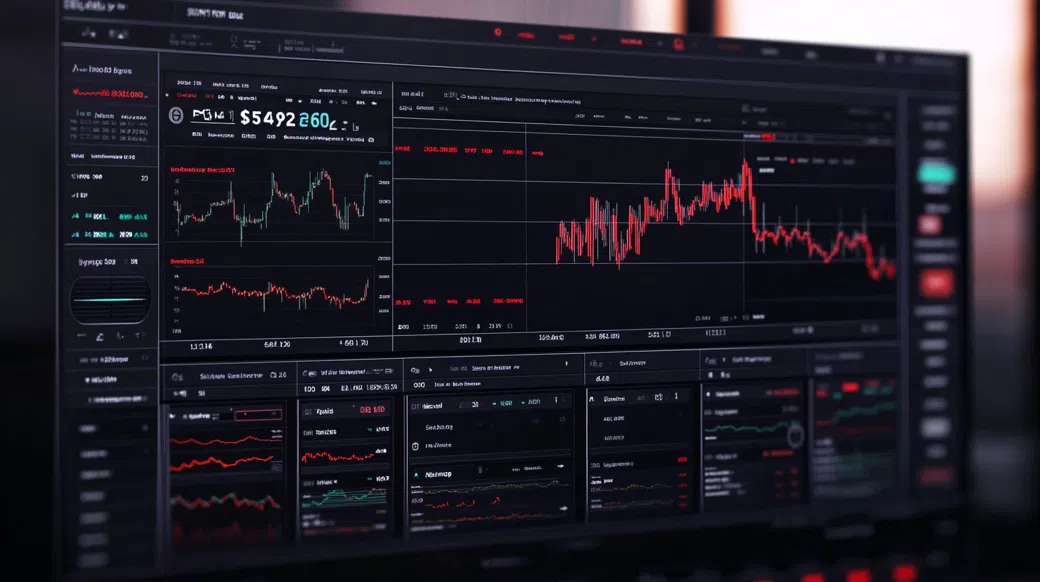
| Platforms | Proprietary WebTrader + iOS/Android mobile apps |
Built for traders who want multi-asset CFDs with high leverage and a clean, browser-first workflow, Rendaluce suits active speculators more than long-horizon investors—the headline trade-off is flexibility versus an offshore oversight model. I tested both account tiers and found the cost structure predictable: a spread-only Standard option and a tighter Raw/ECN-style alternative for higher-frequency flow. Markets skew liquid (FX majors, headline indices, gold, BTC/ETH), and the platform stack stays proprietary rather than leaning on MT4/MT5. Execution tools are adequate for discretionary trading, but research depth is not the main selling point. For the full platform walk-through, start at Rendaluce.
Rendaluce appears to be a functioning broker rather than a “vanish-with-your-deposit” operation, and my deposit and withdrawal loops completed as expected. Still, it runs under an offshore registration framework, so “safe” depends on your risk tolerance and position sizing—not on a Tier-1 safety net.
The key tell for me was process discipline: the provider enforced KYC/AML before allowing full withdrawal routing, and the portal repeatedly referenced segregated client funds in its onboarding disclosures. The legal footprint I saw points to a Mauritius FSC registration, which typically allows higher leverage (good for margin efficiency) but offers slimmer formal compensation schemes and fewer avenues if you’re trying to escalate a dispute across borders. I also scanned for the usual red flags—aggressive “account manager” pressure, suspicious trophy-badges, or forced bonus loops—and didn’t run into hard-sell tactics during my test window. That said, offshore regulation changes the burden of proof: keep records, screenshot confirmations, and don’t overfund a new venue. CFDs are leveraged products; most retail accounts lose money, and you can hit margin calls quickly if volatility spikes.
This broker is generally accessible across parts of Southeast Asia, LATAM, MENA, and select non-EU Europe, while the USA and sanctioned jurisdictions are blocked.
| Region | Status | Leverage Cap |
|---|---|---|
| Southeast Asia (selected countries) | Accepted | Up to 1:500 |
| Middle East & North Africa (selected countries) | Accepted | Up to 1:500 |
| Latin America (selected countries) | Accepted | Up to 1:500 |
| Europe (non-EU / non-UK, selected) | Accepted | Up to 1:200 |
| USA | Restricted | Not offered |
| Sanctioned jurisdictions | Restricted | Not offered |
Eligibility is enforced through a mix of IP checks and document verification; I was asked to confirm residence details before funding. Policies can shift with local rules, so treat access as “subject to compliance” rather than permanent availability.
Rendaluce feels FX-and-index centric, with crypto and shares positioned as tactical add-ons rather than the core of the product. Liquidity is best on the headline contracts where spread and slippage are most controllable.
All exposure is via CFDs, so you’re trading price moves with leverage—not owning the underlying asset. That means no shareholder voting rights, and crypto positions aren’t on-chain withdrawals; it’s purely a derivatives contract with financing embedded.
Rendaluce fees follow a familiar two-lane model: Standard is spread-only, while the Raw/ECN-style account tightens pricing and adds a per-lot commission. On liquid FX, the all-in cost on Raw/ECN can undercut the Standard tier, which is broadly in line with international CFD peers.
| Asset | Spread/Fee | Market Average Comparison |
|---|---|---|
| EUR/USD (Standard) | From 1.5 pips | Close to average for offshore CFD brokers |
| EUR/USD (Raw/ECN) | From 0.2 pips + $7 round-turn per lot | Competitive if you trade size and frequency |
| Bitcoin (BTC/USD) | From $35 | In the typical range; can widen on weekends |
| Gold (XAU/USD) | From $0.25 | Reasonable versus multi-asset CFD platforms |
| US500 Index | From 0.8 points | Fair for a proprietary platform |
Non-spread costs that matter over time: Overnight swap/financing is the real P&L tax if you hold CFDs beyond the session—especially on indices and leveraged FX. Crypto also carries weekend financing dynamics, so a “quiet hold” can still bleed. Add a $10/month inactivity fee after 90 days and the usual FX conversion costs if you deposit in a currency different from your account base. On my side, I treated these as part of the total cost-of-trade and kept holds short unless the thesis justified it.
From Singapore hours into the Asia session, the WebTrader stayed stable and didn’t choke when I ran multiple charts side-by-side (US500, XAU/USD, EUR/USD). Order tickets covered the essentials—market, limit, stop, and basic risk controls—while execution felt consistent on majors when liquidity was healthy. If you’re coming from MT4/MT5, the missing plug-in ecosystem is the main gap: fewer third-party tools, fewer custom scripts, and less “strategy marketplace” culture.
The Rendaluce app is designed for monitoring and fast adjustments rather than deep analysis, and that’s a compliment in 2026. Rendaluce login on mobile supported biometric unlock on my device, quotes refreshed in real time, and I could add/close positions with one-tap confirmation. Deposits and withdrawals are accessible from the same menu, with push notifications for order status and margin alerts. My only gripe: chart space is tight in landscape, so drawing tools feel more “quick mark-up” than proper planning.
Charting covers the staples—multi-timeframe layouts, MA/RSI/MACD/Bollinger, and straightforward trendline tools—enough to run a clean, chart-first process. The economic calendar and integrated news feed are helpful for timing (CPI/FOMC weeks), but the ceiling is below MT5/cTrader when you want advanced automation or custom indicator stacks. Watchlists and alerts do the job; I set price alerts around London open levels and they triggered reliably.
Before I even looked at spreads, the onboarding funnel asked for the usual identity basics (name, residency, contact) and then pushed me into verification. KYC required a government-issued photo ID plus a proof of address dated within three months; my documents cleared in under one business day, and the dashboard flipped to “verified” without additional back-and-forth. The flow is modern and uncluttered, with compliance prompts that are hard to miss.
One practical note: account base currency choices were limited versus top-tier global brokers, so multi-currency depositors should expect conversion costs somewhere in the chain. If you’re evaluating execution, start with the demo, then fund small and scale only after you’ve tested slippage around your preferred session.
I used live chat to clarify swap/overnight fee visibility (where it’s shown per symbol and how it updates), then followed up by email asking about withdrawal cut-off times for card payouts. Chat replied in roughly three minutes with a concise menu path and a note about triple-swap days; the email ticket landed back in my inbox in about nine hours on a business day with the same details plus a link to their fee schedule. The answers were consistent, which matters more than friendly tone.
Coverage is positioned around a 24/5 trading week, which matches most CFD desks, and language availability depends on who is staffing the shift. I didn’t see a dependable phone escalation route during my checks, so treat support as digital-first. Weekends are quieter—fine for account admin, but don’t plan on rapid human intervention when crypto spreads are moving.
If you’re considering this broker, use the demo to map spreads and margin behavior first, then confirm your country eligibility and funding rails before committing real capital. I’d also check the Raw/ECN total cost on your main instrument during your usual session.
Visit RendaluceYes, for beginners who keep position sizes small and focus on liquid CFDs. The interface is approachable, and the $10,000 demo helps you learn margin, stops, and order types without paying spreads in the real market. The offshore leverage (up to 1:500) can be a trap if you treat it as “free buying power.”
Yes, you can trade crypto via CFDs such as BTC/USD and ETH/USD. You’re speculating on price movement with leverage, not buying coins you can withdraw to a wallet. Expect wider spreads and financing effects over weekends compared with major FX pairs.
No, my checks didn’t resemble a Rendaluce scam pattern: KYC was enforced, the client portal produced clear transaction records, and my withdrawal request progressed normally. The bigger issue is jurisdiction—offshore registration typically gives you fewer formal protections than Tier-1 regulators. Treat it as a speculative CFD venue and manage risk accordingly.
No, Rendaluce is not available in the USA. US residents generally face strict derivatives rules, and this provider blocks US onboarding. If you’re relocating, verify eligibility again during KYC.
A Rendaluce withdrawal typically clears internal processing within 24–48 hours after KYC, then depends on the payment rail. Cards usually land in 2–5 business days, wires in 3–7 business days, and crypto transfers are often same-day once approved. Timing can stretch around holidays or enhanced compliance checks.
The Rendaluce minimum deposit is $200. That’s enough to test real spreads and execution, but it’s not enough to safely use high leverage without tight risk controls. If you’re new, consider treating the first deposit as a “platform test budget,” not trading capital.
Yes, the Rendaluce app is available on iOS and Android. It supports core trading actions, account management, and funding/withdrawal navigation, with biometric login on compatible devices. For deep chart work, the WebTrader still feels roomier.
Overall Score: 4.0/5
For traders who measure brokers by spreads, execution consistency, and whether withdrawals actually arrive, Rendaluce checks more boxes than you’d expect from a lesser-known name. My Asia-session spot checks on EUR/USD and US500 were stable, and the two-tier pricing makes sense if you can justify Raw/ECN commissions. The constraint is structural: offshore oversight means fewer formal safety nets, so keep balances lean and document everything. If you proceed, treat it as a CFD venue—not a bank account—and respect leverage. You can review the latest conditions directly via Rendaluce.
Best for: active CFD traders who want a proprietary WebTrader, optional Raw/ECN pricing, and 1:500 leverage with disciplined risk controls. Avoid if: you require Tier-1 regulation, deep third-party platform ecosystems (MT4/MT5 add-ons), or you plan to “set and forget” positions for months.