Polyzext Review 2026: Is It Safe & Worth Your Money?
In-depth Polyzext review updated for 2026. We tested spreads, key features, supported countries, and safety. Read our full verdict.

In-depth Polyzext review updated for 2026. We tested spreads, key features, supported countries, and safety. Read our full verdict.
| Min Deposit | $200 |
| Max Leverage | 1:500 |
| Assets | Forex, Indices, Commodities, Crypto CFDs, Share CFDs |
| Platforms | Proprietary WebTrader, iOS app, Android app |
Built as a multi-asset CFD venue, Polyzext suits traders who want leverage and a clean WebTrader workflow, with the obvious trade-off being an offshore framework and fewer formal investor protections than top-tier regulated brokers. In my test account, the Standard tier leaned spread-only while the Raw-style option tightened pricing with a per-lot commission. Coverage is broad enough for macro playbooks—FX majors, US indices, and metals were the most liquid during my sessions. The platform stack is proprietary (web + mobile), which keeps onboarding cohesive but limits the MT4/MT5 ecosystem many algo traders expect. For a quick read on features and costs, start at Polyzext.
Polyzext looked operational and tradeable in my 2026 test, not like a “vanish-with-your-deposit” setup. That said, it sits in an offshore model, which means the safety net is thinner than with FCA/ASIC-style oversight.
What stood out first was process discipline: the provider enforced KYC before I could move meaningful size, and the client-area copy repeatedly referenced segregated client funds (language, not a guarantee). I also ran a red-flag scan the way I would for any newer CFD shop—no “fake awards” carousel, no constant sales calls, and no pressure to increase deposits after I placed a few small tickets. The registration path pointed to the Seychelles FSA, which typically allows higher leverage and faster product rollouts, but offers weaker compensation schemes and fewer escalation channels if a dispute turns ugly. Practically, that means you need to be your own risk manager: keep position sizing tight, watch margin levels, and treat any bonus promos (if shown) as optional—not a reason to over-leverage. CFDs are leveraged products; most retail accounts lose money, and capital is at risk.
This broker generally accepts clients across parts of Southeast Asia, MENA, LATAM, and selected non-EU European regions, subject to compliance checks. The USA and sanctioned jurisdictions are blocked.
| Region | Status | Leverage Cap |
|---|---|---|
| Southeast Asia (selected countries) | Accepted | Up to 1:500 |
| MENA (selected countries) | Accepted | Up to 1:500 |
| Latin America (selected countries) | Accepted | Up to 1:500 |
| Non-EU Europe (selected countries) | Accepted | Up to 1:500 |
| Sub-Saharan Africa (selected countries) | Accepted | Up to 1:500 |
| USA | Restricted | Not offered |
| Sanctioned jurisdictions | Restricted | Not offered |
Eligibility isn’t just a dropdown choice: IP location, ID country, and proof-of-address need to align at verification. Policies can shift with regulatory updates, so I’d re-check availability inside the client portal before funding.
The lineup feels macro-first: liquid indices and FX sit at the center, with crypto CFDs as a satellite for traders who want weekend volatility. I focused on instruments where spreads tend to tell the truth—majors, gold, and the US500.
All of this is CFD exposure: you’re trading price movement on margin, not buying the underlying shares or taking coins on-chain. Any “dividend” effect is typically handled as an adjustment in the CFD, not as shareholder ownership.
Costs are split by account tier: the Standard account bakes fees into the spread, while the Raw/ECN-style option compresses spreads and adds a fixed commission per lot. On balance, the pricing sits in the middle of the offshore CFD pack—competitive on liquid FX, less forgiving on crypto and off-hours indices.
| Asset | Spread/Fee | Market Average Comparison |
|---|---|---|
| EUR/USD (Standard) | From 1.6 pips | Roughly in line for offshore CFD brokers |
| EUR/USD (Raw/ECN) | From 0.2 pips + $7 round-turn/lot | Competitive for active FX, assuming consistent fills |
| Bitcoin (BTC/USD) | From $35 | Typical; can widen sharply in fast markets |
| Gold (XAU/USD) | From $0.30 | In the expected range for retail CFD execution |
| US500 Index | From 0.8 points | Close to average; best during US cash hours |
Non-spread costs that matter over weeks, not minutes: swap/overnight financing is the big one, and it’s where a “tight spread” account can still bleed if you hold positions through multiple rollovers. There’s also an inactivity fee of $10 per month after 90 days without trading activity, which nudges you to either stay active or withdraw. On funding rails, I saw FX conversion costs when depositing in a non-USD base currency, and crypto CFDs typically carry weekend financing that can surprise position traders. If you want to sanity-check the live pricing panel before committing size, I’d pull up the instrument specs inside Polyzext.
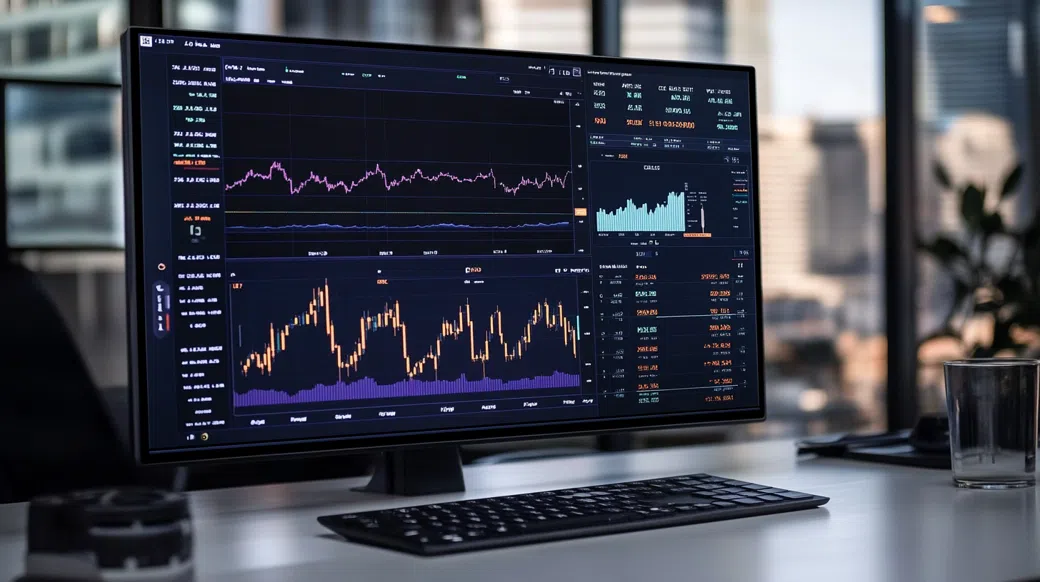
From the desktop browser in Singapore, the WebTrader loaded reliably and stayed connected through an Asia-to-London handoff. Charts are multi-timeframe with the expected indicator set (MA/RSI/MACD/Bollinger), and order tickets include market and pending orders with SL/TP controls. The gap versus MT4/MT5 is mostly ecosystem-related: fewer third-party plugins, fewer off-the-shelf EAs, and less community tooling—fine for discretionary trading, less ideal for system-heavy workflows.
The Polyzext app mirrors the web layout closely, and Polyzext login via biometric unlock worked cleanly on my test device. Quotes updated in real time, one-tap close was available for managing baskets, and I could initiate deposits and monitor withdrawal status from the same menu. Push notifications covered order status and margin alerts, though I’d like more granular price alerts (per level, per instrument) for active index trading.
Tooling is practical rather than flashy: watchlists, an integrated economic calendar, and a news feed that’s good for “what moved?” context. The indicator library is sufficient for classic momentum/mean-reversion reads, but it won’t replace a full MT5/cTrader research stack if you depend on advanced backtesting or custom scripts. For most retail CFD flows, it’s enough to execute and manage risk—just keep expectations grounded.
After entering email, phone, and a basic suitability questionnaire, the client portal prompted AML checks before unlocking the withdrawal area. For verification, I uploaded a government-issued photo ID and a recent utility bill dated within three months; approval landed the same business day. The interface makes it clear when your profile is “verified,” which matters because limits tighten until KYC is complete.
One practical note: account currency choices can affect your effective costs if you deposit in SGD/EUR and trade USD-margined CFDs, because conversions stack quietly. I prefer completing KYC early—even if you’re “just testing”—so the first withdrawal doesn’t become your first compliance surprise.
I tested support with a trading-specific question—where to find swap/overnight rates for XAU/USD and whether they change on triple-swap day. Live chat connected in roughly three minutes and pointed me to the instrument specification panel, plus a note on how financing is applied at rollover. I then sent an email asking about withdrawal processing times after KYC; the reply came in about nine hours with method-by-method expectations and a reminder that bank wires depend on intermediary banks.
Coverage is broadly 24/5, which fits the usual FX week but leaves weekends lighter—something to remember if you hold crypto CFDs when markets keep moving. Language support looked regional rather than global, and I didn’t see a consistent phone desk for every country. Relative to peers in this segment, the service is functional: you’ll get answers, but don’t expect a dedicated account manager unless you’re depositing serious volume.
If you’re considering this broker, start by comparing spreads on the instruments you actually trade and running a few demo scenarios around news volatility. Confirm your country eligibility and funding rails inside the portal, then test a small deposit before scaling up.
Visit PolyzextIt can be, provided you treat it as a CFD learning environment and keep leverage low. The WebTrader layout is not intimidating, and the $10,000 demo helps you practice order placement and risk controls. Beginners should still be cautious: with up to 1:500 leverage available, mistakes compound fast.
Yes, crypto CFDs are part of the product list, with BTC and ETH as core markets. Remember you’re trading a derivative, not withdrawing coins to a wallet. Fees can be more variable on weekends, so position traders should watch financing and spread widening.
No, it didn’t present as a scam in my test—account verification worked, trading was live, and withdrawals followed the stated workflow. The bigger issue is jurisdiction: it operates under an offshore registration model (Seychelles FSA), so the legal backstop is not the same as a Tier-1 regulator. Approach it like any leveraged CFD account: start small and verify the full deposit-to-withdrawal loop.
No, the USA is restricted and accounts are not offered there. US residents generally fall under stricter derivatives rules, and offshore CFD brokers typically block sign-ups. If you’re traveling, expect IP/KYC checks to still enforce residency rules.
A Polyzext withdrawal is usually processed internally within 24–48 hours once KYC is cleared. After that, receipt time depends on the rail: cards often take 2–5 business days, bank wires around 3–7 business days, and crypto can arrive the same day. Delays tend to come from banking intermediaries or mismatched documents.
The Polyzext minimum deposit is $200 in the funding screen I used. That’s enough to test real-market spreads and execution on small sizing without forcing outsized leverage. If you deposit in a non-USD currency, factor in conversion costs.
Yes, Polyzext has mobile apps on iOS and Android alongside its WebTrader. You can monitor positions, place orders, and manage funding from the app, which is helpful during the London-New York overlap. As always, mobile execution is only as good as your connection—use limit orders when volatility spikes.
Overall Score: 4.0/5
For traders who think in charts and macro levels, Polyzext delivers the essentials: a usable WebTrader, a credible Raw-style fee option, and enough market coverage to express FX, index, and metals views from one margin account. My deposit-and-withdrawal loop behaved as advertised, which is the first box I want ticked with any offshore CFD provider. The compromise is structural—Seychelles oversight and 1:500 leverage demand stricter self-discipline than a Tier-1-regulated account. If you proceed, keep sizing modest and treat CFDs as high-risk instruments where losses can exceed expectations. More details and current conditions are best checked at Polyzext.
Best for: active CFD traders who want Raw-style pricing and multi-asset access on web/mobile. Avoid if: you require Tier-1 regulation, MT4/MT5 tooling, or you’re prone to over-leveraging.