Polivenix Trading Platform Alternatives 2026 Guide
Polivenix alternatives for 2026: compare regulated brokers, platforms, costs, and safety checks. Find reliable options for FX, CFDs, and more.

Polivenix alternatives for 2026: compare regulated brokers, platforms, costs, and safety checks. Find reliable options for FX, CFDs, and more.
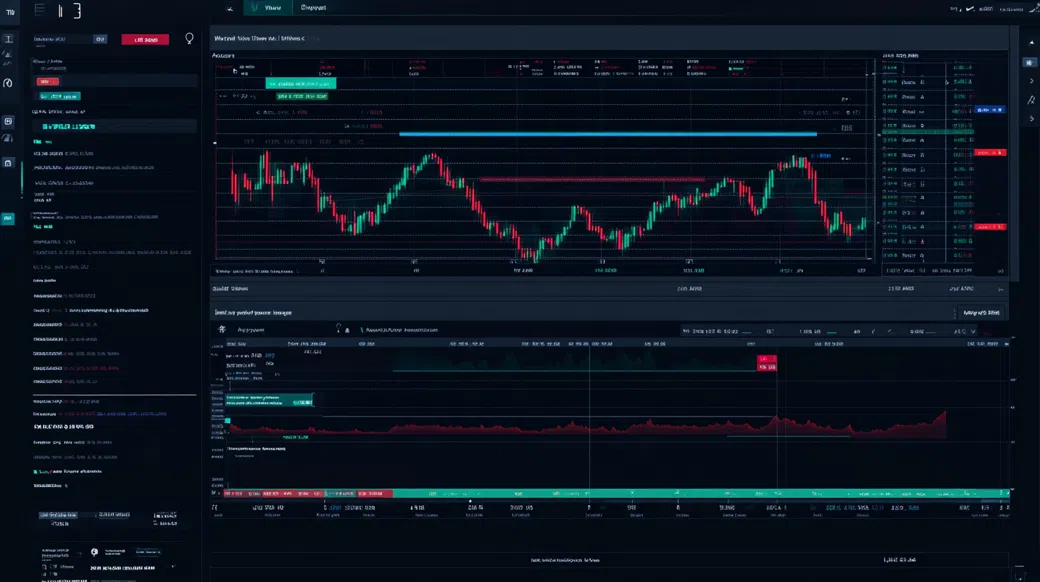
Leverage looks clean on a marketing page; it’s messy in a drawdown. That’s usually the moment traders start hunting for sturdier plumbing—better execution, clearer fee math, and a regulator that actually answers the phone. Polivenix sits in the offshore/off‑register corner of the market (commonly associated with Seychelles FSA-style frameworks), typically offering FX and CFD trading through a proprietary WebTrader plus mobile apps. Expect the usual package for this tier: a modest list of currency pairs and indices, commodity CFDs, and crypto CFDs, paired with headline leverage that can run up to 1:500.
For some traders, that’s enough—until it isn’t. The friction points tend to show up in the boring places: how withdrawals are handled, how margin calls are triggered, how slippage is treated around data releases, and whether negative balance protection is clearly spelled out. If your strategy relies on tight spread control, automation (MT4/MT5/cTrader), or you want real multi‑asset access (stocks/ETFs/options/futures with proper custody and reporting), you’ll likely outgrow the WebTrader-only experience quickly.
This guide to Polivenix alternatives is written for a global audience with a US/EU lens. I’m Singapore-based and I look at brokers the way I look at charts: structure first, narrative second. The goal is simple—map safer, regulated routes for 2026, and show where each option actually fits in a trader’s workflow.
Disclaimer: This article is for informational purposes only and does not constitute investment advice. CFDs and other leveraged products can move against you fast—only risk capital you can afford to lose.
From what’s publicly observable for brokers in this segment, Polivenix operates as a CFD-first venue aimed at retail traders who want fast onboarding, a single web interface, and headline leverage. The product mix typically revolves around FX and indices/commodities via CFDs, with crypto CFDs often available as an add-on rather than a core institutional-grade market. Region access is usually limited—US residents are commonly blocked, and other restricted or sanctioned jurisdictions may be excluded as well. If you’re comparing brokers similar to Polivenix, treat the operating model as closer to a market-maker style setup than DMA access, and evaluate it with that lens: execution rules, re-quotes, and how volatility is handled matter.
The platform stack is generally a proprietary WebTrader with an iOS/Android companion app. Charting tends to be serviceable rather than deep—enough indicators for discretionary trading, basic drawing tools, and a clean watchlist layout, but usually not the same ecosystem you get from MT4/MT5 or cTrader (EAs, custom indicators, broader community tooling). Order entry is commonly limited to the essentials (market/limit/stop), with fewer advanced order controls for active traders. Mobile parity is often decent for monitoring and closing risk, yet heavy chart work and multi-timeframe analysis still feel better on desktop.
Cost structure in offshore CFD venues is normally a mix of spread-only accounts and a “raw” style tier where commissions appear. A typical reference point: EUR/USD around ~2.0 pips on a standard account, while a raw/ECN-style tier may show 0.0–0.4 pips plus a commission in the neighborhood of $6 round-turn per standard lot. Minimum deposits are often set around $250. Overnight financing (swap) is where many swing traders feel the drag; add potential non-trading fees (inactivity, withdrawals) depending on the payment method and account tier.
Strategy drift is a real thing: your trading evolves, and your broker either keeps up—or becomes the bottleneck. Most searches for Polivenix alternatives start after a trader has experienced one of two pain points: execution quality that’s hard to quantify but easy to feel during volatility, or operational friction (funding/withdrawals, documentation, unclear fee lines). And if you’re running leveraged CFDs, small frictions compound—slippage on entries, wider spreads at rollover, and swaps that don’t match expectations can turn a good setup into a mediocre P&L profile.
Think of broker selection like position sizing: it’s a risk-budget decision first, a feature comparison second. The aim isn’t to find a “perfect” venue—it’s to align regulation, product access, and execution with how you actually trade. If your plan is short-horizon FX, costs and slippage dominate. If you’re building a longer-term book with equities and options, custody and reporting dominate. Either way, regulated options vs Polivenix should be evaluated with evidence: licenses, disclosures, and how the broker handles client money.
Start with the regulator footprint: FCA (UK), ASIC (Australia), CySEC (EU), and NFA/CFTC (US) each impose different conduct and capital rules. In the UK, FCA-regulated firms may provide FSCS coverage up to £85,000 (eligibility depends on circumstances); in Cyprus, the ICF can cover up to €20,000. Look for segregated client funds, clear complaints processes, and transparent disclosures—those are the “boring” features that matter when markets gap.
Match instruments to your intent. FX and index CFDs are fine for macro-driven trading, but a multi-asset portfolio needs more: real stocks/ETFs, listed options, and futures. Brokers similar to Polivenix often keep you inside the CFD wrapper; that can be efficient for leverage, but you don’t get shareholder rights on stock CFDs, and you’re exposed to broker-specific pricing and financing terms. If your trading plan includes hedging with options or rolling futures, you’ll want a venue built for listed derivatives.
Spreads are the visible cost; commissions, swaps, and platform/data fees are the quiet ones. Compare on an all-in round-turn basis: spread in pips + commission per lot + typical slippage during your trading window. A raw account with 0.1–0.3 pips but a $6–$8 round-turn commission can still beat a 1.8–2.2 pip spread-only model for active traders. Also check overnight financing (swap) if you hold risk across sessions—those charges can dominate over time.
Platform choice is a strategy choice. MT4/MT5 and cTrader support automation, backtesting, and deeper third-party tooling; proprietary platforms can be clean but sometimes shallow. Execution model matters too: market maker vs STP/ECN/DMA has implications for how orders are filled and how slippage shows up during spikes. If you’re coming from Polivenix, test execution with a small live account and measure fill quality around your usual events—London open, US CPI, FOMC, or just thin Asia hours.
Operational reliability is part of edge. Check support hours against your timezone (US/EU traders often need coverage during New York and London), and see whether responses are specific or scripted. Education matters less once you’re experienced, but high-quality webinars and platform guides can speed up onboarding. Finally, assess mobile parity: can you adjust stops, manage margin, and monitor exposure without hunting through menus? When volatility hits, interface friction becomes risk.
FX and CFDs are likely the core offering, with something like 30–50 FX pairs, 8–15 index CFDs, and a handful of commodities. The practical question is not “can you trade EUR/USD,” but “what does it cost to trade your style?” With a typical spread reference near ~2.0 pips on EUR/USD and leverage that can reach 1:500, the profile suits smaller accounts chasing directional moves—but it can punish high-frequency approaches where spread + slippage is the real enemy. In regulated land, Pepperstone and IC Markets are built for cost-sensitive FX/CFD flow, offering MT4/MT5/cTrader stacks and raw-style pricing where your round-turn cost is easier to model. If you scalp or run systematic strategies, that predictability is worth more than a leverage headline.
Stocks and ETFs are where many offshore CFD platforms show their limits. Even when “stocks” are offered, it’s often stock CFDs—synthetic exposure without ownership, voting rights, or the same corporate action handling you’d expect from a true securities broker. For investors who want to build positions, reinvest dividends, or hedge with listed options, that’s a structural mismatch. Interactive Brokers (IBKR) is the obvious bridge here: broad global equities/ETFs with options and futures on top, plus strong reporting and API tooling. Saxo Bank is another multi-asset route, particularly for traders who want a polished platform and access across cash equities, ETFs, bonds, options, and futures alongside FX. That’s the difference between “price exposure” and a full portfolio toolkit.
Crypto access at brokers in this category is typically via crypto CFDs—you’re trading price movement, not taking on-chain delivery, and you don’t control a wallet. That’s not automatically bad; it can be useful for hedging or shorting, and it keeps everything inside one margin framework. The trade-off is counterparty and financing risk: overnight costs, wider spreads during stress, and weekend gaps can bite. For traders who want regulated crypto CFD exposure with a simpler interface, Plus500 and IG are common choices in supported regions, with clearer regulatory oversight and product disclosures. If your goal is actual coin ownership, that’s a different category entirely—and outside the typical CFD broker model.
Regulation: SEC/FINRA (US), FCA (UK), IIROC (Canada)
Markets: Stocks, ETFs, options, futures, FX, bonds (broad global market access)
Fees: FX spreads typically tight on major pairs; commissions vary by product/venue; market data fees may apply depending on exchanges
Platform: Trader Workstation (TWS), IBKR Mobile, Client Portal, APIs
Best For: Multi-asset portfolio builders and hedgers
Regulation: FCA (UK), ASIC (Australia), CySEC (EU), DFSA (Dubai)
Markets: FX and CFDs (indices, commodities, some crypto CFDs in eligible regions)
Fees: EUR/USD often ~0.0–0.3 pips on Razor/Raw-style pricing + commission (commonly ~$6–$8 round-turn); Standard accounts typically ~1.0+ pip all-in
Platform: MT4, MT5, cTrader, TradingView integration (region-dependent), mobile apps
Best For: Systematic FX traders using MT4/MT5/cTrader
Regulation: FCA (UK), MAS (Singapore), DFSA (Dubai)
Markets: Stocks, ETFs, options, futures, FX, bonds, CFDs (availability varies by jurisdiction)
Fees: FX spreads generally competitive on majors; commissions on equities/options/futures depend on exchange and account tier
Platform: SaxoTraderGO, SaxoTraderPRO
Best For: Cross-asset macro traders who want a single risk dashboard
Regulation: FCA (UK), ASIC (Australia), MAS (Singapore)
Markets: CFDs (FX, indices, commodities, shares), spread betting (UK/IE), crypto CFDs in eligible regions
Fees: Costs typically spread-based for many CFD markets; majors can be competitive, with wider pricing on smaller/volatile instruments
Platform: IG proprietary web platform, MT4 (region-dependent), mobile apps
Best For: Event-driven CFD traders who value robust risk controls
Regulation: CFTC/NFA (US), FCA (UK), ASIC (Australia), IIROC (Canada)
Markets: FX (spot/CFD structures vary by region), selected CFDs in some jurisdictions
Fees: Typically spread-based pricing on FX; spreads vary by pair and liquidity conditions
Platform: OANDA web/mobile, MT4 (region-dependent), APIs
Best For: FX-first traders prioritizing transparent pricing and data
Regulation: FCA (UK), CySEC (EU), ASIC (Australia), MAS (Singapore)
Markets: CFDs (FX, indices, commodities, shares), crypto CFDs in eligible regions
Fees: Spread-based; expect majors to be reasonable, with additional costs via overnight funding and wider spreads on smaller markets
Platform: Plus500 proprietary WebTrader and mobile apps
Best For: Simplicity-focused CFD traders who don’t need MT4/MT5
| Platform | Regulation | Main Markets | Typical Costs | Best For |
|---|---|---|---|---|
| Interactive Brokers (IBKR) | SEC/FINRA, FCA, IIROC | Stocks/ETFs, options, futures, FX, bonds | Product-based commissions; FX typically tight on majors; data fees may apply | Multi-asset portfolio builders and hedgers |
| Pepperstone | FCA, ASIC, CySEC, DFSA | FX and CFDs | Raw: ~0.0–0.3 pips + ~$6–$8 RT; Standard: ~1.0+ pip | Systematic FX traders using MT4/MT5/cTrader |
| Saxo Bank | FCA, MAS, DFSA | Stocks/ETFs, options, futures, FX, bonds, CFDs | Competitive FX spreads; exchange commissions vary by market/tier | Cross-asset macro traders who want a single risk dashboard |
| IG | FCA, ASIC, MAS | CFDs (FX/indices/commodities/shares), spread betting (UK/IE) | Mainly spread-based; majors competitive; financing costs for holds | Event-driven CFD traders who value robust risk controls |
| OANDA | CFTC/NFA, FCA, ASIC, IIROC | FX (and selected CFDs in some regions) | Spread-based FX pricing; varies by pair and market conditions | FX-first traders prioritizing transparent pricing and data |
| Plus500 | FCA, CySEC, ASIC, MAS | CFDs (FX/indices/commodities/shares), crypto CFDs (eligible regions) | Spread-based; overnight funding a key variable | Simplicity-focused CFD traders who don’t need MT4/MT5 |
Switching brokers is like rolling a futures position: the risk sits in the transition, not the destination. Do it in stages, document everything, and keep leverage low until you’ve tested fills and funding rails. If you’re moving away from Polivenix, assume positions can’t be transferred broker-to-broker—you’ll be closing risk on one venue and reopening on another, with all the slippage that implies.
If you’re still evaluating the platform, review current onboarding steps, funding methods, and regional eligibility before committing meaningful capital. Compare execution tools and fee disclosures side-by-side with the regulated competitors listed above so the choice is driven by facts, not leverage slogans.
Visit PolivenixThe best alternative depends on whether you need true multi-asset access or mainly FX/CFDs. For global stocks, options, and futures, Interactive Brokers (IBKR) is hard to beat; for cost-sensitive FX/CFDs with MT4/MT5/cTrader, Pepperstone is a strong fit. Traders who prefer a simple proprietary interface often shortlist Plus500, while IG suits those who care about mature risk controls around volatile events.
Polivenix is commonly evaluated as an offshore-style platform rather than a top-tier regulated broker under FCA/NFA/CySEC-style regimes. That doesn’t automatically mean you can’t trade, but it usually means fewer formal investor protections (compensation schemes, stricter conduct rules) than regulated brokers provide. If safety is your priority, use regulated options vs Polivenix and verify the legal entity on the regulator’s public register.
With platforms like Polivenix, FX and index/commodity CFDs are typically the main menu, while crypto exposure is often offered as crypto CFDs (price exposure, not coin ownership). Stocks and ETFs, when available, are frequently CFDs rather than real share dealing, and listed futures are usually not the focus. If you need real stocks/ETFs or listed futures, IBKR or Saxo are more appropriate substitutes.
Before switching, confirm regulation (FCA/ASIC/CySEC/NFA as applicable), read the client money and negative balance protection terms, and compare round-turn costs (spread + commission + swaps). Test execution with a small deposit and measure slippage during the hours you actually trade. Finally, plan the operational path—KYC the new account first, then withdraw using the original funding rail to reduce AML-related delays.
About the Author: Daniel Okafor is a derivatives trader turned market analyst based in Singapore, focused on how broker structure, execution, and macro regimes shape real trading outcomes. He covers APAC brokerages and global cross-asset flows, with a bias for charts, audited disclosures, and risk-first comparisons.