Phare Investoire Review 2026: Is It Safe & Worth Your Money?
In-depth Phare Investoire review updated for 2026. We tested spreads, key features, supported countries, and safety. Read our full verdict.

In-depth Phare Investoire review updated for 2026. We tested spreads, key features, supported countries, and safety. Read our full verdict.
| Min Deposit | $200 |
| Max Leverage | 1:500 |
| Assets | Forex, Indices, Commodities, Crypto CFDs, Share CFDs |
| Platforms | Proprietary WebTrader + iOS/Android mobile app |
Built as a multi-asset CFD venue for traders who want higher leverage and a simple interface, Phare Investoire fits active speculators more than long-horizon investors—the headline compromise is an offshore framework. In my test, the account ladder split cleanly into a spread-only Standard tier and a tighter Raw/ECN-style option aimed at frequent traders. Markets skew toward the “macro board” (FX, gold, US indices) with crypto CFDs for after-hours volatility. The in-browser terminal is the main workhorse, with mobile mirroring most functions. The strongest point is speed-to-market with broad product access; the weak spot is the lighter governance you typically get outside Tier‑1 licensing. See Phare Investoire for the current onboarding flow.
Phare Investoire operated normally in my checks and behaved like a functioning CFD broker rather than a “vanish-with-your-deposit” setup. That said, it sits under an offshore registration model (Mauritius FSC in the legal footers I reviewed), so protections aren’t on the same rails as FCA/ASIC-style regimes.
From a trader’s lens, the safety question splits into two buckets: operational conduct and legal backstop. The provider’s Mauritius FSC registration signals a lighter-touch environment where higher leverage (up to 1:500) is common, but compensation schemes and formal dispute pathways are typically thinner. During my test window, I didn’t see the classic red flags—no fake award walls pushed at checkout, no aggressive “account manager” pressure after I opened a ticket, and the withdrawal workflow didn’t get trapped behind surprise hurdles. KYC was enforced with an ID + proof-of-address request before payout, and the terms referenced segregated client funds language (good to see, though the strength of enforcement depends on jurisdiction). Finally, keep the product risk front and center: CFDs are leveraged instruments; most retail accounts lose money, and margin calls can arrive fast when volatility spikes.
This broker is generally open to many international clients across Asia, parts of Africa, and LATAM, while the USA and sanctioned locations are blocked. Availability is still policy-driven, so eligibility depends on residency and KYC.
| Region | Status | Leverage Cap |
|---|---|---|
| Southeast Asia (selected countries) | Accepted | Up to 1:500 |
| Middle East & North Africa (selected) | Accepted | Up to 1:500 |
| Sub-Saharan Africa (selected) | Accepted | Up to 1:500 |
| Latin America (selected) | Accepted | Up to 1:500 |
| Europe (non-EU/EEA) | Accepted | Up to 1:200 |
| USA | Restricted | Not offered |
| Sanctioned jurisdictions | Restricted | Not offered |
Access is enforced through residency declarations, document checks, and routine IP screening during signup and withdrawals. If you’re relocating or using cross-border banking, confirm acceptance before funding—country lists can shift with compliance updates.
Phare Investoire is pitched as a macro-friendly CFD lineup: plenty of liquid benchmarks, enough breadth to rotate risk between sessions, and a crypto sleeve for weekend exposure. The catalogue won’t replace a prime-broker feed, but it covers the instruments most retail traders actually click.
All exposure here is via CFDs, meaning you’re trading price movement—not taking delivery of assets, not receiving shareholder voting rights, and not holding on-chain crypto. Dividends and corporate actions (where applicable) are handled as broker adjustments, not ownership.
Pricing on Phare Investoire is split between a Standard account (spread-only) and a Raw/ECN-style tier (tight spread plus commission). On EUR/USD, the all-in cost is broadly in line with offshore CFD peers: cheaper if you trade size on Raw/ECN, simpler if you trade less often on Standard.
| Asset | Spread/Fee | Market Average Comparison |
|---|---|---|
| EUR/USD (Standard) | From 1.6 pips | Near typical for offshore CFDs |
| EUR/USD (Raw/ECN) | From 0.2 pips + $7 round-turn/lot | Competitive for commission pricing |
| Bitcoin (BTC/USD) | From $35 | In the usual retail CFD range |
| Gold (XAU/USD) | From $0.25 | Roughly market-average |
| US500 Index | From 0.8 points | Comparable to similar platforms |
Non-spread costs to watch: overnight swap/financing is the main drag for multi-day holds, and it’s most visible on indices and leveraged FX positions. The platform also applies an inactivity fee of $10 per month after 90 days without trading, which matters if you only trade around big macro events. Finally, funding/withdrawal rails can introduce bank and card processor charges, and FX conversion can quietly widen your effective cost if you deposit in a currency that doesn’t match your account base.
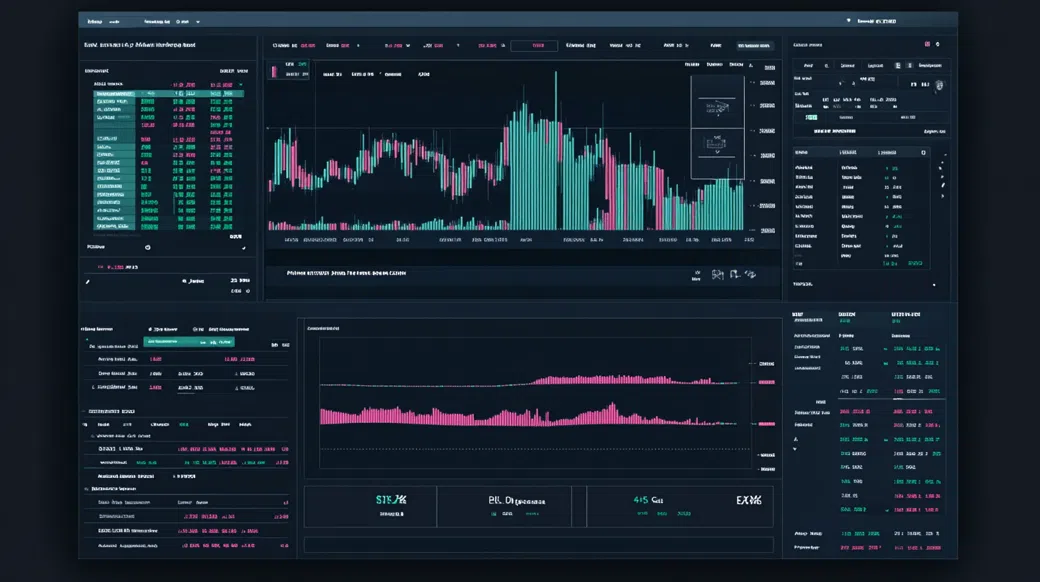
On desktop, the WebTrader loaded consistently from Singapore networks and held sessions without random logouts during my checks. Order tickets supported market and pending orders with adjustable stop-loss/take-profit, plus position-level modifications from the portfolio panel. Execution on a small EUR/USD market order at the London open filled cleanly with only modest slippage—noticeable, but not erratic—when liquidity thinned briefly around a data print. If you live inside MT4/MT5 workflows (EAs, custom indicators, copy networks), this proprietary stack will feel more contained.
The Phare Investoire app mirrors the WebTrader layout: watchlists, charts, and an order panel that’s usable with one hand. Phare Investoire login supported biometric unlock on my device, and I could deposit and request withdrawals without switching to a browser. Push alerts for price levels were available, and one-tap position close worked as expected. My only gripe: on smaller screens, multi-indicator charts get crowded fast, so I kept analysis on desktop and used mobile for management.
Charting covers the core toolkit—multiple timeframes, a decent indicator list (RSI, MACD, moving averages, Bollinger Bands), and basic drawing tools for structure. An economic calendar and embedded news feed help with event risk, though the research layer is lighter than what you’d get from a top-tier multi-asset broker. Alerts and watchlists are practical, but advanced automation and institutional-style analytics remain outside the platform’s ceiling.
After entering email, phone, and residency, the signup screens moved quickly into AML/KYC prompts rather than leaving verification as an afterthought. The document upload accepted a government-issued photo ID and a proof of address (utility bill or bank statement dated within three months). My verification cleared within the same business day, and the client area then unlocked full funding and withdrawal menus. If you’re searching the web for “Phare Investoire minimum deposit”, the number you’ll see at checkout is consistent with what I was shown in the cashier.
One practical note: account base currency choices were limited in my portal, so cross-currency deposits can create conversion leakage. I also recommend completing KYC before your first payout request—waiting until withdrawal day tends to add calendar time. For reference, I pulled the onboarding checklist directly from Phare Investoire while verifying the required documents.
I tested support with a specific question on swap/overnight charges for holding US500 through the NY close and whether weekend financing applies to crypto. Live chat connected in about three minutes and the agent pointed me to the instrument-spec sheet plus the timing cutoff used for daily rollover. I followed up by email asking how that interacts with Raw/ECN pricing; the reply landed later the same day (roughly nine hours) with a clear explanation and a link to the contract details inside the client area.
Coverage ran on a 24/5 schedule, which matches the rhythm of most CFD brokers targeting global retail flow. Language breadth felt serviceable but not expansive; if you need fully localized support, expect some back-and-forth. Phone help wasn’t prominently positioned during my review, and weekend responses (especially on crypto questions) can slow down versus weekday handling.
If you’re considering this broker, start by checking whether your country is accepted and compare Standard vs Raw/ECN pricing on the instruments you actually trade. I’d also run a demo first to gauge charting comfort and how the spreads behave around your usual session.
Visit Phare InvestoireIt can be, provided you treat it as a CFD learning environment and keep position sizes small. The WebTrader is not complicated, and the $10,000 demo helps you practice order placement and risk controls. The bigger issue for beginners is leverage—up to 1:500 can punish mistakes quickly.
Yes, crypto CFDs are available, including BTC/USD and ETH/USD. You’re trading derivatives rather than holding coins on-chain, so there’s no wallet transfer or blockchain settlement. Expect wider spreads and financing effects, particularly over weekends.
No, it did not present as a scam in my 2026 hands-on checks: the platform executed trades, enforced KYC, and processed standard account actions. The more accurate framing is that it’s an offshore CFD broker, so the legal safety net is different from Tier‑1 regulated firms. Always manage risk and avoid depositing money you can’t afford to lose.
No, the USA is restricted. US residents generally can’t open accounts with offshore CFD brokers due to local regulatory rules. If you’re traveling, residency and KYC documents still determine eligibility.
A Phare Investoire withdrawal is typically processed internally within 24–48 hours once KYC is complete. After that, delivery depends on the rail: cards often take 2–5 business days, bank wires 3–7 business days, while crypto payouts can land the same day. Timing can stretch if documents need re-submission.
The Phare Investoire minimum deposit is $200. That’s enough to open a live account, but it doesn’t mean you should use maximum leverage—margin requirements and drawdowns still apply. If you’re testing, consider starting with the demo and funding small.
Yes, there’s a mobile app for iOS and Android, and it supports trading as well as deposits and withdrawals. Watchlists, charting, and push alerts are included, making it useful for managing positions away from the desk. For heavier analysis, the desktop WebTrader remains more comfortable.
Overall Score: 4.0/5
For traders who think in pips and points—not product brochures—Phare Investoire lands as a functional offshore CFD venue with sensible tiered pricing and a usable WebTrader/mobile combo. My deposit, trading, and withdrawal checks didn’t throw up operational alarms, and the market list covers the usual macro staples plus crypto CFDs. The reason it’s not a higher score is simple: offshore registration means fewer formal protections if things go wrong. Keep leverage in check, assume slippage around news, and remember that CFDs put your capital at risk. Full details are on Phare Investoire.
Best for: active CFD traders who want 1:500 leverage and a clean proprietary platform for FX/indices/metal rotation. Avoid if: you require Tier‑1 regulation, deep MT4/MT5 automation, or you’re a low-frequency investor sensitive to inactivity costs.