Peak Credmere Trading Platform Alternatives 2026
A risk-aware guide to Peak Credmere alternatives in 2026—compare regulated brokers, platforms, costs, and migration steps for US/EU-focused traders.

A risk-aware guide to Peak Credmere alternatives in 2026—compare regulated brokers, platforms, costs, and migration steps for US/EU-focused traders.
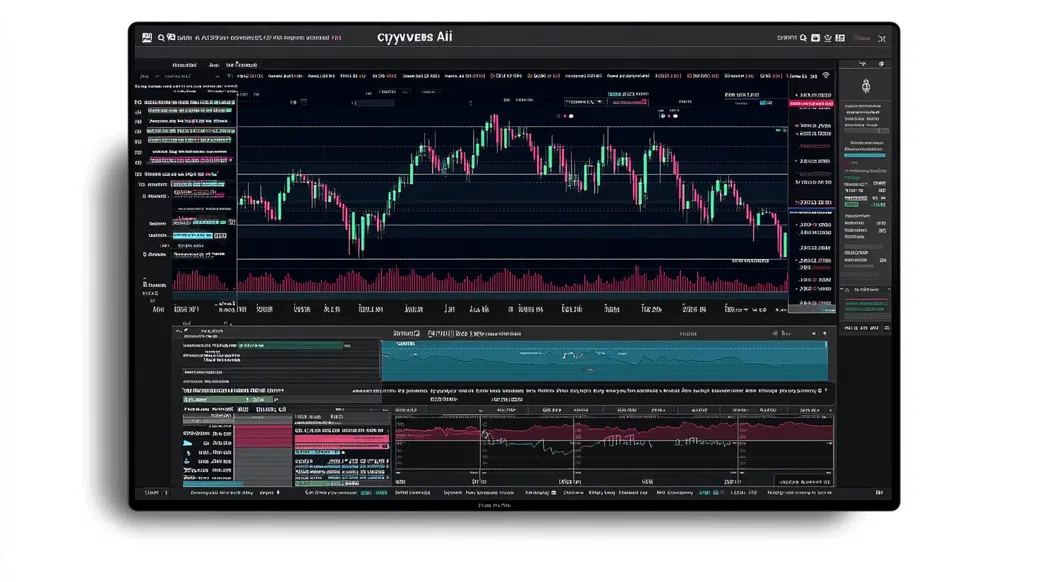
Price action has a way of exposing weak plumbing. If your fills drift in fast markets, if your margin rules feel opaque, or if withdrawals become a “ticketing system” instead of a process, you start shopping for sturdier rails. That’s the practical context behind this guide to Peak Credmere trading platform alternatives 2026—written for traders who care more about execution and protections than flashy leverage.
Based on what’s commonly observed in the offshore CFD segment, Peak Credmere appears positioned as a forex/CFD-first venue with a proprietary WebTrader and a mobile app. Typical parameters in this category include a $250 entry deposit, headline leverage around 1:500, and a standard-style EUR/USD spread that tends to print near 2.0 pips in normal liquidity. The product shelf usually leans on major/minor FX pairs, index CFDs, a small commodities list, and a menu of crypto CFDs—useful for directional punts, less ideal for traders who need transparent routing, deep order controls, or real asset ownership.
This is why Peak Credmere alternatives matter: regulated brokers can offer clearer legal recourse, more robust client-money rules, and—in some cases—investor compensation frameworks. They also tend to publish sharper disclosures on execution model, slippage handling, and financing charges, which is where your P&L quietly bleeds over time.
Disclaimer: This article is for informational purposes only and does not constitute investment advice. CFDs and other leveraged products carry a high risk of loss and may not be suitable for all investors.
From a trader’s-eye view, Peak Credmere fits the classic offshore CFD brokerage mold: a streamlined onboarding funnel, a broad-but-not-deep instrument list, and risk settings geared toward high leverage. Public-facing details in this segment often point to an offshore framework such as the Seychelles FSA rather than a top-tier onshore regime. The audience is typically retail traders who want FX and index CFDs with low friction, rather than portfolio builders seeking direct market access or exchange-traded products. As with other platforms like Peak Credmere, the critical questions are less about the watchlist and more about custody, dispute resolution, and how trades are actually executed during volatility.
The platform stack is usually a proprietary WebTrader supplemented by iOS/Android apps. Charting tends to be functional rather than institutional: a solid set of timeframes, basic indicators, and drawing tools, but not the kind of workflow that heavy technical traders expect when juggling multiple layouts and conditional orders. Order entry typically covers market, limit, and stop, with a simplified position panel and margin readouts in the dashboard. Execution can feel adequate in calm tape, yet the real test is macro prints—where latency, requotes (if any), and slippage handling start to matter more than the UI polish. Mobile parity is often decent for monitoring and closing risk, less so for detailed analysis.
Costs in this offshore CFD bracket are commonly packaged as spread-first. A standard account often shows EUR/USD around 2.0 pips in typical conditions, with wider spreads during illiquid hours. Some brokers in this tier advertise “raw” style pricing—think 0.0–0.4 pips plus a commission in the neighborhood of $6–$8 round-turn—but availability and conditions vary. Beyond the headline spread, watch the slow drip: swap/overnight financing on held CFD positions, potential inactivity charges, and withdrawal frictions that can act like an implicit fee. The cheapest-looking quote is not always the cheapest fill.
Leverage gets attention; infrastructure keeps you solvent. Traders tend to pivot to Peak Credmere alternatives when the gap between their strategy and the broker’s setup becomes expensive—usually through spreads, execution behavior, or operational friction. For example, a short-term FX approach that targets 3–8 pips per trade can be mathematically compromised by a 2.0 pip typical spread before you even account for slippage. Add uncertainty around the legal framework and client-money treatment, and the “edge” starts to look like a marketing number.
Start with your strategy’s failure modes, then match the broker to them. A swing trader can tolerate a different cost profile than a scalper; an options hedger needs instruments that a CFD-only venue won’t provide. The point is to rank what hurts you most—execution quality, instrument access, or legal protections—and select accordingly among alternatives to the Peak Credmere trading platform.
Regulation isn’t a badge; it’s a ruleset with enforcement. FCA, ASIC, CySEC, and NFA each impose different requirements, but the common threads include KYC/AML controls and client-money handling. In parts of the UK/EU ecosystem, investor compensation frameworks can apply (for example, FSCS coverage up to £85,000 in the UK and ICF coverage up to €20,000 in Cyprus—eligibility depends on entity and product). Favor brokers that clearly state segregated client funds, negative balance protection (where applicable), and the legal entity you’ll actually be onboarded to.
Write down what you trade now—and what you might trade after the next macro regime shift. FX and index CFDs cover many active traders, but real stocks/ETFs, listed options, and exchange-traded futures require a different brokerage stack. If you need long-only investing with shareholder rights, you want spot equities/ETFs, not stock CFDs. Macro hedgers may need government bonds or futures curves, which typically sit outside offshore CFD menus. The best brokers similar to Peak Credmere are often not “similar” at all once you map instruments to objectives.
Think in round-turn cost: spread + commission + realistic slippage. A raw account showing 0.2 pips but charging $7 round-turn can still beat a 2.0 pip spread account—especially on higher frequency flow—yet it depends on your average trade size and holding time. Then there’s swap/overnight financing for CFDs, which can dominate costs for position traders. Also scan for non-trading fees: inactivity charges, currency conversion spreads, and withdrawal costs. Cheap entry isn’t the same as low friction over a quarter.
Platform choice dictates what you can automate and how you manage risk. MT4/MT5 and cTrader support a mature ecosystem of tools, while proprietary WebTraders vary widely in stability and order control. Execution model matters: market maker, STP, ECN, and DMA each come with trade-offs around spreads, potential conflicts, and fill behavior. Ask how the broker handles slippage on stops and limits, whether partial fills can occur, and what latency looks like at peak volume. If your current experience on Peak Credmere feels “fine” until CPI day, that’s your signal to test execution under stress.
When something breaks, response time becomes a trading variable. Look for support coverage that matches your timezone, plus clear escalation paths for funding and trade disputes. Education is secondary for experienced traders, but transparent documentation (margin rules, swap tables, corporate actions on CFDs) is not optional. Mobile apps should mirror risk controls—position sizing, stop management, and alerts—rather than just being a quote screen. A clean UX is helpful; a predictable operational process is essential.
For FX and index CFDs, the main differentiator is usually cost-of-trade and execution consistency, not the number of instruments on the homepage. In the offshore CFD lane, a typical EUR/USD spread near 2.0 pips can be a hard ceiling on short-horizon strategies, especially when you add slippage around fast candles. By contrast, FX specialists such as Pepperstone and IC Markets are built for tighter pricing structures (often via raw-style accounts) and offer platform stacks like MT4/MT5/cTrader that many systematic traders already know. If you’re trading around macro events, pay attention to how each broker discloses execution quality and whether they publish order-handling policies. High leverage (often marketed up to 1:500 in offshore venues) cuts both ways; a single gap can turn a normal drawdown into a margin call.
This is where many traders discover the difference between “exposure” and “ownership.” Offshore CFD brokers often provide stock indices and sometimes single-stock CFDs, but that doesn’t give you shareholder rights, voting, or the same corporate-action treatment you get with real equities. If your plan includes building a US/EU equity book, Interactive Brokers and Saxo Bank are more appropriate frameworks because they offer broad access to real stocks and ETFs alongside derivatives, with routing/DMA-style capabilities depending on venue and product. Even for active traders, having listed options and futures available can change how you hedge—index puts versus CFD stops is not a small upgrade, it’s a different risk toolkit. For many searching for top substitutes for Peak Credmere, this is the decisive gap-closer.
Crypto on CFD platforms is typically synthetic exposure: you’re trading a contract, not taking delivery of coins, and there’s no on-chain transfer. That can be perfectly fine for short-term directional trades, but it’s not custody. If Peak Credmere-style crypto CFDs are part of your playbook, check contract specs (trading hours, margin, financing) and be realistic about weekend liquidity and slippage. Among regulated CFD providers, IG and Plus500 are commonly used for crypto CFDs where permitted, with clearer jurisdictional rules and standardized disclosures. If your goal is long-term crypto ownership, a CFD broker is the wrong tool; you’d need a regulated spot exchange or custodian instead. For traders comparing regulated options vs Peak Credmere, the key is understanding whether you want price exposure or asset control.
Regulation: SEC/FINRA (US), FCA (UK), IIROC (Canada) (entity depends on residency)
Markets: Stocks, ETFs, options, futures, bonds, FX (spot), funds (availability varies by region)
Fees: FX spreads typically tight on liquid pairs; commissions vary by product and venue (schedule-based)
Platform: Trader Workstation (TWS), IBKR Desktop, web platform, mobile app, API
Best For: Multi-asset traders who need listed options/futures and deep market access
Regulation: FCA, ASIC, CySEC, DFSA (entity depends on residency)
Markets: FX and CFDs (indices, commodities; product list varies by entity)
Fees: EUR/USD often ~0.0–0.3 pips on Razor/Raw-style pricing + commission; ~1.0+ pip typical on Standard-style pricing
Platform: MT4, MT5, cTrader, TradingView integration (where available)
Best For: Cost-sensitive FX traders running MT4/MT5 or cTrader workflows
Regulation: FCA, MAS, DFSA (entity depends on residency)
Markets: Stocks, ETFs, options, futures, FX, bonds, CFDs (availability varies by region)
Fees: Pricing depends on tier; FX spreads typically competitive on majors; commissions apply on exchange-traded products
Platform: SaxoTraderGO, SaxoTraderPRO
Best For: Investors who want a single account for equities plus macro hedging tools
Regulation: FCA, ASIC, MAS
Markets: CFDs (FX, indices, commodities, shares), spread betting (UK), some share dealing via specific entities
Fees: Spreads are product-dependent; FX spreads often from ~0.6 pips on majors (typical can be higher in volatile conditions)
Platform: IG Trading Platform (web/mobile), MT4 (where available)
Best For: Active CFD traders who want strong disclosures and broad index coverage
Regulation: ASIC, CySEC, FSA Seychelles (group-level; entity depends on residency)
Markets: FX and CFDs (indices, commodities, some crypto CFDs where permitted)
Fees: EUR/USD often ~0.0–0.3 pips on Raw + commission (commonly in the ~$6–$7 round-turn range); Standard-style spreads typically wider
Platform: MT4, MT5, cTrader
Best For: High-frequency traders focused on tight spreads and fast execution
Regulation: FCA, CySEC, ASIC, MAS
Markets: CFDs (FX, indices, commodities, shares; crypto CFDs where permitted)
Fees: Spread-only model on most instruments; typical FX spreads vary by pair and market conditions
Platform: Plus500 proprietary web platform and mobile app
Best For: Simplicity-first traders who prefer a clean proprietary interface over MT4/MT5
| Platform | Regulation | Main Markets | Typical Costs | Best For |
|---|---|---|---|---|
| Interactive Brokers (IBKR) | SEC/FINRA, FCA, IIROC | Stocks/ETFs, options, futures, bonds, FX | Schedule-based commissions; tight FX pricing on liquid pairs | Multi-asset traders who need listed options/futures and deep market access |
| Pepperstone | FCA, ASIC, CySEC, DFSA | FX, CFDs (indices/commodities) | Raw: ~0.0–0.3 pips + commission; Standard: ~1.0+ pip typical | Cost-sensitive FX traders running MT4/MT5 or cTrader workflows |
| Saxo Bank | FCA, MAS, DFSA | Stocks/ETFs, options, futures, FX, bonds, CFDs | Tiered pricing; commissions on exchanges; competitive FX on majors | Investors who want a single account for equities plus macro hedging tools |
| IG | FCA, ASIC, MAS | CFDs (FX/indices/commodities/shares), spread betting (UK) | FX spreads often from ~0.6 pips on majors; varies by volatility | Active CFD traders who want strong disclosures and broad index coverage |
| IC Markets | ASIC, CySEC, FSA Seychelles | FX, CFDs (indices/commodities; some crypto CFDs) | Raw: ~0.0–0.3 pips + ~$6–$7 round-turn; Standard wider | High-frequency traders focused on tight spreads and fast execution |
| Plus500 | FCA, CySEC, ASIC, MAS | CFDs (FX/indices/commodities/shares; crypto CFDs where allowed) | Spread-only pricing; instrument-dependent | Simplicity-first traders who prefer a clean proprietary interface over MT4/MT5 |
Switching brokers is less “sign up and go” than a controlled operational handover. Treat it like reducing counterparty risk while keeping market risk contained: verify the new venue first, then unwind exposure in a planned way, then fund the new account in stages. If you’re moving from Peak Credmere, remember that leverage can magnify small mistakes—one rushed withdrawal or an unplanned position closure during a news spike can cost more than a month of spreads.
If you’re benchmarking conditions, review eligibility for your jurisdiction, then compare platform tools, execution disclosures, and funding rules side-by-side. Don’t commit size until you’ve tested the workflow with real orders and confirmed the entity you’re trading under.
Visit Peak CredmereThe best option depends on whether you need multi-asset access or pure FX/CFD efficiency. For real stocks, ETFs, options, and futures, Interactive Brokers (IBKR) and Saxo Bank are strong choices; for MT4/MT5/cTrader-driven FX trading, Pepperstone and IC Markets are often better fits. For a simpler CFD-only workflow with strong regulatory coverage, IG or Plus500 can make sense depending on region and product availability.
Peak Credmere appears to operate under an offshore framework (commonly associated with the Seychelles FSA in this segment), which generally offers fewer investor protections than FCA/ASIC/CySEC/NFA regimes. Safety is not only about platform uptime—it’s also about client-fund segregation, dispute resolution, and enforceable oversight. If those protections are a priority, shortlist regulated options and verify the entity directly on the regulator’s register.
Peak Credmere is typically positioned around forex and CFDs, and crypto exposure—where available—is usually via crypto CFDs rather than coin ownership. Real stocks/ETFs and listed futures are often not part of an offshore CFD-only menu, or they’re offered as CFDs without ownership rights. If you need exchange-traded futures or real equities, look at multi-asset brokers like IBKR or Saxo; for crypto CFDs, regulated CFD firms such as IG or Plus500 may offer access where permitted.
Before switching, confirm the new broker’s license on the official FCA/ASIC/CySEC/NFA register and ensure the account entity matches your residency. Next, map your strategy to the platform stack (MT4/MT5/cTrader vs proprietary) and compare round-turn trading costs including swaps and likely slippage. Finally, export your statements and plan your withdrawal sequence so you’re not forced to close positions under time pressure.
About the Author: Daniel Okafor is a derivatives trader turned market analyst based in Singapore, focused on APAC brokerages and global macro cross-currents. He prioritizes execution quality, risk controls, and clear disclosures—charts over chatter—when assessing trading platforms.