Peak Credmere Review 2026: Is It Safe & Worth Your Money?
In-depth Peak Credmere review updated for 2026. We tested spreads, key features, supported countries, and safety. Read our full verdict.

In-depth Peak Credmere review updated for 2026. We tested spreads, key features, supported countries, and safety. Read our full verdict.
| Min Deposit | $200 |
| Max Leverage | 1:500 |
| Assets | Forex, Indices, Commodities, Crypto CFDs, Share CFDs |
| Platforms | WebTrader (browser) + iOS/Android mobile apps |
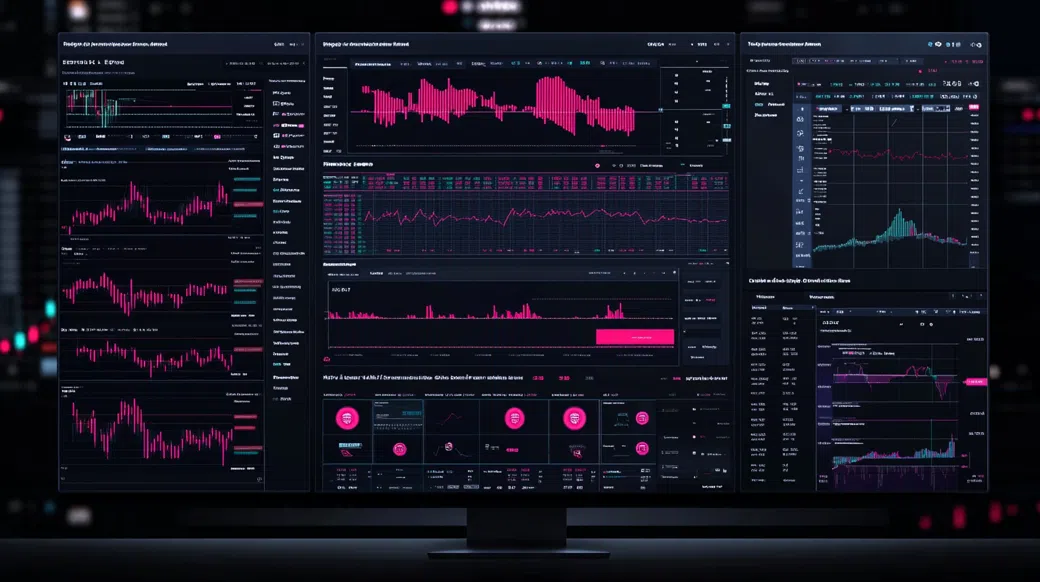
Built for multi-asset CFD traders who want higher leverage and a clean web interface, Peak Credmere suits active short-term setups best—while the headline compromise is an offshore regulatory framework. In my test account, I saw two practical tiers (Standard vs. Raw/ECN-style) that map well to “casual vs. frequent” trading habits. Markets skew toward FX and indices, with crypto CFDs available for those who can handle weekend financing. The platform stack is a proprietary WebTrader plus mobile apps, which keeps things lightweight, but you’re not getting a deep third‑party ecosystem. For a quick look at the product list and account options, I started at Peak Credmere.
Peak Credmere appears operational and tradeable rather than a “vanish-with-your-deposit” setup, but it’s not the same safety profile you’d expect from a Tier‑1 licensed broker. The main caveat is that oversight sits in an offshore jurisdiction, which changes how complaints and protections work.
The first trust signal I look for is friction: the provider pushed me into KYC before I could request a withdrawal, and the checks were standard AML—photo ID plus a recent proof of address dated within three months. In my account area, the legal footer referenced a Mauritius FSC registration, which is common for international CFD firms offering 1:500 leverage. That leverage can be a feature for margin-efficient strategies, but offshore status typically comes with thinner compensation schemes and fewer escalation paths if a dispute turns messy. I also scanned for the usual red flags—aggressive “account manager” pressure, unverifiable trophies, or withdrawal obstructions—and didn’t hit anything dramatic during the test window. Still, safeguards are partly contractual (segregated-funds language, negative balance protection stated for retail profiles) rather than backed by the strongest regulators. Remember: CFDs are leveraged products; most retail traders lose money, and capital is at risk.
This broker broadly accepts clients across parts of Asia, MENA, and segments of Africa and Latin America, subject to local rules. The USA and sanctioned jurisdictions are blocked.
| Region | Status | Leverage Cap |
|---|---|---|
| Southeast Asia (selected countries) | Accepted | Up to 1:500 |
| MENA (selected countries) | Accepted | Up to 1:500 |
| Sub-Saharan Africa (selected countries) | Accepted | Up to 1:500 |
| Latin America (selected countries) | Accepted | Up to 1:500 |
| USA | Restricted | Not offered |
| Sanctioned jurisdictions | Restricted | Not offered |
Eligibility is enforced through address verification and document checks, not just what your browser says about your location. Policies can shift as local regulators update guidance, so it’s worth re-checking access during signup rather than assuming last year’s status holds.
Rather than being a “crypto-first” venue, the lineup reads like a macro trader’s toolkit: FX for daily liquidity, indices for risk-on/risk-off expression, and metals for hedging. Share CFDs and crypto CFDs are present, but they feel additive instead of core.
All of the above are CFDs, so you’re trading price exposure, not taking delivery or receiving shareholder privileges. For crypto, that also means no on-chain transfers—just synthetic exposure with margin and financing costs.
Pricing is tiered: Standard accounts lean on the spread, while the Raw/ECN-style option tightens FX spreads and adds a per-lot commission. On my test, the all-in cost on majors looked broadly in line with offshore CFD peers, with the Raw tier making the bigger difference for frequent execution.
| Asset | Spread/Fee | Market Average Comparison |
|---|---|---|
| EUR/USD (Standard) | From 1.6 pips | Slightly higher than best-in-class, typical for offshore CFD pricing |
| EUR/USD (Raw/ECN) | From 0.2 pips + $7 round-turn per lot | Competitive for active traders when liquidity is strong |
| Bitcoin (BTC/USD) | From $35 | In the middle of the CFD pack; widens during risk spikes |
| Gold (XAU/USD) | From $0.30 | Near market norms outside major news minutes |
| US500 Index | From 0.8 points | Comparable to many non-US index CFD providers |
Non-spread costs that matter: swap/overnight financing changes the economics of holding trades beyond the session, and I saw triple-swap mechanics applied mid-week on FX. Dormant accounts can be charged $10 per month after 90 days without activity, which quietly punishes “set-and-forget” users. Withdrawals may carry third-party rail costs (bank fees or network fees for crypto), and if you fund in one currency and your base is another, conversion spreads can show up at the edges. For current fee disclosures and the exact schedule in the client portal, I cross-checked the documentation inside Peak Credmere.
WebTrader is the center of gravity here: the browser terminal held up across Asia and London hours, and the layout keeps pricing, depth, and positions on one screen without feeling cramped. Order tickets offered market/limit/stop with adjustable SL/TP, plus partial close from the positions panel—handy for scaling out during a trend day. If you live inside MT4/MT5 scripts and third-party plug-ins, you’ll feel the gap; this is a simpler ecosystem aimed at discretionary execution rather than automation-heavy workflows.
The Peak Credmere app mirrors the web layout closely, which reduced “where did they hide that button?” moments after the Peak Credmere login. I placed a small NAS100 test trade from mobile during the NY overlap and could modify stops with a press-and-drag interface. Deposits and withdrawals sit inside the same menu as account settings, and push notifications covered price alerts and margin status. One quirk: on weaker connections, chart redraws can lag a beat when flipping timeframes quickly.
Charting is serviceable: multiple timeframes, common indicators (RSI, MACD, Bollinger), and enough drawing tools to mark structure and liquidity zones. There’s an economic calendar and a compact news feed, but don’t expect the depth of a dedicated research terminal or a full MT5 marketplace. Watchlists and alerts did the job for tracking FX and metals into data releases, which is the minimum I want from a proprietary platform.
From the first screen, the signup flow focused on contact details, residency, and a short suitability questionnaire—more compliance than marketing. KYC required a government-issued ID and a proof of address (I used a bank statement), and verification cleared within the same business day. The dashboard then prompted me to set an account currency before funding, which matters if you’re trying to avoid conversion costs.
I funded via USDT to keep the transfer friction low, and the balance posted after network confirmations; card funding was also available but can add bank-side decline risk depending on issuer. One practical note: the platform nudged me to complete verification before withdrawals rather than letting me trade first and “sort it later,” which I prefer from an AML standpoint.
To test support under a real trading constraint, I asked live chat how swap is calculated on XAU/USD and whether the rate is visible before holding overnight. The agent came back in about three minutes with a clear pointer to the contract specs page and explained when financing is applied. I then sent an email ticket about withdrawal rails for crypto versus card; the reply landed roughly nine hours later with method-by-method timing and minimums.
Coverage runs on a 24/5 rhythm, which matches the forex week and is standard for this segment of CFD providers. Language support depends on shift, with English reliable and regional languages appearing inconsistently. Phone support wasn’t prominently offered in my account area, so treat it as chat-and-email first. Over weekends, expect slower handling unless it’s a platform incident rather than an account query.
If you’re considering this broker, start by checking whether your country is eligible and compare the Standard versus Raw/ECN pricing on the instruments you actually trade. I’d also recommend running the demo to see how margin and order controls feel before moving real funds.
Visit Peak CredmereYes, it can work for beginners who keep position sizes small and use the demo first. The WebTrader layout is not overly complex, but leverage up to 1:500 can magnify mistakes quickly. New traders should focus on risk controls (stop-loss, margin, and exposure limits) before chasing tighter spreads.
Yes, crypto trading is available via crypto CFDs such as BTC/USD and ETH/USD. You’re speculating on price moves with leverage, not buying coins for on-chain transfer. Keep an eye on weekend financing and wider spreads during fast markets.
No, it didn’t behave like an outright scam in my testing—trading, KYC, and withdrawals followed a normal process. The more relevant question is regulatory strength: it operates under an offshore model (Mauritius FSC), which offers fewer formal protections than Tier‑1 regimes. Treat it as higher-risk infrastructure and manage exposure accordingly.
No, Peak Credmere is not available to US residents. The platform restricts USA signups and will typically block onboarding when residency documents don’t match eligibility rules. If you’re US-based, you’ll need a CFTC/NFA-compliant venue instead.
A Peak Credmere withdrawal typically goes through internal processing within 24–48 hours after KYC is complete. Receipt time then depends on the rail: cards usually take 2–5 business days, bank wires can take 3–7 business days, and crypto often arrives the same day once approved. Bank-side and network fees can still apply.
The Peak Credmere minimum deposit is $200 for the entry Standard account in my test. Funding above that level can make risk management easier by reducing the temptation to over-leverage small balances. If you plan to trade frequently, check whether the Raw/ECN-style tier is available in your region.
Yes, there’s a Peak Credmere app for iOS and Android alongside the WebTrader. You can place and manage trades, set alerts, and handle deposits/withdrawals from the phone. Mobile is best for monitoring and quick adjustments, while detailed chart work still feels easier on desktop.
Overall Score: 4.0/5
For traders who think in scenarios—Asia range, London breakout, NY data volatility—Peak Credmere delivers a usable multi-asset CFD setup with a clear Standard vs. Raw/ECN pricing ladder. Execution on majors and indices felt stable enough for discretionary trading, and the platform doesn’t bury essential controls. The cost picture is acceptable, especially on the commission tier, but the offshore framework is the price of admission. Keep leverage realistic, and assume you—not a regulator—are your first line of defense. If you want to compare account tiers directly, start from Peak Credmere.
Best for: active CFD traders comfortable with offshore registration who value a simple WebTrader + mobile stack. Avoid if: you need Tier‑1 regulatory protections, US access, or a full MT4/MT5 automation ecosystem.