Orol Investek Review 2026: Is It Safe & Worth Your Money?
In-depth Orol Investek review updated for 2026. We tested spreads, key features, supported countries, and safety. Read our full verdict.

In-depth Orol Investek review updated for 2026. We tested spreads, key features, supported countries, and safety. Read our full verdict.
| Min Deposit | $200 |
| Max Leverage | 1:500 |
| Assets | Forex CFDs, Index CFDs, Commodity CFDs, Crypto CFDs, Share CFDs |
| Platforms | Proprietary WebTrader + iOS/Android mobile apps |
Built as a multi-asset CFD venue, Orol Investek suits traders who value flexible leverage and a clean web platform more than top-tier regulatory protection—the trade-off is an offshore framework and fewer formal dispute routes. My test account showed two clear tiers (spread-only Standard and commission-based Raw/ECN), with pricing that’s broadly in line with international CFD shops. The market menu leans liquid: majors on FX, core indices, and the usual crypto pairs for tactical swings. Execution felt consistent during the Asia-to-London handover, but the research stack won’t replace a dedicated analytics terminal. For quick access to the interface and conditions, Orol Investek is easiest assessed via demo first.
Orol Investek looked operational and trade-capable in my 2026 check, not a “vanish-after-deposit” setup. That said, it runs under an offshore regulatory model, so the safety profile isn’t the same as an FCA/ASIC-style broker.
From the documentation flow and the disclosures presented in the client portal, the provider is set up under the Seychelles FSA registration model—common in the high-leverage CFD lane. Offshore status matters in practical ways: higher leverage (up to 1:500 here) comes with lighter statutory protections, limited compensation schemes, and fewer levers if a dispute turns messy. I scanned for the usual red flags—aggressive “account manager” pressure, suspicious trophy-badge marketing, and withdrawal friction. Sales outreach was minimal during my test window, and the withdrawal page displayed method-specific timelines rather than vague promises. On the safeguards side, KYC was enforced before withdrawal (ID + proof of address), and the legal pages referenced segregated client funds (language, not a guarantee). Finally, remember CFDs are leveraged products; most retail accounts lose money and capital is at risk.
This broker typically accepts clients across parts of Southeast Asia, MENA, Africa, and selected non-EU European jurisdictions, while the USA and sanctioned locations are not onboarded.
| Region | Status | Leverage Cap |
|---|---|---|
| Southeast Asia (selected) | Accepted | Up to 1:500 |
| MENA (selected) | Accepted | Up to 1:500 |
| Sub-Saharan Africa (selected) | Accepted | Up to 1:500 |
| Europe (non-EU/EEA, selected) | Accepted | Up to 1:200 |
| Latin America (selected) | Accepted | Up to 1:500 |
| USA | Restricted | Not offered |
| Sanctioned jurisdictions | Restricted | Not offered |
Eligibility is enforced through a mix of signup declarations, IP checks, and KYC review, so you can be asked to reconfirm residency even after creating a profile. Policies also shift with compliance updates, so it’s worth re-checking permitted regions before funding.
What stood out is the “macro-first” product design: plenty of liquid benchmarks for event-driven trading, without drowning you in obscure micro-contracts.
All of these are CFDs, meaning you’re trading price exposure rather than owning the underlying asset. There are no shareholder voting rights on share CFDs, and crypto positions are not on-chain holdings.
Costs are split by account tier: the Standard account bakes fees into the spread, while the Raw/ECN-style option pairs tighter quotes with a per-lot commission. On my pricing snapshots, the total cost landed where you’d expect for an offshore CFD broker—competitive on majors, less sharp on crypto and some indices during quieter hours.
| Asset | Spread/Fee | Market Average Comparison |
|---|---|---|
| EUR/USD (Standard) | From 1.6 pips | In line |
| EUR/USD (Raw/ECN) | From 0.2 pips + $7 round-turn/lot | Competitive |
| Bitcoin (BTC/USD) | From $28 | Slightly higher |
| Gold (XAU/USD) | From $0.30 | In line |
| US500 Index | From 0.8 points | In line |
Non-spread costs that matter: Overnight swap/financing is the silent P&L driver if you hold beyond day trades; I checked the swap table inside the portal and it’s very much “instrument-specific,” with triples mid-week on some products. The inactivity fee is $10 per month after 90 days without trading, which nudges casual users to either stay active or withdraw. On funding, currency conversion can show up if your card/bank base currency differs from the account currency, and crypto CFDs often carry heavier weekend financing than FX majors.
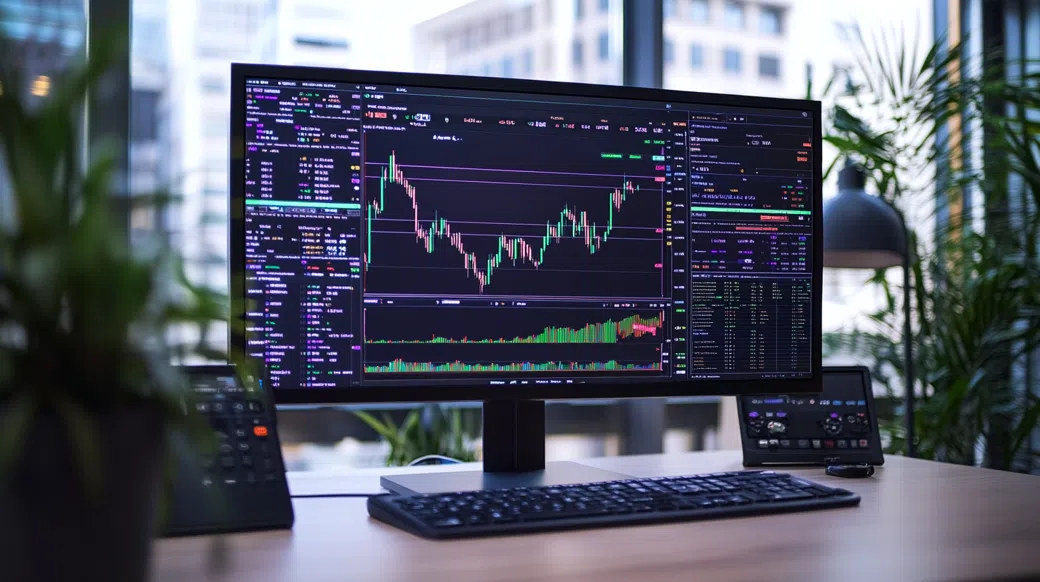
WebTrader is the center of gravity here. Logging in from Singapore on desktop stayed stable across multiple sessions, and the layout prioritizes charts over marketing. Order tickets supported market, limit, and stop, with sensible margin readouts and clear liquidation levels—useful when you’re running 1:500 leverage and need to see risk in numbers, not vibes. There’s no need to pretend this matches the MT4/MT5 plugin universe; it’s more “get in, manage, get out” than “build a sprawling indicator stack.”
The Orol Investek app mirrors the web experience closely: watchlists, real-time quotes, and one-tap position management are all there, plus deposits/withdrawals from the same menu. I also tested biometric unlock, which worked reliably on my device, and push notifications for order updates were consistent. For traders who check positions during commutes, the mobile flow is practical—though you’ll still want desktop for multi-chart context. If you’re troubleshooting access, the Orol Investek login screen includes a password reset path and session management controls.
Charting covers the basics traders actually use: multiple timeframes, the common indicator roster (MA, RSI, MACD, Bollinger), and drawing tools for levels and channels. The platform also embeds an economic calendar and a news feed—fine for spotting scheduled volatility, not deep enough for macro narrative building. Alerts and watchlists are available, but heavy quant traders will still prefer MT5/cTrader ecosystems for scripting and third-party analytics.
After entering email, phone, and a short suitability-style questionnaire, the dashboard pushed me directly to identity checks rather than letting me trade indefinitely in “unverified” mode. KYC required a government-issued photo ID and a proof-of-address document dated within three months; my submission cleared the same day. The onboarding pages were clean, with AML language surfaced early—good friction, in my view, for a broker operating offshore.
Deposit confirmation on card was immediate in my case, and the platform clearly separated “available” versus “equity” once a position was open—small UI details that help avoid accidental over-leverage. For traders who want to compare tiers before committing, you can also benchmark the pricing screens inside Orol Investek using the demo environment.
I tested support with a practical question: where exactly the swap rates are displayed and whether weekend financing differs on crypto CFDs. Live chat replied in about three minutes with a step-by-step path to the swap table and a short explanation of how daily financing is applied (including weekend considerations). I then sent a follow-up via email asking about withdrawal cut-off times; the ticket was answered in roughly nine hours on a business day with a clear processing window.
Coverage is typical for this segment: 24/5 availability aligned to trading days, with weekend responses less predictable unless you’re dealing with crypto market hours. Language support felt functional in English; other languages appear region-dependent. Phone support wasn’t emphasized in my test, so if you require a hotline-style relationship, you may find the channel mix more digital-first than concierge.
If you’re considering an offshore CFD account in 2026, start by stress-testing spreads and margin behavior on demo, then confirm your region’s eligibility before depositing. The product makes the most sense when you already know your instruments and position sizing rules.
Visit Orol InvestekIt can be, but only for beginners who treat leverage cautiously and use the demo first. The interface is chart-led and not overly cluttered, yet the offshore setup and 1:500 leverage mean risk management matters more than platform simplicity. If you’re brand new, focus on small sizing and learn how margin calls work before scaling.
Yes, crypto CFDs are available, including BTC/USD and ETH pairs. You’re trading price exposure via CFD rather than owning coins on-chain, so financing and weekend costs are part of the equation. For shorter tactical trades, liquidity on majors is generally more usable than on smaller tokens.
No, my test experience didn’t show classic scam behavior like blocked withdrawals or hidden account access. The bigger issue is jurisdiction: it operates under an offshore registration model (Seychelles FSA), which offers fewer formal protections than Tier-1 regulators. Approach it as a higher-risk brokerage choice and manage exposure accordingly.
No, the USA is restricted. US residents typically can’t open accounts due to local regulatory requirements around CFDs and leveraged trading. If you’re relocating, expect residency checks during KYC.
Withdrawal processing is usually 24–48 hours after KYC approval, then the delivery time depends on the method. In my test, card rails are typically 2–5 business days, bank wires often take 3–7 business days, and crypto withdrawals can arrive the same day. Always factor in banking cut-off times and compliance checks.
The minimum deposit is $200. That amount is enough to trial small positions, but with CFDs you should size trades so a routine drawdown doesn’t trigger a margin call. If you’re unsure, the $10,000 demo balance is the safer starting point.
Yes, there are iOS and Android apps alongside the WebTrader. The mobile build supports monitoring, order placement, and account actions like deposits and withdrawals. For detailed chart work, desktop still feels more comfortable, but the app is sufficient for active position management.
Overall Score: 4.0/5
Speed and simplicity are the main reasons traders will consider Orol Investek in 2026: a chart-centric WebTrader, a usable mobile suite, and pricing that makes sense if you choose the right tier for your frequency. My card deposit posted instantly, and the withdrawal workflow (post-KYC) followed the timelines shown in the portal—no theatrics, just a standard queue. The offshore reality remains the key caveat: protections and escalation paths are thinner than Tier-1 regulators, and 1:500 leverage punishes sloppy sizing. Treat CFDs as high-risk instruments, and keep position risk tight. For hands-on checks, Orol Investek is best evaluated on demo first.
Best for: active CFD traders focused on FX/indices/gold who want Raw/ECN pricing and a clean web platform. Avoid if: you need Tier-1 regulation, deep research/education, or you’re prone to over-leveraging.