Nourévalise Trading Platform Alternatives 2026
Looking for Nourévalise alternatives in 2026? Compare regulated brokers, platforms, costs, markets, and safety steps to switch with less friction.

Looking for Nourévalise alternatives in 2026? Compare regulated brokers, platforms, costs, markets, and safety steps to switch with less friction.
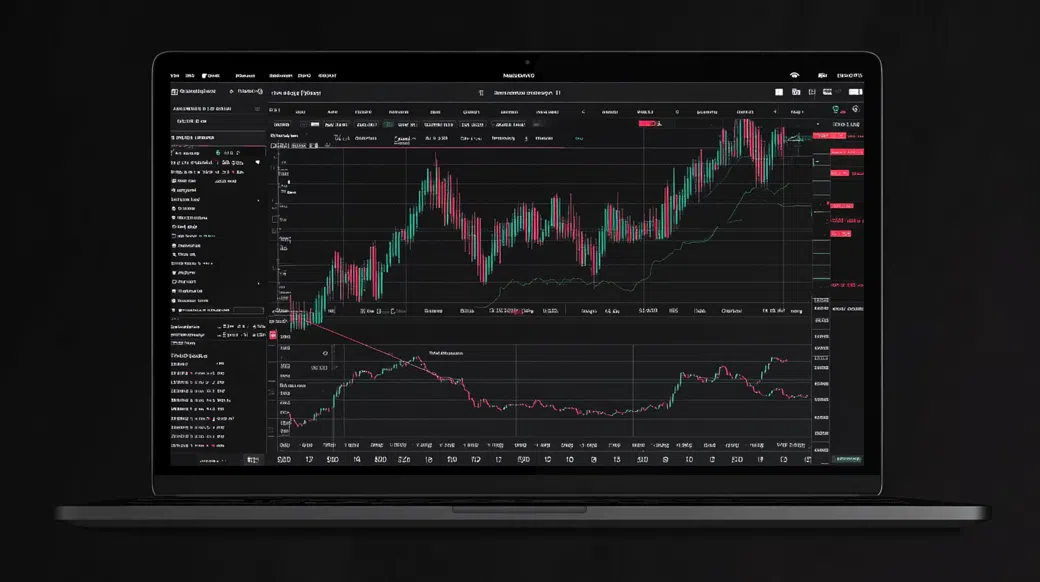
Leverage has a way of flattering a trading account—right up until spreads, slippage, and a margin call remind you who’s in charge. Nourévalise sits in that familiar offshore/off-platform lane: a CFD-first setup built around FX and indices, typically paired with a proprietary WebTrader and a mobile app that gets the job done but rarely delights power users. In this segment, marketing usually leads with high maximum leverage (often around 1:500) and a low-ish barrier to entry (commonly near a $250 minimum deposit), while the real story is in execution quality, funding/withdrawal plumbing, and what happens when something goes wrong.
For US and EU readers, the first filter is structural: many offshore CFD venues restrict the USA outright and may not provide the same client protections you’d expect under the FCA, ASIC, CySEC, or NFA. That’s why “Nourévalise alternatives” isn’t just a shopping exercise—it’s a risk-control decision. Some traders want tighter round-turn costs for active FX, others want real stocks/ETFs rather than share CFDs, and a growing cohort simply wants a platform stack (MT4/MT5/cTrader, APIs, better charting) that can support systematic testing instead of click-and-hope.
This guide to Nourévalise trading platform alternatives 2026 focuses on regulated substitutes, strategy-fit criteria, and a practical migration sequence. If you’re currently using Nourévalise, treat the comparison like you’d treat a new trade idea: define the downside first, then optimize the upside.
Disclaimer: This article is for informational purposes only and does not constitute investment advice. Trading CFDs and other leveraged products involves a high risk of loss and may not be suitable for all investors.
From what’s publicly observable about brokers in this category, Nourévalise looks like an offshore CFD broker operating under a Seychelles FSA-style framework rather than a top-tier onshore license. The product mix is usually straightforward: spot FX and CFDs on indices and commodities, with crypto CFDs often added for breadth. That model tends to suit short-horizon traders who mainly need margin access, not long-term asset ownership features like voting rights, SIPC/FSCS-style protections, or exchange-level transparency.
Platform-wise, expect a proprietary WebTrader with basic-to-mid charting and an account dashboard that focuses on balance, margin, and open positions. Charting is typically adequate for single-timeframe decision-making—candlesticks, common overlays, and a modest indicator shelf—yet it can feel shallow for traders who build playbooks across sessions or run systematic workflows. Order tickets usually cover market/limit/stop with basic risk controls; advanced conditional logic and rich depth-of-market tools are less common in platforms like Nourévalise. Mobile apps often mirror the web experience reasonably well, but “parity” doesn’t necessarily mean “precision,” especially around fast markets and partial fills.
Cost structure at offshore CFD venues is frequently split into a spread-only “Standard” tier and a tighter-spread account that charges commission. A reasonable working assumption for EUR/USD on a Standard-style account is around 2.0 pips in normal conditions, while an ECN/Raw-style tier may quote near 0.0–0.4 pips plus roughly $6 round-turn commission per standard lot. Add the second layer: swap/overnight financing, which matters if you hold positions beyond the session, and potential non-trading fees (withdrawal handling, inactivity) that can quietly dominate for low-frequency accounts.
Cost and control usually break the spell first. A wider spread doesn’t look dramatic on a small ticket, but scale the same “extra” 1.0 pip over a month of active trading and you’ve created a permanent headwind. Add offshore governance—where complaint pathways and restitution mechanisms can be thinner—and the case for regulated options vs Nourévalise becomes less about features and more about survivability. Nourévalise alternatives also become attractive when your strategy evolves: what worked as discretionary clicks often needs better tooling once you start measuring execution, slippage, and fill quality.
Think of broker selection as strategy infrastructure, not a “better app” hunt. Define the instruments you actually trade, your holding period, and your tolerance for operational risk (funding, withdrawals, dispute resolution). From there, shortlist regulated venues, compare round-turn costs on your typical position size, then test execution with small size before moving serious margin.
Start with the legal wrapper: FCA (UK), ASIC (Australia), CySEC (EU), and NFA/CFTC (US) each impose different conduct rules, reporting, and client-money handling. Under the FCA, for example, FSCS coverage can reach up to £85,000 for eligible clients; in Cyprus, ICF coverage may reach up to €20,000. No scheme makes trading “safe,” but segregated client funds, robust AML/KYC, and enforceable oversight meaningfully change your downside scenario versus offshore-only setups.
Map “what you trade” to “what you can truly access.” FX and index CFDs are easy to find; real stocks/ETFs, listed options, and futures are a different league and often require a multi-asset broker. If your macro book expresses through US equities, European ETFs, or rates futures, you’ll likely outgrow CFD-only menus. For traders who mainly hedge currency exposure, an FX-first broker can be enough—provided execution and funding rails are strong.
Ignore the single headline number and compute the round-turn: spread paid to enter/exit plus commission (if any). Then layer in swaps/overnight fees for held positions, plus non-trading charges like inactivity or withdrawal fees. A simple sanity check: estimate your monthly lots traded and multiply by “all-in” per-lot cost; it’s often the fastest way to see which of the top substitutes for Nourévalise is structurally cheaper for your style.
Platform choice is really about repeatability. MT4/MT5 and cTrader support indicators, automation, and a broad ecosystem; proprietary platforms can be slick but sometimes closed. Execution model matters: market makers internalize flow, while STP/ECN/DMA routing can reduce conflicts (though not eliminate slippage). If you’re comparing competitors to Nourévalise, run a small live test across quiet and volatile sessions and record fill speed, re-quotes, and stop-loss behavior.
Support is not a “nice to have” when money is in transit. Check service hours aligned to your trading session, the availability of live chat vs ticketing, and whether the broker supports your funding methods and base currencies. Education matters less than execution for experienced traders, but clear margin policies, transparent fee schedules, and consistent mobile parity reduce mistakes—especially when managing risk on the move.
FX and CFDs are the natural habitat here: think 30–50 FX pairs, a handful of commodities, and roughly 8–15 indices. The trade-off is cost and control. With a typical EUR/USD spread around 2.0 pips on a standard setup and leverage often marketed near 1:500, a trader can get “exposure” easily, but the round-turn friction can be heavy for active styles. Regulated FX/CFD specialists like Pepperstone or IC Markets are often better aligned for systematic FX because they commonly offer Raw-style pricing (tight spreads plus commission), multiple platform stacks (MT4/MT5/cTrader), and clearer execution reporting. If your edge is measured in fractions of a pip, the broker’s microstructure is part of the strategy.
Stocks and ETFs are where the offshore CFD model usually shows its limits. Even when “shares” appear on the menu, it’s frequently share CFDs—price exposure without ownership, voting rights, or the same corporate action handling you’d get on an exchange. For investors building longer-horizon portfolios, that difference is not cosmetic. Interactive Brokers (IBKR) is the cleanest bridge to real listed markets (US/EU equities, options, futures, bonds) with professional-grade routing and reporting. Saxo Bank also fits traders who want a single account for equities, ETFs, options, and FX under a more institutionally-minded platform stack. In my experience, once you start caring about dividend treatment, tax docs, and precise fills on liquid equities, CFD-only share exposure feels like the wrong instrument.
Crypto exposure at CFD brokers tends to be synthetic: you’re trading a crypto CFD, not moving coins on-chain, and you won’t have wallet withdrawal functionality. That can be fine for short-term directional views—especially if you’re trading around macro liquidity pulses—but it’s a different product than spot crypto ownership. If you want crypto as part of a broader CFD toolkit, IG offers crypto CFDs in supported regions under a strong regulatory umbrella, and Plus500 also provides crypto CFDs (availability varies by jurisdiction). The bigger point: check margin rules, weekend pricing behavior, and overnight financing because crypto CFDs can carry higher spreads and sharper gap risk than major FX pairs.
Regulation: SEC/FINRA (US), FCA (UK), IIROC (Canada)
Markets: Stocks, ETFs, options, futures, bonds, FX
Fees: FX pricing varies by volume; commissions apply on many products; built for cost transparency rather than “all-in spread” simplicity
Platform: Trader Workstation (TWS), IBKR Desktop/mobile/web, API access
Best For: Multi-asset traders who need real market access and advanced order control
Regulation: FCA (UK), ASIC (Australia), CySEC (EU), DFSA (Dubai)
Markets: FX, index CFDs, commodity CFDs, some crypto CFDs (region-dependent)
Fees: Standard spreads often around ~1.0+ pip on EUR/USD; Raw-style pricing commonly ~0.0–0.3 pips + commission (varies by entity)
Platform: MT4, MT5, cTrader, TradingView integrations (where available)
Best For: Cost-sensitive FX traders running EAs or short-term setups
Regulation: FCA (UK), MAS (Singapore), DFSA (Dubai)
Markets: Stocks, ETFs, options, futures, FX, CFDs, bonds
Fees: Tiered pricing by product; FX spreads typically competitive for larger accounts; commissions on exchange-traded instruments
Platform: SaxoTraderGO, SaxoTraderPRO
Best For: Portfolio-style traders who want one account across listed and OTC markets
Regulation: FCA (UK), ASIC (Australia), MAS (Singapore)
Markets: CFDs (indices, FX, commodities, shares), some stocks/ETFs (region-dependent), crypto CFDs (where permitted)
Fees: Spread-based pricing on many CFDs; typical EUR/USD spreads often ~0.6–1.2 pips depending on account and conditions
Platform: IG Web Platform, mobile apps; MT4 support in many regions
Best For: Macro CFD traders who value breadth and strong platform governance
Regulation: ASIC (Australia), CySEC (EU), FSA Seychelles (group-level)
Markets: FX, index CFDs, commodity CFDs, crypto CFDs (region-dependent)
Fees: Raw-style accounts often ~0.0–0.3 pips on EUR/USD + commission; Standard accounts typically ~1.0+ pip all-in
Platform: MT4, MT5, cTrader
Best For: High-frequency FX traders focused on tight pricing and platform choice
Regulation: FCA (UK), CySEC (EU), ASIC (Australia), MAS (Singapore)
Markets: CFDs on FX, indices, commodities, shares; crypto CFDs where permitted
Fees: Spread-based; costs vary by instrument and volatility rather than a fixed commission schedule
Platform: Plus500 proprietary WebTrader and mobile apps
Best For: Simplicity-first CFD traders who prefer a clean, guided interface
| Platform | Regulation | Main Markets | Typical Costs | Best For |
|---|---|---|---|---|
| Interactive Brokers (IBKR) | SEC/FINRA, FCA, IIROC | Stocks/ETFs, options, futures, bonds, FX | Commissions by product; FX pricing varies by volume | Multi-asset traders who need real market access and advanced order control |
| Pepperstone | FCA, ASIC, CySEC, DFSA | FX + CFDs (indices/commodities; crypto CFDs where allowed) | Raw-style ~0.0–0.3 pips + commission; Standard ~1.0+ pip | Cost-sensitive FX traders running EAs or short-term setups |
| Saxo Bank | FCA, MAS, DFSA | Listed + OTC: stocks/ETFs/options/futures, FX, CFDs | Tiered; commissions on exchanges; competitive FX for larger sizes | Portfolio-style traders who want one account across listed and OTC markets |
| IG | FCA, ASIC, MAS | CFDs across FX/indices/shares/commodities; MT4 in many regions | Mostly spread-based; EUR/USD often ~0.6–1.2 pips | Macro CFD traders who value breadth and strong platform governance |
| IC Markets | ASIC, CySEC, FSA Seychelles (group-level) | FX + CFDs (indices/commodities; crypto CFDs where allowed) | Raw-style ~0.0–0.3 pips + commission; Standard ~1.0+ pip | High-frequency FX traders focused on tight pricing and platform choice |
| Plus500 | FCA, CySEC, ASIC, MAS | CFDs on FX/indices/commodities/shares; crypto CFDs where allowed | Spread-based; varies with volatility and instrument | Simplicity-first CFD traders who prefer a clean, guided interface |
Switching brokers is an operational trade: you’re reducing counterparty and execution risk while avoiding preventable account freezes. Keep it methodical—verify regulation first, then line up KYC and funding rails before you touch your live positions. If you’re currently active on Nourévalise, remember that leverage cuts both ways; rushing the move during volatile markets can add unnecessary P&L noise on top of administrative friction.
If you’re benchmarking brokers, it helps to re-check the current onboarding flow, funding options, and platform features in your region before you commit. Snapshot the spreads you actually see during your trading window, then compare that live experience against the regulated options above.
Visit NourévaliseThe best alternative depends on whether you’re optimizing for real market access, FX trading costs, or a simpler CFD interface. For true multi-asset exposure (stocks/ETFs/options/futures), Interactive Brokers or Saxo Bank are hard to beat; for FX execution and platform choice, Pepperstone and IC Markets are common picks. If you mainly want broad CFDs with strong oversight, IG is a consistent benchmark in the “best Nourévalise alternatives 2026” discussion.
Nourévalise appears to operate under an offshore framework (commonly associated with jurisdictions like Seychelles), which typically means fewer investor protections than FCA/ASIC/CySEC/NFA-regulated brokers. That doesn’t automatically imply wrongdoing, but it does change the dispute-resolution and compensation backdrop. If safety is your priority, compare regulated options vs Nourévalise and verify the exact legal entity and license on the regulator’s public register.
Nourévalise is typically positioned around FX and CFDs, with crypto often offered as crypto CFDs rather than on-chain ownership. Real stocks/ETFs and listed futures are often not part of the core offshore CFD menu, or they appear only as CFDs on shares. If you need exchange-traded futures or real equities, platforms like IBKR or Saxo are more direct substitutes for Nourévalise.
Before switching, verify regulation (FCA/ASIC/CySEC/NFA) on the official register, then confirm which legal entity you will onboard with and what protections apply (segregated funds, negative balance protection, FSCS/ICF eligibility). Next, test trading costs in live conditions—spreads, commission, and swap—because that’s where many Nourévalise alternatives differ in practice. Finally, set up the new account and KYC first, then withdraw from Nourévalise via the original funding method to minimize AML-related delays.
About the Author: Daniel Okafor is a derivatives trader turned market analyst based in Singapore, covering APAC brokerages and global macro through a trader’s lens. He focuses on execution, cost-of-trade, and platform plumbing—because charts are useful, but fills decide the P&L.