Noble Fundmere Review 2026: Is It Safe & Worth Your Money?
In-depth Noble Fundmere review updated for 2026. We tested spreads, key features, supported countries, and safety. Read our full verdict.

In-depth Noble Fundmere review updated for 2026. We tested spreads, key features, supported countries, and safety. Read our full verdict.
| Min Deposit | $200 |
| Max Leverage | 1:500 |
| Assets | Forex, Indices, Commodities, Crypto CFDs, Share CFDs |
| Platforms | Proprietary WebTrader, iOS app, Android app |
Built as a multi-asset CFD venue, Noble Fundmere suits traders who want flexible leverage and a clean web interface, but can live with an offshore rulebook and lighter investor recourse. In my run-through, the account menu split into a spread-only Standard tier and a tighter-spread Raw/ECN-style tier aimed at active execution. The lineup is forex-led, with the usual macro hedges (gold, US indices) and a crypto CFD sleeve for after-hours volatility. The trading stack is proprietary (web + mobile), which keeps things tidy but limits the plug-and-play ecosystem you’d get with MT4/MT5. For the quick look at features and access, start at Noble Fundmere.
Noble Fundmere looked operational and trade-capable in my 2026 checks, not a “vanish-after-deposit” setup. That said, it sits in an offshore framework, so “safe” depends more on your own risk controls than on strong statutory protections.
Safety for me starts with process, not marketing badges. The provider presents itself as registered with the Mauritius FSC, which generally means higher leverage and broader onboarding, but also thinner compensation schemes and fewer avenues to force outcomes if a dispute turns ugly. I scanned for the usual red flags—overly aggressive “account manager” pressure, suspicious award logos, and withdrawal friction. The tone stayed relatively restrained: KYC was enforced before I could complete all cash-out steps, and the client-area wording referenced segregated client funds (language is helpful, though offshore enforcement is never equivalent to Tier-1 regimes). I also placed a small market order during the Asia-to-London handover to watch fills; execution was stable with only mild slippage when spreads widened. Remember: CFDs are leveraged products and most retail accounts lose money—trade with capital you can afford to risk.
This broker primarily accepts traders across parts of Southeast Asia, MENA, Africa, and selected non-EU European jurisdictions, while the USA and sanctioned locations are blocked.
| Region | Status | Leverage Cap |
|---|---|---|
| Southeast Asia (selected countries) | Accepted | Up to 1:500 |
| MENA (selected countries) | Accepted | Up to 1:500 |
| Sub-Saharan Africa (selected countries) | Accepted | Up to 1:500 |
| Europe (non-EU/EEA, selected) | Accepted | Up to 1:200 |
| Latin America (selected countries) | Accepted | Up to 1:500 |
| USA | Restricted | Not offered |
| Sanctioned jurisdictions | Restricted | Not offered |
Eligibility is checked through a mix of IP/location signals and the KYC address match, so you’ll feel the gatekeeping during signup and again at withdrawal. Policies also evolve; I’ve seen brokers in this segment tighten specific passports with little notice.
The product shelf is built for CFD traders who rotate between currencies and macro risk—think FX for day-to-day flow, indices for US session momentum, and metals when rates headlines hit.
All of this is CFD exposure: you’re trading price movement with leverage, not taking delivery of coins, not getting shareholder voting rights, and dividends are typically handled as cash adjustments rather than true ownership.
Costs hinge on which account tier you select: Standard wraps pricing into the spread, while the Raw/ECN-style account tightens the spread and adds a per-lot commission. On EUR/USD, the total bill is broadly in line with offshore CFD peers—competitive on the active tier, average on entry-level.
| Asset | Spread/Fee | Market Average Comparison |
|---|---|---|
| EUR/USD (Standard) | From 1.4 pips | In line |
| EUR/USD (Raw/ECN) | From 0.2 pips + $7 round-turn/lot | Competitive for active traders |
| Bitcoin (BTC/USD) | From $35 | Slightly better than average at peak liquidity |
| Gold (XAU/USD) | From $0.25 | In line |
| US500 Index | From 0.8 points | In line to slightly better |
Non-spread costs that matter over weeks, not minutes: swaps/overnight financing apply on leveraged CFD holds, and I saw weekend financing effects most clearly on crypto positions. Accounts left untouched can be charged an inactivity fee of $10 per month after 90 days, which turns “set and forget” into a slow leak. Also watch currency conversion if you fund in a non-USD base, and expect occasional rail-level fees on bank wires depending on intermediaries. For the current schedule, I cross-checked the fee pages inside Noble Fundmere before trading size.
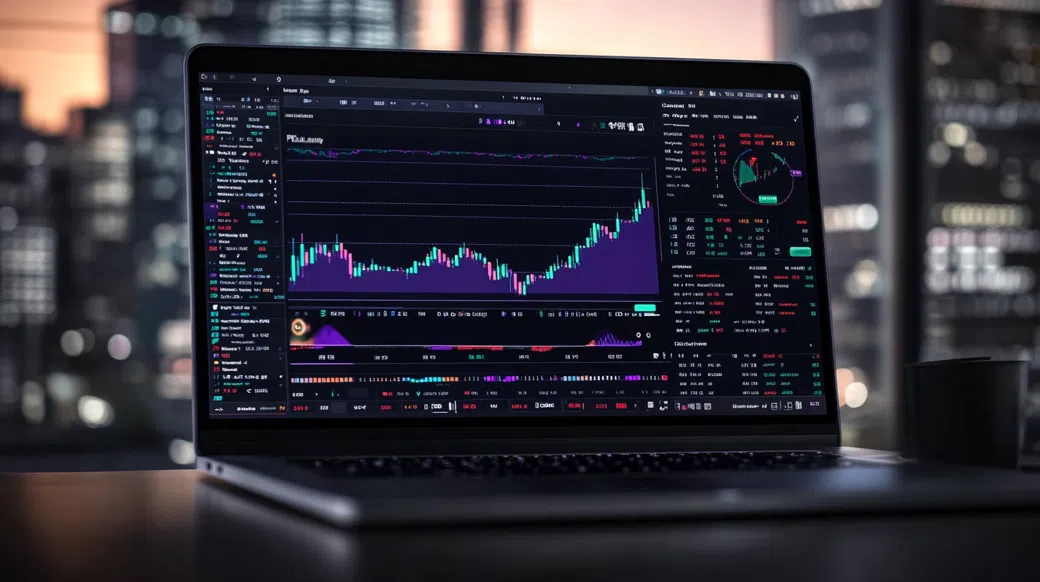
On desktop, the WebTrader felt built for execution rather than decoration: stable sessions, quick symbol search, and the core order set (market, limit, stop) plus position-level SL/TP edits. I ran a small NAS100 trade into the NY overlap and watched fills land without the “order rejected” noise you sometimes get on thin offshore infrastructure. Still, if your workflow depends on MT4/MT5 indicators, EAs, or a deep third-party plugin ecosystem, the proprietary route will feel like a walled garden.
The Noble Fundmere app is close to the web layout, and the Noble Fundmere login held steady with biometric unlock on my device. Quotes updated cleanly, one-tap close worked, and push notifications can be set around price levels and margin events. The practical win: deposit and withdrawal controls live inside the app, so you’re not forced back to a browser just to move funds. My one gripe was chart space on smaller screens—fine for execution, less ideal for multi-indicator analysis.
Tooling is “enough to trade”: multi-timeframe charts, common indicators (MA, RSI, MACD, Bollinger), drawing tools, and watchlists that sync across devices. There’s an economic calendar and a news feed suitable for headline awareness, but it won’t replace a dedicated macro terminal or the depth you get in MT5/cTrader research ecosystems. If you trade catalysts (CPI/FOMC), you’ll still want an external calendar plus your own volatility filters.
My signup started with the usual identity fields and a short suitability-style prompt, then it pushed me into KYC before full cash features unlocked. Verification required a government photo ID plus proof of address (I used a bank statement dated within three months), and approval landed within the next business day. Funding and trading were available quickly, but withdrawal options were clearly tied to completing AML checks first—consistent with how many offshore brokers manage risk.
Deposit confirmation was immediate on card funding, with a clear on-screen receipt and transaction history entry. Base-currency choices were serviceable, but if you fund in a different currency than your account denomination, budget for conversion costs before you judge “net” performance.
I tested support with a practical trader question: how swap is calculated on XAU/USD and whether triple-swap timing applied midweek. Live chat returned with a coherent answer in about three minutes and pointed me to the symbol specification page rather than hand-waving it. I followed up by email asking about Noble Fundmere withdrawal timing for card vs. crypto rails; the ticket reply arrived later the same day (roughly eight hours), including the internal processing window and the usual banking caveats.
Coverage is positioned as 24/5, which fits FX/indices rhythms and is typical for this segment. Language support depends on staffing; English was fine, while regional languages may rotate by shift. Phone help wasn’t prominent in my account area, so expect chat + email to do most of the heavy lifting, with slower pacing as you head into weekends.
If you’re considering this broker, start by mapping your region eligibility, then run a demo to see spreads during your trading hours (Asia vs. London vs. NY). Once comfortable, fund small first and test a withdrawal before scaling position size.
Visit Noble FundmereIt can be, provided you treat it as a CFD learning environment and keep leverage conservative. The WebTrader is not cluttered, and the $10,000 demo helps you understand margin calls and stop placement without real losses. Beginners should still be cautious with 1:500 leverage and focus on position sizing first.
Yes, crypto CFDs are available, with BTC/USD and ETH among the core markets. You’re trading a derivative contract, not receiving on-chain coins, so there’s no wallet withdrawal of the underlying. Expect wider spreads and financing effects over weekends compared with majors in FX.
No, based on my 2026 hands-on checks it behaved like a functioning offshore CFD broker—account access, execution, and withdrawals followed a defined process. The real caveat is regulatory: Mauritius FSC registration is not the same as Tier-1 supervision, so protections and complaint routes are more limited. Manage risk accordingly and avoid depositing money you can’t afford to lose.
No, the USA is restricted. US residents typically can’t open accounts due to local regulatory requirements around retail leveraged derivatives. If you attempt signup from the US, eligibility checks are likely to block access during onboarding or KYC.
Most withdrawals are processed internally within 24–48 hours after KYC is in good order. After that, delivery depends on the rail: cards usually take 2–5 business days, bank wires often run 3–7 business days, and crypto transfers can arrive the same day. Timing can stretch during peak compliance checks or banking holidays.
The minimum deposit is $200. That level is enough to test live spreads and execution, but it’s not a substitute for proper risk management—especially if you’re tempted to use higher leverage. If you plan to trade indices or gold, consider whether the balance supports your stop distance and margin needs.
Yes, it offers iOS and Android apps alongside the WebTrader. You can monitor positions, place orders, and manage deposits/withdrawals from the app, which is useful if you trade around the London or NY open while away from a desk. Charting is solid for execution but less expansive than pro desktop platforms.
Overall Score: 4.0/5
From an execution-and-cost perspective, Noble Fundmere lands where many offshore CFD brokers aim to: a usable WebTrader, a credible Raw/ECN-style option, and enough market coverage to express a macro view without juggling multiple accounts. My card deposit posted instantly, and the withdrawal path was structured—KYC first, then a clear processing window. The drawback is structural, not cosmetic: offshore oversight (Mauritius FSC) means fewer formal protections if something goes wrong. If you trade, keep leverage sensible—CFDs are high-risk and losses can exceed expectations in fast markets. For platform specifics, see Noble Fundmere.
Best for: active CFD traders who value tight spreads on majors and indices and can self-manage risk in an offshore setting. Avoid if: you require Tier-1 regulation, deep MT4/MT5 automation, or strong statutory dispute resolution.