Nadhodnex Trading Platform Alternatives 2026
Nadhodnex trading platform alternatives 2026: compare regulated brokers, platforms, costs, and safety checks to find reliable Nadhodnex alternatives.

Nadhodnex trading platform alternatives 2026: compare regulated brokers, platforms, costs, and safety checks to find reliable Nadhodnex alternatives.
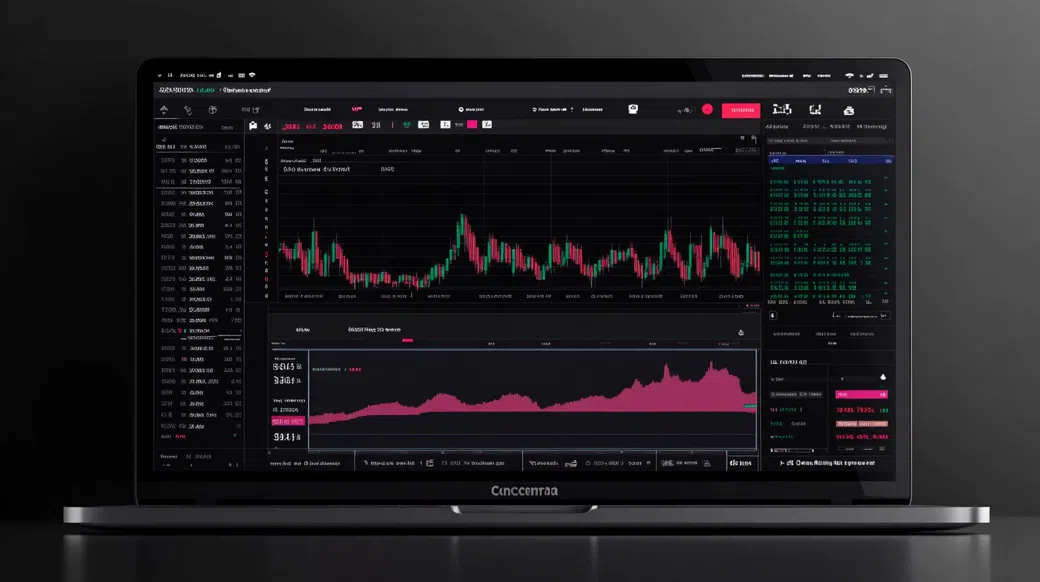
Pull up a one-hour chart and you’ll see it fast: the broker matters as much as the setup. Execution friction, swaps that drift against you, and a platform that can’t express your risk plan will quietly tax even a good macro view. Nadhodnex sits in a familiar bucket for many global retail traders—CFD-first access to forex, indices, commodities, and often crypto CFDs, typically delivered through a proprietary WebTrader plus mobile apps. Public-facing details can be thin with offshore-style brokers, and that’s usually where the search for Nadhodnex alternatives begins: not with “more leverage,” but with better guardrails, clearer disclosures, and a platform stack that matches how you actually trade.
For US/EU readers in 2026, the practical question is simple: can you get comparable markets with stronger oversight, more transparent pricing, and a cleaner path for deposits/withdrawals? In my own process, I start by locking down the non-negotiables—regulation, segregated client funds, negative balance protection where applicable—then I work outward to spreads, commissions, and execution model (market maker vs STP/ECN/DMA). This guide lays out those trade-offs and highlights regulated options vs Nadhodnex that can fit different styles, from macro swing positions to short-horizon CFD trading.
Disclaimer: This article is for informational purposes only and does not constitute investment advice. CFDs and other leveraged products carry a high risk of loss and may not be suitable for all investors.
Across retail CFD brokerage, Nadhodnex reads like an offshore-leaning provider: forex and CFDs as the core product set, higher headline leverage (commonly marketed up to 1:500), and account onboarding aimed at speed rather than deep product breadth. The USA is typically restricted, and other sanctioned jurisdictions are usually excluded as well. In practice, the target user tends to be the short-to-medium-term trader who wants majors/minors, a handful of indices and commodities, and a menu of crypto CFDs—without expecting exchange-traded futures or direct market access equities. That positioning explains why competitors to Nadhodnex often win on market range and transparency, even if the offshore venue looks simpler on the surface.
The platform stack is usually centered on a proprietary WebTrader with an iOS/Android companion app. Charting is functional—enough indicators and drawing tools for basic structure, support/resistance, and moving-average regimes—but it rarely matches the depth power users expect from MT5 or a dedicated multi-asset workstation. Order entry generally covers market and limit/stop orders, with risk controls that depend heavily on the specific instrument’s margin rules. Mobile parity is often “good enough” for monitoring and basic edits, while deeper workflow (multi-chart layouts, conditional orders, advanced analytics) can feel compressed. If you’re evaluating platforms like Nadhodnex, the key test is whether the tools let you express your stop placement and position sizing cleanly during volatility spikes.
Cost structure in this segment is commonly spread-led: a Standard-style account with EUR/USD often around 2.0 pips, and sometimes a “Raw/ECN-style” tier marketed with tighter spreads (roughly 0.0–0.4 pips) plus a commission that typically lands in the $6–$8 round-turn range. Minimum deposits are frequently set around $250, with financing costs (swap/overnight fee) becoming the real drag for positions held through rate differentials or weekend rollovers. Watch for non-trading charges too—withdrawal handling fees and inactivity fees can be where the pain hides, especially if you’re pausing risk during macro event windows.
My tell is always the same: the platform stops being a tool and starts being a constraint. That’s when traders begin hunting Nadhodnex alternatives—sometimes after a single bad experience with withdrawal friction, but more often after a slow grind of small issues: pricing that’s hard to reconcile, limited order control, or an execution model that behaves differently in fast markets. If you’re building a repeatable process, broker quality becomes part of your edge because it reduces “non-market” variance. And with leveraged CFDs, a few points of slippage or a widened spread around data releases can flip a positive expectancy system negative.
Think of broker selection like sizing a position: you’re allocating trust and capital under uncertainty. The clean way to do it is to match broker capabilities to strategy constraints—regulatory protection first, then instruments, then cost and execution. Only after that should UI preferences enter the conversation. This is where alternatives to the Nadhodnex trading platform separate into two camps: multi-asset venues built for breadth, and FX/CFD specialists built for tight trading conditions.
Start with the badge that matters: oversight. FCA (UK), ASIC (Australia), CySEC (EU), and NFA/CFTC (US) supervision typically brings stricter rules around disclosures, capital, and client money handling. In the UK, FSCS protection can cover eligible claims up to £85,000; in Cyprus, the ICF can cover eligible claims up to €20,000. None of that makes trading “safe,” but it changes the failure-mode risk. Also look for segregated client funds and, for retail CFD accounts, negative balance protection where applicable.
List your “must trade” instruments before you compare brokers. FX and index CFDs cover a lot of macro expressions, but some strategies need more: real stocks/ETFs for long-duration exposure, options for defined-risk structures, or exchange-traded futures for tighter tracking. Many brokers similar to Nadhodnex concentrate on CFDs, which can be fine for tactical risk—just don’t expect the same toolbox as a true multi-asset broker. Match the venue to the instrument, not the other way around.
Ignore the marketing “from” number and compute round-turn cost-of-trade: spread + commission + typical slippage in your trading hours. A raw account with 0.1–0.3 pips plus commission can beat a 1.0–1.2 pip spread-only account if you trade actively; the reverse can be true for low-frequency traders. Add swap/overnight fees to the model if you hold positions beyond a session, and don’t skip funding/withdrawal and inactivity charges—they show up when your risk budget tightens.
Platform is not aesthetics; it’s functionality under stress. MT4/MT5 and cTrader matter for advanced order control, algorithmic trading, and indicator ecosystems, while proprietary platforms can be slick but narrower. Execution model matters too: market maker pricing can be perfectly acceptable for many retail flows, but STP/ECN/DMA setups may behave better for certain styles, especially around liquidity gaps. If you’re benchmarking Nadhodnex against regulated options vs Nadhodnex, test for re-quotes, slippage distribution, and latency during your active window.
When something breaks, the only thing that matters is time-to-resolution. Look for 24/5 (or better) coverage, regional phone/chat availability, and support in the language you’ll actually use under pressure. Education is secondary for experienced traders, but market calendars, margin calculators, and clear platform documentation reduce operational errors. Mobile parity also matters in 2026—alerts, position edits, and margin monitoring should be consistent across devices, not a cut-down companion.
On paper, a CFD-first broker like Nadhodnex can cover the core macro toolkit: 30–50 FX pairs, a set of indices, and a short list of commodities—usually with leverage marketed as high as 1:500. The catch is the “all-in” execution experience: EUR/USD around 2.0 pips on a typical spread-led account means you’re paying a meaningful toll each round trip, and that toll is felt most by active traders. Regulated Nadhodnex alternatives such as Pepperstone and IC Markets are often chosen precisely because they offer multiple platform stacks (MT4/MT5/cTrader) and more competitive raw-style pricing for short-horizon strategies. If your edge is small—think mean reversion on liquid pairs—spreads, slippage, and order handling are not details; they’re the business model.
This is where many platforms like Nadhodnex show the biggest gap. Offshore CFD venues frequently offer equities as CFDs (if offered at all), which means financing charges, no shareholder voting rights, and different tax/documentation treatment than holding the underlying security. Traders who want actual stocks and ETFs—especially US-listed liquidity for global macro baskets—tend to move to multi-asset brokers with direct access. Interactive Brokers is a common choice for serious market access across equities, options, futures, and FX, while Saxo is strong for investors who want a curated multi-asset experience with robust research and portfolio tooling. In other words: for equity investing, top substitutes for Nadhodnex are usually the brokers that behave like brokerages, not CFD wrappers.
Crypto access in this category is typically delivered as crypto CFDs—price exposure without on-chain ownership, no ability to withdraw coins to a wallet, and financing/spread costs that can be non-trivial in choppy regimes. That structure can still be useful for short-term hedging or expressing risk-on/risk-off views (BTC as a volatility proxy, for instance), but it’s not the same as holding spot. If you want regulated crypto CFDs, IG and Plus500 are two established names in the CFD space (availability varies by region), while Saxo can serve traders who prefer crypto ETPs/derivatives-style exposure in a broader portfolio context where allowed. For anyone comparing competitors to Nadhodnex, clarify upfront whether you need “trade the price” or “own the asset.”
Regulation: SEC/FINRA (US), FCA (UK), IIROC (Canada) (entity depends on region)
Markets: Stocks, ETFs, options, futures, bonds, FX, funds
Fees: FX pricing varies by venue/plan; commissions apply across many products; designed for low friction at scale rather than spread-only simplicity
Platform: Trader Workstation (TWS), IBKR Desktop/Web, mobile; API access
Best For: Multi-asset professionals needing global market access
Regulation: FCA (UK), ASIC (Australia), CySEC (EU), DFSA (Dubai)
Markets: FX, CFDs (indices, commodities, some shares)
Fees: Typical EUR/USD ~0.0–0.3 pips + commission on Razor/Raw-style accounts; ~1.0+ pip range on Standard-style pricing (varies by entity/account)
Platform: MT4, MT5, cTrader, TradingView integration (where available)
Best For: Systematic FX traders using EAs/cTrader
Regulation: FCA (UK), MAS (Singapore), DFSA (Dubai) (entity depends on region)
Markets: Stocks, ETFs, bonds, options, futures, FX, CFDs
Fees: Pricing is tiered by account level and product; FX spreads typically start around the sub-1 pip area on majors for higher tiers, wider for entry tiers
Platform: SaxoTraderGO, SaxoTraderPRO
Best For: Portfolio traders mixing FX with listed instruments
Regulation: CFTC/NFA (US), FCA (UK), ASIC (Australia), IIROC (Canada) (entity depends on region)
Markets: FX, CFDs (region-dependent)
Fees: Typically spread-only pricing; EUR/USD often seen around ~0.6–1.2 pips depending on account type and market conditions
Platform: OANDA web/mobile, MT4 (availability varies)
Best For: US-eligible FX traders prioritizing regulation
Regulation: FCA (UK), ASIC (Australia), MAS (Singapore)
Markets: CFDs on FX, indices, commodities, shares; spread betting (UK/IE)
Fees: Spread-led pricing; majors often competitive in liquid hours, with costs varying by instrument and volatility
Platform: IG web platform, mobile; MT4 (in some regions)
Best For: Macro CFD traders needing broad index coverage
Regulation: FCA (UK), CySEC (EU), ASIC (Australia), MAS (Singapore)
Markets: CFDs on FX, indices, commodities, shares, crypto (availability depends on region)
Fees: Primarily spread-based; overnight financing applies for held positions
Platform: Plus500 proprietary WebTrader and mobile apps
Best For: Beginners who want a clean CFD interface
| Platform | Regulation | Main Markets | Typical Costs | Best For |
|---|---|---|---|---|
| Interactive Brokers (IBKR) | SEC/FINRA, FCA, IIROC (by entity) | Stocks/ETFs, options, futures, bonds, FX | Commissioned model; tight pricing aimed at active/pro users | Multi-asset professionals needing global market access |
| Pepperstone | FCA, ASIC, CySEC, DFSA | FX + CFDs | Raw-style ~0.0–0.3 pips + commission; Standard ~1.0+ pip range | Systematic FX traders using EAs/cTrader |
| Saxo Bank | FCA, MAS, DFSA (by entity) | Stocks/ETFs, options, futures, FX, CFDs | Tiered pricing; FX spreads typically start sub-1 pip on higher tiers | Portfolio traders mixing FX with listed instruments |
| OANDA | CFTC/NFA, FCA, ASIC, IIROC (by entity) | FX; CFDs (region-dependent) | Mostly spread-only; EUR/USD often ~0.6–1.2 pips depending on conditions | US-eligible FX traders prioritizing regulation |
| IG | FCA, ASIC, MAS | CFDs on FX, indices, commodities, shares | Spread-led; costs vary by market/volatility | Macro CFD traders needing broad index coverage |
| Plus500 | FCA, CySEC, ASIC, MAS | CFDs on multi-asset set (region-dependent) | Spread-based + overnight financing for held positions | Beginners who want a clean CFD interface |
A broker switch is operational risk dressed up as admin. Treat it like a controlled rollout: confirm the destination first, reduce exposure during the transfer window, and keep records tight for compliance and tax. If you’re moving from Nadhodnex to one of the best Nadhodnex alternatives 2026 has on offer, avoid rushing—errors around withdrawals, margin, or platform settings can cost more than a month of spreads.
If you’re still evaluating, review the onboarding steps, funding rails, and product list in your region before committing capital. Then compare it side-by-side against Nadhodnex alternatives on regulation, platform stack, and total cost per trade—spreads alone don’t tell the full story.
Visit NadhodnexThe best alternative depends on what you’re trying to trade and how you manage risk. For true multi-asset access (real stocks/ETFs, options, futures), Interactive Brokers is hard to beat; for platform choice and tighter FX conditions, Pepperstone is a frequent pick. If you want an all-in-one CFD venue with broad index coverage, IG is a strong contender among Nadhodnex alternatives.
Based on how offshore-style CFD brokers typically present (and absent clear tier-1 licensing disclosures), Nadhodnex is best treated as an unregulated or offshore platform rather than a top-tier regulated brokerage. That doesn’t automatically mean misconduct, but it does mean fewer formal investor-protection mechanisms than FCA/ASIC/CySEC/NFA-supervised firms. If safety is a priority, focus on regulated options vs Nadhodnex and confirm segregation of client funds and negative balance protection terms.
Nadhodnex typically aligns with forex and CFD trading, and crypto exposure (where offered) is usually via crypto CFDs rather than on-chain ownership. Real stocks/ETFs and exchange-traded futures are often not the focus on platforms like this, or they may appear only as CFDs. If you need listed futures or direct equity access, brokers similar to Nadhodnex won’t usually match Interactive Brokers or Saxo.
Before switching, confirm the new broker’s regulator and legal entity on the official register, then read the client money and complaints policies. Next, compare total trading cost (spread + commission + swaps) and test execution with small size during your normal trading hours. Finally, make sure your funding method and withdrawal process align with AML rules so funds don’t get delayed mid-migration.
About the Author: Daniel Okafor is a derivatives trader turned market analyst based in Singapore, covering APAC brokerages through a global macro lens. He focuses on execution quality, platform mechanics, and risk—because the chart is only half the trade.