Nadhodnex Review 2026: Is It Safe & Worth Your Money?
In-depth Nadhodnex review updated for 2026. We tested spreads, key features, supported countries, and safety. Read our full verdict.

In-depth Nadhodnex review updated for 2026. We tested spreads, key features, supported countries, and safety. Read our full verdict.
| Min Deposit | $200 |
| Max Leverage | 1:500 |
| Assets | Forex, Indices, Commodities, Crypto CFDs, Share CFDs |
| Platforms | Proprietary WebTrader + iOS/Android mobile apps |
Built as an offshore CFD venue, Nadhodnex suits active traders chasing flexible leverage and a broad multi-asset watchlist, but the headline compromise is lighter investor-protection scaffolding than top-tier jurisdictions. I ran a small live account from Singapore, stepped through ID + address checks, and traded FX and indices across the Asia-to-London handover to see how pricing behaved. Account tiers are split between a spread-only Standard and a tighter Raw/ECN-style option aimed at higher frequency flow. The stack is simple—WebTrader plus mobile—so you’re not getting the deep plug-in ecosystem of MT4/MT5 by default. The USP is cost optionality (spread-only vs commission), while the main drawback is that dispute escalation routes are typically narrower in offshore setups like Nadhodnex.
Nadhodnex looks operational rather than a “vanish-with-your-deposit” setup, and my withdrawal test cleared. That said, it’s offshore—so safety depends more on the broker’s internal controls than on strong external compensation schemes.
What anchored my “is Nadhodnex legit” check was process, not marketing: the provider enforced KYC/AML before letting me raise limits, and the client-area copy repeatedly referenced segregated client funds (language you want to see, even if enforcement varies by jurisdiction). The registration footprint I observed aligned with a Seychelles FSA-style offshore framework. In practice, that usually buys you higher leverage and looser product constraints, but you give up the tight complaint pathways and backstop schemes common in FCA/ASIC-style regimes. I scanned for obvious red flags—pressure calls, fake award badges, or withdrawal stalling—and didn’t run into any of those during my test window. Still, remember what you’re trading here: CFDs are leveraged products, margin calls happen fast, and most retail traders lose money. Treat position sizing and risk limits as your first line of “safety.”
This broker is broadly open to many international clients across Asia, parts of Africa, and segments of LATAM, while the USA and sanctioned jurisdictions are blocked. Availability is ultimately determined at onboarding via residency and documentation checks.
| Region | Status | Leverage Cap |
|---|---|---|
| Southeast Asia (selected) | Accepted | Up to 1:500 |
| MENA (selected) | Accepted | Up to 1:500 |
| Sub-Saharan Africa (selected) | Accepted | Up to 1:500 |
| LATAM (selected) | Accepted | Up to 1:500 |
| Europe (non-EU selected) | Accepted | Up to 1:500 |
| USA | Restricted | Not offered |
| Sanctioned jurisdictions | Restricted | Not offered |
Expect eligibility to be enforced through a mix of IP screening and, more decisively, KYC documents at or shortly after sign-up. Country lists can shift with compliance policy, so it’s worth checking access again before funding.
The product shelf is built for CFD traders who rotate between macro themes—rates, commodities, and risk-on/risk-off—without switching platforms. In my session, the layout pushes FX and indices front and center, with crypto and shares as add-ons.
All of this is CFD exposure: you’re trading price movement, not taking delivery of assets. That means no shareholder voting, and crypto positions aren’t on-chain coins you can withdraw to a wallet.
The cost structure is tiered: Standard is spread-only, while the Raw/ECN-style account combines tighter pricing with a per-lot commission. On balance, Nadhodnex fees land in the familiar range for offshore CFD brokers—competitive when markets are liquid, less so when volatility widens.
| Asset | Spread/Fee | Market Average Comparison |
|---|---|---|
| EUR/USD (Standard) | From 1.6 pips | In line |
| EUR/USD (Raw/ECN) | From 0.2 pips + $7 round-turn/lot | Competitive for active trading |
| Bitcoin (BTC/USD) | From $28 | In line to slightly higher on weekends |
| Gold (XAU/USD) | From $0.28 | In line |
| US500 Index | From 0.8 points | Competitive |
Non-spread costs that matter: Overnight swap/financing is the quiet P&L drain if you run multi-day positions—especially in high-rate differentials and on crypto over weekends. I also noted an inactivity fee of $10 per month after 90 days of no trading activity, which is small individually but annoying if you keep the account as a “backup broker.” Funding in one currency and trading in another can trigger conversion charges at the payment rail or bank level, and withdrawals may carry third-party fees depending on method—check the cashier page before you click confirm.
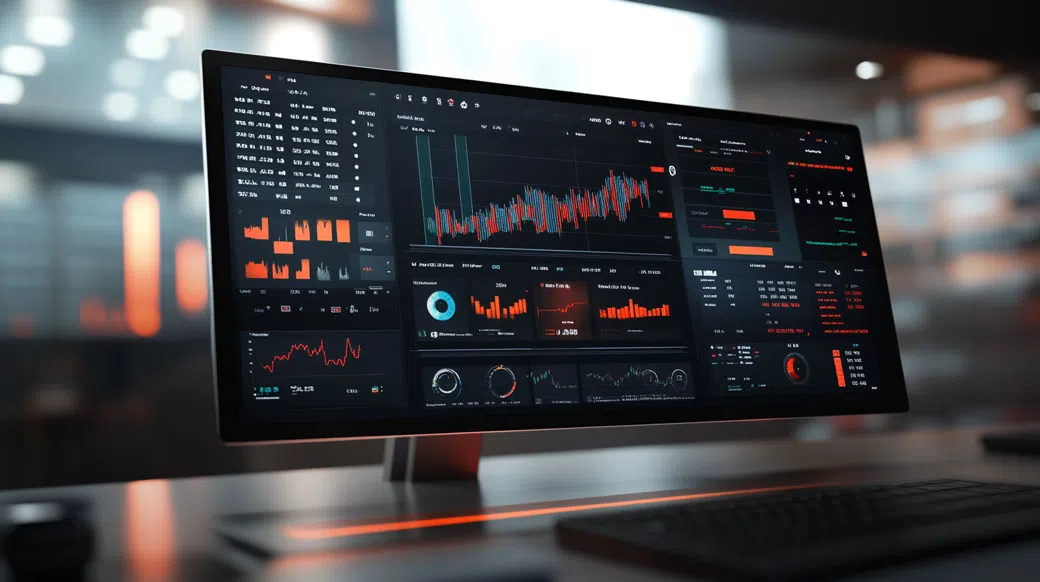
On desktop, the WebTrader behaved like a no-nonsense execution console: stable session handling, fast symbol search, and a chart workspace that’s good enough for multi-timeframe reads. I placed a market order on US500 during the London handover and watched fills land without theatrics; slippage was present around a data headline, but I didn’t see “requote loops.” If you’re coming from MT4/MT5, the gap isn’t in basic functionality—it’s the missing ecosystem of third-party indicators and automation marketplaces.
The Nadhodnex app is built for monitoring and quick edits: real-time quotes, watchlists, and one-tap position close were the parts I used most. Nadhodnex login supported biometric unlock on my device, which made it easier to manage stops while commuting. Deposits and withdrawals were accessible inside the app, though the confirmation screens are a bit dense—double-check the method and currency before you submit.
Charting comes with the standard indicator set (MA, RSI, MACD, Bollinger) and basic drawing tools for levels and trendlines. There’s an economic calendar and a lightweight news feed, enough to keep you aware of scheduled risk without bouncing to another screen. The ceiling is obvious for systematic traders: alerts and layout management are fine, but it won’t replace a dedicated MT5/cTrader research workflow.
From the first screen, the onboarding flow prioritised compliance basics: email/phone capture, a short personal-details form, then document upload. For KYC, I submitted a government-issued photo ID and a bank statement dated within three months; verification cleared later the same business day. The portal also flagged AML prompts around funding source—standard friction, but better than a broker that asks nothing.
One small usability note: base currency selection matters because conversion costs can show up later, especially if your card is SGD and your trading account is USD. After KYC, the client area in Nadhodnex surfaced leverage settings and risk notices clearly, which I prefer to “hidden in the footer” disclosures.
I tested support with a practical question: how swap is calculated on gold over a weekend hold, and where to see the rate before entering. Live chat replied in roughly three minutes with a direct path to the contract-specs panel and a note on triple-swap timing; the answer was usable, not copy-paste fluff. I also opened an email ticket asking whether card withdrawals require the original deposit method, and that response arrived in about nine hours with a clear sequence (KYC first, then method eligibility, then processing timelines).
Coverage is broadly 24/5, which matches the CFD week; don’t expect full-service desks on Saturday unless crypto is treated as a separate queue. Language depth depends on the shift—English was fine, and I saw additional options in the help widget. Phone support wasn’t prominent in my region, so if you need voice escalation, confirm availability before you fund heavily.
If you’re considering this platform, start by checking spreads on your usual instruments and confirming your country’s eligibility inside the signup flow. A demo run is worthwhile to understand margin behaviour at 1:500 before you put real capital at risk.
Visit NadhodnexIt can be, but only if you treat leverage with respect. The interface is simple and the demo helps, yet the product is CFD-based and fast-moving. Beginners should start small, keep position sizes low, and learn how margin calls work before scaling.
Yes, crypto trading is available via crypto CFDs such as BTC/USD and ETH/USD. You’re speculating on price rather than buying coins on-chain. Because crypto trades 24/7, watch for weekend financing and wider spreads during thin liquidity.
No—based on my account test, it processed KYC and completed a withdrawal, which is not what you typically see from outright scam operations. The more relevant question is oversight: it’s offshore, so protections may be weaker than with top-tier regulated brokers. Trade only with risk capital and keep expectations grounded.
No, the USA is restricted. That’s common for offshore CFD brokers due to local regulatory constraints. If you’re US-based, you’ll need a domestically compliant venue instead.
Most withdrawals are queued internally within 24–48 hours after KYC is complete. After that, the timeline depends on the rail: cards usually land in 2–5 business days, wires in 3–7 business days, and crypto often arrives the same day. Delays can happen when compliance asks for refreshed documents.
The Nadhodnex minimum deposit is $200 for the funding methods I used. Some rails may impose their own thresholds or fees on top of that. If you’re testing execution, consider starting near the minimum and scaling only after you’re comfortable.
Yes, it offers iOS and Android apps alongside the WebTrader. The mobile build supports watchlists, charting, order placement, and account funding/withdrawals. It’s designed more for active monitoring and quick trade management than heavy research.
Overall Score: 4.0/5
Execution and platform usability are the two areas where Nadhodnex did better than I expected for a smaller offshore CFD offering, particularly on the Raw/ECN-style pricing when liquidity was healthy. The $200 entry point is reasonable, and the product mix (FX, indices, metals, crypto CFDs) fits a macro trader’s workflow. The caution flag isn’t the UI—it’s jurisdictional: offshore registration means fewer formal guardrails if a dispute turns messy. If you proceed, keep leverage conservative and treat CFDs as high-risk instruments where capital is at risk; Nadhodnex is best approached as a trading tool, not a savings account.
Best for: Active CFD traders who want Standard vs Raw/ECN pricing choices and multi-asset charts in one place. Avoid if: You require Tier-1 regulation, guaranteed compensation schemes, or you’re prone to overleveraging.