Majetkovín Trading Platform Alternatives 2026
Majetkovín alternatives for 2026: compare regulated brokers, platforms, FX/CFD costs, and safety checks. Practical guidance for US/EU-focused traders.

Majetkovín alternatives for 2026: compare regulated brokers, platforms, FX/CFD costs, and safety checks. Practical guidance for US/EU-focused traders.
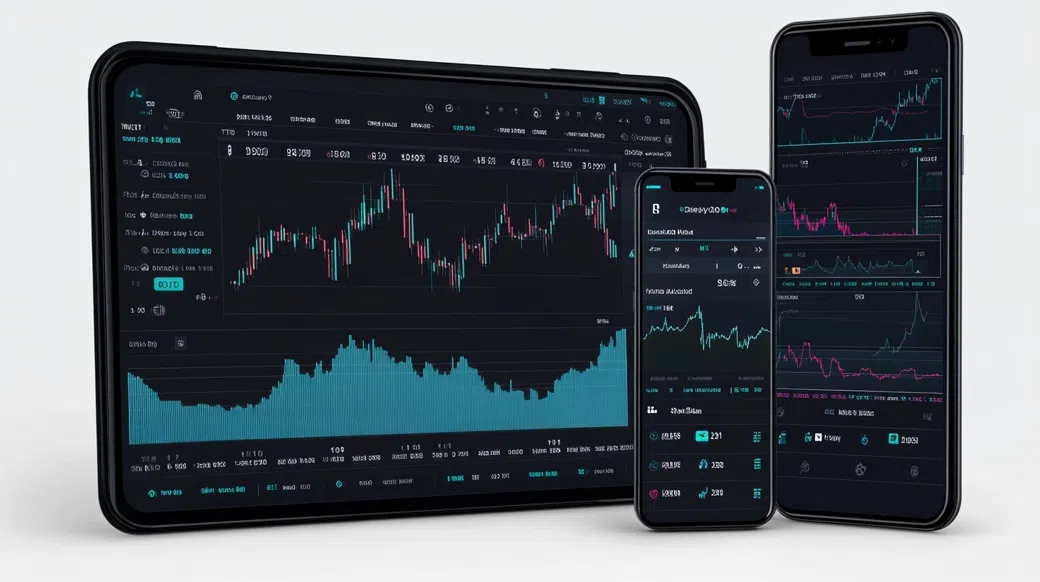
Price action doesn’t care about your broker story—but your fills, your margin terms, and your ability to get money out absolutely do. Majetkovín sits in the familiar offshore CFD lane: a proprietary WebTrader, a mobile app, and a menu built around forex and CFDs (often including crypto CFDs). Based on what’s typically observable in this segment, traders may see a minimum deposit around $250, headline leverage up to 1:500, and “from” spreads that land closer to reality at roughly 2.0 pips on EUR/USD on a standard-style account. That combination can feel convenient at first, especially for smaller accounts, but it can also amplify the two things that quietly decide your long-run outcome: execution quality (slippage during volatility) and the rulebook you’re trading under.
That’s why Majetkovín alternatives get searched most aggressively after a couple of hard lessons: a widening spread into a data print, a margin call that arrives faster than expected, or a withdrawal process that feels slower than the chart. In US/EU terms, another issue often dominates: many offshore providers operate outside the investor-protection architecture that comes with FCA, ASIC, CySEC, or NFA oversight. If you’re assessing Majetkovín today, treat this guide as a practical comparison framework for 2026—less marketing, more mechanics. The goal is to map your strategy (scalping, swing, hedging, long-only investing) to a platform stack and regulatory regime that fits the risk you’re actually taking.
Disclaimer: This article is for informational purposes only and does not constitute investment advice. CFDs and other leveraged products carry a high risk of loss and may not be suitable for all investors.
Viewed through a trader’s lens, Majetkovín looks like a CFD-first brokerage built for online self-directed accounts rather than institutional-style workflow. The product shelf typically centers on forex pairs (roughly a few dozen), major indices, a small set of commodities, and a crypto CFD list that’s broad enough for directional punts but rarely deep enough for serious basis or options-style hedging. The regulatory footprint, as commonly seen for offshore providers, is often tied to jurisdictions such as the Seychelles FSA rather than top-tier regimes. That matters because the rules around marketing leverage, dispute resolution, and client-money safeguards can differ materially from FCA/ASIC/CySEC standards—especially when markets gap.
The platform stack is usually a proprietary WebTrader paired with iOS/Android apps—functional for monitoring and placing trades, less so for building a repeatable process. Charting tends to be basic-to-mid: common timeframes, a workable indicator list, and enough drawing tools for trendlines and levels, but not always the depth you’d expect for multi-timeframe backtesting or systematic workflows. Order tickets generally cover market/limit/stop; more advanced controls (server-side trailing stops, partial fills visibility, detailed depth-of-market) are often limited on platforms like Majetkovín. Mobile parity is typically decent for watchlists and position management, but heavy chart annotation and multi-window layouts remain a desktop advantage elsewhere.
Cost is where offshore CFD brokers can look cheap in the headline and expensive in the lived experience. A realistic reference point for a standard-style account is EUR/USD around 2.0 pips in normal liquidity, with wider pricing during news or thin hours. Some firms in this category advertise a “Raw/ECN” tier—if offered, you’d expect a tighter spread (roughly 0.0–0.4 pips) plus a commission in the neighborhood of $5–$8 round-turn. Add the less visible line items: swap/overnight financing on leveraged holds, potential inactivity charges after a quiet period, and occasional withdrawal fees depending on the rail used. These mechanics are the same ones you’ll benchmark when comparing competitors to Majetkovín in 2026.
Leverage can feel like power right up until the margin call email arrives. For many accounts, the catalyst isn’t a single bad trade—it’s realizing that platform design, execution model, and policy friction can turn a decent strategy into a noisy equity curve. Majetkovín alternatives tend to come into focus after traders quantify their “all-in” cost per round trip and notice how often slippage shows up when volatility spikes. Another common trigger is geography: the USA is typically restricted for offshore CFD venues, and EU/UK residents may prefer frameworks with clearer negative balance protection and standardized disclosures.
Think like a risk manager, not a shopper. The right replacement isn’t the one with the loudest leverage banner; it’s the one whose rules, costs, and platform stack fit your strategy under stress. Build a short list, then pressure-test it: verify the regulator record, model expected trading costs at your position size, and confirm whether the platform supports your order management style. For traders rotating among Majetkovín alternatives, this approach prevents a sideways move from one set of problems to another.
Start with the rulebook. FCA (UK), ASIC (Australia), CySEC (EU), and NFA/CFTC (US) supervision typically implies stricter conduct standards, clearer complaints processes, and requirements like segregated client funds. In the UK, FSCS coverage can protect eligible clients up to £85,000 if a firm fails; in Cyprus, ICF coverage can apply up to €20,000 (eligibility and product scope vary). Offshore setups—often the category Majetkovín is associated with—may not offer comparable backstops, so you’re leaning more heavily on the firm’s internal controls and goodwill.
Your asset needs should drive the broker choice, not the other way around. FX and index CFDs cover many macro-driven strategies, but investors who want long-term portfolios usually need real stocks and ETFs, not just price-tracking contracts. Options and futures matter if you hedge convexity, trade volatility, or manage event risk with defined payoff structures. Some platforms like Majetkovín emphasize CFD breadth; multi-asset brokers can add direct market access for equities and listed derivatives, which changes both costs and risk profile.
Compare the round-turn, not the marketing line. Spread-only pricing can look simple but become expensive for active traders; commission models can be cheaper if the underlying spreads are tight and execution is stable. Don’t ignore swap/overnight financing if you hold leveraged positions beyond the session, and check inactivity fees if you trade in bursts. A clean way to compare Majetkovín alternatives is to estimate monthly cost at your typical volume (lots traded) and include a realistic slippage assumption for fast markets.
Platform choice is strategy choice. MT4/MT5 and cTrader support automation, custom indicators, and a broader ecosystem; proprietary terminals can be perfectly usable for discretionary trading but may limit advanced workflow. Execution model matters too: market maker vs STP/ECN/DMA influences how orders are handled, how re-quotes/slippage show up, and what “best execution” looks like in practice. If you’re evaluating Majetkovín against regulated options, test fills during liquid and illiquid windows—Asia open versus London/NY overlap can feel like different markets.
Service quality becomes visible only when something breaks. Look for support hours that match your trading session, clear escalation paths, and responses that answer the question asked (not just scripted macros). Education should be more than beginner gloss—platform tutorials, margin policy explanations, and product-specific risk disclosures are the useful bits. Finally, check mobile parity: if you manage risk on the go, you need reliable order modification, alerts, and account reporting without missing key controls.
In FX/CFDs, the trade-off usually sits between convenience and microstructure. Majetkovín-style offshore offerings often pair higher leverage (commonly up to 1:500) with a spread profile that’s workable for swing trading but punitive for high-frequency entries—EUR/USD around ~2.0 pips is a meaningful headwind if you’re scalping. Regulated specialists such as Pepperstone and IC Markets are popular substitutes for Majetkovín among active FX traders because they typically offer Razor/Raw-style accounts where spreads can be very tight (often near 0.0–0.4 pips) with a transparent commission, plus MT4/MT5/cTrader support. The bigger point: execution quality and slippage control can matter more than the last decimal of spread, especially around macro releases when liquidity thins and stops become market orders in disguise.
Stocks and ETFs are where many CFD-first venues leave a gap. Offshore platforms frequently offer equity exposure mainly as CFDs, which can be fine for short-term tactical trades but does not give you ownership rights, voting, or the same treatment of dividends and corporate actions as holding the underlying shares. If your 2026 plan includes building a long book alongside hedges, Interactive Brokers and Saxo Bank are two regulated options that can close that gap: both are known for broad access to global exchanges, real stocks/ETFs, and listed derivatives in one account. That multi-asset setup is particularly useful for macro traders who want to express a theme across spot FX, equity index exposure, and options/futures hedges without juggling multiple platforms.
Crypto is often present on offshore CFD menus, but it’s crucial to name what you’re trading: a crypto CFD is price exposure, not on-chain ownership. You won’t withdraw coins to a personal wallet, and you’re taking counterparty risk to the broker alongside market risk. For traders who want regulated options vs Majetkovín in this lane, IG and Plus500 are examples of brokers known for offering crypto CFDs in certain jurisdictions (availability depends on region and local rules). The practical difference is less about “more coins” and more about guardrails: clearer disclosures, standardized leverage restrictions in some regions, and generally stronger client-money frameworks than what’s typical offshore. Regardless of venue, crypto CFDs can gap violently—size positions like you expect overnight risk to show up at the worst time.
Regulation: SEC/FINRA (US), FCA (UK), IIROC (Canada)
Markets: Stocks, ETFs, options, futures, bonds, FX
Fees: FX pricing typically reflects tight institutional-style spreads with commissions; equities priced per-share/tiers vary by venue
Platform: Trader Workstation (TWS), IBKR Desktop, web platform, mobile
Best For: Multi-asset traders who need listed options/futures and deep market access
Regulation: FCA (UK), ASIC (Australia), CySEC (EU), DFSA (Dubai)
Markets: FX, CFDs (indices, commodities, some shares depending on region)
Fees: Standard spreads often around ~1.0+ pip on EUR/USD; Razor/Raw-style pricing can be ~0.0–0.4 pips plus commission (varies by entity)
Platform: MT4, MT5, cTrader, TradingView integration (region-dependent), mobile apps
Best For: Cost-focused FX day traders prioritizing MT4/MT5/cTrader workflow
Regulation: FCA (UK), MAS (Singapore), DFSA (Dubai)
Markets: Stocks, ETFs, options, futures, FX, CFDs, bonds
Fees: Pricing varies by tier and market; FX spreads commonly competitive with commissions embedded or applied by account level
Platform: SaxoTraderGO, SaxoTraderPRO
Best For: Portfolio builders who want research-grade tools alongside trading
Regulation: ASIC (Australia), CySEC (EU), FSA Seychelles (group-level)
Markets: FX, CFDs (indices, commodities, crypto CFDs in some regions)
Fees: Raw spreads often near ~0.0–0.4 pips on EUR/USD plus commission; standard accounts generally wider with no added commission
Platform: MT4, MT5, cTrader
Best For: Scalpers and algo traders who care about latency and tight pricing
Regulation: FCA (UK), ASIC (Australia), MAS (Singapore)
Markets: CFDs (FX, indices, commodities, shares), crypto CFDs in permitted regions
Fees: Spread-based pricing is common; typical costs depend on instrument and session liquidity
Platform: IG web platform, mobile apps, MT4 (where offered)
Best For: Macro CFD traders who want broad market coverage under strong oversight
Regulation: FCA (UK), CySEC (EU), FSC Bulgaria
Markets: Stocks, ETFs; CFDs (region-dependent offering)
Fees: Investing side often positioned as low-cost; CFD costs primarily via spread and overnight financing
Platform: Proprietary web platform and mobile app
Best For: Beginners shifting from CFDs into long-only stocks/ETFs
| Platform | Regulation | Main Markets | Typical Costs | Best For |
|---|---|---|---|---|
| Interactive Brokers (IBKR) | SEC/FINRA, FCA, IIROC | Stocks/ETFs, options, futures, bonds, FX | FX tight-spread + commission model; per-share equity pricing varies | Multi-asset traders who need listed options/futures and deep market access |
| Pepperstone | FCA, ASIC, CySEC, DFSA | FX and CFDs | Raw ~0.0–0.4 pips + commission; Standard ~1.0+ pip (typical ranges) | Cost-focused FX day traders prioritizing MT4/MT5/cTrader workflow |
| Saxo Bank | FCA, MAS, DFSA | Stocks/ETFs, options, futures, FX, CFDs, bonds | Tiered pricing by market/account; FX generally competitive | Portfolio builders who want research-grade tools alongside trading |
| IC Markets | ASIC, CySEC, FSA Seychelles (group-level) | FX and CFDs | Raw ~0.0–0.4 pips + commission; Standard wider spread-only pricing | Scalpers and algo traders who care about latency and tight pricing |
| IG | FCA, ASIC, MAS | CFDs across FX/indices/commodities/shares; crypto CFDs where permitted | Mostly spread-based; varies by instrument and volatility regime | Macro CFD traders who want broad market coverage under strong oversight |
| Trading 212 | FCA, CySEC, FSC Bulgaria | Stocks/ETFs; CFDs (region-dependent) | Investing often low-cost; CFDs via spread + overnight financing | Beginners shifting from CFDs into long-only stocks/ETFs |
Switching brokers is operational risk dressed up as a “new platform” decision. Treat it like a controlled migration: confirm the new venue is real and properly supervised, reduce the chance of being stuck between accounts, and keep records tight for taxes and disputes. Most importantly, don’t run maximum leverage during the transition—one bad fill can turn a logistics task into a drawdown.
If you’re still considering it, review the current onboarding flow, platform tools, and regional eligibility before funding. Then benchmark it against the Majetkovín trading platform alternatives 2026 in this guide—especially on spreads, execution behaviour, and withdrawal rules.
Visit MajetkovínThe best alternative depends on whether you need multi-asset investing or pure FX/CFD execution. For listed stocks/ETFs plus options and futures, Interactive Brokers is hard to ignore; for FX-focused trading with MT4/MT5/cTrader, Pepperstone or IC Markets are commonly shortlisted. If your goal is broad macro CFDs under top-tier supervision, IG is a strong contender among the best Majetkovín alternatives 2026.
Majetkovín is typically associated with an offshore regulatory setup (often seen under jurisdictions such as the Seychelles FSA) rather than FCA/ASIC/CySEC/NFA oversight. That doesn’t automatically mean a platform fails, but it usually means fewer formal investor-protection layers and less standardised dispute resolution than in the UK/EU/US. If safety is your priority, focus your search on regulated options vs Majetkovín with segregated client funds and clearer negative balance protection policies.
With platforms like Majetkovín, forex and CFDs are usually the core offering, and crypto exposure is often via crypto CFDs (price tracking, not coin ownership). Real stocks/ETFs and listed futures are commonly limited or routed through CFDs rather than direct exchange access. If you need real equities, options, or futures, Majetkovín alternatives such as Interactive Brokers or Saxo Bank are better aligned with that requirement.
Before switching, confirm the new broker’s exact legal entity on the relevant regulator register, then compare round-turn costs (spread + commission + typical slippage) for your main instruments. Next, verify funding/withdrawal rails, margin call rules, and whether the platform supports your workflow (MT4/MT5/cTrader, mobile risk controls, and reporting). Finally, plan the sequence: KYC first, then test with small size—this is how experienced traders approach alternatives to the Majetkovín trading platform without adding avoidable operational risk.
About the Author: Daniel Okafor is a derivatives trader turned market analyst based in Singapore, covering APAC brokerages and global macro through a trading-first lens. He focuses on execution details, risk controls, and what platforms actually do in volatile markets—charts over chatter.