Klarheit Fundex Trading Platform Alternatives 2026
Compare Klarheit Fundex alternatives for 2026: regulated brokers, costs, platforms (MT4/MT5/cTrader), market access, and a safer migration checklist.

Compare Klarheit Fundex alternatives for 2026: regulated brokers, costs, platforms (MT4/MT5/cTrader), market access, and a safer migration checklist.
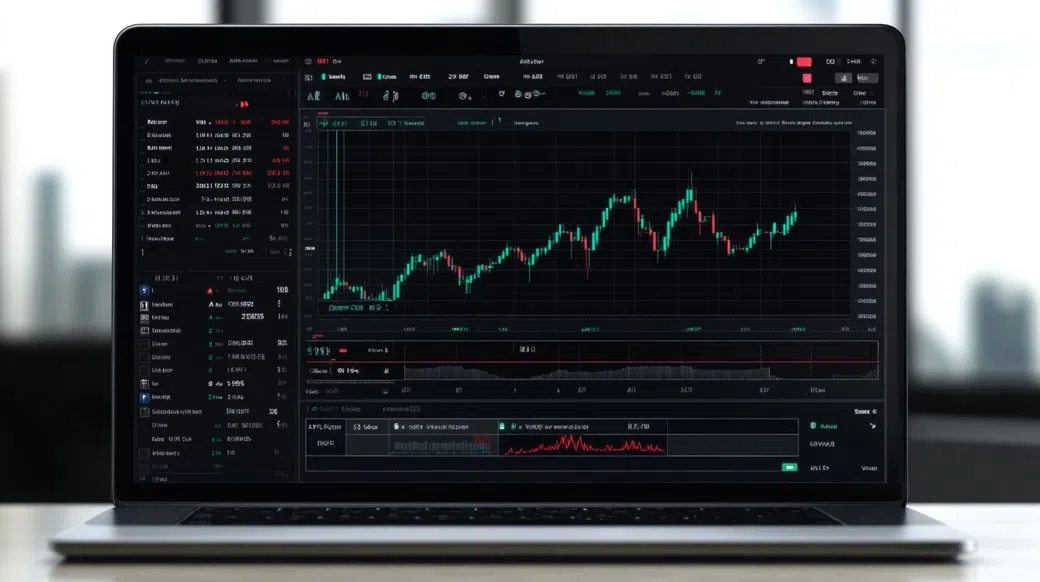
Leverage is a sharp tool. Used well, it’s efficient; used carelessly, it’s a fast track to a margin call. That’s the lens I use when evaluating offshore CFD venues and the regulated brokers that compete for the same traders. Klarheit Fundex appears positioned as a CFD-first provider built around a proprietary WebTrader plus mobile apps, typically offering forex pairs, index CFDs, commodities, and a menu of crypto CFDs. The common draw is simple: accessible onboarding, high headline leverage (often around 1:500), and an entry deposit that tends to sit near $250 in this segment.
But the decision point usually arrives later—when execution quality matters more than marketing, when you need a deeper platform stack, or when you want regulator-backed processes around client money and complaints. That’s where Klarheit Fundex alternatives become a practical research project, not a curiosity. A trader running a short-term FX model cares about spread + slippage + fill consistency; an investor rotating into US/EU equities cares about whether they’re buying real shares or just a stock CFD with overnight financing attached.
This guide is written for a global audience with a US/EU focus, and it leans toward regulated venues with clearer protections, broader market access, and more robust tooling. I’ll keep it comparative and risk-aware—because CFDs are leveraged products and losses can exceed expectations quickly when volatility spikes.
Disclaimer: This article is for informational purposes only and does not constitute investment advice. Trading CFDs and other leveraged products involves high risk and may not be suitable for all investors.
From a trader’s perspective, Klarheit Fundex fits the familiar offshore CFD brokerage profile: a retail-facing venue that concentrates on FX and CFDs, targets smaller account sizes, and emphasizes speed-to-account over institutional-grade breadth. Public-facing details for providers in this bracket commonly point to offshore registration—often under the Seychelles FSA framework—rather than top-tier US/EU supervision. That distinction matters because rulebooks, dispute paths, and client-money safeguards can differ materially across jurisdictions. For traders comparing brokers similar to Klarheit Fundex, the core question is straightforward: are you paying for convenience with higher friction later (withdrawals, pricing transparency, platform limits), or are you getting a setup that can scale with your strategy?
The platform stack is typically centered on a proprietary WebTrader with basic-to-mid charting, plus iOS/Android apps that mirror the essentials. Expect the standard toolkit: multiple chart types, a reasonable set of indicators, drawing tools for trendlines and levels, and one-click trade tickets for market and pending orders. Where these platforms often show their ceiling is depth—fewer advanced order controls, limited customization, and less transparency around execution analytics (slippage distribution, fill statistics, or venue reporting). Mobile parity is usually adequate for monitoring and order management, but serious workflow—multi-chart layouts, templates, and systematic execution—tends to be more comfortable on platforms like MT5 or cTrader offered by regulated alternatives.
Cost structure for this segment usually comes in tiers. A Standard-style account often prices EUR/USD around ~2.0 pips typical, while a “raw” or ECN-labeled option may advertise tight spreads (sometimes 0.0–0.4 pips) but adds a commission in the neighborhood of $6 round-turn. Beyond spreads, keep your eyes on swap/overnight financing (material for swing positions), plus any withdrawal handling fees or inactivity charges that can quietly raise the effective cost. With offshore CFD venues, the cleaner comparison is the all-in cost per round trip at your trade size, then sanity-check it during active market hours when spreads and slippage are real—not theoretical.
Usually it’s not one big event—it’s a series of small frictions that add up. A trader might accept a proprietary platform early on, then hit a wall when they want auditability, multi-asset access, or stricter oversight on client-money handling. In practice, Klarheit Fundex alternatives are most attractive when your strategy matures: tighter costs matter, execution quality becomes measurable, and you want a clearer regulatory perimeter than offshore CFD setups typically provide. A second driver is portability—being able to run the same workflow across brokers (MT4/MT5/cTrader, API access) instead of learning a new interface every time.
Selection gets easier if you frame it as “fit-to-strategy” first and “features” second. Start with what you trade (and how), then work backward into regulation, cost, and platform requirements. The best Klarheit Fundex alternatives 2026 list isn’t a single winner; it’s a shortlist that matches your risk budget, execution needs, and asset coverage—without relying on high leverage to make the product look exciting.
In US/EU contexts, regulation is not a badge—it’s an operating standard. FCA, ASIC, CySEC, and NFA/CFTC supervision generally implies tighter rules on client onboarding (KYC/AML), clearer disclosures, and often segregated client funds. Protection schemes vary: the UK’s FSCS can cover eligible clients up to £85,000, while Cyprus’ ICF can cover up to €20,000 subject to conditions. Offshore entities may offer policies like negative balance protection, but enforcement and recourse can be harder when things go wrong.
“More instruments” only helps if they’re the instruments you actually need. FX and index CFDs may cover many macro-driven strategies, but portfolio traders often want real stocks/ETFs, options for hedging, or futures for cleaner exposure. Platforms like Klarheit Fundex tend to be CFD-heavy; regulated multi-asset brokers can add cash equities, listed derivatives, and bonds. If you’re US-based, eligibility is a hard constraint—many CFD brokers won’t onboard US residents at all.
Don’t anchor on “from 0.0 pips” marketing. What matters is the round-turn cost: spread + commission + any execution slippage you routinely see in your session. Also price in swap/overnight fees if you hold positions beyond the rollover, because that can outweigh tight spreads over time. Check for inactivity fees and withdrawal charges; they matter for part-time traders and for anyone rotating capital across venues during drawdown control.
Here’s where the gap often opens between offshore WebTraders and top substitutes for Klarheit Fundex. MT4/MT5 and cTrader support deeper automation, richer analytics, and a larger ecosystem of tools. Execution model matters too: market maker pricing can be fine for many retail flows, but STP/ECN/DMA-style routing is often preferred by active traders because it can reduce conflict-of-interest concerns and improve transparency. Measure slippage during news and thin liquidity—latency and fill quality show up exactly when risk is highest.
Good support is operational risk management. Look for 24/5 coverage aligned to your trading hours, fast escalation for withdrawals and margin issues, and documentation that actually explains margin calls, negative balance protection, and fee schedules. Education is useful only if it’s specific—platform tutorials, risk sizing, and order-type mechanics. A clean mobile app helps, but for serious workflows you want stability across desktop/web, consistent chart templates, and reliable notifications for margin thresholds.
FX and CFD flow is where Klarheit Fundex-like venues typically concentrate: roughly a few dozen forex pairs, a handful of commodities, and a standard set of index CFDs. The trade-off is often cost and execution transparency. With EUR/USD around ~2.0 pips typical on a standard account in this offshore category, frequent traders feel the drag quickly—especially if you’re turning over positions intraday. Regulated FX/CFD specialists such as Pepperstone or IC Markets are built for this: they offer MT4/MT5/cTrader stacks, plus account structures where all-in costs can be materially tighter depending on account type and region. The practical test is simple: run the same position size during your active session and compare spread behavior, slippage on market orders, and how the broker handles fast markets. High leverage (1:500) can look attractive, but it also shrinks the distance to a margin call when volatility jumps.
This is where many traders outgrow CFD-only lineups. Stock CFDs can be useful tactically, but they are not the same as owning shares: no voting rights, no direct participation in corporate actions the way a cash equity holder would, and financing costs can bite if you hold. If your 2026 plan includes US/EU equities or ETF allocation, Interactive Brokers is the obvious upgrade path for global market access (cash equities, options, futures), while Saxo Bank offers a strong multi-asset suite with a more guided user experience. For traders coming from platforms like Klarheit Fundex, the key shift is moving from synthetic exposure to listed markets with deeper liquidity and clearer venue rules. That also changes your risk profile: you may use less leverage, but you gain flexibility in hedging and portfolio construction.
Crypto on offshore CFD platforms is usually exposure via derivatives, not on-chain ownership. That distinction matters: a crypto CFD is a leveraged bet on price, with overnight fees and broker-specific trading conditions; you don’t withdraw coins to a wallet because you never held the underlying asset. For regulated options vs Klarheit Fundex in this bucket, IG and Plus500 are commonly used for crypto CFDs where permitted, with clearer disclosures and stronger jurisdictional oversight than typical offshore setups. Still, crypto CFDs can gap violently—weekends, thin books, and headline risk create the kind of slippage that turns “reasonable leverage” into forced liquidation. If crypto is central to your strategy, check product availability in your country and read the margin rules twice before sizing up.
Regulation: SEC/FINRA (US), FCA (UK), IIROC (Canada) (entity depends on region)
Markets: Stocks, ETFs, options, futures, FX, bonds, funds
Fees: FX pricing varies by schedule; commissions apply across many products; spreads are typically competitive for active traders
Platform: Trader Workstation (TWS), IBKR Desktop, WebPortal, mobile; API access
Best For: Multi-asset traders who need listed options/futures
Regulation: FCA (UK), ASIC (Australia), CySEC (EU), DFSA (Dubai)
Markets: FX and CFDs (indices, commodities, some shares depending on entity)
Fees: EUR/USD typically ~0.0–0.3 pips + commission on Razor/Raw-style accounts; ~1.0+ pip range on Standard-style pricing
Platform: MT4, MT5, cTrader, TradingView integration (region-dependent), mobile
Best For: Cost-focused FX traders and algo users
Regulation: FCA (UK), MAS (Singapore), DFSA (Dubai) (entity depends on region)
Markets: Stocks, ETFs, options, futures, FX, bonds, CFDs
Fees: Pricing is tiered by account level; FX spreads are typically competitive; commissions apply to listed assets
Platform: SaxoTraderGO, SaxoTraderPRO
Best For: Portfolio builders who want FX plus cash equities
Regulation: CFTC/NFA (US), FCA (UK), ASIC (Australia), IIROC (Canada)
Markets: FX (and CFDs in some regions), indices/commodities depending on jurisdiction
Fees: Typically spread-only pricing on many accounts; EUR/USD often around ~0.6–1.2 pips in liquid conditions (varies by entity and time)
Platform: OANDA Trade (web/mobile), MT4 (availability varies)
Best For: US-eligible FX traders prioritizing oversight
Regulation: FCA (UK), ASIC (Australia), BaFin (Germany)
Markets: CFDs (FX, indices, commodities, shares)
Fees: FX spreads often from ~0.7 pips on major pairs (varies by market conditions); commissions apply to share CFDs in some setups
Platform: Next Generation platform, mobile; MT4 offered in some regions
Best For: Chart-first CFD traders who want strong tooling
Regulation: FCA (UK), CySEC (EU), ASIC (Australia), MAS (Singapore)
Markets: CFDs (FX, indices, commodities, shares, crypto CFDs where permitted)
Fees: Primarily spread-based; typical costs vary by instrument and volatility; overnight funding applies for held CFD positions
Platform: Plus500 proprietary WebTrader and mobile apps
Best For: Simple CFD execution without third-party platforms
| Platform | Regulation | Main Markets | Typical Costs | Best For |
|---|---|---|---|---|
| Interactive Brokers (IBKR) | SEC/FINRA, FCA, IIROC (by entity) | Stocks/ETFs, options, futures, FX, bonds | Commissions vary; competitive pricing for active users | Multi-asset traders who need listed options/futures |
| Pepperstone | FCA, ASIC, CySEC, DFSA | FX + CFDs | Raw: ~0.0–0.3 pips + commission; Standard: ~1.0+ pip range | Cost-focused FX traders and algo users |
| Saxo Bank | FCA, MAS, DFSA (by entity) | Stocks/ETFs, options, futures, FX, CFDs | Tiered spreads/commissions; listed products priced per schedule | Portfolio builders who want FX plus cash equities |
| OANDA | CFTC/NFA, FCA, ASIC, IIROC | FX (CFDs in some regions) | Often spread-only; EUR/USD commonly ~0.6–1.2 pips in liquid hours | US-eligible FX traders prioritizing oversight |
| CMC Markets | FCA, ASIC, BaFin | CFDs across FX/indices/commodities/shares | FX often from ~0.7 pips; share CFD commissions may apply | Chart-first CFD traders who want strong tooling |
| Plus500 | FCA, CySEC, ASIC, MAS | CFDs incl. crypto CFDs where allowed | Spread-based; overnight funding on held positions | Simple CFD execution without third-party platforms |
Switching brokers is operational risk, not just paperwork. Treat it like a controlled rollout: verify regulation first, get the new account fully approved, then migrate trading activity in stages. Most importantly, avoid running two sets of leveraged positions across venues without a plan—duplicate exposure can look harmless until a macro headline hits and both books move against you. If you’re exiting Klarheit Fundex, map the sequence before you click “withdraw.”
If you’re still evaluating the original venue alongside Klarheit Fundex trading platform alternatives 2026, verify regional eligibility, product list, and fee schedules directly in the onboarding flow. Compare platform tooling and execution conditions on demo or small size first, then decide where your strategy fits best.
Visit Klarheit FundexThe best option depends on what you’re trading and whether you need listed markets. For multi-asset access (real stocks/ETFs, options, futures), Interactive Brokers is hard to beat, while Saxo Bank suits traders who want a guided multi-asset platform. If your focus is FX/CFDs with tighter all-in pricing and MT4/MT5/cTrader, Pepperstone is a common shortlist name and a strong candidate among Klarheit Fundex alternatives.
Safety is harder to underwrite when a broker operates under an offshore framework such as the Seychelles FSA rather than top-tier US/EU regulators. That doesn’t automatically mean a platform is unusable, but it can mean fewer formal investor-protection mechanisms and more limited recourse if disputes arise. For risk control, many traders prefer regulated options vs Klarheit Fundex where segregated client funds and compensation schemes (like FSCS/ICF, where applicable) are clearer.
With platforms like Klarheit Fundex, the typical offering is forex and CFDs, and any “stocks” are often stock CFDs rather than real share dealing. Listed futures are usually not part of the core lineup for offshore CFD venues; traders who need futures typically move to brokers like Interactive Brokers or Saxo Bank. Crypto exposure is commonly offered as crypto CFDs (price exposure, not on-chain ownership), with costs and margin rules that can change quickly during volatility.
Before switching, confirm the new broker’s exact legal entity on the regulator’s register, then get your account KYC-approved so withdrawals and deposits don’t stall. Next, compare round-turn trading costs (spread + commission) and platform fit (MT4/MT5/cTrader/API) against your strategy. Finally, download your statements from Klarheit Fundex and migrate in small steps—leveraged products can amplify mistakes during the transition.
About the Author: Daniel Okafor is a derivatives trader turned market analyst based in Singapore, focused on APAC brokerages and global macro cross-currents. He prioritizes execution details, cost-of-trade math, and platform capability over marketing narratives—charts over chatter.