Is Santander Platform Legit in 2026? Safety Review
Is Santander Platform legit and safe in 2026? An evidence-based look at regulation signals, fund safety, security, and what to verify before depositing.

Is Santander Platform legit and safe in 2026? An evidence-based look at regulation signals, fund safety, security, and what to verify before depositing.
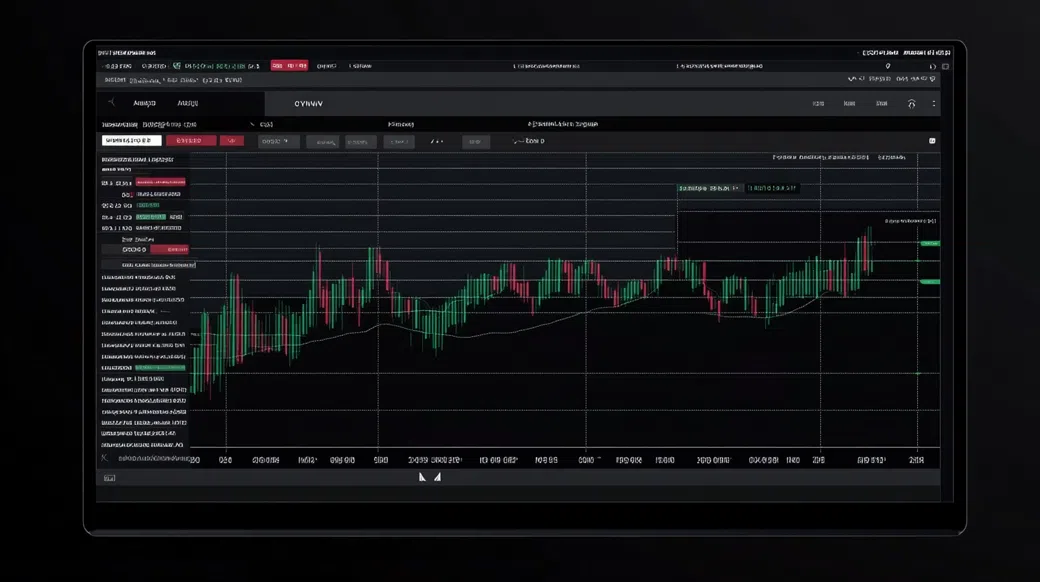
The question I hear most from traders isn’t about spreads or charts—it’s whether the brand behind the login screen is real. Is Santander Platform legit? And, just as importantly, is Santander Platform safe for deposits in 2026? Based on publicly visible legitimacy signals, there isn’t enough transparent, regulator-verifiable information to treat it as low-risk without further checks. Before funding anything, use Santander Platform to confirm the legal entity, jurisdiction, and withdrawal terms in writing.
From what’s typically implied by “platform” branding and the way these services are marketed, Santander Platform appears to sit in the retail trading-platform/brokerage lane (the bucket where FX/CFDs are common). In that category, regulation isn’t a marketing badge—it’s a live record on a regulator’s public register that ties your account to a named legal entity, a jurisdiction, and a rulebook for client money, complaints, and conduct. Start with the footer and legal pages: the entity name and address should be explicit, then you should be able to verify the license status directly on the relevant regulator website. If the paperwork is thin or the entity cannot be matched, the most accurate stance is “not confirmed.” That’s the core of the Santander Platform legit question in 2026: can you independently reconcile what the site says with an authoritative register?
| Entity Name | Look for the operating company name shown in the legal documents (terms, disclosures, privacy notice) and verify it matches any payment recipient name; if only a brand name is shown, ask support for the legal entity in writing. |
| Compliance Signals | Check for a clear KYC/AML policy, a risk disclosure appropriate for leveraged products, and a stated jurisdiction; then confirm any claimed license on the applicable regulator’s public register before deposit. |
| Security | Confirm HTTPS/TLS on all login and account pages and look for 2FA options in account settings; review the privacy/data-protection statement for consistency with the stated jurisdiction. |
Direct Answer: For “is my money safe with Santander Platform?” the honest answer is: it depends on what you can verify about the operating entity and the custody/withdrawal rules. Without regulator-confirmed oversight and clear client-funds protections, you should assume higher counterparty risk. In that context, is Santander Platform safe is not a yes/no—it’s a checklist.
In a broker-style setup, the minimum safety baseline is written language on client money handling (segregated accounts or equivalent), a coherent withdrawal process, and security controls that reduce account-takeover risk. Start with the plumbing: what funding methods are allowed, who receives the funds, and what conditions apply to withdrawals (processing times, fees, verification triggers, and limits). Next, validate the security stack: TLS on every authenticated page, strong password rules, and 2FA (authenticator/TOTP is preferable to SMS). Then do three practical checks before funding: (1) download and read the terms and risk disclosure; (2) request the legal entity + jurisdiction + complaints route via support and keep the response; (3) confirm any license claim on the regulator’s register using the entity name, not the brand.
A legitimate trading venue doesn’t hide the ball on product risk. You want clean disclosures: what instruments are offered, whether you’re trading real assets or derivatives, the execution model (agency vs. market maker), and the full cost stack (spread, commission, financing, and inactivity/withdrawal fees). For a Santander Platform trading platform review in 2026, product transparency is one of the fastest tells—serious operators publish a fee schedule and risk warning that reads like a compliance document, not a sales page. If you can’t find those documents without registering, slow down and treat it as an unanswered risk item rather than a minor inconvenience.
For platforms in the retail broker bucket, the usual menu includes FX pairs, indices, commodities, and equity-linked contracts (often CFDs), sometimes with crypto-linked instruments depending on jurisdiction. The credible version of this offering is specific: contract sizes, trading hours, margin/leverage rules, financing rates, and corporate-action handling are either publicly listed or readily available in product specs. When people ask whether is Santander Platform a legit choice for multi-asset trading, the key is whether the platform is explicit about what you’re trading and what protections apply (negative balance protection in some jurisdictions, and clear margin close-out rules). If the asset list is presented without contract details, you’re trading marketing, not a specification.
Online feedback can help, but it’s noisy. Review aggregators and app-store comments mix genuine experience with affiliate-driven posts, short-term emotions after wins/losses, and—at times—manufactured narratives on both sides. A cleaner approach is triangulation: compare public-facing reviews with (1) any regulator-facing complaint pathways (where applicable), (2) long-running community threads where users post screenshots of withdrawal timelines, and (3) the platform’s own escalation process and response discipline. On the Santander Platform scam or legit debate, patterns matter more than individual anecdotes: repeated, time-clustered reports of withdrawal friction are more informative than a handful of extreme one-star or five-star posts.
Think of this as a pre-trade risk filter—the same way I’d sanity-check margin terms before putting on a leveraged macro view. Whether is Santander Platform a legit broker comes down to what you can confirm in black and white, not how smooth the UI looks.
If you’re considering an account, use the site as a document hunt first, not a deposit funnel. Confirm the legal entity, read the risk disclosure, and screenshot the withdrawal policy before you register. At login, check whether 2FA is offered and whether the browser shows secure TLS on every account page. Only after those items line up should you think about funding.
Visit Santander PlatformFrom a market-structure lens, the safest conclusion today is conservative: is Santander Platform legit remains unconfirmed unless you can tie the platform to a named legal entity and a regulator-verified record. That doesn’t automatically mean wrongdoing; it means the public evidence base is thin relative to what established brokers disclose. On the same logic, is Santander Platform safe depends on whether you can verify client-funds protections, documented withdrawals, and basic account-security controls before depositing. If you proceed, do it only after you’ve matched the entity details and withdrawal terms directly on Santander Platform and—where applicable—on the regulator’s register.
Risk Warning: Trading involves risk, and you can lose some or all of your capital, especially with leveraged products. This article is for informational purposes only and does not constitute financial advice.
Legitimacy hinges on whether you can verify the operating legal entity and any claimed license on an official public register. If those details aren’t clearly disclosed and verifiable, treat the platform as higher risk until proven otherwise. In practice, “Santander Platform legit” is a documentation question, not a branding question.
Safety for deposits and withdrawals depends on transparent terms, consistent payment recipient details, and a clear KYC-driven withdrawal process. If policies are vague or change after funding, that’s a practical risk even if the trading app functions well. When evaluating how safe is Santander Platform, prioritize withdrawal rules and dispute channels over marketing features.
“Scam” is a strong claim and usually requires evidence of deception, not just limited transparency. What can be said responsibly is this: if you cannot verify the legal entity, jurisdiction, and any regulatory status, the risk profile rises and you should not treat it like a regulated broker. If you’re asking “is Santander Platform a scam,” focus on verifiable facts—entity identity, register entries, and written withdrawal terms.
Your money is only as safe as the counterparty controls you can confirm: client-funds handling language, reliable withdrawals, and enforceable oversight. If those pieces are not clear and independently verifiable, size down your risk or avoid depositing. For most users, the biggest failure mode isn’t price slippage—it’s uncertainty around custody and withdrawals.
Check (1) the legal entity name and jurisdiction on the terms/privacy pages, (2) any claimed license by searching the regulator’s public register using the entity name, (3) the full withdrawal policy including KYC requirements and fees, (4) whether 2FA is available in account settings, and (5) the complaint/escalation channel and response expectations. If any of these are missing or inconsistent, treat it as a stop signal until clarified in writing.