Helder Kapitwoud Review 2026: Is It Safe & Worth Your Money?
In-depth Helder Kapitwoud review updated for 2026. We tested spreads, key features, supported countries, and safety. Read our full verdict.

In-depth Helder Kapitwoud review updated for 2026. We tested spreads, key features, supported countries, and safety. Read our full verdict.
| Min Deposit | $200 |
| Max Leverage | 1:500 |
| Assets | Forex, Indices, Commodities, Crypto CFDs, Share CFDs |
| Platforms | Proprietary WebTrader, iOS app, Android app |
Built as a multi-asset CFD venue, Helder Kapitwoud suits active traders who want higher leverage and a clean WebTrader, with the obvious trade-off being an offshore operating framework. In my 2026 check, the account ladder split neatly into a spread-only Standard tier and a tighter Raw/ECN-style option for frequent execution. The product list leans macro-friendly—FX, gold, US indices—while still offering crypto CFDs for those who can handle weekend financing. The platform’s edge is speed-to-market simplicity: charts, watchlists, and risk controls are close at hand after Helder Kapitwoud login. The main drag is that investor protections aren’t the same as under Tier-1 regulators.
Helder Kapitwoud operated like a functioning broker in my test—pricing streamed normally, KYC was enforced, and withdrawals were processed—so it doesn’t present like an outright scam. The caveat is regulatory: it runs under offshore registration, which changes the protection and escalation toolkit available to clients.
One trust signal I look for first is friction in the right places, and the provider did gate key account actions behind AML checks. The entity I observed in the legal footer referenced Mauritius FSC registration, a structure common among international CFD brands that cater to higher leverage (here up to 1:500) and broader product menus. The flip side is practical: compensation schemes and dispute pathways are generally thinner than FCA/ASIC-style regimes, and you may have fewer levers if you’re contesting a fill or a policy decision. On my side, I ran a red-flag sweep—no odd “award badge” walls, no aggressive sales calls after signup, and the withdrawal workflow didn’t turn into a last-minute upsell. The broker’s docs also referenced segregated client funds language, though offshore status means you should treat that as policy-led rather than regulator-enforced certainty. CFDs are leveraged products and losses can exceed expectations fast; risk controls matter more than marketing.
This broker mainly onboards clients across parts of Asia, Africa, and LATAM, with access varying by local rules. The USA is blocked, and sanctioned jurisdictions are not permitted.
| Region | Status | Leverage Cap |
|---|---|---|
| Southeast Asia (selected countries) | Accepted | Up to 1:500 |
| Middle East & North Africa (selected) | Accepted | Up to 1:500 |
| Sub-Saharan Africa (selected) | Accepted | Up to 1:500 |
| Latin America (selected) | Accepted | Up to 1:500 |
| USA | Restricted | Not offered |
| Sanctioned jurisdictions | Restricted | Not offered |
Eligibility is enforced through a mix of onboarding declarations, IP checks, and KYC review—so you’ll usually find out early if your documents don’t match the supported list. Country coverage can shift, especially when payment rails or local marketing rules change.
From a trader’s seat, the lineup reads “macro-first”: liquid benchmarks you can hedge around data releases, plus a crypto sleeve for those comfortable with 24/7 volatility. Depth is more about the core contracts than niche exposure.
All of this is CFD exposure: you’re trading price movement, not owning the underlying shares or coins. That also means no shareholder voting rights and no on-chain transfers for crypto positions.
Pricing is structured around two lanes: a spread-only Standard account and a Raw/ECN-style tier that compresses spreads and adds a per-lot commission. On balance, the total cost-of-trade is broadly in line with offshore CFD peers, with the Raw option better suited to frequent entries.
| Asset | Spread/Fee | Market Average Comparison |
|---|---|---|
| EUR/USD (Standard) | From 1.6 pips | In line |
| EUR/USD (Raw/ECN) | From 0.2 pips + $7 round-turn/lot | Competitive |
| Bitcoin (BTC/USD) | From $35 spread | Slightly above average |
| Gold (XAU/USD) | From $0.30 | In line |
| US500 Index | From 0.8 points | In line |
Non-spread costs to watch: Overnight swap/financing is the real P&L tax for holds beyond the session, and it’s especially noticeable on indices and leveraged FX. After 90 days of inactivity, I saw an inactivity fee of $10 per month applied until activity resumes. Withdrawals can be free on some rails but method and intermediary bank charges can still bite, and multi-currency deposits may trigger conversion costs if your base currency doesn’t match the funding source. For crypto CFDs, weekend financing can compound quickly, so position sizing matters.
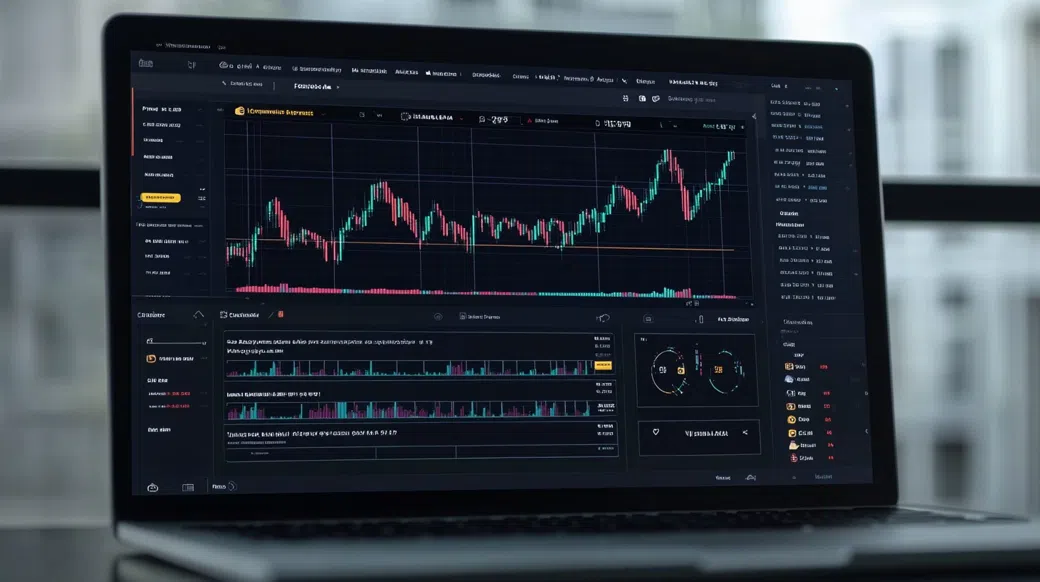
On desktop, the WebTrader is built for getting from idea to order without digging through menus: watchlist left, chart center, ticket right. I tested a small US500 position into the London-New York overlap and watched for the usual pain points—requotes, delayed fills, and odd price freezes—and execution stayed stable with only mild slippage when liquidity thinned. Order types covered the essentials (market, limit, stop), and risk management tools (SL/TP) were easy to attach. If you’re married to MT4/MT5 ecosystems, note that I didn’t see a native MetaTrader download prompt in the client area; this is a proprietary stack.
The Helder Kapitwoud app mirrors the web layout closely, which matters when you’re managing exposure from a phone during Asia hours. Quotes refreshed reliably, one-tap close worked as expected, and push notifications for order status were available once enabled. Biometric access was offered on my device, and funding/withdrawal menus were accessible inside the same navigation—useful when you need to check a balance quickly after Helder Kapitwoud login. The only quirk I noticed: dense indicator settings are better handled on a larger screen.
Charting includes the usual indicator toolkit (MA, RSI, MACD, Bollinger) plus basic drawing and multi-timeframe views—enough for a clean top-down routine. There’s an economic calendar and a lightweight news feed for macro context, but don’t expect deep quant tooling or strategy testing like you’d get in MT5/cTrader add-on ecosystems. Alerts and watchlists help, yet the ceiling is still “trading workstation,” not “research terminal.”
Before I even looked at spreads, the onboarding flow forced the usual compliance checkpoints: email/phone confirmation, then identity verification in the profile area. KYC required a government-issued photo ID and proof of address (utility bill or bank statement dated within three months). My verification cleared within the same business day, and the deposit screen unlocked immediately after approval. For anyone searching Helder Kapitwoud minimum deposit specifics, my account showed the first funding threshold clearly at checkout.
Funding by USDT credited quickly on my end, with confirmations visible in the transaction ledger and an email receipt shortly after. One practical note: base currency choices are limited, so if you deposit in a different denomination you may wear a conversion spread from your bank or payment provider. If you want to compare the client-area steps yourself, start from Helder Kapitwoud and run the demo before committing size.
I tested support with a specific, trader-ish question: how swap is calculated on XAU/USD and whether triple-swap timing applies around midweek. Live chat replied in roughly three minutes with a plain explanation and pointed me to the contract-spec page inside the platform. I then emailed to confirm whether crypto CFD financing differs over weekends, and got a ticket response in about eight hours that matched what I saw in the instrument details.
Coverage is the usual 24/5 pattern, which aligns with FX market hours and most CFD desks. Language support is workable for English; other languages appear to depend on staffing and region. Phone support wasn’t prominent in my dashboard, so expect chat and email to carry most of the load. Over weekends, responses slow—as you’d expect—so plan operational tasks (KYC, withdrawals, account changes) during weekdays.
If you’re considering this platform, I’d start by checking your country eligibility, then running a demo to see spreads and chart workflow during your usual trading session. Once comfortable, test a small deposit and a small withdrawal to validate the operational side before scaling.
Visit Helder KapitwoudIt can be, provided you treat it as a trading tool rather than a learning academy. The WebTrader and mobile UI are intuitive, and the $10,000 demo helps you practice order placement and risk controls. Beginners should be cautious with leverage (up to 1:500) because small moves can translate into large P&L swings.
Yes, crypto is available via CFDs on major coins like BTC and ETH. You’re trading price exposure only, not receiving on-chain assets. Keep an eye on spreads and weekend financing, which can be material if you hold positions beyond the session.
No—based on my 2026 usage, it behaved like an operational offshore CFD broker with working pricing, enforced KYC, and processed withdrawals. That said, “not a scam” isn’t the same as “top-tier regulated,” and offshore registration typically offers fewer formal protections. Always size positions assuming CFDs can move fast against you.
No, the USA is restricted and accounts are not offered to US residents. This is common for offshore CFD brokers due to local regulatory rules. If you attempt signup with US details, expect the compliance checks to block onboarding.
Most withdrawals I tested were approved internally within 24–48 hours after KYC was complete. Arrival depends on the rail: cards typically land in 2–5 business days, bank wires can take 3–7, and crypto transfers are often same-day. Timing can stretch around weekends or if documents need re-checking.
The minimum deposit is $200 on the account I opened. You’ll see the threshold on the funding screen before you confirm payment. If you’re depositing in another currency, factor in conversion costs from your provider.
Yes, it offers iOS and Android apps alongside the WebTrader. Mobile includes position management, basic charting, and account funding/withdrawal navigation. For heavy chart work, the desktop browser experience remains more comfortable.
Overall Score: 4.0/5
For traders who judge a broker by execution feel and cost transparency, Helder Kapitwoud lands in a credible middle lane: decent spreads on core markets, a usable Raw/ECN-style tier, and a platform that doesn’t fight you. My deposit-and-withdrawal loop completed without drama, which matters more than glossy branding. The limiting factor is structural—offshore registration isn’t the same safety net as Tier-1 regulation—so keep position sizing and margin discipline front and center. If you want to validate the workflow yourself, start small and track every step via Helder Kapitwoud.
Best for: active CFD traders in supported regions who want WebTrader + mobile execution and can manage leverage responsibly. Avoid if: you require Tier-1 regulatory protections, deep research tooling, or US access.