Gaînor Capestre Review 2026: Is It Safe & Worth Your Money?
In-depth Gaînor Capestre review updated for 2026. We tested spreads, key features, supported countries, and safety. Read our full verdict.

In-depth Gaînor Capestre review updated for 2026. We tested spreads, key features, supported countries, and safety. Read our full verdict.
| Min Deposit | $200 |
| Max Leverage | 1:500 |
| Assets | Forex, Indices, Commodities, Crypto CFDs, Share CFDs |
| Platforms | WebTrader + iOS/Android app |
Built as a multi-asset CFD venue for traders who want leverage and a clean, chart-forward interface, Gaînor Capestre suits active speculators more than “buy-and-hold” investors—and the headline trade-off is operating under an offshore framework. In my 2026 walkthrough of Gaînor Capestre, I found two core pricing tiers (spread-only vs. tighter spreads plus commission), with a product mix that leans FX/index macro but still keeps crypto and metals on the board. The WebTrader is the center of gravity, with mobile mirroring most functions. The edge is flexibility (including higher leverage); the drag is lighter investor protection than top-tier regulators.
Gaînor Capestre is operational and tradable based on my account test, with KYC checks and standard withdrawal workflows, so it doesn’t present like a “vanish-with-your-deposit” setup. The important caveat is that it’s structured as an offshore broker, which typically means lighter client-protection rules than Tier-1 jurisdictions.
From a safety lens, the first thing I checked was the legal footprint: the broker presents itself under a Mauritius FSC-style offshore model, and the customer journey is consistent with that segment—higher leverage access, but no robust compensation scheme if a dispute turns ugly. I scanned for the usual red flags (aggressive “account manager” pressure, fake awards, or forced-bonus traps); the sales tone stayed restrained, and promotional messaging was present but not shoved into the trade flow. On safeguards, KYC wasn’t optional: I had to upload a passport image plus a recent proof of address (dated within three months) before withdrawals were enabled, and the site language references segregated client funds. Still, offshore regulation is not the same as top-tier supervision. CFDs are leveraged products; losses can exceed expectations quickly, and most retail traders lose money—size positions accordingly.
This platform is broadly accessible across parts of Asia, Africa, and Latin America, with availability varying by local rules and payment rails. The USA is blocked, and sanctioned jurisdictions are excluded.
| Region | Status | Leverage Cap |
|---|---|---|
| Southeast Asia (selected countries) | Accepted | Up to 1:500 |
| Middle East & North Africa (selected) | Accepted | Up to 1:500 |
| Sub-Saharan Africa (selected) | Accepted | Up to 1:500 |
| Latin America (selected) | Accepted | Up to 1:500 |
| USA | Restricted | Not offered |
| Sanctioned jurisdictions | Restricted | Not offered |
Expect eligibility to be validated through KYC data and document checks, not just what your browser says about your location. Policies also shift with banking partners, so a country that works today can be reclassified later.
The product shelf is built for CFD traders who rotate risk with the calendar: FX and index benchmarks take top billing, with metals and crypto acting as the volatility spice. Depth is adequate for discretionary traders, less so for niche cross-asset hedges.
All exposures here are CFDs: you’re trading price movements, not taking delivery of commodities or owning underlying shares. For crypto in particular, it’s not a wallet product—no on-chain transfers, just derivative P&L.
Costs on this broker hinge on account tier: Standard pricing bakes fees into the spread, while the Raw/ECN-style option narrows spreads and adds a per-lot commission. On my test account, the all-in feel is broadly competitive for offshore CFD venues, with the Raw tier clearly designed for frequent traders.
| Asset | Spread/Fee | Market Average Comparison |
|---|---|---|
| EUR/USD (Standard) | From 1.4 pips | Around average |
| EUR/USD (Raw/ECN) | From 0.2 pips + $7 round-turn/lot | Competitive for active trading |
| Bitcoin (BTC/USD) | From $38 spread (typical conditions) | In line with offshore CFD peers |
| Gold (XAU/USD) | From $0.22 | Slightly better than average |
| US500 Index | From 0.6 points | About average |
Non-spread costs that matter: Overnight swap/financing is the quiet leak for multi-day positions, and it becomes especially visible on indices and leveraged FX. I also noted an inactivity fee of $10 per month after 90 days without trading, which turns “set-and-forget” accounts into a slow bleed. On withdrawals, the provider may pass through payment-rail charges (wire fees in particular), and card/crypto conversions can add a hidden FX haircut if your base currency doesn’t match the funding rail—details worth checking inside Gaînor Capestre before sizing up.
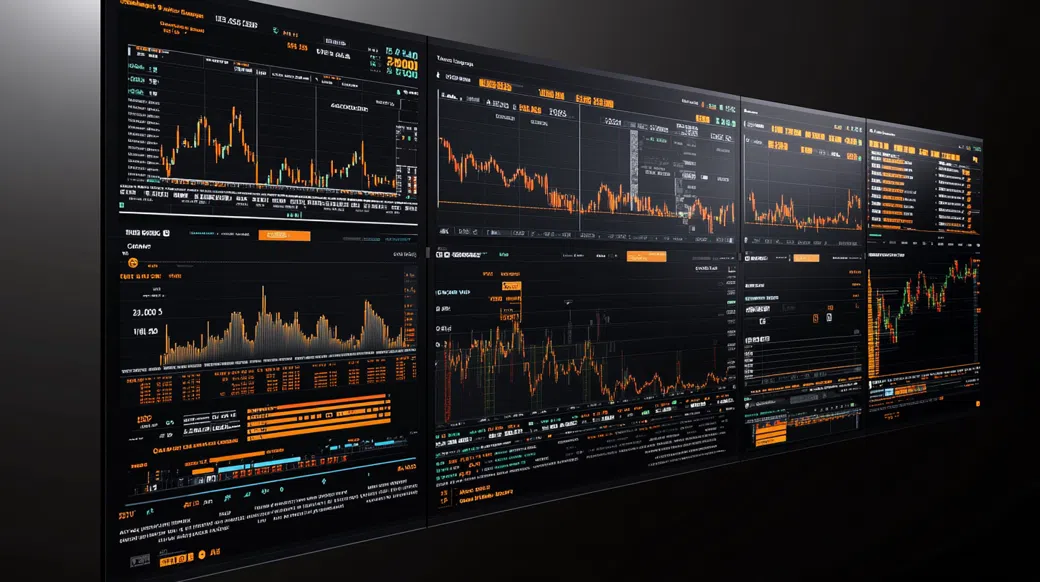
On desktop, the WebTrader felt built for people who read charts before headlines: watchlists load quickly, order tickets are compact, and the chart canvas doesn’t fight you when you flip timeframes. I placed a small EUR/USD market order around the London open and then bracketed it with stop-loss/take-profit; execution came back without drama, with only modest slippage when spreads briefly widened on a data spike. If you live inside MT4/MT5 plug-in ecosystems, note that I didn’t see those terminals presented as a guaranteed option here—this is more self-contained.
The Gaînor Capestre app mirrors the WebTrader flow well: real-time quotes, position management, and one-tap close are all present, and deposits/withdrawals are reachable from the same menu tree. For Gaînor Capestre login, biometric unlock worked reliably on my device, and push notifications for filled orders were timely. The main mobile quirk is screen density—indicator settings can feel compressed when you stack overlays, so I kept chart work on desktop and used the phone for monitoring and execution.
Charting covers the core toolbox—MA, RSI, MACD, Bollinger Bands, plus basic drawing tools and multi-timeframe layouts. There’s an economic calendar and a lightweight news feed that’s useful for “what moved it” context, though it won’t replace a dedicated macro terminal. Compared with MT5/cTrader-style environments, the ceiling is lower for automation and deep order analytics, but adequate for discretionary CFD trading.
After selecting an account type, the signup asked for the usual identity basics (email, phone, and residency) before pushing me into AML/KYC steps. Verification required a government-issued photo ID and a proof of address document (I used a bank statement under three months old), and my status flipped to verified within the same business day. Funding gates were applied after verification, which is stricter than brokers that let you deposit first and sort documents later.
For traders asking about the Gaînor Capestre minimum deposit, $200 is realistic for testing the mechanics without overcommitting. Base currency options depend on your onboarding path, so mismatches can create conversion costs on both deposits and withdrawals; I’d align account currency with your most-used funding rail.
I tested support with a practical trader question: where to find the swap/overnight rate schedule for indices and whether weekend financing is tripled. Live chat connected in about three minutes, and the agent pointed me to the contract-spec screen plus a short explanation of how the platform applies daily financing. I also sent an email asking about withdrawal processing cut-off times; a ticket reply landed in roughly nine hours with a clear “internal processing 24–48 hours after KYC” statement and method-specific expectations.
Coverage is essentially 24/5, which matches the rhythm of the FX week, and language support appears to be region-dependent. Phone help wasn’t prominently surfaced in my account area, so assume chat/email are the primary rails. On weekends, crypto markets still move, but staffing tends to thin—plan accordingly if you trade BTC volatility.
If you’re considering this broker, start by checking the live spreads during your active session (Asia/London/NY overlap) and confirm your country eligibility before funding. A demo run helps you map order types, margin behavior, and the mobile workflow without rushing into leverage.
Visit Gaînor CapestreIt can be, as long as you treat it like a CFD learning venue rather than an investing account. The interface is relatively clean and the $10,000 demo is useful for rehearsing stops and margin. Beginners should keep leverage conservative even though up to 1:500 is available.
Yes, crypto is offered via CFDs, with BTC and ETH as the main contracts in my platform view. That means you’re speculating on price and using margin, not buying coins for on-chain storage. Weekend pricing and financing effects can be material, so check contract specs before holding positions.
No—based on my 2026 test, the broker processed KYC properly and allowed deposits, trading, and withdrawals through normal channels. The bigger consideration is that it operates under offshore registration, which generally offers less formal protection than top-tier regulators. Manage risk like a professional: keep position sizes reasonable and withdraw profits periodically.
No, it’s restricted for US residents. The platform also blocks sanctioned or heavily regulated jurisdictions. If you relocate, expect compliance checks to re-validate your account.
Internal processing is typically 24–48 hours after your KYC is approved. In my test, card withdrawals are usually 2–5 business days to land, bank wires 3–7 business days, and crypto transfers can arrive the same day depending on network conditions. Your bank’s own timelines can extend the final leg.
The Gaînor Capestre minimum deposit is $200 on the entry-level setup I used. That’s enough to test execution and withdrawals without forcing oversized leverage. Funding method minimums can vary slightly, but $200 is the practical starting point.
Yes, there’s a Gaînor Capestre app for iOS and Android that supports trading, account management, and funding actions. I was able to manage open positions and receive fill notifications without relying on desktop. For detailed chart work, the larger WebTrader layout is still more comfortable.
Overall Score: 4.0/5
For traders who think in levels, catalysts, and risk windows, Gaînor Capestre delivers a respectable CFD toolkit: tiered pricing, a capable WebTrader, and a mobile app that doesn’t feel like an afterthought. My deposit and withdrawal loop worked as advertised, and the cost structure (1.4 pips Standard EUR/USD; Raw from 0.2 pips plus $7/lot round-turn) is coherent for its audience. The limiting factor is structural—offshore oversight and fewer formal protections than Tier-1 regimes—so treat it as a trading venue, not a savings account. Remember: CFDs are leveraged and capital is at risk. If you want to explore it, start small on Gaînor Capestre and earn trust over time.
Best for: active CFD traders who value leverage and multi-asset rotation from one screen. Avoid if: you need Tier-1 regulatory cover, investor compensation schemes, or you’re prone to over-leveraging.