Fortunix Finyron Review 2026: Is It Safe & Worth Your Money?
In-depth Fortunix Finyron review updated for 2026. We tested spreads, key features, supported countries, and safety. Read our full verdict.

In-depth Fortunix Finyron review updated for 2026. We tested spreads, key features, supported countries, and safety. Read our full verdict.
| Min Deposit | $200 |
| Max Leverage | 1:500 |
| Assets | Forex, Indices, Commodities, Crypto CFDs, Share CFDs |
| Platforms | Proprietary WebTrader, iOS app, Android app |
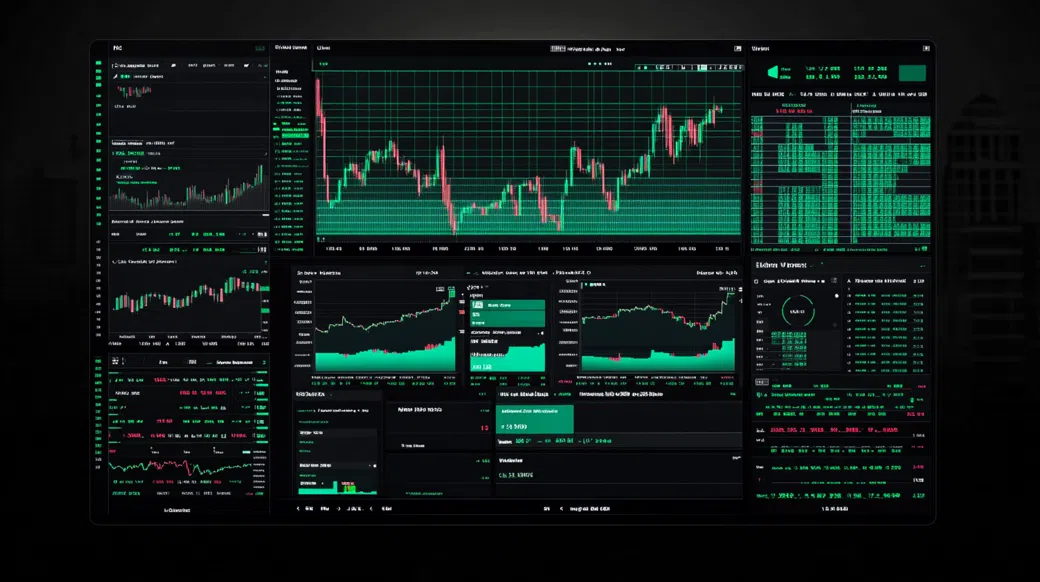
Built like a multi-asset CFD venue for traders who care about leverage and platform convenience, Fortunix Finyron suits active speculators but asks you to accept an offshore rulebook as the price of entry. I ran a small test account on Fortunix Finyron and found two clear tiers: a spread-only Standard and a tighter Raw/ECN-style option aimed at higher turnover. Markets skew FX and indices first, with crypto and metals rounding out the watchlist. The WebTrader is the center of gravity, while mobile mirrors most of the essentials. The headline drawback is protection depth—complaints and dispute escalation simply aren’t the same as a Tier-1 jurisdiction.
Fortunix Finyron is operational and tradeable in the way most offshore CFD brokers are—functioning platform, working order tickets, and KYC gates—rather than a simple “vanish-with-your-deposit” setup. That said, the safety profile depends heavily on your tolerance for offshore oversight and the limited recourse that comes with it.
On paperwork, the provider presents itself under a Mauritius FSC-style offshore registration model, which typically allows higher leverage (here up to 1:500) but doesn’t usually come with robust compensation schemes or the same regulator-led dispute path you’d expect in the UK/EU/Australia. My red-flag sweep focused on the usual pressure points: deposit upsells, “award” badges that can’t be verified, and withdrawal friction. I didn’t encounter aggressive account managers, and the dashboard pushed identity verification early—passport/ID plus proof of address—before I could request a payout. The legal pages also referenced segregated client-funds language, which is a positive signal, though enforcement standards vary by jurisdiction. Keep the bigger picture in view: CFDs are leveraged products; margin calls happen fast, and most retail traders lose money when risk controls are loose.
This broker generally accepts clients across parts of Southeast Asia, MENA, and selected LATAM/Africa corridors, with onboarding filtered by KYC checks. The USA is not supported, and sanctioned jurisdictions are blocked.
| Region | Status | Leverage Cap |
|---|---|---|
| Southeast Asia (selected) | Accepted | Up to 1:500 |
| MENA (selected) | Accepted | Up to 1:500 |
| Sub-Saharan Africa (selected) | Accepted | Up to 1:500 |
| Latin America (selected) | Accepted | Up to 1:500 |
| USA | Restricted | Not offered |
| Sanctioned jurisdictions | Restricted | Not offered |
In practice, eligibility is enforced through a mix of signup declarations, IP checks, and document review during AML/KYC. Rules can shift with payment-provider constraints, so I’d re-check access right before funding.
The lineup reads “macro first”: liquid indices and major FX pairs are the cleanest fit, while crypto CFDs are there for volatility hunters who can manage weekend financing and gaps. Depth is sufficient for discretionary trading, not a substitute for an exchange book.
Everything here is CFD exposure, meaning you’re trading price movements on margin rather than buying the underlying asset. Share CFDs don’t grant voting rights, and crypto CFDs don’t put coins on-chain in your name.
Fortunix Finyron fees follow a two-lane structure: Standard accounts pay via spread, while the Raw/ECN-style tier pairs near-zero spreads with a per-lot commission. On total cost, the Raw/ECN route is typically cheaper for frequent traders; the Standard account is simpler but not the tightest in its bracket.
| Asset | Spread/Fee | Market Average Comparison |
|---|---|---|
| EUR/USD (Standard) | From 1.4 pips | In line |
| EUR/USD (Raw/ECN) | From 0.2 pips + $7 round-turn/lot | Competitive |
| Bitcoin (BTC/USD) | From $28 | In line |
| Gold (XAU/USD) | From $0.35 | In line |
| US500 Index | From 0.8 points | Competitive |
Non-spread costs that matter: swaps/overnight financing can dominate outcomes if you hold positions for days, especially in high-rate differentials and metals. I also noted an inactivity fee of $10 per month once an account sits dormant beyond the stated grace period, which quietly punishes “set-and-forget” users. On funding rails, you’ll want to watch FX conversion if your card is not USD-denominated, and crypto positions can carry weekend financing that makes long holds noticeably pricier.
WebTrader is where this service tries to keep you: login was stable over multiple sessions from Singapore, and I didn’t hit random disconnects while flipping between 1-minute and 4-hour charts. Order tickets supported market and pending orders with SL/TP controls; execution on a small EUR/USD clip during the London open felt consistent, though the platform doesn’t give the same depth of plugin ecosystem you’d get with MT4/MT5. If you’re an automation-heavy trader, that gap will matter more than the spread.
The Fortunix Finyron app tracks the WebTrader layout closely—watchlists sync, quotes update cleanly, and one-tap position close is easy to find when volatility spikes. My Fortunix Finyron login on Android supported biometric unlock after the first credential entry, which is a small but real quality-of-life win. Deposits and withdrawal requests are accessible in-app, and push notifications can be toggled for order fills and margin alerts, although chart drawing tools are inevitably tighter on screen space.
Charting covers the staples (MA, RSI, MACD, Bollinger) with multi-timeframe views and basic annotations; it’s enough for price-action plus indicator confirmation. Research is lightweight: an economic calendar and integrated news headlines are present, but don’t expect institutional-grade commentary or the depth you’d see in dedicated MT5/cTrader ecosystems. For my workflow, it’s usable—just bring your own macro calendar and be disciplined around data releases.
My onboarding started with a short form (email, phone, base currency choice) and moved quickly into AML steps before I could unlock full withdrawals. KYC required a government-issued photo ID and a proof of address dated within three months; verification cleared the same business day in my case, after an automated document scan and a manual review checkpoint. The flow felt designed to be mobile-friendly, with clear prompts when an upload didn’t meet edge/crop requirements.
One practical note: the cashier labels are clear, but method availability can change by country and payment provider. I funded by USDT to keep bank FX out of the equation, then verified the withdrawal screen limits before placing more trades on Fortunix Finyron.
I tested support with a trader’s question rather than a generic one: “Where do you publish swap rates for indices, and do they change around roll dates?” Live chat answered in about three minutes with directions to the instrument-spec panel and a reminder that financing can be triple-charged on a designated day. I then emailed asking whether crypto weekend financing is built into the swap line item; the ticket response landed in roughly nine hours and matched what I saw in the contract specs.
Coverage sits in the expected 24/5 bracket for an offshore CFD desk, with weekends mainly limited to self-service help pages and crypto trading functionality. Language support depends on staffing—English is fine, while local-language depth will vary. Phone support wasn’t prominent in my region, so if you require a dial-in desk for urgent trade admin, that’s a constraint worth pricing in.
If you’re considering this platform, start by comparing Standard vs Raw/ECN pricing on the instruments you actually trade, then verify whether your country and funding method are supported before committing meaningful capital. A demo run during a busy session is a sensible first filter.
Visit Fortunix FinyronIt can be, provided you keep position sizes small and treat leverage with respect. The WebTrader is learnable and the demo account helps, but the offshore framework means you should be extra strict on risk controls and documentation.
Yes, crypto CFDs like BTC/USD and ETH/USD are available on the product list. You’re trading leveraged price exposure, not receiving coins into a blockchain wallet, and financing charges can be meaningful over weekends.
No—based on my hands-on use, the broker operated normally with KYC enforcement and functioning withdrawals. The more relevant question is “is Fortunix Finyron legit for my risk tolerance,” because offshore registration typically offers less dispute leverage than Tier-1 regulation.
No, Fortunix Finyron is not available in the USA. US residents are generally restricted from opening accounts, and the platform flags this during eligibility checks.
A Fortunix Finyron withdrawal typically shows internal processing within 24–48 hours after KYC is approved. From there, receipt time depends on the rail: cards often take 2–5 business days, bank wires 3–7 business days, while crypto is commonly completed the same day.
The Fortunix Finyron minimum deposit is $200. If you’re funding via card or crypto, also factor in any third-party processing or network fees and potential FX conversion from your base currency.
Yes, there are mobile apps for iOS and Android. The app supports watchlists, charting, order placement, and account actions like deposits and withdrawals, making it viable for monitoring trades away from the desk.
Overall Score: 4.1/5
What stood out is the platform’s focus on the tradable basics—FX, indices, and metals—paired with a Raw/ECN-style tier that keeps friction reasonable for higher-frequency strategies. The offshore setup is the central compromise: you gain leverage flexibility, but you give up the deeper safety nets many investors expect. For traders who can self-govern risk, Fortunix Finyron is a credible CFD venue to shortlist and stress-test in demo before scaling. Remember: CFDs use leverage, losses can exceed expectations quickly, and capital is always at risk.
Best for: active CFD traders who track spreads/commission and want up to 1:500 leverage on major markets. Avoid if: you require Tier-1 regulation, strong investor compensation schemes, or you tend to overtrade with high margin.