Erdem Analiz Sistemi Trading Platform Alternatives 2026
Compare Erdem Analiz Sistemi alternatives for 2026 with a safety-first lens: regulated brokers, costs, platforms, execution quality, and a practical migration checklist.

Compare Erdem Analiz Sistemi alternatives for 2026 with a safety-first lens: regulated brokers, costs, platforms, execution quality, and a practical migration checklist.
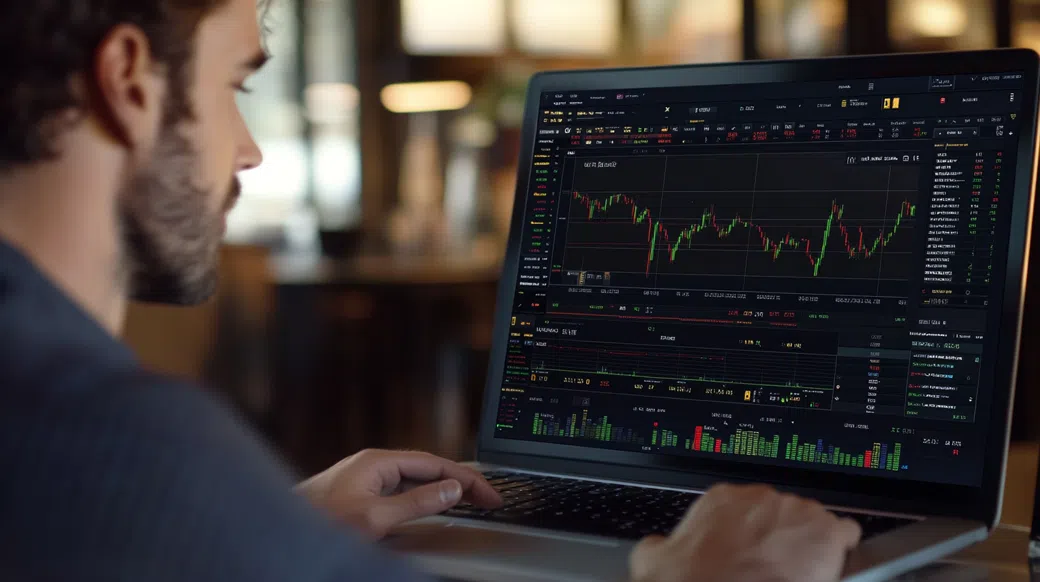
Spreads don’t lie. If your EUR/USD is consistently printing around 2.0 pips and you’re paying it dozens of times a week, the compounding drag is measurable—especially for short-horizon traders who live and die by a few pips of edge. That cost pressure is one reason the search for Erdem Analiz Sistemi alternatives keeps showing up in my inbox from US/EU readers who want tighter pricing, clearer protections, and better tooling than the “basic WebTrader + mobile app” stack common in offshore CFD venues. Public-facing information around Erdem Analiz Sistemi aligns with what you typically see in this segment: forex and CFD access (often including crypto CFDs), a proprietary browser platform, a relatively low entry point (commonly around a $250 minimum deposit), and headline leverage that can run as high as 1:500.
None of that is automatically “good” or “bad.” It’s context. High leverage magnifies both wins and losses; a platform that’s fine for discretionary charting can be a dead end for systematic execution; and an offshore framework (often via Seychelles FSA-style setups) can leave clients with fewer formal recourse options than an FCA, ASIC, CySEC, or NFA-regulated environment. This 2026 guide is built for a global audience with a US/EU focus: it compares regulated options vs Erdem Analiz Sistemi, breaks down the cost math traders actually feel, and maps broker choices to the instruments you trade—FX, indices, commodities, stocks/ETFs, and crypto exposure.
Disclaimer: This article is for informational purposes only and does not constitute investment advice. CFDs and other leveraged products involve a high risk of loss and may not be suitable for all investors.
From a market-structure lens, Erdem Analiz Sistemi looks like a CFD-first brokerage offering access primarily to forex and CFDs rather than a full exchange-connected, multi-asset account. The regulatory posture is typically described in offshore terms (commonly a Seychelles FSA-type framework), which can shape everything from dispute resolution to how investor protections are administered. The product set tends to suit newer retail traders seeking simple access to FX, indices, and crypto-linked price exposure, with leverage frequently marketed up to 1:500 and a minimum deposit around $250.
The proprietary WebTrader experience is usually built for convenience: log in from a browser, place trades quickly, and manage positions without installing a desktop terminal. Charting is generally adequate for directional trading—multiple timeframes, a standard indicator list, and basic drawing tools—yet it may feel shallow if you rely on custom indicators, advanced order routing, or scriptable automation. Mobile apps on iOS/Android often mirror the core workflow (quotes, charts, order entry, account dashboard), but parity gaps can show up in alerting, multi-chart layouts, or deeper analytics. For traders comparing platforms like Erdem Analiz Sistemi, the key question is whether the toolset supports your process, not whether the UI looks modern.
Cost-wise, the common pattern is a spread-led model on a Standard-style account, with EUR/USD often observed around 2.0 pips in normal liquidity. Some brokers in this offshore bracket also advertise Raw/ECN-style tiers; when offered, those typically pair near-zero spreads (often ~0.0–0.4 pips) with a commission in the ballpark of $5–$8 per round-turn. Beyond the headline spread, watch the quieter line-items: swap/overnight financing on CFD positions, possible withdrawal charges depending on method, and occasional inactivity policies. The right comparison isn’t “lowest advertised”—it’s the total cost your strategy actually pays across a month of trading.
Cost and control are the two catalysts I see most. A trader can tolerate a few tenths of a pip in extra spread for a while—until the journal shows the drag in black and white. Then comes the second layer: platform constraints. If your playbook needs MT4/MT5 or cTrader for automation, or you require deeper execution reporting (slippage, fill timestamps, partials), proprietary WebTrader setups can become a ceiling. That’s when “Erdem Analiz Sistemi alternatives” turns from a casual search into a risk-management decision: tighter pricing, stronger oversight, and better tools often travel together, but you still have to match the broker to your market and region.
Think of broker selection as fitting a tool to a job while staying inside your risk budget. Start with the non-negotiables (jurisdiction, regulation, funding methods), then work outward: instruments, pricing, and platform stack. The last step is operational—how quickly support responds when margin is tight and markets move fast. For competitors to Erdem Analiz Sistemi, the “best” choice is the one that matches your execution needs and the products you actually trade.
Regulation is a structure, not a slogan. FCA (UK), ASIC (Australia), CySEC (EU), and NFA/CFTC (US) each impose rules around disclosures, conduct, and handling client money. In the UK, FSCS coverage can reach £85,000 for eligible clients; in Cyprus, the ICF can cover up to €20,000 under specific conditions. Look for segregated client funds, clear negative balance protection policies where applicable, and a straightforward complaints process. Offshore arrangements—often used by brokers similar to Erdem Analiz Sistemi—may offer fewer standardized protections.
Instrument access decides what you can hedge, not just what you can trade. Many CFD-first venues focus on FX, indices, commodities, and crypto CFDs; stocks and ETFs, if present, are often CFDs only (no shareholder rights, no voting, no transfer). If you need exchange-traded products—US equities, EU ETFs, listed options, or futures—then a multi-asset broker with direct market access becomes more than a “nice to have.” Build your shortlist by mapping instruments to your strategy: macro hedges, carry, equity exposure, or cross-asset correlation trades.
Price the trade the way your P&L feels it. Spreads and commissions are the visible layer; swap/overnight fees and financing are the slow leak on multi-day positions; inactivity and withdrawal fees are operational friction. For FX, compare the round-turn cost: spread paid + commission both ways, converted into pips if you want an apples-to-apples view. A “Raw” account with a $6 round-turn can be cheaper than a 1.2-pip spread account once you scale volume—even before you factor in slippage.
Platform choice is really execution choice. MT4/MT5 ecosystems support indicators, EAs, and a huge third-party tooling market; cTrader tends to attract traders who care about depth-of-market and order handling; proprietary terminals vary widely. Execution model matters too: market maker vs STP/ECN vs DMA has implications for fills, re-quotes, and how spreads behave around news. Before leaving Erdem Analiz Sistemi, test your shortlisted alternatives during active sessions and at rollover to see how latency and slippage show up in real conditions.
Operational quality is underrated until it’s urgent. Evaluate support hours in your timezone, the quality of first-response troubleshooting, and whether the broker can handle account issues without endless handoffs. Education matters less for veterans but can still be useful—especially margin and product-specific explainers for CFDs, options, and futures. Finally, check mobile parity: if you manage risk on the go, the app must handle alerts, position edits, and margin monitoring without lag or missing functions.
On FX and index CFDs, the core comparison is cost + execution under stress. With EUR/USD commonly around 2.0 pips on a standard-style offshore setup, frequent traders can bleed edge quickly, even if the platform offers leverage up to 1:500. Regulated FX/CFD specialists often compete more aggressively on pricing and tooling: Pepperstone and IC Markets are routinely chosen by traders who care about MT4/MT5/cTrader availability and tighter effective spreads on Raw-style accounts (usually paired with transparent commissions). If your strategy is event-driven, pay attention to how spreads widen and how often you see negative slippage at fills; those “micro” details are where broker quality becomes a P&L factor.
Stocks and ETFs are where many offshore CFD platforms lose the plot for US/EU investors. If equity exposure is offered, it’s frequently via CFDs on shares rather than ownership—meaning no shareholder rights and different tax/reporting dynamics depending on jurisdiction. That’s a meaningful gap for long-term portfolios, dividend strategies, or anyone who wants to trade listed options against stock holdings. Interactive Brokers (IBKR) is the cleanest “all-in-one” answer for many regions because it connects to global exchanges and supports equities, ETFs, options, and futures in a single account. Saxo Bank is another strong alternative for traders who want a broad product shelf with a more guided, research-forward platform experience.
Crypto access is often framed as convenience, but the product form matters. Many venues in this category provide crypto CFDs—price exposure only—so you’re not taking delivery on-chain and you can’t withdraw coins to a wallet. That can be perfectly fine for short-term positioning or hedging, but it’s not the same as owning spot crypto. Among regulated options, IG and Plus500 commonly offer crypto CFD exposure in supported jurisdictions, with clearer risk disclosures and standardized client-money handling. If your goal is macro trading around Bitcoin volatility, a regulated CFD venue may fit; if you want self-custody, you’re looking outside the CFD broker universe entirely. Either way, treat leverage with caution—crypto volatility plus margin is a fast route to liquidation.
Regulation: SEC/FINRA (US), FCA (UK), IIROC (Canada)
Markets: Stocks, ETFs, options, futures, bonds, FX (spot), funds (region-dependent)
Fees: FX pricing is typically spread + commission (varies by venue/size); equity commissions depend on market and plan
Platform: Trader Workstation (TWS), IBKR Desktop, web platform, mobile; API access
Best For: Multi-asset traders who need exchange access and advanced order types
Regulation: FCA (UK), ASIC (Australia), CySEC (EU), DFSA (Dubai)
Markets: FX and CFDs (indices, commodities, some shares depending on entity)
Fees: Standard spreads often around ~1.0–1.3 pips on EUR/USD; Raw-style pricing can be ~0.0–0.3 pips + commission per round-turn (varies by platform/entity)
Platform: MT4, MT5, cTrader, TradingView integration (availability varies), mobile apps
Best For: Systematic FX traders and scalpers optimizing spread + execution
Regulation: FCA (UK), MAS (Singapore), DFSA (Dubai)
Markets: Stocks, ETFs, bonds, FX, options, futures, CFDs (product set varies by location)
Fees: FX spreads vary by tier; equities typically charged via commissions/market fees depending on exchange
Platform: SaxoTraderGO, SaxoTraderPRO, mobile apps
Best For: Portfolio-style traders mixing FX with listed products and research tools
Regulation: FCA (UK), ASIC (Australia), MAS (Singapore)
Markets: CFDs (indices, FX, commodities, shares), spread betting (UK/IE), some shares/ETFs depending on region
Fees: FX spreads commonly from ~0.6–1.0 pips on major pairs (varies by account/region); CFD financing applies on holds
Platform: IG web platform, mobile, MT4 (where available)
Best For: Macro CFD traders who want broad index coverage and strong risk controls
Regulation: CFTC/NFA (US), FCA (UK), ASIC (Australia), IIROC (Canada)
Markets: FX (spot/CFD depending on region), some CFDs (indices/commodities in certain jurisdictions)
Fees: Typically spread-only pricing; major-pair spreads often around ~0.8–1.4 pips depending on market conditions and region
Platform: OANDA web/mobile, MT4 (availability varies), API access
Best For: Risk-first FX traders who value transparent policies and US eligibility
Regulation: FCA (UK), ASIC (Australia), BaFin (Germany)
Markets: CFDs (FX, indices, commodities, treasuries, shares depending on region)
Fees: FX spreads can be competitive on majors (often from ~0.7 pips, conditions vary); overnight financing on CFD positions
Platform: Next Generation platform, mobile; MT4 (in some regions)
Best For: Active discretionary traders who want robust charting in a proprietary platform
| Platform | Regulation | Main Markets | Typical Costs | Best For |
|---|---|---|---|---|
| Interactive Brokers (IBKR) | SEC/FINRA, FCA, IIROC | Stocks/ETFs, options, futures, bonds, FX | FX spread + commission (varies); equities priced per market/plan | Multi-asset traders who need exchange access and advanced order types |
| Pepperstone | FCA, ASIC, CySEC, DFSA | FX + CFDs | ~1.0–1.3 pips Standard; ~0.0–0.3 pips + commission on Raw-style | Systematic FX traders and scalpers optimizing spread + execution |
| Saxo Bank | FCA, MAS, DFSA | Multi-asset: stocks/ETFs, options, futures, FX, CFDs | Tiered FX spreads; listed products via commissions/market fees | Portfolio-style traders mixing FX with listed products and research tools |
| IG | FCA, ASIC, MAS | CFDs (FX/indices/commodities/shares), spread betting (UK/IE) | Majors often ~0.6–1.0 pips; financing costs on holds | Macro CFD traders who want broad index coverage and strong risk controls |
| OANDA | CFTC/NFA, FCA, ASIC, IIROC | FX (spot/CFD by region), limited CFDs in some regions | Mostly spread-only; majors often ~0.8–1.4 pips (market-dependent) | Risk-first FX traders who value transparent policies and US eligibility |
| CMC Markets | FCA, ASIC, BaFin | CFDs across FX/indices/commodities/shares (region-dependent) | Majors often from ~0.7 pips; overnight financing on CFDs | Active discretionary traders who want robust charting in a proprietary platform |
Switching brokers is less about “sign up here” and more about avoiding operational mistakes that cost money. Treat it like a controlled position reduction: reduce exposure, secure records, then re-deploy capital once the new venue is verified and tested. One practical note: leverage cuts both ways, so don’t increase size during the transition just to “make back” frictional costs.
If you’re comparing alternatives to the Erdem Analiz Sistemi trading platform, it can still help to review the current onboarding flow, product list, and account terms side-by-side with regulated peers—especially if your region has restrictions or specific KYC requirements. Verify what you can trade, how costs are charged, and how withdrawals are handled before committing meaningful capital.
Visit Erdem Analiz SistemiThe best option depends on whether you need exchange-traded products or mainly FX/CFDs. For full multi-asset access (stocks, ETFs, options, futures), Interactive Brokers (IBKR) is often the strongest fit; for FX-focused execution and platform choice, Pepperstone and OANDA are common picks. This article’s best Erdem Analiz Sistemi alternatives 2026 list is designed so you can choose by instrument and execution needs rather than marketing claims.
Erdem Analiz Sistemi appears to operate under an offshore-style framework (commonly described in Seychelles FSA terms) rather than top-tier US/EU regulators like the FCA, CySEC, or NFA. That doesn’t automatically mean misconduct, but it does mean investor-protection mechanisms and dispute processes may be thinner than at heavily supervised firms. If safety is the priority, consider regulated options vs Erdem Analiz Sistemi and verify the exact legal entity on the regulator’s public register.
With brokers in this category, the core offering is usually forex and CFDs, often including crypto CFDs, while stocks/ETFs may be CFDs only and listed futures are commonly not offered. That means you’re typically trading derivative exposure rather than owning the underlying asset. If you want listed futures and exchange-traded equities, platforms like IBKR or Saxo Bank are more aligned with that requirement than many platforms like Erdem Analiz Sistemi.
Before moving, verify regulation on the official register, confirm whether you’ll be trading CFDs or real shares, and model your monthly round-turn costs (spread + commission + swap). Also check platform compatibility—MT4/MT5/cTrader vs proprietary—and whether negative balance protection applies in your jurisdiction. Finally, export statements and plan withdrawals using the same payment method used to fund your Erdem Analiz Sistemi alternatives account migration to reduce AML delays.
About the Author: Daniel Okafor is a former derivatives trader turned market analyst based in Singapore, focused on APAC brokerages and global macro. He prioritizes execution quality, risk controls, and transparent cost breakdowns—charts over chatter—so readers can make informed platform decisions.