Elqui Rendanza Trading Platform Alternatives 2026
Review Elqui Rendanza alternatives for 2026 with a US/EU lens: regulated brokers, platforms, costs, asset access, and a safer migration checklist.

Review Elqui Rendanza alternatives for 2026 with a US/EU lens: regulated brokers, platforms, costs, asset access, and a safer migration checklist.
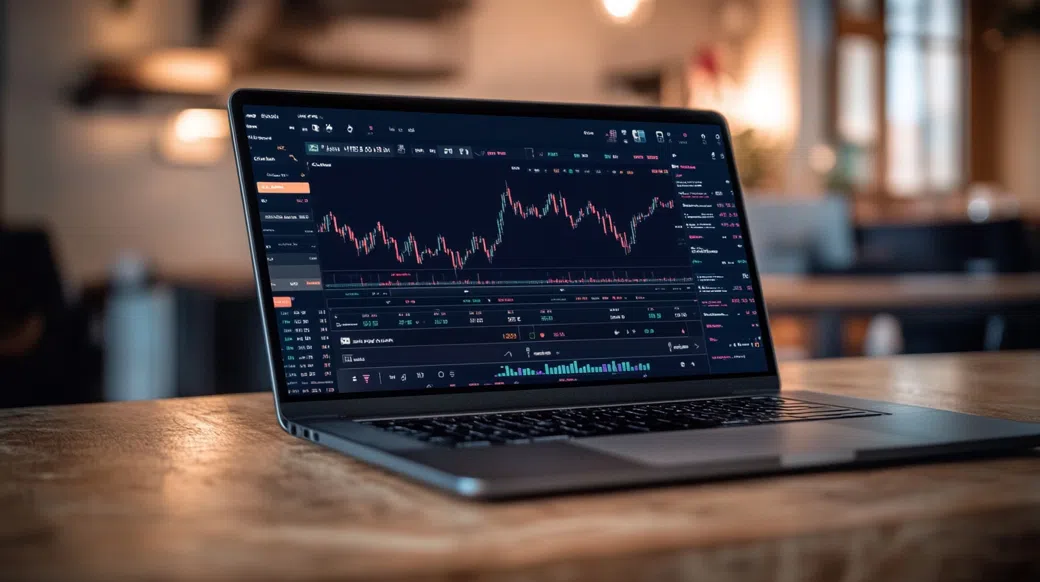
Spreads tell you more than slogans. If your EUR/USD is consistently printing wider than expected, or fills slip when volatility spikes, the “platform” becomes less about charts and more about trust, controls, and how orders are really handled. That’s the practical backdrop for this guide to Elqui Rendanza alternatives in 2026. From what’s typically observable for offshore CFD providers, Elqui Rendanza appears positioned as a forex-and-CFD-first venue with a proprietary WebTrader and a companion mobile app. The usual headline features in this segment are high leverage (commonly up to 1:500), a moderate entry deposit (often around $250), and a menu centered on FX pairs, indices, commodities, and crypto CFDs. The trade-off is rarely hidden: thinner investor-protection frameworks, fewer transparency anchors, and platform stacks that don’t always support institutional-grade tooling (think: advanced order types, API workflows, or robust post-trade reporting). For US and EU traders, the gap between “can place a trade” and “can verify a broker’s safeguards” matters. That’s why the alternatives in this list skew toward brokers with recognizable regulators (FCA, ASIC, CySEC, NFA) and clearer rules around segregated client funds, negative balance protection (where applicable), and dispute handling. This is a chart-first, risk-first rundown—because with leveraged CFDs, the cost of being wrong compounds quickly.
Disclaimer: This article is for informational purposes only and does not constitute investment advice. CFDs and other leveraged products carry a high risk of loss and may not be suitable for all investors.
On the spectrum from multi-asset brokerage to CFD venue, Elqui Rendanza sits closer to the CFD end. Public-facing details for brands in this lane commonly point to offshore registration—here, best treated as a Seychelles FSA framework—paired with a product set built around forex and CFDs rather than exchange-traded ownership. That profile usually appeals to short-term traders looking for high leverage and fast onboarding, but it can leave longer-horizon investors wanting clearer protections, stronger reporting, and a deeper instrument shelf. For readers evaluating brokers similar to Elqui Rendanza, the key question isn’t whether you can click “Buy.” It’s whether the plumbing is verifiable: regulator oversight, segregation language, margin rules, and how complaints are handled when execution or withdrawals become contentious.
The platform stack is typically a proprietary WebTrader with a basic-to-mid toolset, backed by iOS/Android apps. Charting generally covers the essentials—multiple timeframes, common indicators, and standard drawing tools—without going deep into strategy testing or workflow automation. Order tickets in this category tend to focus on market and limit orders, with stop-loss/take-profit available but fewer advanced types (OCO brackets, server-side trailing logic, conditional routing) than you’d see at larger venues. Mobile parity is usually decent for monitoring and manual execution, though serious risk work—position sizing, swap sensitivity, and multi-asset correlation checks—often feels cramped on small screens. The account dashboard typically prioritizes deposits/withdrawals and open positions over detailed, exportable post-trade analytics.
Cost structure for offshore CFD platforms usually clusters around a Standard account with EUR/USD “from” spreads near 2.0 pips, and sometimes a tighter, commission-based tier that resembles Raw/ECN pricing (often 0.0–0.4 pips plus roughly $6 round-turn commission). Swap/overnight financing is a meaningful line item for traders holding CFD positions beyond the session, and it’s where silent P&L bleed can show up if you’re running carry exposure unintentionally. Withdrawal and inactivity charges vary widely across competitors to Elqui Rendanza, so it’s worth checking fee schedules and funding rails (card, bank wire, e-wallets) before you treat headline spreads as the whole story.
A switch is usually triggered by one of two things: a strategy evolves, or the risk budget tightens. If you’re moving from discretionary clicks to systematic execution—or you’re trading around macro events where slippage and margin spikes are real—you start benchmarking platforms like Elqui Rendanza against venues with clearer execution policies and stronger oversight. In that moment, “Elqui Rendanza alternatives” stops being a search term and becomes a control check: protection rules, reporting quality, and whether your account is supported in your jurisdiction. One more reality check: high leverage (1:500 is common in offshore setups) can magnify small execution problems into big equity swings, especially when spreads widen around news.
Treat broker selection like building a trading system: define constraints, then test candidates against them. The temptation is to start with leverage or a slick interface. I’d start with what happens on the bad days—flash moves, margin calls, platform lag, and disputes. Alternatives to the Elqui Rendanza trading platform should be evaluated on verifiable safeguards and on whether their platform/tooling matches your execution style.
Regulators aren’t a guarantee of profits, but they do set enforceable rules. FCA-registered firms in the UK may fall under FSCS coverage (up to £85,000 in eligible cases), while CySEC firms can be linked to the ICF (up to €20,000, eligibility-dependent). ASIC and NFA/CFTC oversight tend to be strict on conduct and reporting. Look for segregation wording (segregated client funds) and ask whether negative balance protection applies to your entity and jurisdiction.
Write down what you actually need: spot FX and indices CFDs for macro trading, or real stocks/ETFs for long-term allocation. Many offshore CFD platforms focus on FX/indices/commodities and may offer equities only as CFDs—no shareholder rights, no exchange voting, and different tax treatment. Multi-asset brokers (IBKR, Saxo) can materially change what you can execute: options hedges, futures curves, and bond exposure—not just CFDs.
Compare in round-turn terms: spread + commissions + expected slippage at your trade size. A “0.1 pip” raw spread can still be pricey after commissions; a wider spread can be acceptable if execution is stable and you trade less frequently. Don’t ignore swap/overnight fees if you hold CFDs for days, and check non-trading costs (inactivity, withdrawal, FX conversion). For many traders, costs are a strategy parameter—not a marketing bullet.
Platform dictates what’s possible. MT4/MT5 and cTrader are common for automation, indicators, and third-party tools; proprietary platforms vary from basic to excellent. Execution model matters: market maker setups can be fine for small sizes, while STP/ECN/DMA configurations may better fit higher frequency or news-driven trading—though slippage exists everywhere. If you’re currently on Elqui Rendanza, test an alternative with small size during high-volatility windows to observe spreads, latency, and stop behavior.
Support is part of risk control. Look for 24/5 coverage for FX markets, clear escalation paths, and local-language options if needed. Education should go beyond beginner gloss—margin policy, order types, and platform-specific risk tools. Finally, mobile parity matters if you manage risk on the move; a good app should let you adjust stops, monitor margin, and review trade history without hunting through menus.
The core proposition is usually FX and CFDs with high leverage—often up to 1:500—and a list that might cover roughly 30–50 FX pairs plus indices and commodities. That’s functional for directional macro trades, but the edge often lives in execution and cost discipline. With a typical Standard EUR/USD spread around 2.0 pips, frequent traders can end up paying more than they think; a 20-trade week compounds that friction fast, especially if slippage widens around data releases. For tighter pricing and deeper platform choice, Pepperstone and IC Markets are common benchmarks among FX/CFD specialists. Both are known for offering MT4/MT5 and cTrader, which matters if your process relies on EAs, custom indicators, or fast order management. If you’re comparing top substitutes for Elqui Rendanza, focus on how the broker behaves during volatility—spread expansion, re-quotes (if any), and margin-call mechanics—not just the calm-market brochure.
Equity access is where offshore CFD venues often feel thin for US/EU investors. Even if stocks are listed, they’re frequently CFDs rather than real shares—meaning no direct ownership, no shareholder rights, and different protections than an exchange-traded position. That distinction matters when you’re holding for months, reinvesting dividends, or using options as a hedge. Interactive Brokers (IBKR) and Saxo Bank are the cleanest solutions when you want real stocks and ETFs alongside derivatives. IBKR is built for breadth—global equities, options, futures, FX, and bonds—while Saxo is strong for multi-asset portfolio workflows and platform tooling. If your current setup resembles platforms like Elqui Rendanza, moving to a multi-asset broker can be less about “more instruments” and more about being able to express a macro view with proper hedges (index options, rate futures) rather than only CFD proxies.
Crypto exposure on many CFD-first platforms is typically delivered as crypto CFDs—price exposure without on-chain ownership. That can be acceptable for short-term trading or hedging, but it’s not the same as holding spot crypto in a wallet, and it introduces broker counterparty risk on top of crypto volatility. Fees can also be less transparent: spreads may widen materially during weekend moves, and financing charges can bite if positions are held. For regulated crypto CFD access (where permitted), IG is a frequent reference point in the UK/EU context, offering a rulebook that’s clearer than offshore venues. Plus500 can be a simpler alternative for traders who value a straightforward interface and defined product scope over platform customization. Among Elqui Rendanza alternatives, the crypto question should be framed in plain terms: do you want tradable exposure (CFD), or do you need ownership (spot)? Those are different tools for different jobs.
Regulation: SEC/FINRA (US), FCA (UK), IIROC (Canada)
Markets: Stocks, ETFs, options, futures, FX, bonds (multi-asset access)
Fees: Generally low, commission-based pricing on many products; FX pricing typically tight on major pairs (varies by plan/region)
Platform: Trader Workstation (TWS), web platform, mobile app, APIs
Best For: Macro traders who hedge with options/futures
Regulation: FCA, ASIC, CySEC, DFSA
Markets: FX and CFDs (indices, commodities; availability depends on entity)
Fees: Standard spreads often around ~1.0+ pip on EUR/USD; Raw-style pricing commonly 0.0–0.3 pips + commission (varies by platform/entity)
Platform: MT4, MT5, cTrader, TradingView integration (where available)
Best For: Systematic FX traders running MT4/MT5 EAs
Regulation: FCA, MAS, DFSA
Markets: Stocks, ETFs, options, futures, FX, bonds; CFDs in supported regions
Fees: Multi-asset pricing with commissions/tiers; FX spreads typically competitive on majors (exact schedules vary by country)
Platform: SaxoTraderGO, SaxoTraderPRO
Best For: Portfolio-style traders needing real market access
Regulation: FCA, ASIC, MAS
Markets: CFDs (indices, FX, commodities, shares CFDs), spread betting (UK); crypto CFDs where permitted
Fees: Spread-based pricing; typical EUR/USD often around ~0.6–1.0 pip depending on account/region and conditions
Platform: IG web platform, mobile app; MT4 supported in some regions
Best For: News-driven CFD traders who value a clear rulebook
Regulation: ASIC, CySEC, FSA Seychelles (group-level)
Markets: FX and CFDs (indices, commodities, some crypto CFDs depending on entity)
Fees: Raw spreads often 0.0–0.2 pips on EUR/USD + commission (commonly around $6–$7 round-turn); Standard accounts usually wider
Platform: MT4, MT5, cTrader
Best For: High-frequency scalpers focused on tight spreads
Regulation: FCA, CySEC, ASIC, MAS
Markets: CFDs (FX, indices, commodities, share CFDs; crypto CFDs where permitted)
Fees: Spread-based; costs vary by instrument and volatility, with overnight funding on leveraged positions
Platform: Plus500 proprietary web platform and mobile app
Best For: Beginners who want a simpler CFD interface
| Platform | Regulation | Main Markets | Typical Costs | Best For |
|---|---|---|---|---|
| Interactive Brokers (IBKR) | SEC/FINRA, FCA, IIROC | Real stocks/ETFs, options, futures, FX, bonds | Commission-led; tight FX pricing on majors (plan/region dependent) | Macro traders who hedge with options/futures |
| Pepperstone | FCA, ASIC, CySEC, DFSA | FX + CFDs (indices/commodities) | Raw: ~0.0–0.3 pips + commission; Standard: ~1.0+ pip | Systematic FX traders running MT4/MT5 EAs |
| Saxo Bank | FCA, MAS, DFSA | Multi-asset: stocks/ETFs, options, futures, FX, bonds | Tiered commissions; competitive FX spreads (country dependent) | Portfolio-style traders needing real market access |
| IG | FCA, ASIC, MAS | CFDs + (UK) spread betting; crypto CFDs where permitted | Spread-based; EUR/USD often ~0.6–1.0 pip (conditions vary) | News-driven CFD traders who value a clear rulebook |
| IC Markets | ASIC, CySEC, FSA Seychelles (group-level) | FX + CFDs (indices/commodities; some crypto CFDs) | Raw: ~0.0–0.2 pips + ~$6–$7 round-turn commission | High-frequency scalpers focused on tight spreads |
| Plus500 | FCA, CySEC, ASIC, MAS | CFDs (FX/indices/commodities/share CFDs) | Spread-based + overnight funding; varies by instrument | Beginners who want a simpler CFD interface |
Switching brokers is less like changing an app and more like rewiring risk controls. Do it in sequence, keep records, and avoid overlapping leverage across two venues. The cleanest migrations I’ve seen start with verification (regulator registers) and end with small-size execution tests—because the first week on a new platform is where hidden friction (slippage, swaps, margin policy) usually shows up.
If you’re still evaluating your options, review onboarding terms and regional eligibility carefully, then compare platform tooling and costs against the regulated brokers listed above. A quick demo run plus a small live test trade can reveal more about execution and spreads than any marketing page.
Visit Elqui RendanzaThe best choice depends on whether you need real multi-asset access or mostly FX/CFDs. For broad markets (stocks/ETFs, options, futures), Interactive Brokers and Saxo are strong benchmarks; for FX/CFD execution and MT4/MT5/cTrader workflows, Pepperstone or IC Markets are commonly used. If you want a simpler CFD-only experience under major regulators, IG or Plus500 can fit—subject to your region.
Elqui Rendanza appears to operate under an offshore framework (commonly associated with Seychelles FSA in this segment), which generally provides fewer investor-protection layers than FCA/ASIC/CySEC/NFA supervision. Safety comes down to verifiable controls: segregation language, transparent fees, withdrawal reliability, and how disputes are handled. For many US/EU traders, that’s why regulated options vs Elqui Rendanza become the starting point for comparison.
With brokers in this category, you’re typically looking at forex and CFDs, with crypto exposure often delivered as crypto CFDs rather than on-chain ownership. Stocks and ETFs, when available, are frequently CFDs rather than real shares, and exchange-traded futures are often not offered. If you need real stocks/ETFs or futures, IBKR or Saxo are more direct fits among the best Elqui Rendanza alternatives 2026.
Verify regulation on the official register, confirm which legal entity you’ll be onboarded to, and read the margin/negative-balance rules for your jurisdiction. Next, compare round-turn trading costs (spread + commission + likely slippage) and inspect swap/overnight fees if you hold CFDs beyond the session. Finally, test deposits, withdrawals, and platform stability with small size before moving full capital—especially if you’re coming from an offshore setup like Elqui Rendanza trading platform alternatives 2026 comparisons often highlight.
About the Author: Daniel Okafor is a derivatives trader turned market analyst based in Singapore, focused on APAC brokerages and global macro. He prioritizes execution quality, risk controls, and what the chart and tape reveal over platform hype.