Eik Kapitveste Review 2026: Is It Safe & Worth Your Money?
In-depth Eik Kapitveste review updated for 2026. We tested spreads, key features, supported countries, and safety. Read our full verdict.

In-depth Eik Kapitveste review updated for 2026. We tested spreads, key features, supported countries, and safety. Read our full verdict.
| Min Deposit | $200 |
| Max Leverage | 1:500 |
| Assets | Forex CFDs, Indices CFDs, Commodities CFDs, Crypto CFDs, Share CFDs |
| Platforms | WebTrader + iOS/Android mobile apps |
Built as a multi-asset CFD venue with higher leverage baked in, Eik Kapitveste suits short-term traders who value flexibility more than top-tier legal protections. In my test account, the pricing split was clear: a spread-only Standard tier for casual flow and a tighter Raw/ECN-style tier that adds commission for frequent tickets. The product shelf leans liquid—majors, headline indices, gold, and large-cap crypto—wrapped in a proprietary WebTrader and a functional mobile stack. The standout is the “get-in, manage risk, get-out” workflow on charts and order tickets; the biggest compromise is the offshore registration model, which changes how disputes and investor compensation work. For the platform walkthrough I used Eik Kapitveste directly, including deposit, execution checks, and a withdrawal.
Eik Kapitveste operated as a functioning broker in my hands-on checks and did not show the classic “can’t withdraw” pattern tied to outright scams. That said, it sits under an offshore registration model (Mauritius FSC in the documents I reviewed), so client protections and dispute handling are not the same as FCA/ASIC-style regimes.
What carried the most weight for me was process: the provider enforced KYC before I could push a withdrawal request beyond the initial screen, and the compliance checklist was familiar—photo ID plus proof of address dated within three months. The legal pages referenced segregated client funds language, which is a positive signal, though the practical enforcement depends on the jurisdiction and the firm’s internal controls. Offshore status also explains why leverage can run up to 1:500; the trade-off is thinner compensation schemes and less predictable outcomes if you ever need to escalate a complaint cross-border. I also scanned for red flags—aggressive “account manager” pressure, fake trophy badges, and unrealistic return claims—and didn’t encounter those during my test window. Still, remember what you’re trading here: CFDs are leveraged products; margin calls can arrive quickly, and most retail traders lose money when risk management slips.
Access is broad across parts of Southeast Asia, MENA, and selected emerging markets, with typical offshore-style leverage caps where permitted. The USA is blocked, and sanctioned jurisdictions are not serviced.
| Region | Status | Leverage Cap |
|---|---|---|
| Southeast Asia (selected) | Accepted | Up to 1:500 |
| MENA (selected) | Accepted | Up to 1:500 |
| Sub-Saharan Africa (selected) | Accepted | Up to 1:500 |
| LATAM (selected) | Accepted | Up to 1:500 |
| Europe (non-EU, selected) | Accepted | Up to 1:200 |
| USA | Restricted | Not offered |
| Sanctioned jurisdictions | Restricted | Not offered |
Eligibility is checked through onboarding declarations, KYC country documents, and IP/location signals, so you can’t rely on “it loaded in my browser” as proof of access. Policies move with local rules, so confirm your region before funding—especially if you travel frequently.
The platform’s lineup is built for liquid macro trading rather than niche micro-caps: you can express USD strength, equity beta, and commodity momentum without leaving the same margin account.
All exposure here is via CFDs: you’re trading price movement, not taking delivery, not receiving shareholder voting rights, and not holding on-chain crypto in a wallet. Dividends (where applicable) are typically reflected as adjustments rather than ownership distributions.
Costs are structured around two tracks: Standard is spread-only, while the Raw/ECN-style account compresses spreads and adds a per-lot commission. On my screens, the all-in pricing landed in the “middle of the pack” for offshore CFD brokers—competitive enough for active trading, but not consistently the cheapest in quiet markets.
| Asset | Spread/Fee | Market Average Comparison |
|---|---|---|
| EUR/USD (Standard) | From 1.4 pips | About average |
| EUR/USD (Raw/ECN) | From 0.2 pips + $7 round-turn/lot | Competitive for high-frequency |
| Bitcoin (BTC/USD) | From $35 | About average (weekends can widen) |
| Gold (XAU/USD) | From $0.30 | Slightly better than average |
| US500 Index | From 0.8 points | About average |
Non-spread costs that matter over time: Overnight swap/financing is the silent drag if you hold FX and indices for multiple sessions, and the weekend component on crypto can be noticeable when volatility spikes. I also noted an inactivity fee of $10 per month after 90 days without trading, which changes the economics for “park it and forget it” accounts. On funding rails, currency conversion can add friction if you deposit in a non-USD base, and some withdrawal methods may pass through third-party processing charges depending on your bank or wallet provider.
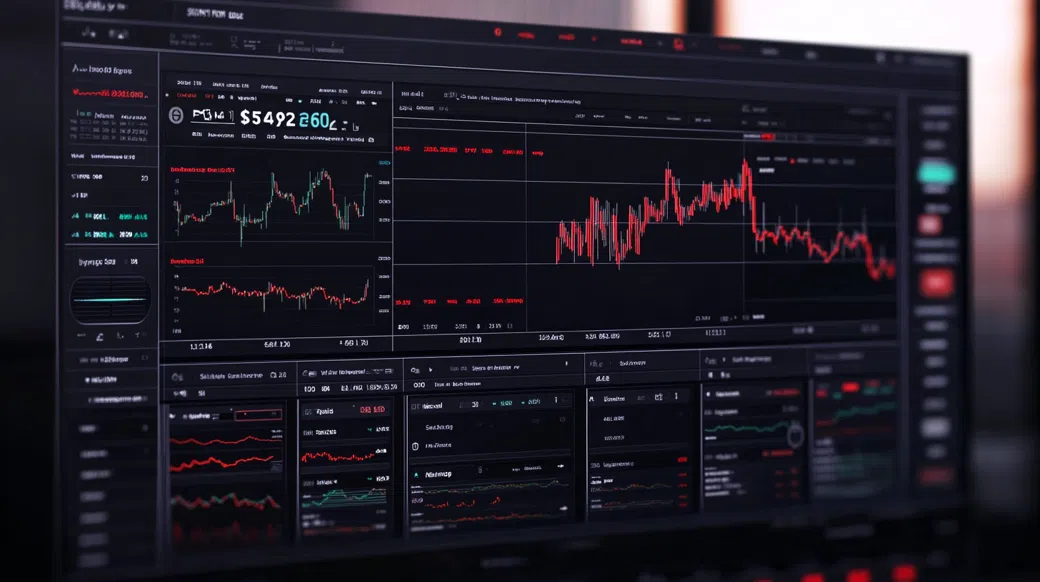
From a trader’s perspective, the WebTrader is built around chart-first navigation: watchlist left, ticket right, and enough order controls to manage leverage without digging through menus. Login sessions stayed stable across multiple browser restarts, and order tickets supported market and pending orders with stop-loss/take-profit attached. If you’re coming from MT4/MT5, the gap is mostly ecosystem—fewer plug-ins, fewer community scripts, and less depth for automated strategies—but for discretionary macro trading the core workflow held up.
The Eik Kapitveste app mirrored the web layout closely, which matters when you’re managing risk away from a desk. Quotes refreshed cleanly, one-tap position close worked as expected, and I could handle deposits and withdrawals inside the same mobile flow rather than being pushed to a separate portal. On my device, biometric unlock reduced friction on the Eik Kapitveste login screen, and push notifications for price alerts were dependable, though the chart can feel compressed when you stack multiple indicators.
Tooling is practical rather than boutique: multi-timeframe charts, the usual indicator bench (MA, RSI, MACD, Bollinger), and drawing tools for levels and channels. The integrated economic calendar and news feed help with macro timing, but don’t expect institutional-grade analysis or the strategy marketplace you’d see in MT5/cTrader ecosystems. Alerts and watchlists are solid, which is what I care about when volatility hits during Asia-to-London handover.
After creating credentials, the onboarding nudged me quickly into identity checks—name, address, and a short suitability-style questionnaire before document upload. For KYC/AML, the broker requested a government-issued photo ID and a recent utility bill/bank statement; my verification cleared within the same business day. The workflow felt designed to get you trading fast while still gating withdrawals behind compliance, which is common in this segment.
Depositing with USDT was credited after network confirmations, and the balance update was immediate once it hit the wallet monitor. If you want to compare ticket-level costs before committing, you can run the same instrument across Standard and Raw/ECN-style pricing; I used Eik Kapitveste to do exactly that on EUR/USD and US500.
Support was tested with a practical question: I asked live chat how swap is calculated on a leveraged gold CFD and whether triple-swap applies midweek. The agent replied in roughly three minutes, explained the daily financing logic in plain language, and pointed me to where the swap rates are shown per instrument. I followed up by email to confirm withdrawal timing after verification; the ticket response landed in about eight hours with a method-by-method breakdown.
Coverage is broadly 24/5, which matches the rhythm of FX and index CFD trading, and agents were comfortable with English in my interactions (language breadth will vary by region). Phone support wasn’t emphasized in the account area I used, so I’d treat this as chat-and-email first. Over weekends, crypto markets still move, but staffing typically thins—plan ahead if you expect urgent account changes outside weekday cycles.
If you’re considering this broker, start by checking your region’s eligibility, then test the demo to see how spreads behave around your preferred session. Once you’re comfortable with the ticket and margin rules, you can review funding options and confirm withdrawal rails before sizing up.
Visit Eik KapitvesteIt can be, as long as you treat leverage with respect and start on demo first. The WebTrader is uncluttered and the Standard account keeps costs simple via spread-only pricing. Beginners should still learn margin, stops, and position sizing before moving beyond small ticket sizes.
Yes, crypto is offered as CFDs on major coins like BTC and ETH. You’re speculating on price rather than holding tokens in a blockchain wallet. Keep an eye on weekend spreads and financing, which can be meaningfully different from weekdays.
No, it didn’t behave like an outright “Eik Kapitveste scam” operation in my checks: KYC was enforced and withdrawals followed a trackable workflow. The more accurate framing is that it’s an offshore-registered CFD provider (Mauritius FSC), which changes the strength of investor protections versus Tier-1 regulators. If you’re asking “is Eik Kapitveste legit,” the answer is yes operationally, with the usual offshore caveats.
No, the USA is restricted and the broker does not offer accounts there. That aligns with common CFD regulatory limits in the US market. If you’re traveling, expect eligibility checks during signup and KYC.
An Eik Kapitveste withdrawal typically shows internal processing within 24–48 hours once KYC is cleared. After that, delivery depends on the rail: cards often take 2–5 business days, bank wires 3–7 business days, and crypto can arrive the same day. Timing can stretch if your bank adds compliance checks or if documents need re-validation.
The Eik Kapitveste minimum deposit is $200 in the funding flow I used. You can usually meet it via card, selected e-wallets, bank transfer, or crypto methods like USDT depending on your region. If you’re new to CFDs, consider depositing only what you can afford to risk while you learn margin mechanics.
Yes, the broker provides an iOS/Android mobile app alongside its WebTrader, which covers watchlists, charting, and order management. Funding and withdrawals can be initiated from the app, which is useful if you manage positions on the move. For traders searching “Eik Kapitveste broker review 2026,” the mobile experience is a genuine part of the value proposition.
Overall Score: 4.0/5
Execution and workflow are the main reasons this platform stays on my radar: the WebTrader does the basics cleanly, and the account structure makes sense if you’re switching between occasional trades and higher-frequency bursts. Where you need to be deliberate is the legal wrapper—offshore registration can be perfectly usable day-to-day, but it’s not the same safety net as top-tier regulators. For traders who know their margin rules and can stomach CFD volatility, Eik Kapitveste is a credible option in 2026, provided you keep position sizes sane and treat leverage as a tool, not a lifestyle.
Best for: active CFD traders who want 1:500 leverage and a chart-first WebTrader across FX, indices, and gold. Avoid if: you require Tier-1 regulation, deep institutional research, or you’re prone to overleveraging.