Delfín Investanza Trading Platform Alternatives 2026
Compare Delfín Investanza alternatives for 2026: regulated brokers, costs, platforms, and safety checks for US/EU traders choosing a reliable option.

Compare Delfín Investanza alternatives for 2026: regulated brokers, costs, platforms, and safety checks for US/EU traders choosing a reliable option.
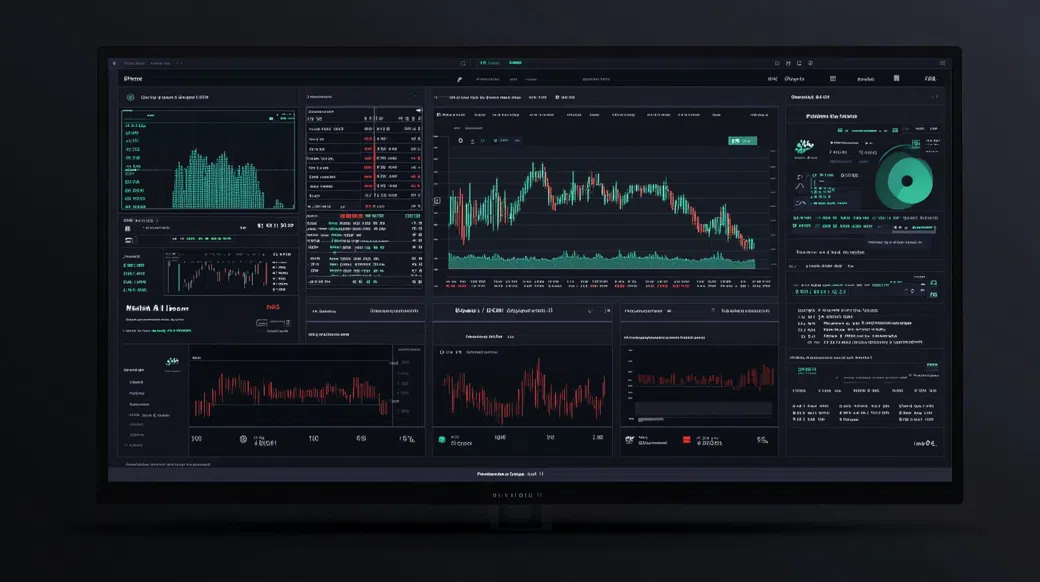
Leverage is a double-edged tool: it makes a 20-pip move feel meaningful, and it can also turn a routine pullback into a margin call. That’s the lens I use when assessing offshore CFD venues such as Delfín Investanza. Public-facing details in this segment typically point to a CFD-first setup (forex, indices, commodities, and often crypto CFDs), a proprietary WebTrader plus mobile app, and commercial terms that look “retail-friendly” on the surface—think max leverage around 1:500, a minimum deposit near $250, and EUR/USD spreads around 2.0 pips on a standard-style account.
For a subset of traders, that’s enough. For everyone else, the friction shows up in places that matter when you’re sizing risk: verification standards, withdrawal mechanics, execution transparency (slippage and re-quotes), and whether the firm sits under a top-tier regulator with enforceable client-money rules. This guide to Delfín Investanza alternatives is written for a US/EU-heavy audience that cares about two things: (1) keeping counterparty risk boring, and (2) getting a platform stack that matches the strategy—manual macro trading, systematic FX, equity investing, or options hedging.
I’ll walk through what Delfín Investanza-style platforms usually provide, what tends to be missing, and which regulated substitutes are better aligned with 2026 realities: tighter risk rules, clearer KYC/AML workflows, and a growing split between “trade CFDs” and “own the underlying.”
Disclaimer: This article is for informational purposes only and does not constitute investment advice. CFDs and other leveraged products carry a high risk of loss, and you can lose more quickly than expected if markets gap or liquidity thins.
Across brokers similar to Delfín Investanza, the common blueprint is an offshore or lightly supervised entity offering forex and CFDs to international clients, with the US almost always excluded. In this category, the business model is typically CFD-first and often market-maker leaning, meaning your execution quality depends on the venue’s internal pricing, risk management, and liquidity arrangements rather than direct exchange access. The appeal is simple—broad CFD menus, high leverage (here, commonly around 1:500), and fast onboarding—but the trade-off is that investor protection frameworks (segregated client funds enforcement, complaint escalation, compensation schemes) are usually thinner than what FCA/ASIC/CySEC/NFA-supervised firms must maintain.
Platform-wise, alternatives to the Delfín Investanza trading platform often come down to whether you want a proprietary WebTrader workflow or an ecosystem like MT4/MT5/cTrader. Delfín Investanza-style WebTraders tend to cover the basics well: multi-timeframe charts, a standard indicator pack, drawing tools for levels and trendlines, and one-click trade tickets. The gap usually appears when you push beyond “chart and click”—advanced order logic, strategy automation, detailed depth-of-market views, and robust reporting. Mobile apps in this segment often mirror watchlists and order placement reliably, but chart study libraries and layout syncing can feel shallower versus pro-grade stacks.
Cost structure is commonly split into a spread-only account and, sometimes, a tighter-spread tier with commission. A reasonable working assumption for this venue type is EUR/USD around 2.0 pips on a standard account; if a “raw” tier exists, you may see near-zero displayed spreads paired with roughly $6–$8 round-turn commission per lot. Don’t ignore the quieter line items: swap/overnight financing (especially painful in carry trades held through volatile funding markets), potential withdrawal charges, and inactivity policies that can bite accounts left dormant after a risk-off regime shift.
Performance isn’t only about entries; it’s about the plumbing. Most traders I speak to begin hunting for Delfín Investanza alternatives when the operational layer starts interfering with strategy—fill quality varies around data releases, reporting isn’t clean enough for tax time, or the risk team at the broker changes margin rules without much notice. Regulation is another catalyst: once you’ve traded under FCA/ASIC/CySEC-style supervision, the difference in client-money protections and dispute pathways becomes hard to unsee.
Selection works best as “fit-to-strategy” plus “fit-to-risk-budget.” Start by defining what you’re actually trading (spot FX vs. index CFDs vs. equities), then work backward into regulation, execution model, and total cost of ownership. The goal isn’t to find the cheapest headline spread; it’s to land on a venue where your expected edge survives fees, slippage, and operational surprises through different volatility regimes.
For US/EU readers, regulators are the first filter: FCA (UK), ASIC (Australia), CySEC (EU), and NFA/CFTC (US) tend to impose clearer client-money rules and conduct standards. In the UK, eligible clients can have access to the FSCS (up to £85,000 in certain cases), while CySEC investment firms may be covered by the ICF (up to €20,000, eligibility dependent). Look for segregated client funds policies and a clean, verifiable license entry on the regulator’s public register—paper claims are not the same as supervision.
“More symbols” isn’t always better; the real question is access type. If you need exchange-traded stocks/ETFs, options, futures, and bonds, a multi-asset broker like IBKR or Saxo is built for that. If your day-to-day is FX and index CFDs, a specialist can be more efficient on platform tooling and liquidity. Crypto is its own fork in the road: many brokers only provide crypto CFDs—useful for short-term exposure, but not the same as holding coins on-chain.
Compare costs using round-turn math. A scalper doing 100 standard lots/month will feel the difference between 2.0 pips spread-only and a 0.2 pip + commission model very quickly, even before you price slippage. Include swap/overnight fees if you hold positions beyond a session, and read inactivity/withdrawal terms like you read a margin schedule—because those “small” fees tend to appear when your attention is elsewhere.
Platform choice is not aesthetic; it’s functional. MT4/MT5 ecosystems win on EA support and community tooling, while cTrader is popular with traders who care about cleaner order handling and depth-of-market views. Proprietary platforms vary: some are excellent, others are thin wrappers over a dealing backend. Execution model matters too—market maker vs. STP/ECN/DMA shapes how you experience spreads during stress, how stops are filled, and what kind of slippage distribution you live with.
Support quality shows up during the worst five minutes: platform outage, rejected withdrawal, margin dispute. Look for 24/5 coverage that matches your time zone, multilingual channels if needed, and documented escalation paths. Education matters less for seasoned traders, but platform documentation and margin/product specs matter a lot—especially around negative balance protection, rollover policy, and how corporate actions are handled on CFD equity products.
On the FX/CFD side, Delfín Investanza-type venues usually offer a workable set of majors/minors (often 30–50 pairs) plus a handful of indices and commodities. The headline lure is leverage—here, typically around 1:500—but leverage doesn’t pay the bill; execution and all-in cost do. A typical EUR/USD spread around 2.0 pips can be a real drag if you trade frequently or scalp around event risk, where slippage widens the effective spread further. For regulated options, Pepperstone and IC Markets are commonly used by cost-sensitive FX traders because they pair MT4/MT5/cTrader stacks with raw-style pricing (tight spreads plus commission) and clearer disclosure around execution. If you’re trading macro swings rather than microstructure, IG and CMC can be compelling for index CFD depth and platform research, with regulation that tends to be easier to verify.
Here’s the big fork: “stock CFDs” are not the same as owning shares. Many platforms like Delfín Investanza focus on CFDs, which means you’re trading a derivative contract with financing costs and no shareholder rights—fine for short-term directional exposure, awkward for long-term allocation. If your 2026 playbook includes real ETFs, dividend handling, corporate actions, and multi-currency portfolios, Interactive Brokers is hard to ignore because it’s built around exchange access (plus options and futures for hedging). Saxo Bank also sits firmly in the multi-asset camp, with a platform suite that’s designed for cross-asset allocation rather than only leveraged CFDs. For EU/UK traders who mainly want share dealing plus some CFD capability, Trading 212 can fit—just stay clear-eyed on which instruments are “investing” versus “CFDs.”
Crypto exposure at offshore CFD brokers is usually delivered as crypto CFDs (often 10–30 coins). That’s a trading instrument, not coin ownership: you don’t withdraw to a wallet, you don’t interact on-chain, and the pricing/spreads can widen sharply during weekend liquidity gaps. If you simply want regulated, cash-settled exposure for tactical trading, Plus500 and IG are often cited in Europe for offering crypto CFDs under established regulatory umbrellas (availability varies by jurisdiction and can change). If your intention is to hold crypto outright, that’s typically a different venue category altogether, and it comes with a separate custody and counterparty checklist. Either way, treat crypto as higher-volatility collateral: reduce leverage, expect gaps, and model liquidation risk before you size the trade.
Regulation: SEC/FINRA (US), FCA (UK), IIROC (Canada) (entity depends on residency)
Markets: Stocks, ETFs, options, futures, bonds, FX, funds
Fees: FX pricing varies by schedule; commissions apply on many exchange-traded products (generally low, tiered); margin rates and data fees depend on setup
Platform: Trader Workstation (TWS), IBKR Desktop, web platform, mobile; API access
Best For: Global macro traders hedging with options/futures
Regulation: FCA (UK), ASIC (Australia), CySEC (EU), DFSA (Dubai)
Markets: FX, CFDs (indices, commodities, some shares depending on entity)
Fees: EUR/USD roughly ~0.0–0.3 pips + commission on Razor/Raw-style accounts; ~1.0+ pip range on Standard-style pricing (varies with conditions)
Platform: MT4, MT5, cTrader, TradingView integration (where available)
Best For: Systematic FX traders running MT4/MT5 or cTrader
Regulation: FCA (UK), ASIC (Australia), MAS (Singapore)
Markets: CFDs (FX, indices, commodities, shares), spread betting (UK/IE where permitted)
Fees: Typical costs are generally spread-led; major FX spreads often competitive during liquid hours (exact spreads vary by instrument and volatility)
Platform: IG web platform, mobile; MT4 available in certain regions
Best For: Discretionary index/FX traders who value research and tooling
Regulation: FCA (UK), MAS (Singapore), DFSA (Dubai) (entity depends on residency)
Markets: Stocks, ETFs, options, futures, FX, bonds, CFDs
Fees: Pricing varies by account tier; FX spreads are typically competitive on higher tiers; commissions apply on many exchange products
Platform: SaxoTraderGO, SaxoTraderPRO
Best For: Multi-asset investors who still want active trading features
Regulation: ASIC (Australia), CySEC (EU), FSA Seychelles (group-level offshore entity)
Markets: FX, CFDs (indices, commodities, some crypto CFDs depending on entity)
Fees: EUR/USD often ~0.0–0.3 pips + commission (raw accounts); spread-only options typically wider (conditions vary)
Platform: MT4, MT5, cTrader
Best For: High-frequency FX scalpers focused on raw pricing
Regulation: FCA (UK), CySEC (EU), FSC Bulgaria
Markets: Stocks and ETFs (investing), CFDs (availability varies by region)
Fees: Investing side is typically commission-free on many shares/ETFs (other charges may apply); CFD costs are spread-based and vary by instrument
Platform: Proprietary web platform and mobile app
Best For: Beginners building ETF portfolios alongside light CFD use
| Platform | Regulation | Main Markets | Typical Costs | Best For |
|---|---|---|---|---|
| Interactive Brokers (IBKR) | SEC/FINRA, FCA, IIROC (by entity) | Stocks/ETFs, options, futures, bonds, FX | Tiered commissions on exchanges; FX pricing by schedule; margin/data fees depend | Global macro traders hedging with options/futures |
| Pepperstone | FCA, ASIC, CySEC, DFSA | FX + CFDs (indices/commodities; shares vary) | Raw: ~0.0–0.3 pips + commission; Standard: ~1.0+ pip range | Systematic FX traders running MT4/MT5 or cTrader |
| IG | FCA, ASIC, MAS | CFDs across FX/indices/commodities/shares | Spread-led pricing; competitiveness depends on instrument and session | Discretionary index/FX traders who value research and tooling |
| Saxo Bank | FCA, MAS, DFSA (by entity) | Multi-asset: stocks/ETFs/options/futures/FX + CFDs | Tiered pricing; commissions on exchanges; FX spreads vary by tier | Multi-asset investors who still want active trading features |
| IC Markets | ASIC, CySEC (+ FSA Seychelles group entity) | FX + CFDs (indices/commodities; crypto CFDs vary) | Raw: ~0.0–0.3 pips + commission; spread-only tiers wider | High-frequency FX scalpers focused on raw pricing |
| Trading 212 | FCA, CySEC, FSC Bulgaria | Stocks/ETFs (investing) + CFDs (region-dependent) | Investing often commission-free; CFDs are spread-based and variable | Beginners building ETF portfolios alongside light CFD use |
Switching brokers is less “sign-up and trade” and more like moving prime brokerage in miniature: you want continuity, clean records, and minimal exposure to operational risk. Before you pull liquidity from Delfín Investanza, set up the replacement account, confirm product availability for your region, and plan the transfer sequence so you’re not forced into rushed closes during volatile sessions. Remember: leveraged CFDs can move faster than withdrawal timelines.
If you’re benchmarking Delfín Investanza trading platform alternatives 2026, it can still help to review the current onboarding flow, product list, and fee schedule side-by-side with regulated peers. Eligibility and conditions can shift by region, so check what applies to your jurisdiction before funding any account.
Visit Delfín InvestanzaThe best option depends on what you’re trading: for true multi-asset access (stocks/ETFs/options/futures), Interactive Brokers or Saxo Bank are often the cleanest step up. For FX/CFD traders prioritizing platform choice and raw-style pricing, Pepperstone and IC Markets are common picks. In other words, “best Delfín Investanza alternatives 2026” is strategy-specific, not a single winner.
Safety is hard to score without transparent, top-tier regulatory supervision, and offshore CFD venues generally provide fewer enforceable investor protections than FCA/ASIC/CySEC/NFA-regulated firms. With higher leverage (often around 1:500) and CFD exposure, the key risks are counterparty quality, client-money handling, and execution practices during stress. If you use Delfín Investanza, keep balances conservative and prioritize withdrawal testing early rather than late.
Delfín Investanza-style offerings are typically centered on forex and CFDs; stocks and ETFs, if offered, are often CFDs rather than exchange-traded ownership, and exchange futures are commonly not part of the stack. Crypto exposure, when available, is usually via crypto CFDs—useful for directional trades, but not the same as holding coins in a wallet. If you need real stocks/ETFs or futures, brokers like IBKR or Saxo are more suitable.
Verify the new broker’s legal entity on the regulator register, then confirm negative balance protection rules, margin policies, and the execution model used for your products. Next, compare total trading cost (spread + commission + expected slippage) and read the withdrawal/AML policy so you’re not surprised mid-transfer. Finally, ensure the platform stack matches your workflow—MT4/MT5/cTrader, APIs, or a robust proprietary suite.
Daniel Okafor is a derivatives trader turned market analyst based in Singapore, covering APAC brokerages and global macro through a risk-first lens. He focuses on execution quality, platform design, and how costs and margin rules behave when volatility hits—because charts are honest even when marketing isn’t.