Clear Termélance Review 2026: Is It Safe & Worth Your Money?
In-depth Clear Termélance review updated for 2026. We tested spreads, key features, supported countries, and safety. Read our full verdict.

In-depth Clear Termélance review updated for 2026. We tested spreads, key features, supported countries, and safety. Read our full verdict.
| Min Deposit | $200 |
| Max Leverage | 1:500 |
| Assets | Forex, Indices, Commodities, Crypto CFDs, Share CFDs |
| Platforms | Proprietary WebTrader, iOS app, Android app |
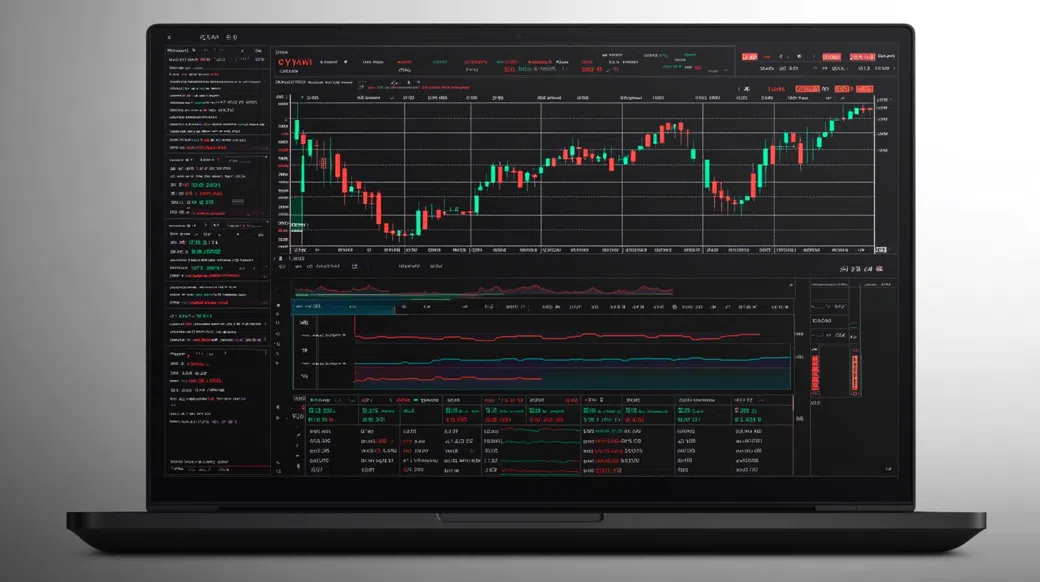
Built as a multi-asset CFD venue with high leverage, Clear Termélance suits traders who want fast access to FX and index risk without a heavyweight desktop stack—while accepting the trade-off of an offshore framework and lighter investor recourse. I ran a small Singapore-based test account, flipping between a Standard and a Raw-style tier to compare total cost on EUR/USD and US500. Coverage leans liquid: majors, headline indices, and the usual metals/energy list, with crypto CFDs for weekend screens. The WebTrader is chart-forward and responsive, and the mobile apps mirror most order controls. The key drawback is what you’d expect here: protections depend more on broker policy than hard regulator enforcement. Clear Termélance
Clear Termélance operated normally in my tests: onboarding, trading, and cash-out processes behaved like a functioning CFD broker rather than a “vanish-with-your-deposit” setup. That said, it sits in an offshore regime, so “safe” depends on your expectations around enforcement, compensation schemes, and how far you’re willing to rely on broker policy.
On the paperwork side, the provider presents itself under a Mauritius FSC registration footprint, which is common in the international CFD lane. Practically, that offshore status usually buys you higher leverage (up to 1:500 here) but can mean thinner statutory investor protections—no UK-style compensation backstop, and fewer formal pathways if a dispute drags out. I looked for the usual red flags during the test window: aggressive bonus pushing, “award” badges with no provenance, or pressure calls after a small deposit. None showed up in my inbox, and the dashboard kept risk warnings visible. Safeguards were present, too: KYC prompts were enforced before withdrawal, and the legal pages referenced segregated client funds language (still worth verifying with support for your entity). Remember: CFDs are leveraged products, and most retail accounts lose money—size positions like capital is at risk, because it is.
This broker is broadly open to traders across parts of Southeast Asia, MENA, and selected African markets, with eligibility confirmed at signup and again during KYC. The USA is not accepted, and sanctioned jurisdictions are blocked.
| Region | Status | Leverage Cap |
|---|---|---|
| Southeast Asia (selected) | Accepted | Up to 1:500 |
| MENA (selected) | Accepted | Up to 1:500 |
| Sub-Saharan Africa (selected) | Accepted | Up to 1:500 |
| Non-EU Europe (selected) | Accepted | Up to 1:200 |
| USA | Restricted | Not offered |
| Sanctioned jurisdictions | Restricted | Not offered |
Expect IP/location checks plus document-based verification; I saw prompts tighten once I moved from browsing to funding and then to withdrawal. Country lists can shift with compliance policy, so re-check eligibility before you commit capital.
For a macro-style workflow, the lineup is built around liquid CFD benchmarks rather than niche microcaps—good for traders who rotate between FX, equity indices, and gold as regimes change.
All of this is CFD exposure: you’re trading price movement with leverage, not taking delivery, not receiving on-chain crypto, and not gaining shareholder voting rights. Dividend adjustments (where applicable) are typically reflected as account credits/debits rather than real dividends.
Costs are structured in two lanes: a Standard account where you “pay in the spread,” and a Raw/ECN-style tier where spreads tighten and a per-lot commission applies. On balance, Clear Termélance fees look in line with offshore CFD peers—competitive enough for active FX/index traders, but not the absolute cheapest once swaps and conversion costs are included.
| Asset | Spread/Fee | Market Average Comparison |
|---|---|---|
| EUR/USD (Standard) | From 1.6 pips | Roughly average for offshore spread-only accounts |
| EUR/USD (Raw/ECN) | From 0.2 pips + $7 round-turn per lot | Competitive for commission pricing, especially at higher volume |
| Bitcoin (BTC/USD) | From $28 (variable) | In the typical range; widens in fast markets and weekends |
| Gold (XAU/USD) | From $0.35 | Slightly better than average during liquid hours |
| US500 Index | From 0.8 points | Near market norms for CFD index spreads |
Non-spread costs that matter: Overnight swap is the silent drag if you hold positions beyond the session; I checked the swap panel before holding XAU/USD into Asia and the rate was clearly displayed (still, it changes with funding conditions). Dormancy isn’t free either—after 90 days without activity, the platform applies a $10 monthly inactivity fee. Withdrawals themselves didn’t add an extra broker-side charge in my card test, but your bank/card issuer can still clip you on FX conversion if you fund in one currency and settle in another; crypto CFD financing over weekends can also be meaningfully higher than weekdays. Clear Termélance
From a trader’s seat, the WebTrader is the centre of gravity: stable sessions, quick instrument search, and enough order control to run disciplined risk. I stress-tested execution around the London–New York overlap on US500 with bracket orders attached; fills were consistent, with a small amount of slippage when volatility spiked, but no pattern of platform freezes. If you’re coming from MT4/MT5, the gap is mainly ecosystem—fewer third-party plug-ins and less automation flexibility—rather than missing basics.
The Clear Termélance app mirrors the web layout closely, which keeps the learning curve low when you switch screens mid-session. Clear Termélance login supported biometric unlock on my device, and order tickets included market, limit, and stop with SL/TP fields visible upfront. I also liked having deposits/withdrawals accessible in-app, plus push notifications for order status; the main quirk is that dense multi-indicator chart setups can feel cramped, so I kept mobile for monitoring and quick adjustments, not deep analysis.
Charting is practical: multi-timeframe views, common indicators (MA, RSI, MACD, Bollinger), and drawing tools that are sufficient for level-to-level planning. The research stack is lighter—an economic calendar and integrated headlines help you stay oriented, but it’s not a replacement for a dedicated macro terminal. Watchlists and alerts do the job, yet traders who rely on advanced strategy testing or cTrader-style depth tools may feel boxed in.
After entering email, phone, and a basic profile, the client portal pushed me toward AML checks before it would allow a withdrawal request. For KYC, I uploaded a government-issued photo ID and a proof of address (bank statement dated within three months); verification cleared the same business day in my case. The flow is cleanly segmented—personal details, trading profile, document upload—without burying the risk disclosures in tiny print.
One practical note: the base-currency choices leaned USD-centric in my portal, so multi-currency funding can introduce conversion cost even if the broker doesn’t label it a “fee.” If you plan to run systematic withdrawals, complete KYC early rather than waiting for the first cash-out request.
I tested support with a very trader-specific question: where to see swap/overnight rates before holding a position through rollover. Live chat connected in about three minutes and walked me to the instrument info panel, including a reminder that triple-swap days can apply depending on the market. I also sent an email asking whether card withdrawals require the deposit source to match the trading account name; the ticket reply landed in roughly nine hours and confirmed the name-matching rule.
Coverage ran on a 24/5 rhythm, which fits the FX week but leaves weekend gaps unless you’re using self-serve help for crypto CFDs. Language options looked region-dependent, and I didn’t see a universally staffed phone line—typical for this segment, where chat and email carry most of the load. Against peers, the quality is decent: clear answers, minimal script-reading, and no pushy upsell in my interactions.
If you’re considering an offshore CFD account for FX and index trading, start by checking live spreads during your usual session and confirm your country eligibility before depositing. A demo run can reveal a lot about execution, chart usability, and whether the fee model matches your holding time.
Visit Clear TermélanceYes, it can work for beginners who keep position sizes small and use the demo first. The interface is uncluttered, and the Standard account avoids commission math. The offshore setup and 1:500 leverage mean new traders should treat risk controls (SL/TP, margin awareness) as non-negotiable.
Yes, crypto is available as CFDs, including BTC/USD and ETH pairs in the tradable list. You’re speculating on price movement rather than owning coins on-chain. Expect wider spreads and higher weekend financing than you’d see in major FX pairs.
No, my Clear Termélance review experience showed a functioning broker workflow: KYC checks, tradable markets, and a processed withdrawal. The bigger consideration is jurisdiction—offshore registration can limit formal recourse compared with Tier‑1 regulation. Treat it as a higher-responsibility setup where you manage risk and cash exposure carefully.
No, Clear Termélance is not available to US residents. The signup flow flagged the USA as restricted. If you’re in the US, you’ll typically need a CFTC/NFA-regulated venue instead of an offshore CFD broker.
A Clear Termélance withdrawal is typically approved within 24–48 hours after KYC is complete. In my card test, funds reached the card rail in about three business days from the request time. Bank wires usually take longer (often 3–7 business days), while crypto transfers can land the same day depending on network conditions.
The Clear Termélance minimum deposit in my test was $200. That amount is enough to open a live Standard account and place small-size CFD trades. If you plan to trade actively on the Raw/ECN-style pricing, a larger buffer helps manage margin and drawdowns.
Yes, Clear Termélance has mobile apps for iOS and Android. The app supports charting, market/limit/stop orders, and account management, including deposits and withdrawals. It’s best used for monitoring and execution on the go, while heavy analysis is still easier on a larger screen.
Overall Score: 4.0/5
From an execution-and-UX standpoint, the platform does what an active CFD trader needs: liquid markets, workable spreads, and enough tooling to manage risk without fighting the interface. The Raw/ECN-style tier priced EUR/USD tightly once commission is included, and my card cash-out completed on a normal timeline. Where I stay cautious is structure—offshore registration shifts more responsibility onto the trader, especially around dispute escalation and leverage discipline. If that trade-off fits your playbook, Clear Termélance is worth a look, but remember CFDs are leveraged and capital is at risk.
Best for: active FX/index traders who want a web-first CFD setup and can self-manage leverage. Avoid if: you need Tier‑1 regulatory protections, deep research, or MT4/MT5-style automation ecosystems.