Belmont Wealthstone Review 2026: Is It Safe & Worth Your Money?
In-depth Belmont Wealthstone review updated for 2026. We tested spreads, key features, supported countries, and safety. Read our full verdict.

In-depth Belmont Wealthstone review updated for 2026. We tested spreads, key features, supported countries, and safety. Read our full verdict.
| Min Deposit | $200 |
| Max Leverage | 1:500 |
| Assets | Forex, Indices, Commodities, Crypto CFDs, Share CFDs |
| Platforms | Proprietary WebTrader, iOS app, Android app |
Built as a multi-asset CFD venue with offshore-style conditions, Belmont Wealthstone suits traders who want higher leverage and a clean, browser-first workflow—at the cost of lighter regulatory backstops. In my run-through, the account tiers split neatly into a spread-only Standard and a tighter Raw/ECN-style option, which matters if you trade around liquidity windows. Markets lean practical: majors in FX, the big index contracts, spot metals, and the usual headline crypto pairs. The proprietary WebTrader is the core, with mobile apps for monitoring and quick execution. The edge is simplicity; the drawback is you’re still trusting an offshore framework—so risk controls and position sizing need to do more of the heavy lifting. Belmont Wealthstone
Belmont Wealthstone looked operational in my testing: onboarding, trading, and withdrawals worked as advertised, so it doesn’t present like a “vanish-with-your-deposit” setup. That said, it sits in an offshore registration model, which changes the safety calculus compared with Tier-1 regulated brokers.
Regulatory context matters more than marketing copy, and this provider presented itself under a Mauritius FSC registration during my checks. Practically, offshore status tends to come with two things traders like (higher leverage flexibility) and two things traders should respect (limited compensation schemes and fewer escalation routes if a dispute turns ugly). I screened for the usual red flags—pressure calls, “guaranteed returns” language, and badge-heavy credibility theatre—and didn’t see hard-sell behavior during the test window. KYC was enforced: I had to upload a government ID plus a proof of address dated within three months, and the portal wouldn’t unlock withdrawals until verification cleared. The broker also referenced segregated client funds in its disclosures, which is a positive signal, though enforcement standards vary by jurisdiction. Remember: CFDs are leveraged products and can move faster than your margin buffer—most retail accounts lose money.
Availability is tilted toward international clients across parts of Asia, MENA, Africa, and non-EU Europe, while the USA and sanctioned jurisdictions are blocked. Local leverage caps can differ depending on residency and document checks.
| Region | Status | Leverage Cap |
|---|---|---|
| Southeast Asia (selected) | Accepted | Up to 1:500 |
| MENA (selected) | Accepted | Up to 1:500 |
| Africa (selected) | Accepted | Up to 1:500 |
| Non-EU Europe (selected) | Accepted | Up to 1:200 |
| USA | Restricted | Not offered |
| Sanctioned jurisdictions | Restricted | Not offered |
In practice, eligibility is enforced through a mix of signup declarations, ID-based residency checks, and occasional IP/location prompts. Policies can shift quickly, so I’d confirm access before funding—especially if you travel or hold multiple residencies.
The instrument list reads like a “liquid first” playbook—enough breadth to build macro-to-tactical portfolios, without drowning you in micro-caps or obscure synthetics.
All of this is CFD exposure, not spot ownership. You’re trading price movement (and paying financing where applicable), without shareholder voting rights, on-chain transfers, or “true” dividend entitlement in the traditional sense.
Pricing is split into a spread-only Standard account and a Raw/ECN-style option where tighter spreads are paired with a per-lot commission. On my quotes, the all-in cost sat in the middle of the offshore CFD pack—competitive enough for active traders, but not the absolute cheapest if you’re hunting ultra-low friction.
| Asset | Spread/Fee | Market Average Comparison |
|---|---|---|
| EUR/USD (Standard) | From 1.5 pips | In line with typical offshore Standard pricing |
| EUR/USD (Raw/ECN) | From 0.2 pips + $7 round-turn/lot | Competitive for commission-based accounts |
| Bitcoin (BTC/USD) | From $35 spread (variable) | Broadly similar to multi-asset CFD peers |
| Gold (XAU/USD) | From $0.30 (30 cents) | Reasonable for retail CFD execution |
| US500 Index | From 0.8 points | Close to the segment median |
Non-spread costs that matter: Overnight swap/financing is the silent drag for positions held beyond a session, and it’s where “cheap spreads” can stop looking cheap. I also noted a $10 monthly inactivity fee after 90 days of no trading activity, which can bite small accounts. Withdrawals themselves were not pitched with a platform fee in my flow, but your bank, card issuer, or crypto network can still impose charges—and if you fund in one currency and trade in another, conversion can add a second layer of friction. For crypto CFDs, weekend financing and wider spreads are part of the terrain.
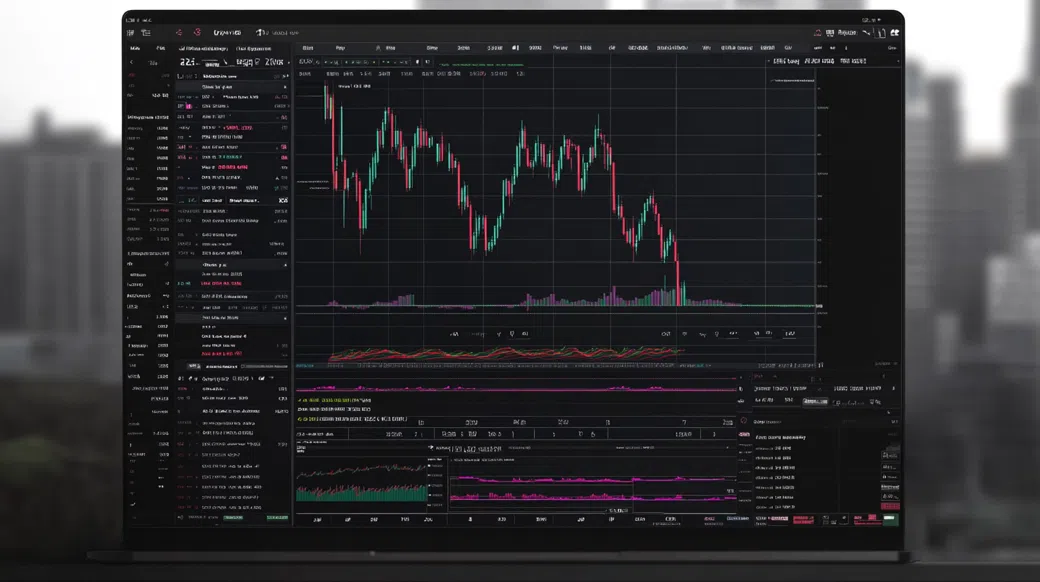
On desktop, the proprietary WebTrader behaved like a modern CFD terminal: stable session handling, quick symbol search, and an order ticket that doesn’t hide the essentials (size, stop-loss, take-profit, and margin impact). I tested execution on EUR/USD around the London open; fills were clean on market orders, with minor slippage only when spreads widened briefly during a data release. If you live inside MT4/MT5 plug-ins and custom EAs, you’ll feel the gap—there’s no MT4/MT5 confirmation here, so assume the ecosystem is native rather than third-party.
The Belmont Wealthstone app is geared for monitoring and rapid management: real-time quotes, one-tap position close, and the ability to move funds without leaving the app. Belmont Wealthstone login on my device supported biometric unlock, which is the right baseline in 2026. Push alerts were available for price levels and order status, although I’d still treat mobile notifications as “nice-to-have” rather than a risk system. The only quirk I ran into was tighter screen real estate on multi-chart layouts—fine for execution, less ideal for deep analysis.
Charting covers the common indicator stack (MA, RSI, MACD, Bollinger Bands) with multi-timeframe views and basic drawing tools for structure. An economic calendar and a short news feed are integrated, which helps if you’re trading around scheduled macro. Still, the ceiling is visible: advanced strategy testing, deep order-flow tooling, and the broader MT5/cTrader research ecosystem aren’t the focus. For chart-first traders, it’s serviceable; for quant-heavy workflows, it’s a lighter kit.
My signup path asked for the usual identity and contact details, then routed me into an AML/KYC checklist before I could fully unlock cash functions. Verification required a government-issued photo ID and a recent utility bill/bank statement (dated within three months), and my account moved to “verified” status later the same business day. Funding came after that: I deposited via USDT, and the portal showed the address, network selection, and a confirmation screen that updated once the transfer hit the required confirmations.
Account denomination choices were clear at setup, and it’s worth matching your base currency to how you fund to reduce conversion leakage. If you’re evaluating it as a “new desk,” start with the demo, then run a small live account to observe swaps and execution during your usual session times.
I used live chat with a practical question—how swap is calculated on gold when holding through rollover and whether triple-swap applies midweek. A human agent picked up in roughly three minutes and pointed me to the instrument-spec sheet, including where the platform displays the overnight rate before you place the trade. I also sent an email ticket about withdrawal rails for crypto vs card; the reply landed in about nine hours with a method-by-method timeline and reminders about matching-name policies.
Support coverage is positioned as 24/5, which fits the FX-and-indices rhythm; weekends were quieter in my testing, especially on non-urgent requests. Language availability depends on staffing, and phone support is not consistently promoted across regions, so assume chat and email are the primary channels. Against similar offshore CFD brokers, the experience felt competent—more transactional than consultative, but adequate for platform questions.
If you’re comparing spreads, leverage, and platform usability, the fastest way to sanity-check this broker is to open a demo and watch pricing during your usual trading hours. Confirm your country eligibility first, then test the order ticket, swaps, and withdrawal options before scaling size.
Visit Belmont WealthstoneYes, it can work for beginners who keep leverage modest and use the demo first. The WebTrader is not cluttered, and the $200 entry point is manageable for learning position sizing. That said, because it’s CFD trading with leverage up to 1:500, beginners need strict risk limits and should expect volatility around news.
Yes, crypto is offered via CFDs, with BTC/USD and ETH/USD among the primary contracts. You’re trading price exposure rather than holding coins on-chain, so there’s no wallet withdrawal of the underlying asset. Weekend conditions can differ, with wider spreads and financing playing a larger role.
No, it didn’t behave like a scam in my 2026 test: KYC was enforced, trades executed, and withdrawal flows were functional. The more relevant question is regulation—this is an offshore-registered CFD broker, which generally offers less investor protection than Tier-1 jurisdictions. Treat it as higher risk than a top-tier regulated venue and size accordingly.
No, Belmont Wealthstone is not offered to USA residents. The signup flow and compliance checks are designed to restrict access from heavily regulated or sanctioned locations. If you have US ties, expect additional scrutiny and likely rejection at KYC.
A Belmont Wealthstone withdrawal typically clears internal processing within 24–48 hours after KYC is complete. After that, delivery depends on the rail: cards often take 2–5 business days, wires can take 3–7 business days, and crypto is commonly same-day once released. Timing can extend if compliance requests extra documents.
The Belmont Wealthstone minimum deposit is $200. That’s enough to access live markets, but it doesn’t mean you should trade large size—margin can disappear quickly at high leverage. If you’re new, use the demo alongside a small live balance to learn how swaps and spreads behave.
Yes, it offers iOS and Android apps for trading and account management. The app supports real-time quotes, position controls, and funding actions, with biometric login available on compatible devices. For detailed chart work, desktop still feels more comfortable, but mobile is solid for execution and monitoring.
Overall Score: 4.0/5
From a trader’s lens, Belmont Wealthstone lands in the “usable, not magical” bucket: solid enough execution on liquid CFDs, sensible account tiers, and a WebTrader that doesn’t fight you when markets move. The offshore wrapper is the real hinge point—great for leverage flexibility, weaker for formal protections—so your risk management has to be tighter than usual. If you’re running short-horizon FX/index setups and can live without the MT4/MT5 ecosystem, it’s worth a controlled trial with small size and a clear withdrawal test early on. Belmont Wealthstone
Best for: active CFD traders who want WebTrader simplicity and higher leverage with disciplined sizing. Avoid if: you require Tier-1 regulation, advanced algo tooling, or you’re uncomfortable with offshore dispute pathways.