Attivonda Alternatives 2026: Best Trading Platforms
Explore Attivonda alternatives for 2026. Compare regulated brokers, platforms, costs, and safety checks to choose a reliable trading option.

Explore Attivonda alternatives for 2026. Compare regulated brokers, platforms, costs, and safety checks to choose a reliable trading option.
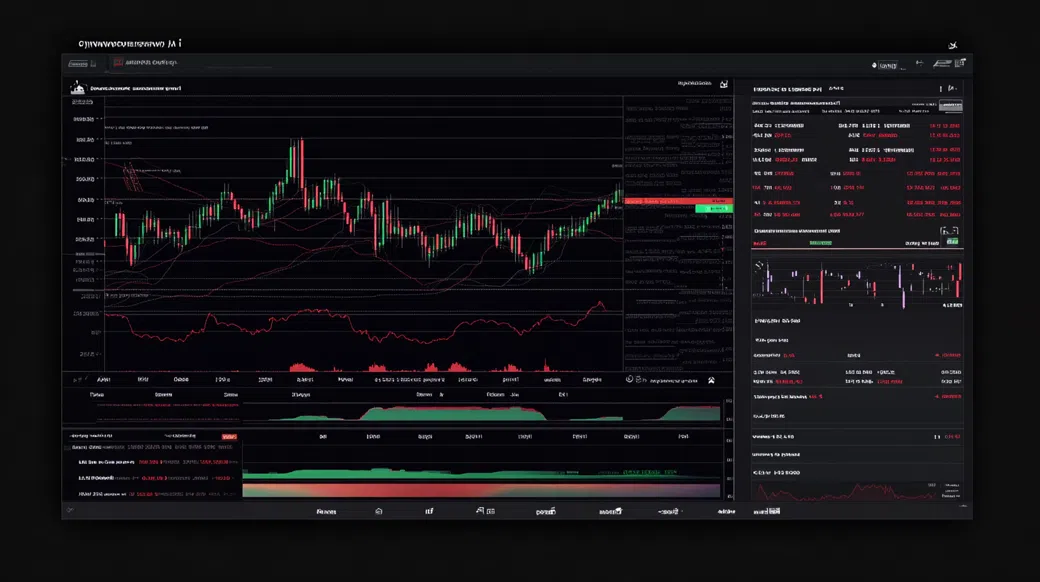
From what I can verify from publicly available information, Attivonda is typically presented as an online trading venue geared toward leveraged products—most commonly forex and CFDs—delivered via a browser-based interface. In 2026, traders comparing Attivonda alternatives tend to be less concerned with marketing features and more focused on hard variables: regulation, execution quality, transparent pricing, and whether the platform supports the workflows real traders use (multi-chart layouts, risk controls, API/automation, and robust reporting). If a broker can’t clearly show who regulates it, how client money is safeguarded, and how orders are routed, that’s usually the starting point for a search for reliable substitutes.
My bias as a former derivatives trader is simple: charts over chatter, and risk management over incentives. If you’re in the US/EU, the bar is higher—product availability, leverage caps, and disclosures are tighter—so “platform convenience” is rarely enough. Below is a practical framework to evaluate alternatives to the Attivonda trading platform and a shortlist of regulated brokers that global traders commonly use as benchmarks.
Disclaimer: This article is for informational purposes only and does not constitute investment advice. Trading leveraged products carries a high level of risk.
Based on baseline industry assumptions where broker-specific disclosures are limited, Attivonda can be viewed as a CFD-style brokerage offering access primarily to forex and CFDs, operated via a proprietary web trader (basic). Where a broker’s licensing footprint is not clearly verifiable from primary sources (regulator registers, legal entity disclosures, audited statements), the safest default assumption for comparison is Unregulated or Offshore (High Risk). That doesn’t automatically prove wrongdoing, but it materially changes your risk: dispute resolution, negative balance protections, product governance, and client-fund segregation rules can be weaker or inconsistently enforced.
Practically, that means the user experience often centers on quick account opening, browser access, and a narrow set of leveraged instruments. For traders, the decision to consider competitors to Attivonda is usually driven by whether the broker’s operating standards match the trader’s needs—especially if position sizing, leverage, or overnight financing costs are meaningful to performance.
Under the baseline “basic web trader” profile, expect a browser platform with watchlists, standard chart types, common indicators, and one-click trading. These platforms can be fine for monitoring and simple discretionary execution, but they tend to fall short for systematic workflows: limited backtesting, fewer advanced order types (e.g., OCO, server-side trailing stops), and less transparency around execution statistics. If you are used to MT4/MT5, TradingView-integrated brokers, or institutional-style ticketing, this is where platforms like Attivonda often feel constrained—especially during volatile sessions when platform stability and order handling matter most.
Where fee schedules are not clearly published and consistently enforced, it’s prudent to model costs using conservative industry defaults. A typical baseline for CFD brokers is floating spreads from ~2.0 pips on major FX pairs (wider in stressed markets), plus overnight financing/swaps on leveraged positions. You should also assume the possibility of non-trading fees (inactivity, withdrawals, FX conversion) unless explicitly waived in the legal documents. For traders comparing regulated options vs Attivonda, the key is not just spreads—it’s the full cost stack and whether price formation and slippage behavior are disclosed in a way you can audit.
In my experience, traders don’t switch because of a single bad fill; they switch when small frictions become structural. The most common trigger for searching Attivonda alternatives (or brokers similar to Attivonda) is a mismatch between the trader’s risk controls and what the broker can reliably offer—especially around regulation, transparency, and platform depth.
Choosing alternatives to the Attivonda trading platform is less about finding the flashiest interface and more about building a repeatable due-diligence checklist. For US/EU readers, regulatory coverage and product constraints can differ sharply by jurisdiction, so always evaluate the specific legal entity you will onboard with—not just the brand name.
Start with the regulator register: FCA (UK), CySEC (EU), ASIC (AU), MAS (SG), CFTC/NFA (US—more limited retail FX/CFD access), IIROC/CIRO (Canada), and similar tier-1 bodies. Verify the license number, legal entity name, and permitted activities. Then check client-money rules: segregation, leverage limits, negative balance protection (where applicable), and complaint handling. If the broker is offshore, treat it as higher-risk and size exposure accordingly—this is often the dividing line between Attivonda alternatives that are “usable” versus “robust.”
Map instruments to your strategy: spot FX/CFDs, indices, commodities, rates, options, stocks/ETFs, or futures. If your edge relies on session-specific behavior (e.g., London open FX, US cash equity hours), confirm trading hours, contract specs, and whether products are CFDs or exchange-traded. Traders moving from brokers similar to Attivonda often realize they need better market breadth—or fewer, higher-quality products with tighter governance.
Model total cost: average spread (not minimum), commissions, swaps/financing, and common non-trading fees. If a broker advertises “from 0.0 pips,” check whether that’s paired with commission and whether it holds outside peak liquidity. Also verify how stop orders are treated in gaps. A good Attivonda alternative should make it easy to estimate effective cost per round trip and to export statements for review.
Platform choice should match workflow: MT4/MT5 for EA ecosystems, TradingView for chart-first discretionary traders, or proprietary platforms with strong analytics. Look for server-side risk controls, stable mobile execution, and clear order tickets. Execution quality is harder: review disclosures on slippage, order rejections, and whether the broker is principal (market maker) or agency-style. If details are vague, run a small, time-boxed live test with strict limits before scaling.
Support matters most when something breaks: withdrawals, KYC, corporate actions, or platform outages. Test response times pre-funding. Check whether education is balanced (risk warnings, not just upsell). For 2026, good UX also includes transparent reporting (tax lots where relevant, financing breakdowns, execution timestamps) and clean integrations. These are the practical differentiators versus platforms like Attivonda.
Using the baseline assumptions, Attivonda’s core offering aligns with forex and CFDs delivered through a basic web platform. That setup can suit light, short-term speculation, but it tends to leave active traders exposed to three common issues: (1) weaker transparency around execution and pricing, (2) higher all-in costs when spreads widen and financing accumulates, and (3) limited tooling for disciplined risk management (advanced order logic, automation, and robust analytics). If you’re comparing Attivonda alternatives for FX/CFDs, focus on the boring stuff: entity regulation, margin policy clarity, and how the broker behaves during volatility (news spikes, weekend gaps, index rebalances). Those are the moments that define real outcomes, not the marketing spreads.
Also differentiate between “best-case” and “typical” spreads. A floating spread model that starts around 2.0 pips (a reasonable conservative baseline when specifics are missing) can be meaningfully more expensive than regulated brokers offering commission-based pricing and deeper liquidity relationships. For strategies with frequent entries—scalping, intraday mean reversion, event-driven trades—the difference in effective cost can swamp signal quality over a quarter.
Stock/ETF access may be limited or unavailable if the platform is primarily a CFD venue. If equities are offered, they are often CFDs on stocks/ETFs rather than direct market access—meaning you typically don’t own the underlying shares, and dividends/adjustments are synthetic. For US/EU investors seeking long-horizon exposure, brokers similar to Attivonda may not be the best fit. A regulated multi-asset broker can provide clearer custody arrangements, corporate action handling, and more transparent fee structures (including FX conversion and market data).
If your goal is portfolio building rather than short-term leverage, consider a platform that supports real stocks/ETFs (where available in your jurisdiction) with strong investor protections. That’s often the most practical reason traders move to best Attivonda alternatives 2026 lists: they want a single home for both trading and investing, without crossing product types that change risk in non-obvious ways.
Crypto availability also may be limited or structured as CFDs, depending on jurisdiction and the broker’s regulatory permissions. In the EU/UK, product rules and marketing restrictions can make crypto CFDs more constrained; in the US, retail access via CFDs is generally not the standard route. If crypto is important to your strategy, verify whether you are trading spot (with custody) versus derivatives/CFDs (with financing and counterparty risk). Many competitors to Attivonda either avoid crypto entirely under stricter entities or provide access through tightly governed offerings with clearer risk disclosures.
Either way, treat crypto as a separate risk bucket: higher volatility, weekend gaps (for CFD pricing), and greater operational complexity. For traders migrating from platforms like Attivonda, the safer posture is to keep crypto exposure on venues that are explicitly regulated for it in your jurisdiction—or to avoid leverage unless you can tolerate rapid drawdowns.
Regulation: IG operates through multiple regulated entities (commonly including FCA in the UK and other tier-1/tier-2 regulators depending on region). Always verify the specific entity you onboard with.
Markets: Broad multi-asset offering typically including FX, indices, commodities, shares/ETFs (often via CFDs and, in some regions, dealing/investing accounts).
Fees: Varies by instrument and entity; generally competitive for liquid markets, with transparent schedules. Financing applies on leveraged positions.
Platform: Strong proprietary web/mobile platforms; often supports advanced charting and risk tools, and may integrate with third-party tools depending on region.
Best For: Traders who want a large, regulated venue and a mature platform—one of the more conservative Attivonda alternatives for global users.
Regulation: Regulated across multiple jurisdictions (commonly including Danish FSA/European regulators and others via local entities). Confirm entity-level protections.
Markets: Multi-asset access often spanning FX, CFDs, stocks, ETFs, bonds, and listed derivatives depending on jurisdiction.
Fees: Tiered pricing is common; costs depend on account level, market, and product type. Financing/margin rates matter for leveraged trading.
Platform: SaxoTraderGO/SaxoTraderPRO are feature-rich with strong reporting and multi-asset workflow.
Best For: Cross-asset traders and investors wanting institutional-style tooling—arguably a top substitute for Attivonda if you value analytics and reporting.
Regulation: Regulated in major jurisdictions (e.g., SEC/FINRA in the US for securities, plus other regulators via global entities). Entity choice matters for product access.
Markets: Very broad global market access: stocks/ETFs, options, futures, FX, bonds, funds—product set varies by region and permissions.
Fees: Generally known for low, transparent commissions on many exchange-traded products; margin/financing rates and data fees can apply.
Platform: Trader Workstation (TWS), web, and mobile; strong routing tools, analytics, and API ecosystem.
Best For: Active traders and multi-asset investors who need global breadth and robust infrastructure—one of the most credible platforms like Attivonda for those moving beyond basic CFDs.
Regulation: Commonly regulated by FCA (UK) and other regional regulators through local entities; verify your onboarding entity.
Markets: Strong CFD suite (FX, indices, commodities, shares) and, in some regions, investing services.
Fees: Competitive pricing on major FX and indices; fee model varies (spread-only or spread+commission for some account types/regions). Financing applies on CFDs.
Platform: Next Generation platform is highly regarded for charting, layout control, and pattern/price projection tools; mobile is strong.
Best For: Technical, chart-driven CFD traders seeking a regulated broker similar to Attivonda but with deeper platform functionality.
Regulation: Operates through regulated entities (often including CFTC/NFA in the US for retail FX and FCA in the UK, among others). Confirm product scope by region.
Markets: Primarily FX and CFDs (availability depends on jurisdiction), with a focus on FX execution and data.
Fees: Pricing depends on account type and region (spread-only or commission-style). Financing/swaps apply on leveraged holdings.
Platform: Proprietary platforms plus integrations (availability varies); generally stable for FX-focused trading.
Best For: FX traders who prioritize regulation and execution transparency—often considered among safer Attivonda alternatives for currency-only workflows.
Regulation: Operates regulated entities in Europe/UK (commonly including KNF in Poland and FCA in the UK, among others). Verify local entity terms.
Markets: Mix of CFDs (FX, indices, commodities, shares) and, in some regions, access to real stocks/ETFs.
Fees: CFD costs typically embedded in spreads; investing accounts may have different pricing schedules, plus FX conversion where applicable.
Platform: xStation is user-friendly with solid charting and analytics; suitable for discretionary traders.
Best For: EU/UK-based traders who want a streamlined platform and a regulated step-up from alternatives to the Attivonda trading platform.
| Platform | Regulation | Main Markets | Typical Costs | Best For |
|---|---|---|---|---|
| IG | Multiple regulated entities (commonly FCA + others by region) | FX, CFDs, shares/ETFs (often CFDs), indices, commodities | Instrument-dependent; generally competitive; financing on leverage | Regulation-first traders wanting a mature multi-asset venue |
| Saxo | Multiple regulated entities (commonly EU/Danish FSA + others) | Multi-asset: FX, stocks/ETFs, bonds, listed derivatives (region-dependent) | Tiered pricing; commissions/spreads vary; margin financing applies | Cross-asset traders needing pro-grade analytics and reporting |
| Interactive Brokers | Major-jurisdiction regulation (e.g., SEC/FINRA + global entities) | Global stocks/ETFs, options, futures, FX, bonds | Low commissions on many products; margin/data fees may apply | Advanced traders seeking global breadth, routing tools, and APIs |
| CMC Markets | Multiple regulated entities (commonly FCA + others) | CFDs: FX, indices, commodities, shares | Spread-only or spread+commission (region/account-dependent); financing on CFDs | Chart-focused CFD traders needing a powerful proprietary platform |
| OANDA | Regulated entities (commonly CFTC/NFA US, FCA UK + others) | Primarily FX (and CFDs where permitted) | Spread-only or commission-style (region-dependent); financing on leverage | FX specialists prioritizing regulatory oversight and execution stability |
| XTB | Regulated entities (commonly KNF, FCA + others) | CFDs plus (in some regions) real stocks/ETFs | Spreads on CFDs; investing fees/FX conversion may apply | EU/UK traders wanting a clean platform and broad retail market access |
If you’re moving capital from Attivonda to a regulated venue, treat it like an operational project. The goal is to reduce avoidable risk: custody issues, documentation errors, and strategy disruption. This is the practical checklist I’d use when rotating to brokers similar to Attivonda but with stronger guardrails.
The “best” choice depends on what you trade and where you’re regulated, but for many US/EU-focused traders, the strongest Attivonda alternatives tend to be regulated multi-asset venues with transparent pricing and robust tooling. If you want broad exchange access and advanced execution controls, Interactive Brokers is often a top benchmark. If you’re primarily a CFD/FX trader who values charting and a refined proprietary platform, CMC Markets and IG are common shortlists. Use a small live pilot to validate execution and total cost before committing meaningful size.
Safety is primarily a function of verifiable regulation, legal-entity transparency, and client-money protections. Where those details cannot be confirmed from primary sources, the conservative assumption is that it may be unregulated or offshore (high risk). That’s a key reason traders look for platforms like Attivonda but under tier-1 regulators, where disclosures, leverage rules, and complaints processes are clearer.
Using baseline assumptions, Attivonda is primarily positioned around forex and CFDs via a web platform, so direct exchange-traded stocks/ETFs or futures access may be limited or unavailable. If stocks are offered, they may be stock CFDs rather than ownership of the underlying shares. Crypto access, if present, is often via derivatives/CFDs and may be restricted by jurisdiction. If you need exchange-traded futures or broad stock market access, consider regulated alternatives to the Attivonda trading platform such as Interactive Brokers or Saxo, depending on your country.
Before switching, confirm (1) the new broker’s regulator and legal entity, (2) client-money segregation and negative balance protection terms where applicable, (3) total costs including spreads/commissions and financing, (4) product specs and margin rules, and (5) platform fit—order types, stability, reporting, and integrations. Also export your full account history from Attivonda for tax and performance records, and test withdrawals early to reduce operational surprises.
If your priority is reliability rather than promos, the best Attivonda alternatives in 2026 are the ones that make regulation, pricing, and execution auditable. Under conservative baseline assumptions, Attivonda looks like a basic web-first CFD venue with limited functionality compared to top-tier brokers—fine for simple access, but less compelling for serious risk-managed trading. Start by picking a regulated entity you can verify, then validate platform fit with a small live test. In trading, the edge isn’t just your strategy; it’s also the plumbing.