Anker Vermothal Trading Platform Alternatives 2026
A risk-aware guide to Anker Vermothal alternatives in 2026: compare regulated brokers, platform tools, FX/CFD costs, and safe migration steps.

A risk-aware guide to Anker Vermothal alternatives in 2026: compare regulated brokers, platform tools, FX/CFD costs, and safe migration steps.
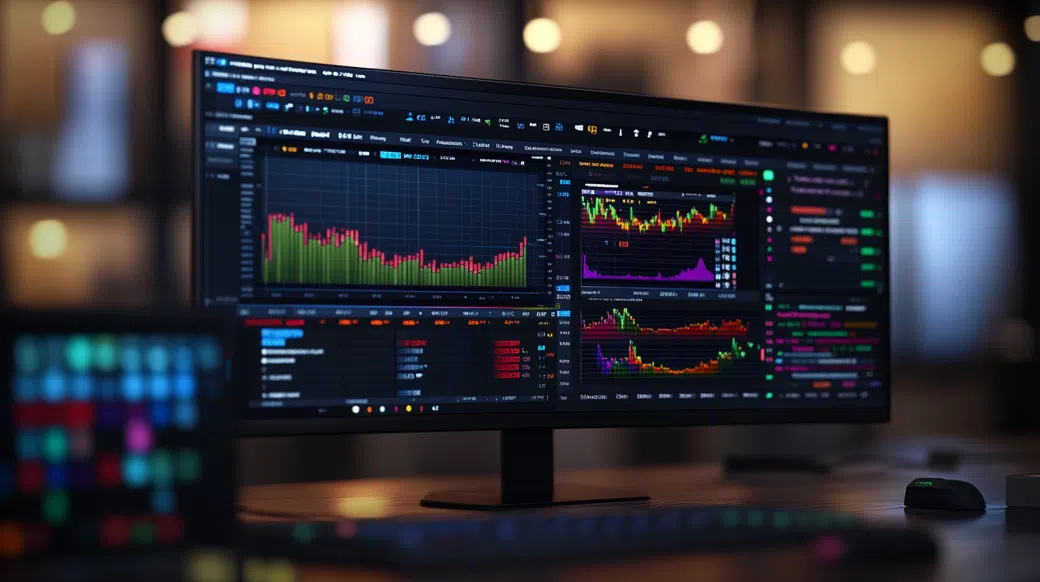
Leverage is a loud amplifier: it boosts wins, and it accelerates mistakes. That’s the lens I use when readers ask about offshore CFD venues and why the search for Anker Vermothal alternatives keeps trending into 2026. Based on what’s typically visible with brokers in this category, Anker Vermothal presents as an offshore, CFD-first setup operating under a Seychelles-style framework, built around a proprietary WebTrader plus mobile apps. The menu usually centers on FX pairs, major indices, a handful of commodities, and crypto CFDs—efficient for quick directional bets, less ideal for investors who want transparent venue rules, deep reporting, or broad market access.
For US and EU-focused traders, the friction point is rarely “charts vs no charts.” It’s the total trading environment: how execution behaves under volatility, whether negative balance protection exists, how margin calls are handled, and what recourse you have if there’s a dispute. If your trading is systematic, platform limitations can become a real cost (not just an inconvenience). If you’re discretionary, the cost is often hidden in spreads, slippage, and financing. This guide to alternatives to the Anker Vermothal trading platform maps those trade-offs, highlights regulated substitutes, and outlines a clean migration process. For reference context only, you can review Anker Vermothal directly while you compare features and risk controls across providers.
Disclaimer: This article is for informational purposes only and does not constitute investment advice. CFDs and other leveraged products carry a high risk of loss and may not be suitable for all investors.
From a market-structure perspective, Anker Vermothal looks like the familiar offshore CFD model: a retail-facing broker offering leveraged exposure via CFDs rather than direct market access. That’s not inherently unusable, but it changes the question set—execution model, conflict management, and client-money safeguards matter more than glossy marketing. The typical product shelf here is FX and index CFDs first, with commodities and crypto CFDs bolted on for variety. For most US residents, access is commonly restricted, and EU traders should pay close attention to protections that are standard under FCA/ASIC/CySEC regimes but inconsistent offshore.
On platform design, the pattern is a proprietary WebTrader aimed at “good enough” charting and order entry: multiple timeframes, a set of common indicators, and basic drawing tools for trendlines and levels. You’ll usually get market/limit/stop orders and a simple positions tab with margin and P&L. Mobile apps (iOS/Android) tend to mirror the web layout—handy for monitoring, less comfortable for multi-chart workflows. Where platforms like Anker Vermothal can fall short is depth: fewer advanced order types, limited strategy automation, and lighter trade analytics compared with MT4/MT5/cTrader ecosystems or true multi-asset terminals.
Cost-wise, offshore CFD brokers commonly advertise “tight” pricing, then deliver a wider live trading reality once volatility hits. A reasonable working assumption for a Standard-style account is EUR/USD around ~2.0 pips under normal conditions. If a Raw/ECN-style tier exists in this segment, it’s typically framed as ~0.0–0.4 pips plus a commission in the $6–$8 round-turn zone per standard lot. Add swap/overnight financing for holds beyond the session, and watch for non-trading charges (withdrawal handling or inactivity rules). These fee mechanics are exactly why traders comparing competitors to Anker Vermothal should model costs across their own monthly volume, not just read the headline spread.
When your P&L starts disagreeing with your backtest, the broker environment is a prime suspect. That’s the practical moment most people begin scanning Anker Vermothal alternatives—not out of boredom, but because execution, funding, or platform constraints begin to show up as measurable drag. In my own derivatives trading days, the tell was consistency: if the same setup produces different outcomes across venues, you’re not just trading the market—you’re trading the plumbing. That’s especially true with CFDs, where leverage magnifies every basis point of spread, slippage, and financing.
Think of broker selection as fit-to-strategy with a risk budget attached. The right venue for a macro swing trader holding for days is not the same as the right venue for a scalper living inside the spread. If you’re comparing regulated options vs Anker Vermothal, score each candidate on protection, cost-of-trade, execution quality, and how well the platform supports your workflow—then only fund what you can operationally monitor.
Start with the regulator and the legal entity you’ll actually onboard to. FCA, ASIC, CySEC, and NFA oversight generally implies stricter conduct rules, clearer dispute paths, and expectations around segregated client funds. For UK clients under FCA firms, the FSCS can cover eligible claims up to £85,000; in Cyprus, the ICF can cover up to €20,000 (eligibility and conditions apply). These aren’t trading edge—these are “what happens if something breaks” controls.
Match instruments to intent. If you only need FX and index CFDs, an FX/CFD specialist can be plenty. If you want to own real stocks/ETFs (with shareholder rights) or trade listed options/futures, you’re in multi-asset territory. The gap matters because CFDs on equities are a synthetic exposure: you’re not on an exchange, and corporate actions, financing, and trading halts can be handled differently than cash equities.
Price your strategy in “round-turn reality”: spread + commissions + expected slippage. A 0.2 pip headline on a Raw account can still be expensive if commission is high or fills deteriorate during volatile sessions. Don’t ignore swap/overnight fees either—carry can quietly dominate outcomes for position trades. Inactivity and withdrawal fees are also operational costs; they matter most for investors who trade less frequently but keep balances parked.
Platform isn’t aesthetics; it’s your execution interface. MT4/MT5 and cTrader support deeper automation, broader third-party tools, and more robust order handling than many proprietary WebTraders. Execution model matters too: market maker vs STP/ECN vs DMA influences how orders are routed and how slippage shows up. If you’re evaluating platforms like Anker Vermothal against regulated brokers, test with small size during active hours and watch for latency spikes around data releases.
Good support is measurable: response time, resolution quality, and clear documentation around margin, corporate actions, and funding. EU/UK traders should also look for negative balance protection where applicable. Education matters less than people think—until you need precise explanations of margin calls, swap calculations, or why a stop executed through a gap. Mobile parity is a plus, but serious analysis still benefits from desktop-grade charting and reporting.
FX and index CFDs are the natural habitat for offshore venues, and Anker Vermothal likely follows that playbook: roughly 30–50 FX pairs, about 8–15 indices, plus a small commodities list. Leverage can run high—commonly around 1:500—which is precisely why execution and risk controls matter. A ~2.0 pip EUR/USD spread on a Standard tier is workable for swing trading, but it’s punitive for high-turnover strategies where pips are your unit of oxygen. For tighter pricing and broader platform choice, FX/CFD specialists like Pepperstone or IC Markets are typically better aligned, offering MT4/MT5/cTrader stacks and Raw-style pricing structures (spreads can compress, with commissions explicit). The key difference isn’t just the quote—it’s how fills behave when liquidity thins and slippage starts writing your P&L.
If your plan includes building exposure to US or European equities, you want clarity on ownership. Offshore CFD brokers often provide equities as CFDs (price exposure only), which means no shareholder rights and a different treatment of dividends, corporate actions, and market access. That’s where top substitutes for Anker Vermothal shift to multi-asset brokers. Interactive Brokers is the benchmark for breadth—global stocks and ETFs, options, futures, and FX—built for serious reporting and routing. Saxo Bank is another strong option for investors who want a single account for equities, ETFs, listed derivatives, and margin products with a more curated UX. If you’re comparing Anker Vermothal alternatives for a long-term allocation, the move from CFD-only equities to real cash equities is not a minor upgrade; it’s a structural change in what you actually own.
Crypto at many CFD brokers is usually crypto CFDs: you’re trading a derivative, not moving coins on-chain. That can be useful for hedging or short exposure, but it’s not the same as custody and transferability. Anker Vermothal likely offers around 10–30 crypto CFD markets, which is plenty for directional trades but still sits inside the broker’s margin and liquidation rules. For regulated CFD access to crypto (where permitted), IG and Plus500 are commonly used by EU/UK clients who want a simpler interface and clear risk disclosures, though product availability varies by region. Bottom line: if your objective is “trade volatility,” CFDs can do that; if your objective is “own and transfer,” a CFD venue is the wrong tool regardless of brand.
Regulation: SEC/FINRA (US), FCA (UK), IIROC (Canada)
Markets: Stocks, ETFs, options, futures, bonds, FX, funds (product access varies by region)
Fees: FX pricing is typically tight with commissions; equities/options pricing varies by market and routing
Platform: Trader Workstation (TWS), IBKR Desktop/mobile, Client Portal, API
Best For: Multi-asset traders who want listed markets and deep reporting
Regulation: FCA (UK), ASIC (Australia), CySEC (Cyprus), DFSA (Dubai)
Markets: FX and CFDs (indices, commodities; availability varies)
Fees: Standard spreads commonly around ~1.0+ pip on EUR/USD; Raw-style pricing often ~0.0–0.3 pips + commission
Platform: MT4, MT5, cTrader (offering depends on entity/region)
Best For: Systematic FX traders running MT4/MT5 or cTrader
Regulation: FCA (UK), MAS (Singapore), DFSA (Dubai)
Markets: Stocks, ETFs, bonds, options, futures, FX, CFDs
Fees: Pricing varies by tier and market; FX spreads are often competitive with transparent schedule-based fees
Platform: SaxoTraderGO, SaxoTraderPRO
Best For: Portfolio builders who want strong research tools and broad market access
Regulation: FCA (UK), ASIC (Australia), MAS (Singapore)
Markets: CFDs (FX, indices, commodities, shares), spread betting (UK/IE), crypto CFDs where permitted
Fees: Spreads vary by instrument; major FX pairs often price competitively on spread-only accounts
Platform: IG Web Platform, mobile app; MT4 support in select regions
Best For: Active CFD traders who value risk tools and market coverage
Regulation: ASIC (Australia), CySEC (Cyprus)
Markets: FX and CFDs (indices, commodities; availability varies)
Fees: Raw accounts often quote ~0.0–0.3 pips on EUR/USD + commission; Standard accounts are typically wider but commission-free
Platform: MT4, MT5, cTrader
Best For: Cost-sensitive scalpers focused on tight spreads
Regulation: FCA (UK), CySEC (Cyprus)
Markets: Stocks and ETFs (investing), CFDs (availability varies by region)
Fees: Investing accounts may be commission-free on many products; CFD costs are primarily spread-based plus overnight financing
Platform: Proprietary web and mobile platform
Best For: Beginners who want simple investing alongside occasional CFDs
| Platform | Regulation | Main Markets | Typical Costs | Best For |
|---|---|---|---|---|
| Interactive Brokers (IBKR) | SEC/FINRA, FCA, IIROC | Stocks/ETFs, options, futures, FX, bonds | Commission-based; generally competitive FX and listed-market pricing | Multi-asset traders who want listed markets and deep reporting |
| Pepperstone | FCA, ASIC, CySEC, DFSA | FX + CFDs | Standard ~1.0+ pip; Raw ~0.0–0.3 pip + commission | Systematic FX traders running MT4/MT5 or cTrader |
| Saxo Bank | FCA, MAS, DFSA | Stocks/ETFs, options/futures, FX, CFDs | Tiered schedules; spreads/commissions vary by product and account level | Portfolio builders who want strong research tools and broad market access |
| IG | FCA, ASIC, MAS | CFDs + (UK/IE) spread betting; crypto CFDs where permitted | Spread-only model on many markets; costs vary by instrument | Active CFD traders who value risk tools and market coverage |
| IC Markets | ASIC, CySEC | FX + CFDs | Raw ~0.0–0.3 pip + commission; Standard wider, no commission | Cost-sensitive scalpers focused on tight spreads |
| Trading 212 | FCA, CySEC | Investing (stocks/ETFs) + CFDs (region-dependent) | Investing often low-fee; CFDs spread + overnight financing | Beginners who want simple investing alongside occasional CFDs |
Switching brokers is less about “closing an app” and more about sequencing cash, exposure, and paperwork. Treat it like a controlled unwind: reduce risk first, then move capital, then rebuild positions where the new venue’s rules are clear. If you rush the order, leverage and margin can turn a simple admin task into a forced liquidation.
If you’re still evaluating account terms, check the current onboarding flow, supported regions, and platform stack before committing funds. Then benchmark it against the best Anker Vermothal alternatives 2026 in this guide—especially on execution tools, protection features, and total trading cost.
Visit Anker VermothalThe best option depends on whether you need listed markets or mainly FX/CFDs. For broad access to real stocks/ETFs plus options and futures, Interactive Brokers is hard to beat; for FX/CFD trading with MT4/MT5/cTrader, Pepperstone or IC Markets are common picks. Traders comparing Anker Vermothal alternatives should rank candidates by execution quality, round-turn cost, and investor protections in their region.
Anker Vermothal appears to operate under an offshore framework (commonly associated with jurisdictions like Seychelles), which typically offers fewer formal protections than FCA/ASIC/CySEC/NFA-supervised firms. That doesn’t automatically mean you can’t trade, but it does change your risk profile—especially around complaints handling, compensation schemes, and client-money safeguards. If safety is your priority, regulated options vs Anker Vermothal are usually the more defensible starting point.
Typically, brokers in this category focus on FX and CFDs, with crypto offered mainly as crypto CFDs rather than on-chain ownership. Stocks and ETFs, if available, are often CFDs as well—meaning price exposure without owning the underlying shares. For listed futures and options, brokers similar to Anker Vermothal are rarely the best fit; multi-asset venues like IBKR or Saxo are more aligned with those instruments.
Before switching, verify the new broker’s exact legal entity on the regulator’s register and confirm what protections apply (segregated funds, negative balance protection, FSCS/ICF eligibility). Next, map your strategy to platform requirements—MT4/MT5/cTrader, order types, and execution model—then compare total cost including swaps and likely slippage. Finally, download your records and plan the withdrawal sequence from Anker Vermothal to reduce AML-related delays.
About the Author: Daniel Okafor is a derivatives trader turned market analyst based in Singapore, covering APAC brokerages and global macro through the lens of execution, risk, and market structure. He focuses on what traders can verify—pricing mechanics, platform capability, and regulatory footing—because charts don’t care about marketing.