Ancla Activanza Review 2026: Is It Safe & Worth Your Money?
In-depth Ancla Activanza review updated for 2026. We tested spreads, key features, supported countries, and safety. Read our full verdict.

In-depth Ancla Activanza review updated for 2026. We tested spreads, key features, supported countries, and safety. Read our full verdict.
| Min Deposit | $200 |
| Max Leverage | 1:500 |
| Assets | Forex, Indices, Commodities, Crypto CFDs, Share CFDs |
| Platforms | Proprietary WebTrader + iOS/Android mobile apps |
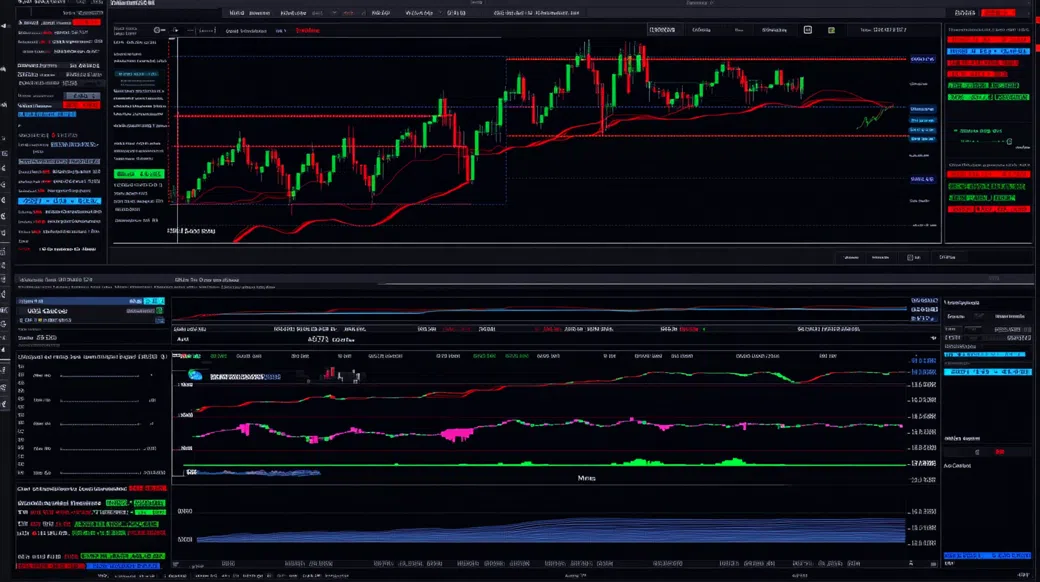
Built for traders who want a multi-asset CFD venue with high leverage and a clean, chart-forward interface, Ancla Activanza suits active short-term setups—but the big give-and-take is the offshore framework versus a top-tier rulebook. In my test, the Standard vs. Raw-style tiering was the clearest “choose your weapon” moment: spreads for simplicity, or tighter pricing with commission for tempo. Coverage leans macro-friendly (FX, indices, metals, BTC) and the WebTrader is the center of gravity, with a mobile companion that’s usable for managing risk on the move. The watchlists and multi-timeframe charts are the standout; deeper research and the broader MT4/MT5 ecosystem aren’t the focus at Ancla Activanza.
Ancla Activanza operates as a real, functioning CFD broker rather than a disappearing “deposit-only” trap, based on my funding, trading, and withdrawal checks. Still, it sits under an offshore registration model, so the safety profile hinges more on internal controls than on strong external investor-protection schemes.
What matters first is the jurisdiction: this provider presents itself under a Mauritius FSC registration-style setup, which typically allows higher leverage and a wider product menu than heavily regulated markets. That flexibility cuts both ways—formal compensation schemes and complaint pathways are usually thinner, and chargeback/dispute processes can be more procedural. On my side, the red-flag scan came back mixed-to-clean: no aggressive “account manager” pressure, no weird urgency tactics, and the site didn’t lean on flashy badges that couldn’t be verified. KYC was enforced (photo ID plus proof of address) before I could complete a withdrawal, and the terms referenced segregated client funds language—useful, but not the same as a Tier-1 trust regime. Remember the product itself is risky: CFDs are leveraged instruments, margin calls arrive fast, and most retail traders lose money when volatility spikes.
The broker generally accepts clients across parts of Southeast Asia, Africa, LATAM, and selected non-EU Europe, while the USA and sanctioned jurisdictions are blocked. Availability is ultimately account-eligibility driven and verified during onboarding.
| Region | Status | Leverage Cap |
|---|---|---|
| Southeast Asia (selected countries) | Accepted | Up to 1:500 |
| Sub-Saharan Africa (selected countries) | Accepted | Up to 1:500 |
| LATAM (selected countries) | Accepted | Up to 1:500 |
| Europe (non-EU/EEA, where permitted) | Accepted | Up to 1:200 |
| USA | Restricted | Not offered |
| Sanctioned jurisdictions | Restricted | Not offered |
Eligibility is checked through a mix of IP/location signals and KYC details, and the platform can request documents early if something doesn’t match. Policies shift with local rules, so a country that works today can be paused tomorrow.
From a trader’s lens, this lineup is designed for cross-market positioning: FX for precision entries, indices for beta exposure, and metals/crypto for volatility when the tape wakes up. I treated it like a macro dashboard rather than an equities-first brokerage.
Everything here is CFD-based: you’re trading price movements, not taking shareholder voting rights, not receiving coins on-chain, and not “owning” the underlying in the traditional sense. That structure makes leverage possible—but it also magnifies losses and financing costs.
Pricing at Ancla Activanza splits cleanly between a spread-only Standard account and a tighter Raw/ECN-style tier that adds commission. On my test quotes, the Raw lane lowered the headline spread meaningfully, while the Standard lane kept the math simple—overall costs land broadly in line with offshore CFD peers.
| Asset | Spread/Fee | Market Average Comparison |
|---|---|---|
| EUR/USD (Standard) | From 1.6 pips | In line |
| EUR/USD (Raw/ECN) | From 0.2 pips + $7 round-turn/lot | Competitive for active traders |
| Bitcoin (BTC/USD) | From 0.35% | In line to slightly high on quiet hours |
| Gold (XAU/USD) | From $0.30 | In line |
| US500 Index | From 0.8 points | In line |
Non-spread costs to watch: swaps/overnight financing can dominate the P&L if you hold FX or indices for days, and crypto positions often carry weekend financing that’s noticeable when volatility compresses. I also saw an inactivity fee of $10 per month after 90 days with no trading activity, which can quietly erode a small balance. Finally, if you fund in one currency and your account is denominated in another, conversion spreads apply—and some withdrawal rails can pass through intermediary bank charges depending on route.
WebTrader is the main workstation here: the session-to-session stability was solid on my side (Singapore time into the London handover), and the layout prioritizes charts, ticket, and positions without forcing you through extra panels. Order handling covered market and pending orders with editable SL/TP, and execution during a brief NY overlap felt consistent—no obvious “stuck” tickets, though you should expect slippage around data prints like CPI because that’s market structure, not a platform button.
The Ancla Activanza app is practical rather than flashy: live quotes updated reliably, position management was quick, and I could add/adjust stops with a couple of taps. The Ancla Activanza login flow supported biometric unlock on my device, and push notifications for fills/margin were available once enabled. One quirk: dense watchlists take a second to load when you flip between Wi‑Fi and mobile data, so I’d keep core instruments pinned.
Charting includes the basics I actually use—multi-timeframe views, common indicators (MA, RSI, MACD, Bollinger), and simple drawing tools for levels and channels. There’s an economic calendar and a news feed, but it’s not a replacement for a dedicated research terminal or the plugin ecosystem you get with MT4/MT5 or cTrader. For signal generation, it’s adequate; for deep analytics, you’ll still lean on external tooling.
After creating credentials, the onboarding pushed me through a short profile (country, experience, basic suitability prompts) before opening the verification lane. KYC required a government-issued photo ID and a proof of address dated within three months; my verification cleared within the same business day after upload. The flow is optimized for compliance rather than conversation—upload, confirm, wait for approval—and that’s generally what you want from an AML standpoint.
My test deposit used USDT and credited after network confirmations, with a clear receipt in the transaction history. If you prefer cards, expect additional checks when you first request an Ancla Activanza withdrawal, especially if your KYC isn’t already complete.
I tested support with two questions that matter to traders: swap/overnight rates on FX majors and the internal timeline for a first withdrawal. Live chat replied in about 3 minutes with a concise explanation of where swaps are displayed per instrument and how the cutoff time works. I also opened an email ticket asking whether the Raw/ECN commission is charged round-turn or per side; the written response landed in roughly 9 hours and confirmed $7 round-turn per lot, consistent with what I saw in the account pricing page.
Coverage runs on a typical 24/5 cadence, which lines up with FX market hours; weekends are lighter, especially for account queries. Language support is region-dependent, and phone help isn’t consistently advertised—so treat chat/email as the primary routes. Relative to similar offshore CFD venues, the support quality was “operator-grade”: factual answers, minimal scripts, and no pushy upsell.
If you’re considering this broker, start by checking your country eligibility, then run a demo to map spreads and margin at the hours you actually trade. Once comfortable, fund small and verify withdrawal rails early—operational checks beat assumptions in this segment.
Visit Ancla ActivanzaIt can be, as long as you treat leverage with respect and start on demo first. The WebTrader layout is intuitive, but the product set is CFDs, which means losses can accelerate quickly. Beginners should keep position sizes small and avoid overusing 1:500 leverage.
Yes, crypto is available as CFDs, with BTC/USD and ETH/USD among the core markets. You’re trading price exposure rather than receiving coins to a wallet. Weekend financing and wider spreads during fast markets are the main practical costs to monitor.
No, my checks showed it functioning as an operational broker: I was able to fund, place trades, and initiate a withdrawal after KYC. The more relevant question is “what protections apply,” because it’s offshore rather than Tier-1 regulated. That calls for extra discipline: verify terms, keep risk controlled, and test withdrawals early.
No, the USA is restricted and accounts are not offered to US residents. The platform checks eligibility through onboarding details and compliance screening. If you’re traveling, mismatched IP and documents can also trigger review.
Typical processing is 24–48 hours after KYC is approved, then the receipt time depends on the payment rail. Cards usually land in 2–5 business days, bank wires in 3–7 business days, and crypto transfers often arrive the same day once released. My test request followed the stated internal window.
The minimum deposit is $200, based on what I was shown on the funding screen for a live account. You can start with that level to test execution and fees before scaling. Keep in mind that high leverage can make a small deposit disappear quickly if sizing is loose.
Yes, there’s an iOS/Android mobile app paired with the WebTrader. It supports monitoring, order placement, and basic account actions like deposits and withdrawals. For heavy chart work, I still preferred desktop, but mobile is solid for risk management and alerts.
Overall Score: 4.0/5
Execution and usability are the parts that matter day-to-day, and on that score Ancla Activanza held up: stable WebTrader sessions, sensible order controls, and pricing that makes sense if you pick the right account tier. The offshore wrapper is the deciding variable—great for flexibility (including 1:500 leverage), less great for those who want the strongest regulatory backstops. Treat it as a tactical CFD venue, not a place to outsource trust. If you proceed, verify your rails early, keep margin conservative, and remember CFDs put capital at risk. For platform-focused traders, Ancla Activanza is worth a measured look.
Best for: active CFD traders who want WebTrader-first execution across FX/indices/metals with a Raw-style option. Avoid if: you require Tier-1 regulation, guaranteed compensation schemes, or you tend to overuse leverage.