Altova Rendrix Trading Platform Alternatives 2026
Altova Rendrix alternatives in 2026: compare regulated brokers, costs, platforms (MT4/MT5/cTrader), and safety checks for US/EU-focused traders.

Altova Rendrix alternatives in 2026: compare regulated brokers, costs, platforms (MT4/MT5/cTrader), and safety checks for US/EU-focused traders.
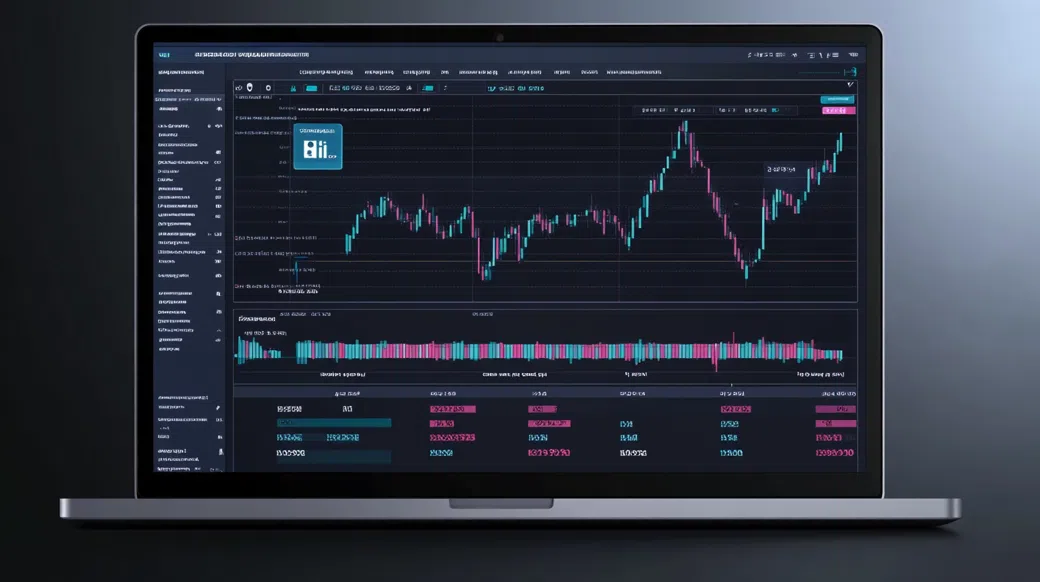
Price action doesn’t care about branding—your fills, your fees, and your legal protections do. That’s the lens I use when readers ask about Altova Rendrix: a CFD-first broker profile that, based on what’s typically observed in offshore setups, tends to revolve around a proprietary WebTrader, a mobile app, high leverage (often marketed around 1:500), and a menu dominated by forex pairs plus index/commodity CFDs and a smaller list of crypto CFDs. You can trade that mix. The question is what happens when volatility hits, spreads widen, or a withdrawal turns into a ticketing marathon.
For US/EU traders in 2026, the real fork in the road is structure. Offshore venues can feel frictionless on day one—fast onboarding, big leverage, simple instruments—but the trade-off is the guardrails you get under major regulators. If your strategy relies on tight execution (think news volatility, short holding periods, or systematic entries), platform depth and order handling matter as much as headline spreads. And if your capital allocation is meaningful, the presence of segregated client funds and formal investor protection schemes stops being “nice to have.”
This guide lays out Altova Rendrix alternatives through a trader’s checklist: regulation, instruments, true cost of trade (spread + commission + swap), platform stack (MT4/MT5/cTrader vs WebTrader), and migration steps that reduce operational risk. I’ll keep the hype out and the numbers grounded.
Disclaimer: This article is for informational purposes only and does not constitute investment advice. CFDs and other leveraged products carry a high risk of loss and may not be suitable for all investors.
From a market-structure standpoint, Altova Rendrix fits the common offshore CFD-broker blueprint: forex and CFDs as the core product, leverage that can run high (often promoted around 1:500), and a client experience designed for quick access rather than deep institutional tooling. The regulatory posture in this segment is typically offshore—here, treat it as operating under a Seychelles FSA-type framework—meaning the protections you’d expect under the FCA, ASIC, CySEC, or NFA may not apply in the same way. The target user is usually a retail trader focused on majors/minors, index CFDs, and short-duration crypto CFD exposure rather than long-horizon investing.
The proprietary WebTrader experience is usually functional rather than surgical: enough charting to mark levels, add basic indicators, and place market/limit/stop orders, but not always the kind of workflow systematic traders want. Chart depth tends to be “basic-to-mid”—fine for discretionary entries, less ideal for multi-timeframe scanning or heavy template work. Mobile apps on iOS/Android typically mirror the web layout, with watchlists, quick order tickets, and a simple account dashboard for margin and P&L. Execution quality is harder to assess without published statistics; in offshore setups, the key practical issue is how slippage behaves around data releases and whether order types (like guaranteed stops) are available.
Costs in this category usually center on the spread, with a “Standard” style account showing EUR/USD around ~2.0 pips in normal conditions. Some firms in the same lane advertise a Raw/ECN-like tier where spreads can print 0.0–0.4 pips but add a commission—often in the neighborhood of $6 round-turn. Beyond the headline spread, the real leak is financing: swap/overnight fees can dominate if you hold CFDs for days or weeks. Depending on the payment method, traders may also encounter withdrawal charges or processing friction—one reason people compare platforms like Altova Rendrix against larger, tightly supervised brokers.
Pressure usually arrives when your strategy stops fitting the venue. A trader can tolerate a simple WebTrader—until they need tighter execution, richer order controls, or a regulator-backed process when something goes wrong. That’s where Altova Rendrix alternatives enter the conversation: not as a “better brand,” but as a different risk framework. If you’re trading leveraged CFDs, platform mechanics and withdrawal reliability can be as material as your entry signal—especially when volatility widens spreads and margin calls come fast.
Think of the selection process as matching infrastructure to a strategy, then stress-testing the operational side. The cleanest way is to define what you trade (instruments), how you trade (holding period, order types, automation), and what can break (execution, margin policy, withdrawals). Once that’s clear, regulated options vs Altova Rendrix tend to separate quickly on investor safeguards, platform depth, and the transparency around costs.
Start with the rulebook. FCA, ASIC, CySEC, and NFA oversight generally implies tighter requirements around marketing, complaints handling, and client-money rules such as segregated client funds. In the UK, FCA-regulated firms can fall under FSCS coverage (up to £85,000, eligibility dependent). In the EU, CySEC supervision can connect to the ICF (up to €20,000, subject to conditions). Those frameworks don’t make trading “safe,” but they change what happens when a dispute appears.
If you only need FX majors, index CFDs, and a small commodities strip, a CFD specialist can be perfectly adequate. But if your plan includes portfolio hedging with listed options, diversifying into real stocks/ETFs, or trading exchange-traded futures during macro cycles, you’re in multi-asset territory. Brokers similar to Altova Rendrix often keep the instrument list tight—fine for tactical trading, limiting for cross-asset risk management.
Compare “round-turn” cost, not slogans. A 2.0-pip EUR/USD spread is a very different outcome versus a 0.2-pip raw spread plus $6 commission, depending on your ticket size and frequency. Then add the quiet costs: swap/overnight financing for held positions, and any inactivity or withdrawal fees that chip away when you’re not trading. For many active traders, cost-of-trade is the edge—especially in mean-reversion systems where expected value per trade is small.
Platform choice is less about aesthetics and more about what you can execute consistently. MT4/MT5 and cTrader ecosystems support automation, plugins, and granular trade management; proprietary WebTraders can be cleaner but narrower. Execution model matters too: market maker setups can be fine for small sizes, while STP/ECN/DMA routing may reduce conflicts—though slippage and liquidity still vary by instrument and session. If you’re coming from Altova Rendrix, test the alternative during the same market hours you normally trade to see how fills behave.
Support quality shows up when something breaks: a margin call dispute, a platform outage, a stuck withdrawal, a missing statement. Look for clear service hours, multiple contact channels, and response times that match your trading schedule (US open vs Asia session). Education is secondary for pros, but platform documentation, contract specs, and margin rules should be easy to find. Mobile parity also matters if you manage risk on the move.
Forex and index CFDs are where offshore CFD brokers usually concentrate liquidity and marketing—and where traders feel the cost structure most directly. If Altova Rendrix runs around ~2.0 pips typical on EUR/USD in a standard setup, that’s workable for swing trades but heavy for high-frequency scalping. The bigger question is execution under stress: slippage around data releases and how margin rules are enforced at high leverage (often advertised near 1:500). In regulated alternatives, Pepperstone and IC Markets are commonly used by systematic FX traders because they pair MT4/MT5/cTrader access with raw-spread style pricing (commission-based) and more explicit execution policies. IG and CMC Markets, meanwhile, can be compelling for index CFD traders who want robust risk tools and a long operating track record under top-tier supervision.
Here’s where many traders discover the difference between “trading a price” and “owning an asset.” In offshore CFD lineups, equities and ETFs—if offered at all—tend to appear as CFDs. That means no shareholder rights, no direct participation in corporate actions in the same way as holding the underlying, and financing costs can apply if you hold positions. If your 2026 plan involves building a core portfolio (US ETFs, European equities) alongside tactical hedges, Interactive Brokers and Saxo Bank are built for that multi-asset workflow: real stocks/ETFs, exchange access, and the ability to layer options or futures for risk control. Among competitors to Altova Rendrix in the CFD space, Plus500 can be a simpler choice for equity CFDs, but it remains CFD-focused rather than a full ownership platform.
Crypto is often offered in CFD form in this segment—useful for directional exposure, but not the same as holding coins on-chain. With crypto CFDs you’re trading a derivative contract: you can go long/short with leverage, but you don’t withdraw BTC/ETH to a wallet, and overnight financing can be a real drag in trending markets. For traders who want regulated crypto CFD access, IG and Plus500 are common reference points in regions where crypto derivatives are permitted, with clearer disclosures and standardized KYC/AML. If your priority is cross-asset macro positioning—say, running BTC risk against USD rates and equity volatility—Saxo’s multi-asset setup can be practical because you can manage FX, indices, and crypto-linked exposure in one risk view. This is the “top substitutes for Altova Rendrix” conversation that’s really about product design and controls, not just coin count.
Regulation: FCA, MAS, DFSA (entity-specific coverage varies by region)
Markets: FX, CFDs, stocks, ETFs, options, futures, bonds
Fees: FX spreads typically from ~0.6–1.2 pips (account/volume dependent); commissions apply on listed stocks/options/futures
Platform: SaxoTraderGO, SaxoTraderPRO
Best For: Macro multi-asset traders who hedge across products
Regulation: SEC/FINRA, FCA, IIROC
Markets: Stocks, ETFs, options, futures, FX, bonds
Fees: Low commissions on many markets (schedule-based); FX pricing is typically tight with explicit commissions depending on plan/venue
Platform: Trader Workstation (TWS), IBKR Desktop, Client Portal, API
Best For: Advanced execution and API-driven workflows
Regulation: FCA, ASIC, CySEC, DFSA
Markets: FX, CFDs (indices, commodities, some crypto CFDs where permitted)
Fees: EUR/USD from ~0.0–0.3 pips on Razor-style accounts plus commission; Standard accounts often ~1.0+ pip
Platform: MT4, MT5, cTrader
Best For: Systematic FX traders using MT4/MT5/cTrader
Regulation: CFTC/NFA, FCA, ASIC, IIROC
Markets: FX (and CFDs in certain jurisdictions)
Fees: Typically spread-based pricing; EUR/USD often ~0.6–1.4 pips depending on region/account
Platform: OANDA Trade (web/mobile), MT4
Best For: US-eligible FX traders needing a regulated venue
Regulation: FCA, ASIC, MAS
Markets: CFDs (indices, FX, shares), spread betting (UK/IE), crypto CFDs where permitted
Fees: Spread-based; major FX often from ~0.6 pips (varies by market and conditions)
Platform: IG Trading Platform, MT4 (in supported regions)
Best For: Index-CFD specialists who value risk tools
Regulation: FCA, ASIC, BaFin
Markets: CFDs (FX, indices, commodities, shares)
Fees: FX spreads often from ~0.7 pips on majors (account and region dependent); commission may apply on some share CFDs
Platform: Next Generation (web/mobile), MT4 (in supported regions)
Best For: Chart-first discretionary traders and active monitors
| Platform | Regulation | Main Markets | Typical Costs | Best For |
|---|---|---|---|---|
| Saxo Bank | FCA/MAS/DFSA (by entity) | FX, CFDs, stocks, ETFs, options, futures, bonds | FX ~0.6–1.2 pips; listed products via commissions | Macro multi-asset traders who hedge across products |
| Interactive Brokers (IBKR) | SEC/FINRA, FCA, IIROC | Stocks/ETFs, options, futures, FX, bonds | Commission schedules; FX typically tight + explicit fees | Advanced execution and API-driven workflows |
| Pepperstone | FCA/ASIC/CySEC/DFSA | FX, CFDs (indices/commodities; some crypto CFDs) | Raw ~0.0–0.3 pips + commission; Standard ~1.0+ pip | Systematic FX traders using MT4/MT5/cTrader |
| OANDA | CFTC/NFA, FCA, ASIC, IIROC | FX (plus CFDs in some regions) | Spread-based; EUR/USD often ~0.6–1.4 pips | US-eligible FX traders needing a regulated venue |
| IG | FCA/ASIC/MAS | CFDs, spread betting (UK/IE), crypto CFDs (where permitted) | Spread-based; major FX often from ~0.6 pips | Index-CFD specialists who value risk tools |
| CMC Markets | FCA/ASIC/BaFin | CFDs (FX, indices, commodities, shares) | FX often from ~0.7 pips; some share CFD commissions | Chart-first discretionary traders and active monitors |
Switching brokers is operational risk disguised as admin work. Treat it like a controlled rollout: verify the destination first, then move money, then scale size. The fastest way to blow up a transition is to close positions in a rush, mis-handle AML payment rails, or redeploy capital before you understand margin policy on the new venue. If you’re exiting Altova Rendrix, assume you’ll need clean documentation and patience—especially when leverage and CFD exposure are involved.
If you’re still evaluating whether the platform fits your approach, review the current onboarding flow, supported regions, and trading conditions side-by-side with the Altova Rendrix alternatives above. The goal is not more leverage—it’s better alignment between tools, protections, and your risk budget.
Visit Altova RendrixThe best option depends on whether you need multi-asset investing or pure FX/CFD execution. For real stocks/ETFs plus options/futures, Interactive Brokers or Saxo Bank are the cleanest step-up. For MT4/MT5/cTrader-focused FX trading with raw-spread style pricing, Pepperstone is often a stronger match. For US residents, OANDA is a practical regulated route for spot FX.
Altova Rendrix appears to sit closer to an offshore/unregulated-style setup (think Seychelles FSA-type framework) than to FCA/ASIC/CySEC/NFA protections. That usually means fewer formal investor safeguards like FSCS/ICF coverage and less standardized recourse if a dispute arises. Safety in leveraged CFD trading is also about margin policy and execution under stress—areas where top-tier regulated brokers tend to publish clearer disclosures.
With Altova Rendrix, the typical offering in this category is forex and CFDs, with crypto often available as crypto CFDs rather than on-chain ownership. Stock/ETF access, if present, is commonly CFD-based rather than real equity ownership. Exchange-traded futures are more often found at multi-asset brokers such as Interactive Brokers or Saxo Bank.
Before switching, verify the new broker’s regulator entry (FCA/ASIC/CySEC/NFA) and confirm the exact legal entity you’ll onboard with. Next, compare round-turn costs (spread + commission) and read the margin call/stop-out rules—those define your downside when volatility spikes. Finally, plan the cash movement: KYC the new account first and withdraw via the same payment method to reduce AML friction.
About the Author: Daniel Okafor is a derivatives trader turned market analyst based in Singapore, covering APAC brokerages and global macro through a trader’s lens. He focuses on execution quality, cost-of-trade, and platform mechanics—charts over chatter, always.