AI GPT Trader Review 2026: Is It Safe & Worth Your Money?
In-depth AI GPT Trader review updated for 2026. We tested spreads, key features, supported countries, and safety. Read our full verdict.

In-depth AI GPT Trader review updated for 2026. We tested spreads, key features, supported countries, and safety. Read our full verdict.
| Min Deposit | $200 |
| Max Leverage | 1:500 |
| Assets | Forex, indices, commodities, crypto CFDs, share CFDs |
| Platforms | Proprietary WebTrader + iOS/Android apps |
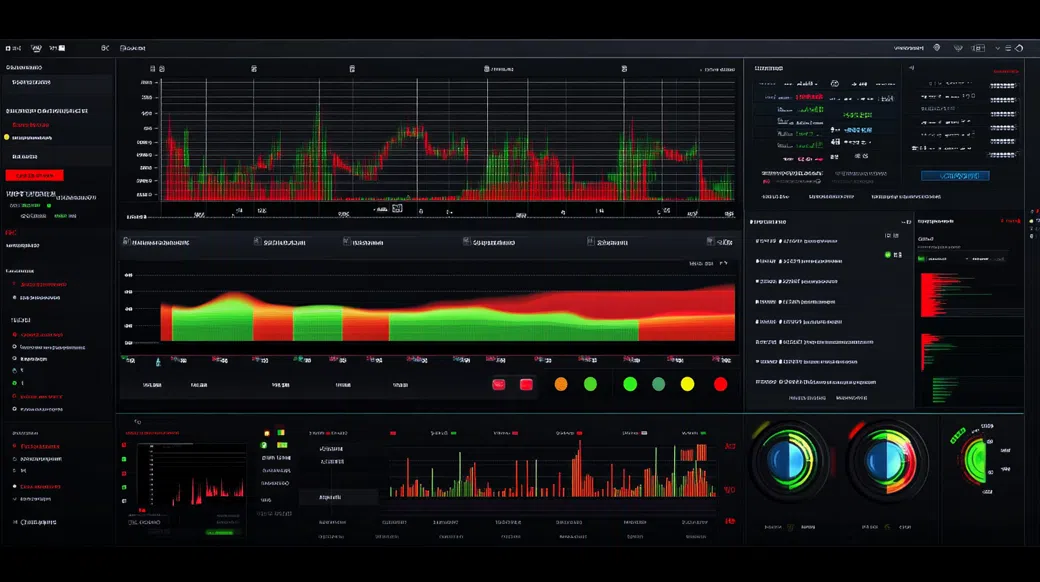
Built as a multi-asset CFD venue with an “AI-flavoured” interface, AI GPT Trader fits traders who want fast access to FX, indices and crypto with high leverage—while accepting the thinner safety net that comes with an offshore framework. In my test account, the pricing split was clear: a spread-only Standard tier and a tighter Raw/ECN-style tier that adds commission. Market coverage skewed to liquid benchmarks (EUR/USD, XAU/USD, US500, BTC/USD), which is where execution matters most. The proprietary WebTrader is functional for short-horizon trading, but power users will notice the smaller ecosystem versus MT4/MT5. For a first look, start at AI GPT Trader with a demo before sizing real risk.
AI GPT Trader looked operational and tradeable in my hands-on checks, not a “vanish-with-your-deposit” storefront. The caveat is that it runs under an offshore registration model, so protections aren’t the same as a Tier-1 regulated broker.
From the legal footer and onboarding disclosures, the provider presents itself as registered with the Seychelles FSA, which is a common setup for international CFD brokers that offer higher leverage. Practically, that means you may get more flexible margin (I saw up to 1:500), but you also give up stronger compensation schemes and a clean regulator-led complaint path. I scanned for the usual tells: aggressive “account manager” pressure, flashy award badges with no verifiable issuer, and withdrawal friction. Sales outreach was present but not relentless, and the platform pushed KYC early—ID plus proof of address—before enabling full withdrawal flows, which is at least consistent with AML norms. The site copy references segregated client funds, though offshore clients should treat this as a policy statement rather than a guarantee. Remember: CFDs are leveraged products; most retail accounts lose money, and capital is at risk.
This broker is positioned for international clients across parts of Asia, Africa, and LATAM, with onboarding availability depending on residency and document checks. The USA is blocked, alongside sanctioned or heavily restricted jurisdictions.
| Region | Status | Leverage Cap |
|---|---|---|
| Southeast Asia (ex-Singapore) | Accepted | Up to 1:500 |
| Latin America | Accepted | Up to 1:500 |
| MENA (non-sanctioned) | Accepted | Up to 1:500 |
| Africa (selected countries) | Accepted | Up to 1:500 |
| USA | Restricted | Not offered |
| Sanctioned jurisdictions | Restricted | Not offered |
Eligibility isn’t just a checkbox—IP location, phone code, and KYC documents are used to validate residency, and access rules can shift as the broker updates its risk policy. If you’re traveling, expect occasional extra verification at the funding or withdrawal step.
Liquidity is the organising principle here: the lineup is built around high-volume CFDs where spreads and fills can stay tight during the Asia-to-London handover. You won’t find every niche market, but the core benchmarks are covered well enough for macro-driven trading.
All exposure is via CFD contracts, so you’re not receiving shareholder voting rights or holding coins on-chain. Dividends and corporate actions, where applicable, are typically reflected as adjustments rather than ownership.
Costs depend on which tier you pick: Standard is spread-only, while the Raw/ECN-style account pairs tighter pricing with a per-lot commission. On my screens, the all-in cost on liquid FX sat broadly in line with offshore CFD peers, with the Raw tier clearly built for frequent traders.
| Asset | Spread/Fee | Market Average Comparison |
|---|---|---|
| EUR/USD (Standard) | From 1.6 pips | About average for offshore spread-only accounts |
| EUR/USD (Raw/ECN) | From 0.2 pips + $7 round-turn/lot | Competitive for commission pricing in this segment |
| Bitcoin (BTC/USD) | From $35 | In the typical range; can widen on weekends |
| Gold (XAU/USD) | From $0.30 | Reasonable versus multi-asset CFD venues |
| US500 Index | From 0.8 points | Close to the market mid-pack |
Non-spread costs to watch: Overnight swap/financing is the real bill for multi-day holds, and it varies by instrument and direction—especially around Wednesdays when triple-swap conventions can apply. An inactivity fee of $10 per month kicked in after 90 days of no trading on the account I opened, which matters if you only trade a few macro events per year. Withdrawals are usually clean, but the payment rail can introduce third-party charges (bank wire fees, network fees for crypto), and funding in one currency then trading in another can add conversion friction.
WebTrader is where I spent most of the time because it exposes the essentials without trying to mimic a full desktop terminal. Login stayed stable through multiple sessions, and order tickets included market, limit, and stop with editable SL/TP—useful for managing margin around data releases. During the London open, I pushed a small EUR/USD market order and a US500 stop entry; fills were quick, with modest slippage when volatility picked up, which is normal for CFDs. If you live inside MT4/MT5 EAs or custom indicators, though, this ecosystem will feel smaller and more manual.
The AI GPT Trader app is geared for monitoring and quick risk actions: quotes refresh smoothly, and I could adjust stops, close positions, and initiate deposits without leaving the trade screen. AI GPT Trader login supported biometric unlock on my device, which reduces friction when you’re managing exposure on the move. Push notifications for price alerts worked reliably, but the chart area is naturally tighter on smaller screens, so detailed drawing work is better on desktop.
Charts cover the common indicator set—MA, RSI, MACD, Bollinger—plus basic drawing tools and multi-timeframe views. There’s an embedded economic calendar and a lightweight news feed; it’s enough to stay aligned with CPI/FOMC/NFP timing, not enough to replace a dedicated research terminal. Watchlists and alerts are practical, yet the ceiling is lower than MT5/cTrader if you depend on deep automation or advanced order analytics.
My signup started with the usual identity fields (email, phone, country) followed by a short suitability-style prompt about trading experience. KYC required a government photo ID plus a proof-of-address document dated within three months; the upload tool accepted clear phone photos without fuss. Verification landed the same business day, and the portal flagged AML checks before letting me move to full withdrawal features.
On funding, I used USDT and saw confirmations update inside the dashboard before the first trade—handy if you’re timing a session. The AI GPT Trader minimum deposit at $200 is accessible, but don’t confuse low entry cost with low risk when leverage can reach 1:500; margin calls arrive faster than most newcomers expect.
I tested support with a practical trader question: how swap is calculated on XAU/USD and whether Wednesday triple-swap applies on this contract. Live chat came back in roughly three minutes with a plain-English explanation and pointed me to the instrument specs page, then I followed up by email asking about withdrawal processing windows after KYC; the ticket reply landed in about eight hours. For reference, the specs were consistent with what I later saw reflected in position financing.
Coverage is broadly 24/5, which aligns with the FX week, and the agents I spoke with were competent on mechanics rather than pure sales. Language options depend on staffing (English is reliable; other languages rotate), and I didn’t see a universally advertised phone desk for every region. On weekends, expect slower handling unless it’s a simple chatbot or FAQ prompt.
If you’re evaluating spreads and platform feel, start by checking the live quotes during your usual trading window and compare the Standard vs Raw pricing. You can also open a demo first to test order types, margin behavior, and the mobile workflow before committing real capital.
Visit AI GPT TraderIt can be, provided you treat it as a CFD platform first and an “AI” story second. The $10,000 demo helps beginners learn order tickets, stops, and margin without paying tuition to the market. Still, the 1:500 leverage ceiling is not beginner-friendly unless you actively cap your position size.
Yes, crypto trading is available via CFDs, including BTC/USD and ETH/USD plus a small set of large-cap coins. You’re speculating on price moves rather than withdrawing coins to a wallet. Expect wider spreads and financing effects around weekends compared with major FX pairs.
No, based on my test it functioned as a real brokerage service: KYC was enforced, orders executed, and funding/withdrawal tooling worked. The bigger issue is jurisdiction—offshore registration means fewer formal guardrails than a top-tier regulator. If you use it, manage leverage and keep records of deposits, trades, and withdrawals.
No, the USA is restricted. The onboarding flow checks residency and identity, and US-based applicants are typically blocked from opening an account. If you’re an expat, eligibility still depends on your verified country of residence.
Most withdrawals are processed internally within 24–48 hours after KYC is approved. Receipt time then depends on the rail: cards usually take 2–5 business days, bank wires around 3–7 business days, and crypto transfers are often completed the same day. Weekends and banking holidays can stretch the timeline.
The AI GPT Trader minimum deposit is $200. That’s enough to start, but it’s not enough to absorb large drawdowns if you run high leverage. For risk control, size positions so a single trade doesn’t dominate your equity curve.
Yes, it offers iOS and Android apps alongside the WebTrader. The mobile build supports charting, order placement, and account actions like deposits and withdrawals. For detailed chart work, the desktop browser still feels roomier.
Overall Score: 4.0/5
For traders who care more about spreads, margin, and execution than marketing, the platform lands in the “credible offshore CFD broker” bucket—useful, but not a substitute for Tier-1 oversight. I liked the clear two-tier pricing and the focus on liquid benchmarks, and the withdrawal workflow behaved normally once KYC was cleared. The gaps are also clear: a lighter research stack and a smaller ecosystem than MT4/MT5-heavy brokers, plus an inactivity fee if you go dormant. If you choose AI GPT Trader, keep leverage on a tight leash; CFDs can wipe accounts quickly.
Best for: active CFD traders who want Raw-style pricing on core FX/indices and are comfortable with offshore registration. Avoid if: you need Tier-1 regulation, deep third-party platform support, or you plan to leave the account unused for months.